 Follow Us on Google News
 Follow Us on Google Discover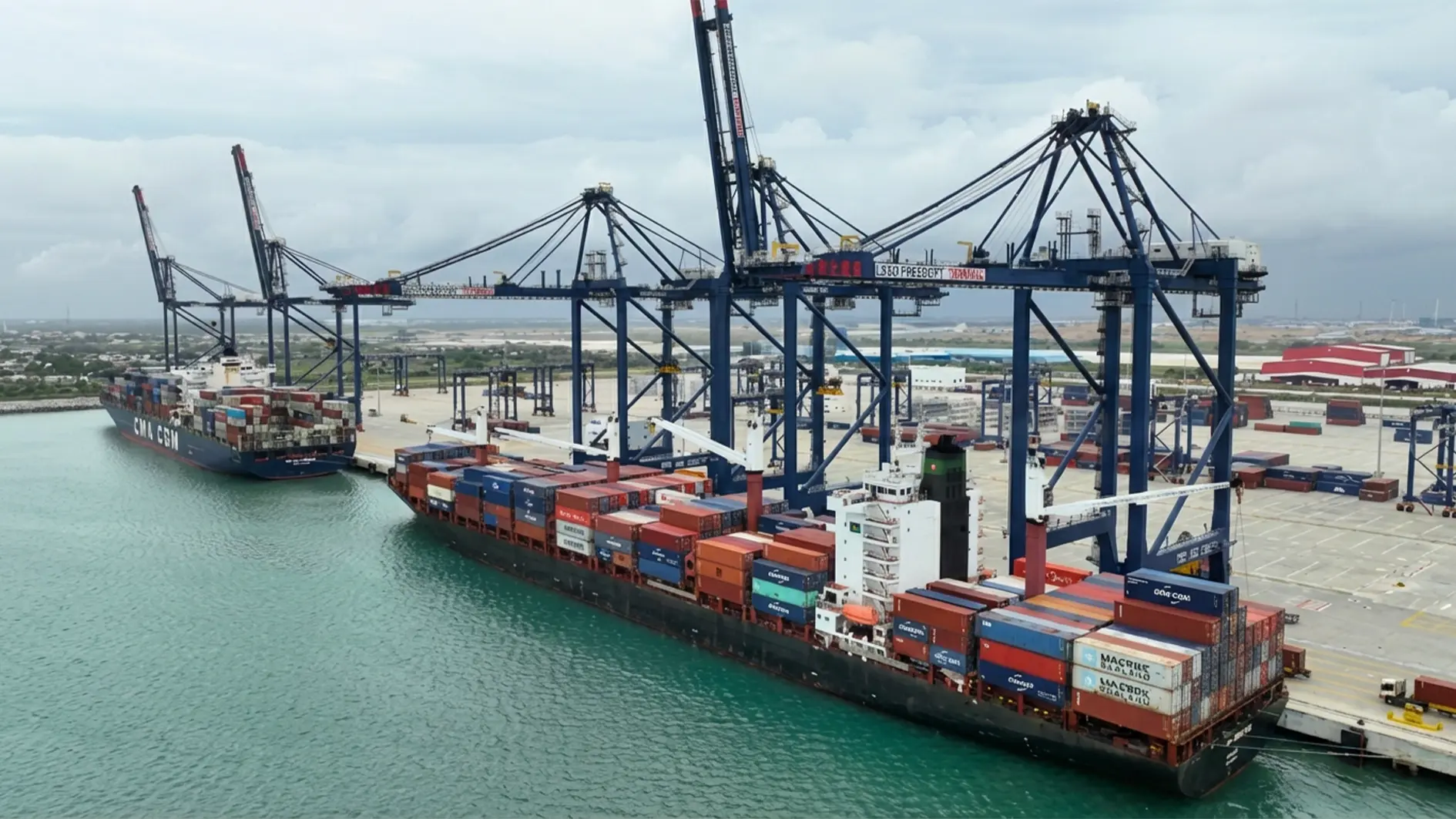
Nigeria loses an estimated N7.97 trillion yearly to persistent maritime inefficiencies, misaligned policy priorities, weak execution and an overemphasis on infrastructure expansion at the expense of efficiency.
This was contained in a presidential advisory paper by the Sea Empowerment and Research Centre (SEREC) titled, ‘When Projects Replace Progress: Nigeria’s Maritime Sector at the Edge of Strategic Irrelevance’, and signed by the Head of Research, Dr Eugene Nweke.
According to SEREC, Nigeria’s maritime challenges are rooted in a history of misplaced priorities, including port expansion without corresponding evacuation infrastructure, underutilised inland container depots, the proliferation of deep seaports without a coordinated national cargo strategy, building projects instead of systems, announcing reforms instead of delivering outcomes and chasing revenue instead of creating trade value.
The research centre said Nigeria is losing between N2.5 trillion and N4 trillion yearly due to inefficiencies across the maritime sector.
The group gave breakdowns of the yearly losses to include between N1.2 trillion to N1.8 trillion in demurrage and storage cost from cargo dwell time inefficiency, N500 billion to N1 trillion from cargo diversion, $2 billion (N2.7 trillion) to $5 billion (N6.75 trillion) in lost export earnings, N300 billion to N700 billion tied to underutilised infrastructure and over N500 billion in systemic transactional inefficiencies.
The cost of inaction is measurable, recurring, and compounding. Nigeria is not just losing money – it is losing economic momentum and regional relevance.
SEREC criticised the government’s heavy focus on revenue generation, arguing that rising port revenues have not translated into improved efficiency or reduced cost of doing business.

“Revenue without efficiency is taxation, while efficiency with growth is development,” the report noted, questioning whether Nigerian ports are becoming more competitive or merely more expensive,” the group stated.
The advisory memo identified export underperformance as a major structural weakness, warning that Nigeria remains heavily import-dependent with limited capacity to compete under the African Continental Free Trade Area (AfCFTA).
SEREC highlighted key gaps to include the absence of dedicated export terminals, weak processing systems, poor cold-chain logistics, and inadequate integration of agro-export corridors.
The report also warned that inefficiencies in Nigeria’s port system are driving cargo to neighbouring countries, including Cotonou – a primary diversion hub for Nigeria-bound imports, Lomé – a major transshipment hub with deep-sea advantages and Tema with a structured, efficient port system, attracting regional trade flows.
According to SEREC, the ports have faster clearance times, lower costs and greater predictability to attract Nigerian-bound shipments.
“Nigeria is losing cargo not by geography, but by inefficiency. The country is effectively subsidising the efficiency of competing regional ports,” the report stated.
SEREC also flagged the absence of a strong, independent economic regulator as a critical gap, noting that delays in establishing a Ports and Economic Regulatory Commission have allowed tariff abuses and weak service standards to persist, with market discipline absent.
While acknowledging the Federal Government’s approval of the Cargo Tracking Note (CTN) as a step toward improving trade visibility and security, the report warned that poor implementation could undermine its objectives.
The research centre called for transparency, stakeholder alignment, and cost controls to prevent the initiative from becoming another underperforming reform.
SEREC said Nigeria must urgently repurpose underperforming inland container depots into export consolidation and logistics centres, to drive structured export aggregation, dedicated export terminals, cold-chain infrastructure and agro-export corridors.
According to SEREC, this transformation is essential for AfCFTA competitiveness, rural economic integration and non-oil export expansion.

