 Follow Us on Google News
 Follow Us on Google Discover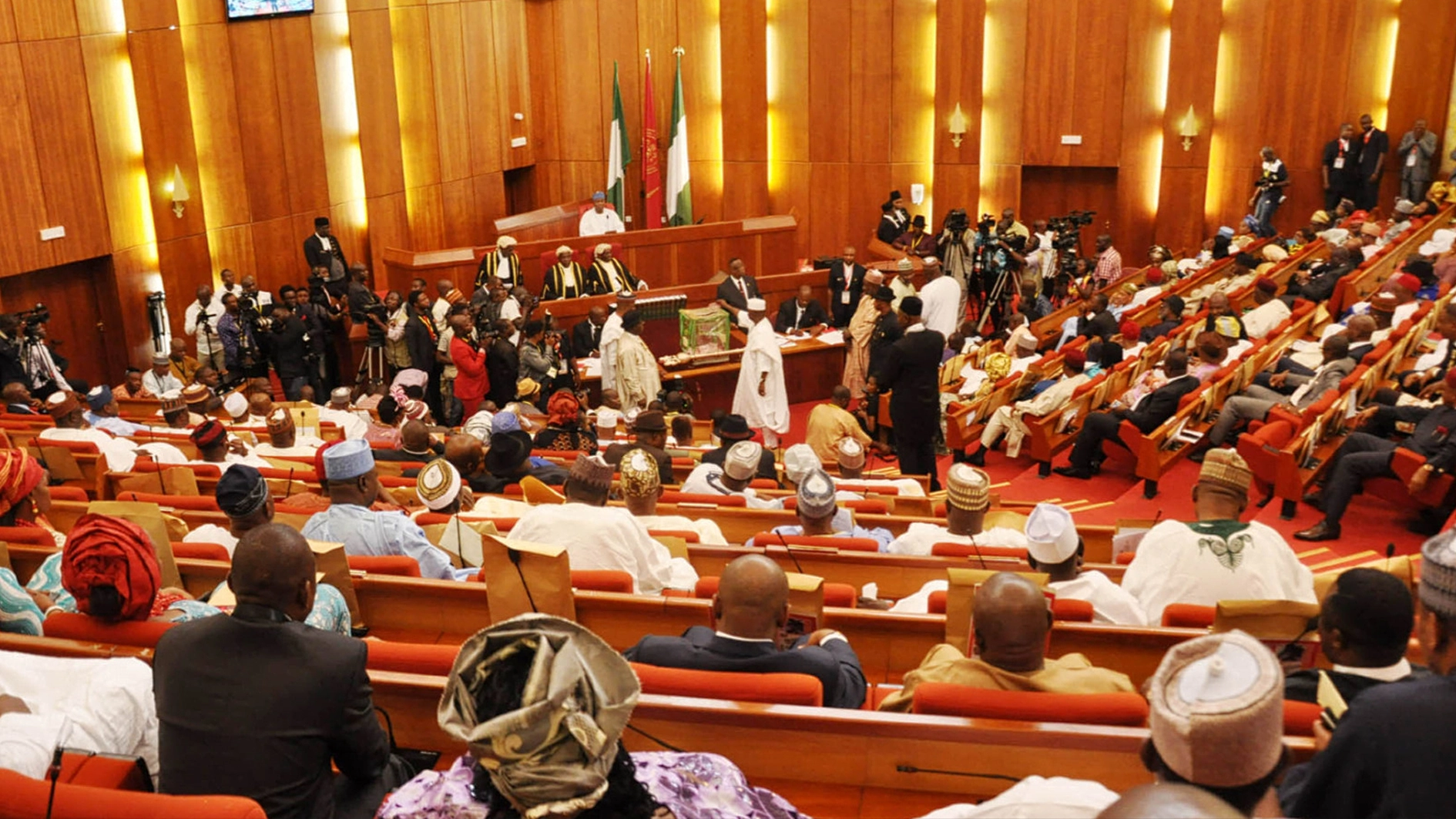
• Ningi calls for suspension of political activities in eight states
• Senator flags ‘cycle of failure’ in Benue killings
• Gani Adams faults CCTV plan, seeks nationwide rollout, power reform
• PRP raises alarm over insecurity, alleges poor funding of defence
• FG insists security improving, cites gains against Boko Haram
• 20 killed in fresh B’Haram attacks on Borno, Adamawa communities
• Troops kill 30 ISWAP fighters, destroy boats in Lake Chad offensive
Growing insecurity across several parts of Nigeria has intensified debate over the effectiveness of current security strategies, with political leaders, security officials and stakeholders offering sharply different assessments of the situation and how it should be addressed.
While some government officials point to gains from ongoing military operations and insist that conditions are improving, others argue that persistent attacks, rising casualties and repeated breaches in vulnerable communities expose structural weaknesses in intelligence, coordination and response.
Recent incidents in Benue, Borno and Adamawa have further amplified concerns, prompting calls for urgent reforms and clearer accountability as pressure mounts for a more decisive and coordinated national response.
Tension escalated at the National Assembly yesterday as the Senate demanded the immediate rescue of 416 citizens reportedly held by Boko Haram and ordered an investigation into recent attacks on military formations in Borno State.
Lawmakers warned that renewed violence in the North-East signals a resurgence of insurgency capable of reversing years of military gains. The chamber observed a minute of silence for 17 officers, including Brigadier-General Oseni Braimoh, killed during a March 3 assault on military bases in Monguno and Benisheikh. The attack also claimed the lives of Colonel Mohammed Isya, Captain A.M. Esmat, Lieutenant Kelvin Festus and other soldiers.

Senate Chief Whip Mohammed Monguno said the coordinated assaults reflect a deliberate attempt to weaken military operations and disrupt key routes, including the Damaturu–Maiduguri corridor.
“This is not random. It is deliberate and strategic,” Monguno said.
Ali Ndume disclosed that insurgents issued a 72-hour ultimatum demanding a N5 billion ransom for the abducted victims, triggering widespread concern among lawmakers.
Abdul Ningi said, “We must take extraordinary measures. This is no longer business as usual.”
He urged the suspension of political activities in eight states affected by insecurity, warning that the worsening situation requires urgent national attention.
Speaking during plenary, Ningi said political activities should be halted in Borno State, Plateau State, Bauchi State, Benue State, Niger State, Sokoto State, Kebbi State, and parts of Kano State.
“We cannot continue to think because we are in Abuja and therefore, this does not affect us. It has affected us,” the lawmaker said.
“One of the things that we must do, and I want us to take this thing very, very seriously… is either to suspend all political activities across this country, or look at the front-line states of Borno, Plateau, Bauchi, Benue, Niger, Sokoto, Kebbi, and part of Kano and suspend all political activities until we are sufficiently certain of these security issues we are dealing with.
“We are not dealing with these security issues at all, and I’m not blaming anybody.”
Ningi also mourned military officers recently killed in terrorist attacks, stressing the need for stronger action.
“I think we are not doing enough, and we must do sufficiently enough to tell Nigeria we are the Senate of the Federal Republic of Nigeria,” he said.
Other senators, including Diket Plang, warned that persistent attacks threaten national security, food systems and resettlement efforts.
The Senate directed the Armed Forces to review operational strategies, audit equipment and strengthen intelligence. It also urged the National Emergency Management Agency and the North East Development Commission to scale up humanitarian support.
Responding, Deputy Senate President Barau Jibrin said the Federal Government is increasing support for military operations, while lawmakers stressed that rescuing the captives remains a national emergency.
“This cannot wait,” one senator said.
Senator warns of ‘cycle of failure’ as killings persist in Benue
Amid renewed killings in Benue State, Senator Abba warned that Nigeria’s security strategy remains trapped in a “predictable cycle of failure,” marked by recurring attacks on rural communities and short-term responses that fail to ensure lasting protection.
Reacting to the latest violence in Benue South Senatorial District, the lawmaker said the persistence of attacks, despite ongoing military operations, reflects deeper structural weaknesses in intelligence coordination, operational planning and political resolve.
“What we are seeing is not new. It is the same pattern—killings, silence, deployment, and then more killings,” he said.
Abba cited an April 12 attack in Edikwu Ankpali, Apa Local Government Area, where at least nine people were reportedly killed, noting that the community experienced similar violence a year earlier. He questioned why high-risk areas continue to face assaults despite the presence of security formations, including Operation Whirl Stroke.
“If security forces are already deployed there, why are attacks still happening?” he asked.
The senator criticised a reactive security model driven by post-attack interventions, warning that it emboldens armed groups and erodes public confidence. He also raised concerns over poor logistics, alleged leniency towards suspects, and political delays, urging a decisive, intelligence-driven approach to end the violence.
Gani Adams faults Tinubu’s CCTV plan, calls for nationwide rollout, power reform
This came as the Aare Onakakanfo of Yorubaland and national leader of the Odua People’s Congress, Gani Adams, criticised President Bola Tinubu over remarks made during a recent visit to Jos, urging a nationwide approach to surveillance and security.
Adams spoke at the yearly Oke-Ibadan Festival held at Mapo Hall, where he argued that installing CCTV cameras only in Jos would not address the country’s broader security challenges.
“We are surprised that President Bola Tinubu, during his recent visit to Jos, was just saying that CCTV gadgets will be fixed in Jos. But I dare say CCTV ought to be installed across the entire country.
“One of the key secrets of good security in the Western world is the CCTV that is installed in strategic locations, even in some streets.”
He linked effective surveillance to stable electricity, stating that a consistent power supply enables round-the-clock monitoring.
“Without adequate and regular power supply, there is no life. It is funny how Nigeria can be talking about 5000 megawatts at this stage of our development as a nation.
“South Africa, with whom we are competing as the giant of Africa, has an installed electricity generation capacity of approximately 58,000 megawatts.”
He added that Egypt’s capacity exceeds 60,000 megawatts and continues to grow through renewable energy projects.
“Nigeria must take a cue from other forward-thinking nations and resolve the power challenge decisively because it is the main obstacle to the wholesome development of our economy”
Adams urged the Federal Government to decentralise electricity generation, proposing a one- to two-year timeline for states to develop their own power systems, stressing that stable electricity remains essential for economic growth.
PRP raises alarm over worsening insecurity, vows decisive action
Also, the National Chairman of the Peoples Redemption Party (PRP), Hakeem Baba-Ahmed, criticised the Federal Government over rising insecurity, stating that the party has identified clear strategies to address the root causes of violence across Nigeria.
Baba-Ahmed, a former adviser to Vice-President Kashim Shettima, spoke in an interview with The Guardian, where he said insecurity ranks among the party’s five core priorities ahead of the 2027 general elections.
He accused the administration of failing to prioritise security despite increasing casualties among civilians and security personnel, adding that the PRP would focus on leadership, resource deployment and structural reforms.
“The PRP has identified five cardinal principles around which it will conduct this forthcoming election. We believe these five principles represent the core issues facing all Nigerians. One of them is to re-secure Nigeria.
“What this means is that if we form a government, if we defeat the APC government and form a government at all levels of this country, we have clear ideas about the root causes of insecurity in different parts of Nigeria. We need good leadership, which is also one of our cardinal principles.
“We must fight insecurity as a country, and we must prioritise it. It is not acceptable that so many of our people are dying. Soldiers are dying, security personnel are dying, and the government is doing very little to address this.”
He alleged inadequate funding of the defence sector, claiming that only seven per cent of the budget for procurement was released last year.
“We were shocked to hear that last year, this same administration, under which more Nigerians have died than under any other administration, released only 7 per cent of the money budgeted for defense procurement and military equipment. Under a PRP government, this will not happen.
“We will go to the root of insecurity in the North-East, South-East, South-South, North-Central, and North-West, and we will deal with these issues decisively so that every Nigerian can sleep peacefully.”
Baba-Ahmed said the party would review the security architecture, appoint competent leaders and strengthen accountability, while also engaging communities to address the underlying causes of conflict.
In a related development, the National Coordinator of the Coalition of Northern Groups, Jamilu Charanchi, expressed concern over worsening insecurity and economic hardship in the North, citing killings, kidnappings and displacement across several states.
“A government that cannot secure lives, ease the cost of living, manage its economy, or justify the taxes it collects has failed its most basic responsibility,” Charanchi said.
FG says security improving as Akume cites gains against Boko Haram
However, the Secretary to the Government of the Federation, George Akume, has said Nigeria’s security situation is improving, with insurgent group Boko Haram significantly weakened by sustained military operations.
Akume spoke in Abuja while receiving members of the Renewed Hope Fulbe Campaign Organisation, a pastoralist-based mobilisation platform that declared support for the re-election of President Bola Tinubu in 2027.
The visit reflects growing political mobilisation ahead of the next general election, with the group pledging to rally pastoralist communities nationwide in support of the administration’s Renewed Hope Agenda.
According to the SGF, a combination of kinetic and non-kinetic strategies has degraded terrorist capabilities, reducing attacks to isolated and less effective incidents. He added that efforts to strengthen the country’s defence architecture through the acquisition of modern equipment and evolving operational strategies are yielding measurable results.
“The challenges we face are temporary. There are clear signs of improvement, and we are confident the situation will continue to stabilise,” Akume said.
While acknowledging that security concerns persist, he maintained that ongoing interventions are gaining traction and will restore lasting peace across the country.
20 killed as Boko Haram attacks Borno, Adamawa border communities
The SGF’s claim came as suspected members of Boko Haram killed 20 residents in coordinated attacks on the Pubagu community in Askira/Uba Local Government Area of Borno State and Mayo-Ladde in Hong Local Government Area of Adamawa State.
The attacks reportedly occurred around 4:00 p.m. on Tuesday, when the insurgents stormed the neighbouring communities, overpowered local security operatives and opened fire on residents.
Confirming the incidents in Maiduguri, the Chairman of Askira/Uba Local Government Area, Mada Saidu, said: “Eleven of our people were killed in Pubagu, while nine lost their lives in Hong Local Government Area of Adamawa State.”
“Yes, there was an attack in Pubagu, Askira/Uba council, yesterday, Tuesday, around 4 p.m. Eleven people were killed. While in Mayo-Ladde, Hong Local Government in Adamawa State, nine people were killed.”
He added: “In total, we have 20 deaths, 11 from Askira Uba in Borno, nine from Hong Local Government, Adamawa.”
The affected communities lie on the southern fringe of Sambisa Forest and are separated by the River Yedzaram, which flows into Lake Chad.
Saidu said the attackers overran local vigilantes and hunters before carrying out the killings.
“I later went there together with the Army. Initially, it was local security that was there, that is, hunters and vigilantes. But they were overpowered by the armed terrorists,” he said.
Eyewitnesses said the attackers arrived on motorcycles, operated for hours, and burned houses while looting food and property.
One survivor said, “Yesterday evening, the terrorists stormed our community in Pubagu. They shot sporadically into the air for hours, burning houses and shops. They killed both men and women after operating for more than an hour.”
Another source added, “The local vigilantes and hunters tried their best. Unfortunately, the terrorists were well armed and in much greater numbers. The resistance was not strong enough. The hunters later fled for their lives, too.”
The latest attack follows an earlier incident on April 16, 2026, when insurgents killed four soldiers and a civilian in Mussa community in Askira/Uba Local Government Area.
Troops kill 30 ISWAP fighters, destroy boats in Lake Chad offensive
Meanwhile, troops of Operation Hadin Kai have killed 30 fighters of the Islamic State West Africa Province (ISWAP) during coordinated land and air operations on Kaniram Island in Lake Chad, Borno State.
The offensive, conducted between April 21 and April 22, 2026, also led to the destruction of several terrorist speed boats along key waterways, disrupting logistics and movement within the region.
The Media Information Officer of Operation Hadin Kai, Sani Uba, said in Maiduguri that air operations played a critical role in the mission.
“The Air Component of the military operations delivered devastating precision air strikes that dismantled ISWAP terrorist logistics networks along the Lake Chad waterways, and in the Kaniram Island axis of Northern Borno state.”
He added: “Acting on credible Intelligence, Surveillance and Reconnaissance (ISR) inputs, OPHK air assets established a persistent overhead presence and confirmed the concentration of over 30 terrorist boats and associated terrorist elements coordinating movement and resupply activities.
“Our targeted validation and positive identification were carefully achieved, ensuring high targeting fidelity prior to the engagement with terrorists.”
According to him, coordinated strikes destroyed multiple boats and logistics hubs, weakening the group’s operational capacity.
“The real-time ISR enabled rapid follow-on strikes on the fleeing and regrouping elements within nearby vegetation, leading to the neutralisation of more than 30 terrorists.
“Surviving elements were observed escaping in disarray, reflecting a breakdown in their cohesion and command structure.”
Uba added that further airstrikes in the Sambisa Forest axis destroyed three gun trucks and killed additional fighters, while post-strike assessments indicated significant losses, including mass burials in the Mallam Fatori area.
He said troops are sustaining pressure to prevent regrouping and maintain control of affected areas.

