 Follow Us on Google News
 Follow Us on Google Discover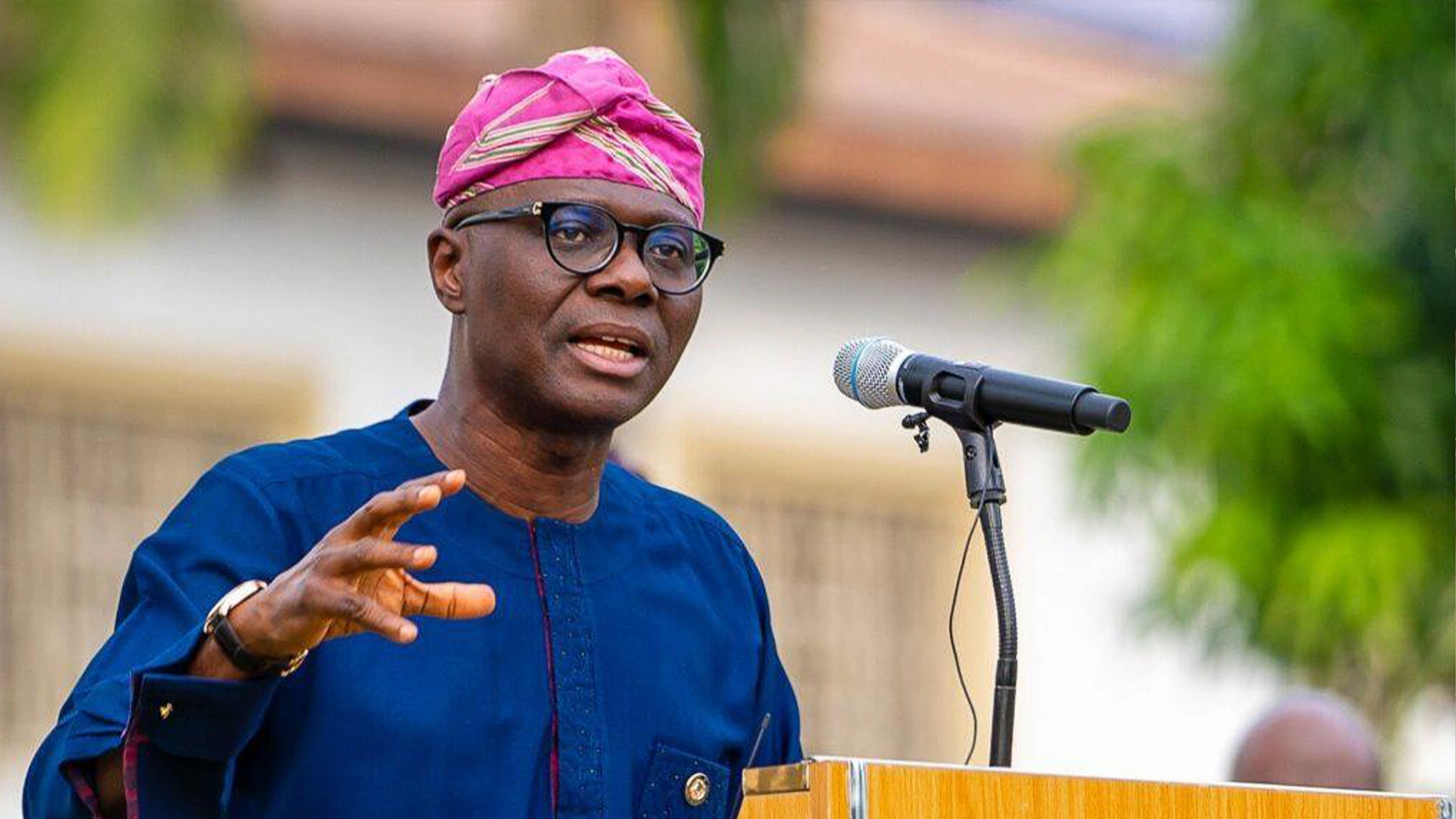
Lagos State Governor, Babajide Sanwo-Olu, has lamented that criminal networks are becoming increasingly sophisticated, exploiting technology, regulatory gaps, and corrupted port channels.
He called for collaboration among critical stakeholders to curb the threat of increasing insecurity in the maritime space.
According to him, what is particularly alarming is that criminal actors are diversifying their methods.
He spoke at a conference organised by the National Drug Law Enforcement Agency (NDLEA) on safeguarding Nigeria’s blue economy against organised crime, illicit drug trafficking and piracy in maritime operations in Apapa, Lagos.
The conference was attended by the Navy, Police, Immigration and other relevant stakeholders in the maritime sector and Blue economy.
Sanwo-Olu, who described the theme of the conference: “Addressing Emerging Criminal Trends: A Legal Framework and Best Practices for Safeguarding Nigeria’s Blue Economy Against Organised Crimes, Illicit Drug Trafficking and Piracy in Maritime Operations”, as both apt and urgent, noted that Lagos State, as Nigeria’s commercial nerve centre and the gateway to West Africa’s maritime trade, occupies a defining position in this conversation.

Represented by Oluwadamilola Emmanuel, his Special Adviser on the Blue Economy, the governor described the conference as a declaration of national intent, that Nigeria will no longer allow its maritime domain to be exploited as a corridor for crime, a conduit for narcotics, or a theatre for piracy.
He noted that the NDLEA’s own operational data tells a stark story:
“In 2024 alone, the Agency seized over 2.6 million kilogrammes of illicit drugs, arrested more than 18,500 offenders, and secured the convictions of over 3,250 individuals, including 10 drug barons. “Over the preceding three years, operations at Nigerian ports resulted in the confiscation of at least 750 tonnes of illicit substances. These figures are a testament to the NDLEA’s resolve, but they also underscore the sheer scale of the challenge we face.
“We account for the majority of Nigeria’s seaport activity, and the nation as a whole handles over seventy percent of West Africa’s maritime trade volume.
“Our extensive coastline, our twin ports at Apapa and Tin Can Island, our inland waterways, and our rapidly growing marine logistics sector are engines of national prosperity. But they are also, if left unguarded, points of vulnerability. The very openness that makes Lagos a global trading hub also makes it a target for organised criminal networks, drug cartels, and maritime crime syndicates.
“The economic stakes could not be higher. According to data from the Nigerian Maritime Administration and Safety Agency (NIMASA), Nigeria’s untapped Blue Economy potential is valued at approximately $296 billion. The maritime sector already contributes an estimated $10 to15 billion annually to our GDP, yet experts consistently note that this is only a fraction of what is achievable,” he said.
He called for cooperation to save lives and secure commerce, noting that Lagos State is actively advancing reforms in maritime logistics and port safety standards, aimed at improving transparency, reducing vulnerabilities within port and transport ecosystems, and strengthening regulatory compliance across Apapa and Tin Can Island.
Earlier, the NDLEA director of seaports operations, ACG Archieabis Ibinabo emphasised that drug trafficking is not just a crime but deeply interconnected with other forms of organised crime, Including money laundering, arms swapping, human trafficking, terrorism and violent crimes.
She noted that recent operational experiences have shown that maritime drug trafficking has become increasingly sophisticated, with criminal syndicates now deploying advertising on so many techniques.
Ibinabo called for the deepening of the already existing synergy among relevant security agencies for a more secure Nigeria. In his remarks, the Chairman/Chief Executive Officer of NDLEA, Brig Gen Mohammed Marwa (rtd) said securing the maritime waters is not a task for a single agency, but a collective crusade.
He noted that the conference aims to harmonise perspectives, bridge operational gaps, and ensure that every participant leaves not just with shared experiences, but with a renewed sense of mission.
Marwa, represented by DCGN, Ahmed Garba, the Director of Airport Operations of the NDLEA. said that NDLEA has shifted to a proactive maritime posture by increasing boots on the water in inland and coastal zones, leveraging cargo risk profiling to stop drugs before they leave the container; Deepening our intelligence marriage with the Nigerian Navy, NIMASA, Customs and international partners.
“Securing our prosperity is a developmental imperative. It is about protecting the fisherman’s livelihood; ensuring the safety of the merchant sailor; preserving biodiversity for the next generation, while we need a unified strategy that integrates technological surveillance, that is, maritime domain awareness with anti-corruption safeguards and regional intelligence sharing,” he added.
Marwa reaffirmed the NDLEA commitment to transforming Nigeria’s maritime domain and called for collaboration with policymakers, the judiciary, and enforcement officers to ensure that our waters remain a secure engine of growth and a pillar of national pride.
“We are witnessing a historic pivot toward revolutionising Nigeria’s economy by intentionally harnessing our vast maritime endowments. However, as we look toward the horizon of the Blue Economy, we must acknowledge the shadows that loom over it.
“In the Gulf of Guinea, these devils take the form of a toxic cocktail: stowaways, illegal fishing, piracy, arms smuggling, and human trafficking. Yet, at the dark heart of nearly every maritime crime lies the catalyst: Illicit drug Tmtrafficking.
“Recent studies suggest that a staggering 80 per cent of the drugs reaching West African shores are funneled through the grossly vulnerable corridors of the Gulf of Guinea.
“Nigeria’s maritime environment is simultaneously our greatest blessing and a primary battlefield.
“It is a reservoir of untapped potential—from shipping and deep-sea fisheries to marine biotechnology and offshore energy. It is equally a theatre where transnational criminal networks exploit the very same waters to undermine our sovereignty.
“These crimes do not exist in silos. They are interwoven, fueled by corruption, and designed to erode investor confidence. The creation of the Federal Ministry of Marine and Blue Economy in 2023 was a visionary masterstroke, but for this ministry to succeed, the Blue must remain Clear—free from the pollution of organised crime.
“Safeguarding this economy requires more than just patrol boats; it requires a robust legal fortress.
“In an era of drones, cyber-attacks on port infrastructure, and non-state actors with sophisticated logistics, the law is only as good as our political will to enforce it.
The Gulf of Guinea is legally sound but operationally strained by porous borders and inconsistent inter-agency coordination. We must move from paper legality to operational dominance.
“Our recent successes tell the story: Tin Can Island: 1,000 kg of cocaine; PTML: Another 1,000 kg intercepted; while in the last two years, over two billion pills of tramadol and millions of codeine bottles seized.
These are not just seizures; they are preventions of social catastrophe.
“Furthermore, the environmental toll—chemical waste from illicit drug production dumped into our waters—threatens the very fisheries and ecosystems the Blue Economy relies upon, “ he said.
A representative of the Managing Director of Nigerian Ports Authority (NPA), Dr Abubakar Dantsoho, noted the importance of collaboration in tackling marine insecurity , stressing that there can be no sustainable prosperity without security.
“Every successful interception, every disrupted trafficking route, and every strengthened partnership brings us closer to a safer, more resilient, and globally competitive maritime environment,” he said.
He commended the NDLEA for its professionalism, dedication, courage, and unwavering commitment to national service, and reaffirmed NPA’s readiness to deepen collaboration with all relevant stakeholders in building a secure, efficient, and globally respected maritime sector.
In his presentation, NDLEA’s Head, Prosecution and Legal Services,
Assistant Commander-General of Narcotics, Adekunle Adebajo, noted that smugglers utilise the vast, porous Atlantic coastline – stretching from Volta region in Ghana through Togo and Benin to land tons of illicit substances at Nigeria entry points like Badagry, Lekki and Nigeria Delta.
According to him, the blue economy cannot flourish in an environment of lawlessness.
He said the Gulf of Guinea has witnessed a sophisticated evolution in organised crime in recent years. Beyond the traditional threats of crude oil thefts and sea robbery, there is the “skunk” trade. Nigeria has become the primary distribution for high potency cannabis (loud skunk) cultivated in Ghana.
“The trade in illicit drug substances within the coastal waters of Nigeria is not just a drug problem but a security threat that funds broader maritime instability. By harmonising the SPOMO Act with the NDLEA Act and adopting high technology surveillance, Nigeria can secure its waters for legitimate economic activity, ” he added.

