 Follow Us on Google News
 Follow Us on Google Discover
The Federal Government has outlined policies and financial market reforms aimed at tackling the persistent barriers facing women-owned businesses, particularly limited access to credit, markets, and long-term capital.
At the grand finale of the ‘Give to Gain’ Summit in Abuja to mark the 2026 International Women’s Month yesterday, the Minister of Women Affairs and Social Development, Imaan Sulaiman-Ibrahim, said the government is shifting from advocacy to targeted interventions designed to unlock the economic potential of women.
The minister disclosed that over 80 per cent of women-owned businesses in Nigeria currently lack access to formal credit, largely confining them to the informal sector and limiting their growth.
To address this, she noted the rollout of the Renewed Hope Social Impact Interventions (RH-SII 774), a nationwide programme structured to deliver grants, microcredit, and enterprise financing to women across all of the nation’s 774 local government areas.
The initiative, the minister observed, goes beyond funding to include skills acquisition, vocational training, agricultural value-chain support, clean energy solutions, and structured mentorship, all aimed at helping women scale their businesses sustainably.
She added that the intervention is backed by the Women’s Economic Empowerment (WEE) Policy (2023), which provides a framework for measurable and scalable outcomes in women-focused economic programmes.
In a major policy shift, the minister also announced the approval of an Affirmative Procurement Policy that guarantees women-owned businesses’ improved access to government contracts, opening up public procurement as a critical growth channel.
On the financial markets side, Director-General of the Securities and Exchange Commission, Dr Emomotimi Agama, represented by the Executive Commissioner, Operations, Mr. Bola Ajomale, emphasised the need to move women entrepreneurs from reliance on short-term financing to long-term wealth creation through the capital market.
He said while millions of Nigerian women are actively engaged in micro and small businesses, the key challenge is their limited access to investment instruments that enable business expansion and asset ownership.
According to him, “Nigerian women currently own 41 per cent of micro-businesses in this country, with 23 million female entrepreneurs operating in that segment — placing Nigeria among the highest rates of female entrepreneurship globally, surpassing the 21 percent global average.
Government commits to supporting women-owned enterprises
Date: 28 April 2026 4:09am WAT
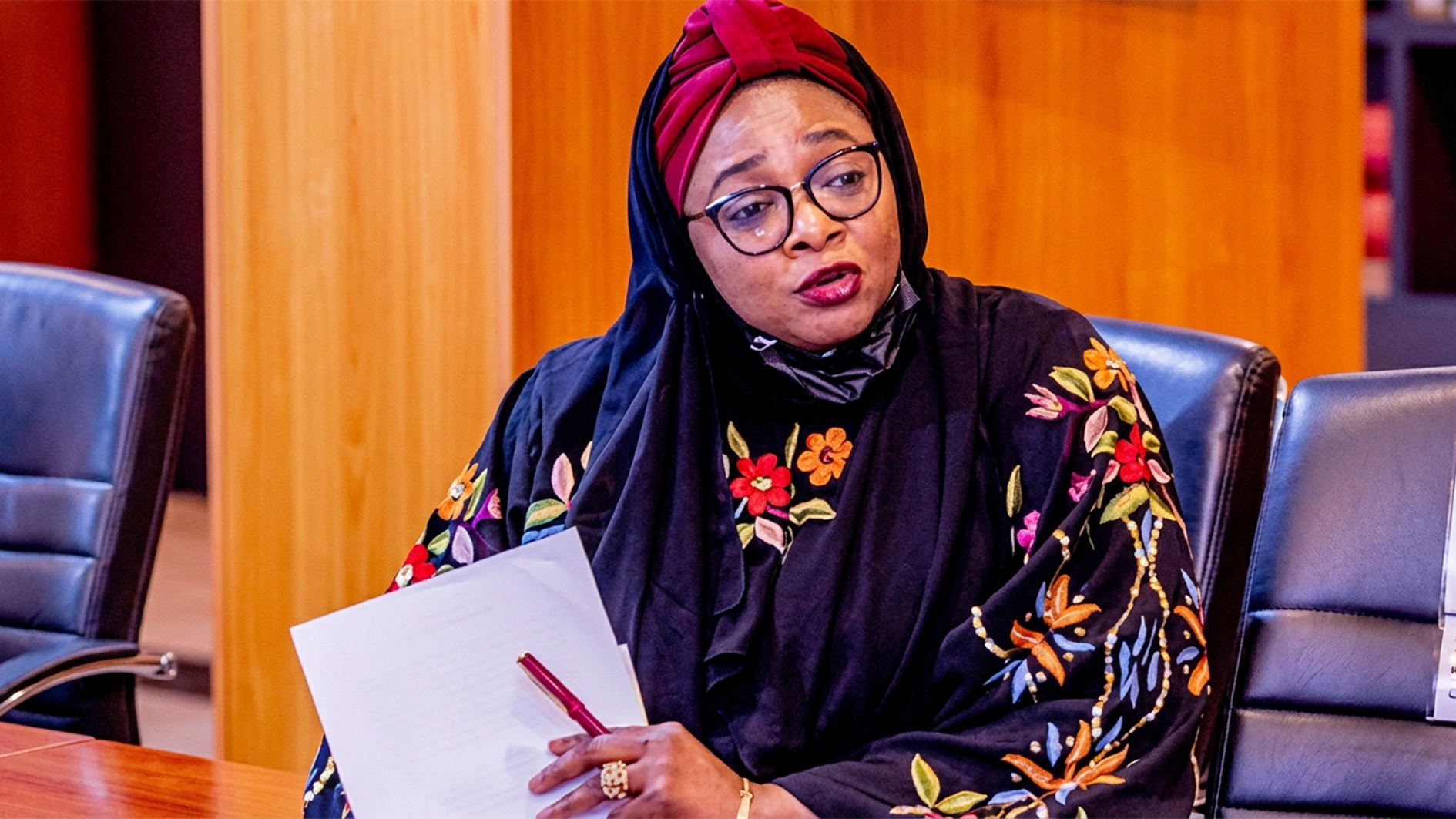
The Minister of Women Affairs and Social Development, Imaan Suleiman-Ibrahim
The Minister of Women Affairs and Social Development, Imaan Suleiman-Ibrahim

