 Follow Us on Google News


 Follow Us on Google Discover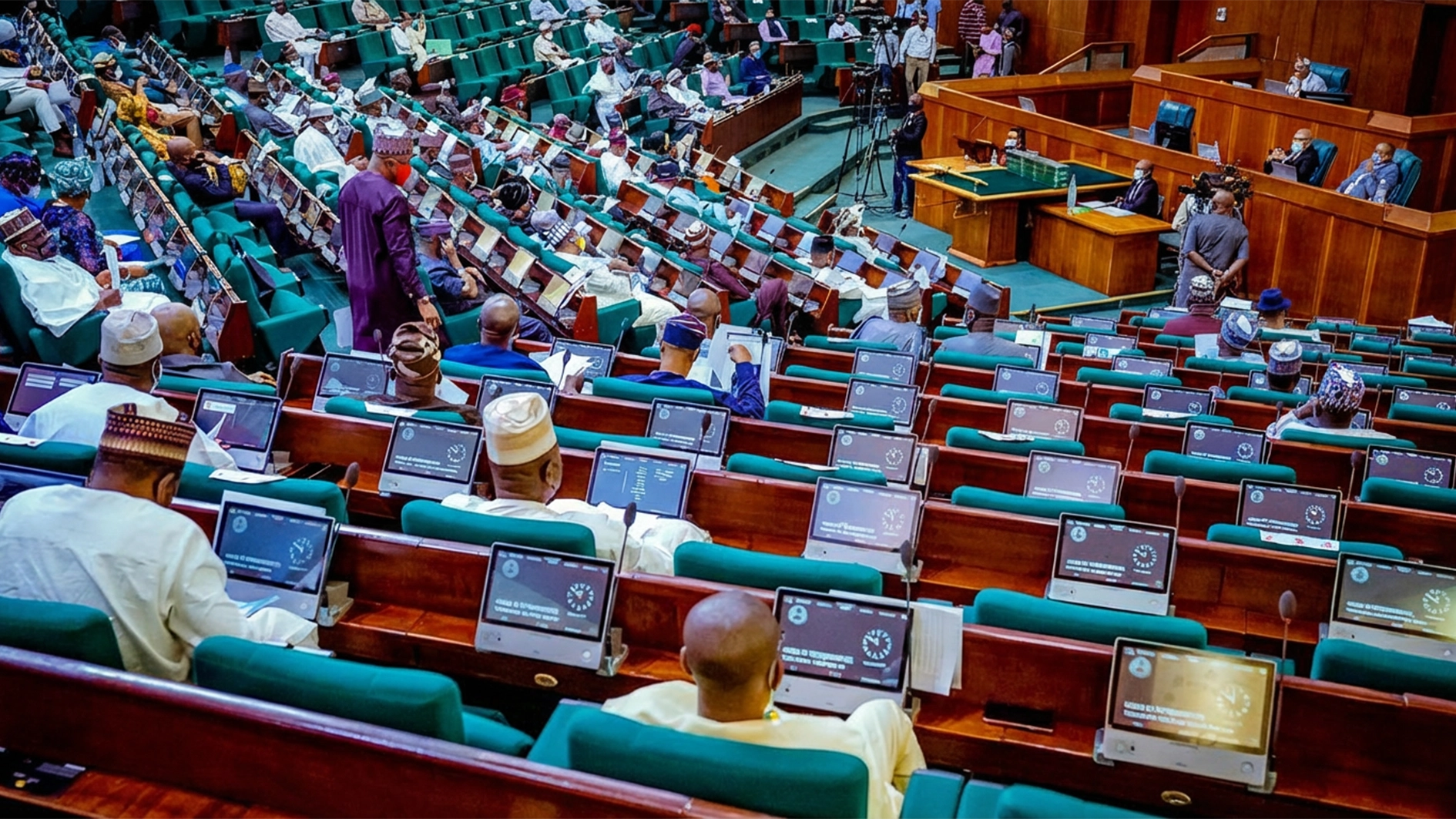
…approve e- communication for Election Petitions
The House of Representatives on Wednesday passed fresh amendments to the Electoral Act, expanding the legal grounds for pre-election suits and approving the use of digital communication in the service of election petition processes.
The bills, sponsored by Adebayo Balogun (APC, Lagos) on behalf of the Deputy Speaker, Benjamin Kalu, were debated and adopted during plenary presided over by Kalu.
A major highlight of the new amendments is the expansion of Section 29(5) of the Electoral Act, which now broadens the basis upon which aspirants can challenge false information submitted by candidates. Lawmakers also resolved long-standing uncertainties over where such cases should be filed.
Under the revised provision, pre-election suits relating to false information may now be instituted either in the Federal Capital Territory or in the jurisdiction where the cause of action arose.
In addition, the House introduced a new Section 29A to clearly define jurisdiction across various categories of pre-election disputes.

Matters concerning National Assembly, state Houses of Assembly and governorship elections will originate at the Federal High Court, with appeals proceeding to the Court of Appeal.
By contrast, pre-election disputes involving presidential elections will commence at the Court of Appeal, which will exercise original jurisdiction, with further appeals lying to the Supreme Court.
To address the problem of conflicting judicial decisions, the amendment expressly bars courts outside those specified from entertaining pre-election matters.
Speaking during the debate, Balogun said the objective of the reforms is to streamline adjudication, ensure speedy dispensation of justice and strengthen the integrity of the electoral process.
In a separate but related amendment, the House approved the use of electronic communication in the service of election petitions, marking a significant shift towards technology-driven electoral adjudication.
The new provision requires candidates, at the point of submitting nomination forms, to provide verifiable physical addresses alongside functional electronic contact details, including email addresses and telephone numbers.
The amendment also revises the First Schedule to the Act to formally recognise electronic service as valid.
Under the new framework, election petition processes may be served personally, by registered post, or through electronic means such as email, SMS and other digital platforms linked to the respondent.
It further provides that service via electronic means will be deemed valid once there is proof of transmission, including delivery confirmations or server-generated records. A recipient’s failure to access or acknowledge such communication will not invalidate the service once it has been successfully dispatched.
Lawmakers also broadened the definition of “electronic means” to accommodate evolving communication technologies capable of generating verifiable records, in line with modern realities.
However, the move generated debate on the floor, with Abdussamad Dasuki (ADC, Sokoto) raising concerns over the reliability of digital communication, citing risks of fraud and uncertainties around message delivery.
Responding, Kalu clarified that the amendment does not abolish existing methods of service but rather expands the available options.
He noted that electronic communication is already widely used in sectors such as banking and should not be excluded from legal processes.
Balogun added that candidates would be required to provide contact details they consider reliable during the election period, thereby reducing disputes arising from failed service.
Kalu stressed that parties remain free to choose between manual and electronic means, insisting that “as a society, we must evolve.

