 Follow Us on Google News
 Follow Us on Google Discover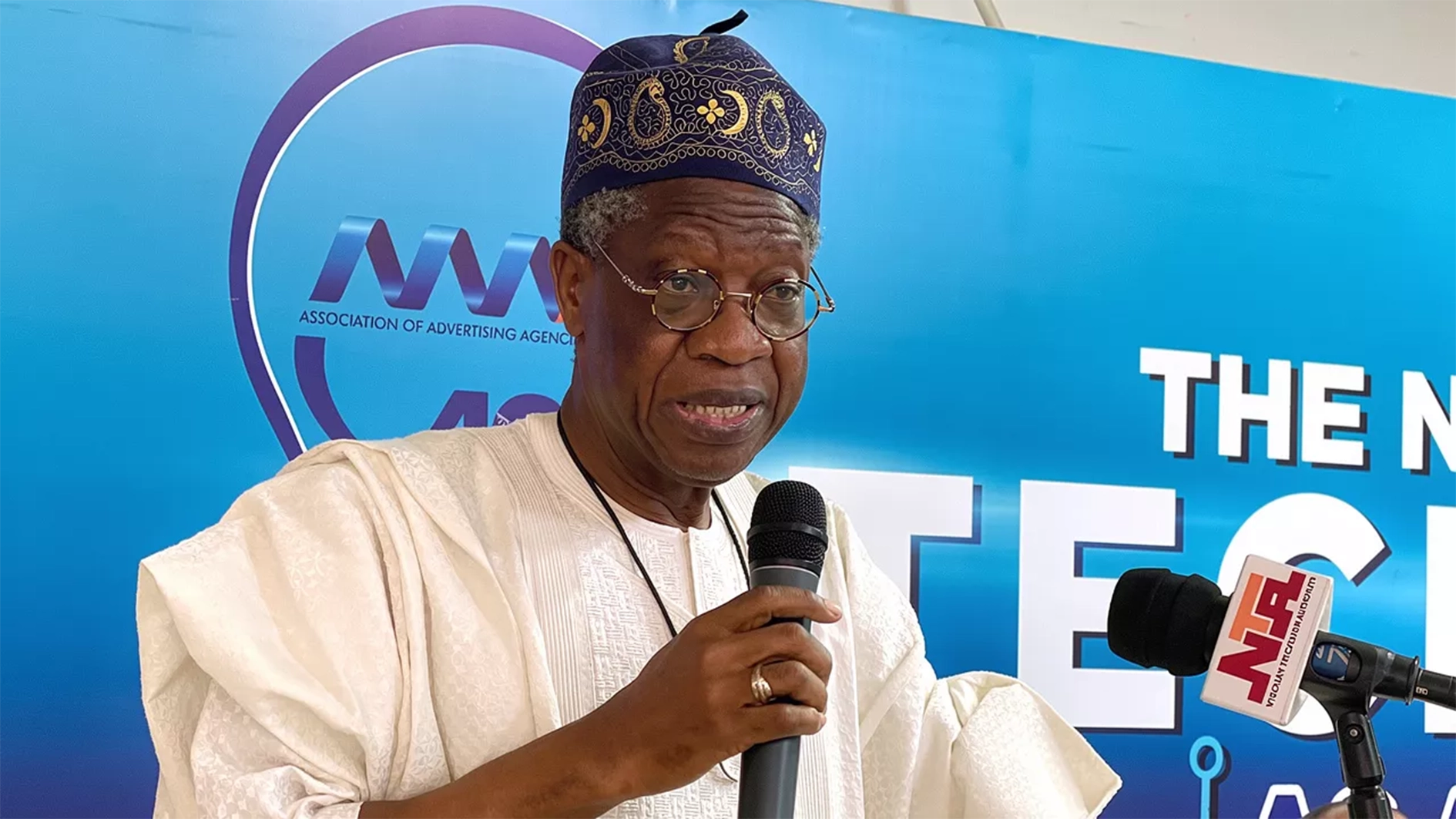
FORMER Minister of Information and Culture, Lai Mohammed, on Thursday defended his decision to suspend Twitter, now X during his time in office, describing it as one of the most difficult choices he had to make in the interest of national security.
He spoke in Abuja at the official launch of the International Media and Information Literacy Institute (IMILI), where stakeholders gathered to discuss the growing influence of digital platforms and the dangers of misinformation.

Mohammed said his position on regulating social media had often been misunderstood, insisting that regulation should not be mistaken for censorship.
“More often than not, I was misunderstood completely. But I still insist today that there must be regulation of social media. Regulation is not censorship,” he said.
Mohammed recalled that the suspension of Twitter in June 2021 under former President Muhammadu Buhari followed mounting concerns over the platform’s role in spreading misinformation and fuelling tensions, particularly after the #EndSARS protests.
The protests, which gained global attention in 2020, were largely mobilised and amplified through social media platforms, especially Twitter, where millions of posts circulated within days, shaping narratives and public sentiment.
The immediate trigger for the suspension was Twitter’s deletion of a controversial post by the then President Buhari, after which the Federal Government announced an indefinite ban on the platform, citing “a litany of problems” including misinformation and threats to Nigeria’s corporate existence.
The decision sparked widespread backlash both within Nigeria and internationally, with civil society groups, foreign governments and rights organisations criticising the move as a restriction on freedom of expression.
Despite the criticism, Mohammed maintained that the action was taken in the national interest.
“One of the most important steps I had to take as a minister was to suspend the operation of Twitter. I knew many young Nigerians depended on it for their businesses, but where there is a conflict between private interest and national security, national security must take precedence,” he said.
He noted that the spread of fake news and disinformation has intensified in the digital era, warning that unverified information continues to shape public opinion and fuel tensions.
According to him, the #EndSARS protests illustrated how misinformation could distort realities and escalate crises, stressing that the power of fake news is such that once it starts, it can hardly be overtaken.
“We did not suspend Twitter because we wanted to show them politics but because Twitter, at that time, became the platform of choice for anybody who wanted to destabilize Nigeria. In fact, we have the record of it. Two civilians died. 36 policemen were killed. Seven soldiers lost their lives. Properties were destroyed during #EndSARS protests,” Mohammed noted.
The launch of IMILI, established as a UNESCO Category 2 Institute, is aimed at addressing these challenges by promoting media and information literacy across societies.
The institute is expected to serve as a global centre for research, policy dialogue, and capacity building, helping citizens develop the skills to critically engage with information in the digital space.
Providing insight into its origins, Mohammed said the idea for IMILI began during his tenure as minister, when the government intensified efforts to combat fake news.
He recalled initiating national conversations on misinformation as far back as 2017 and building partnerships with media organisations to tackle the problem.
The initiative gained momentum after Nigeria hosted the Global Media and Information Literacy Week in 2022, eventually leading to international backing for the establishment of the institute.
Also speaking, Secretary-General of the Nigerian National Commission for UNESCO, Dr Lateef Olagunju, described IMILI as the outcome of years of collaboration.
“This journey has been a long one. We have been part of the process from the beginning, and today we are seeing the realisation of that vision,” he said.
Olagunju noted that the institute would empower citizens to access, analyse and share information responsibly, adding that it would position Nigeria as a key player in global efforts to combat misinformation.

