 Follow Us on Google News
 Follow Us on Google Discover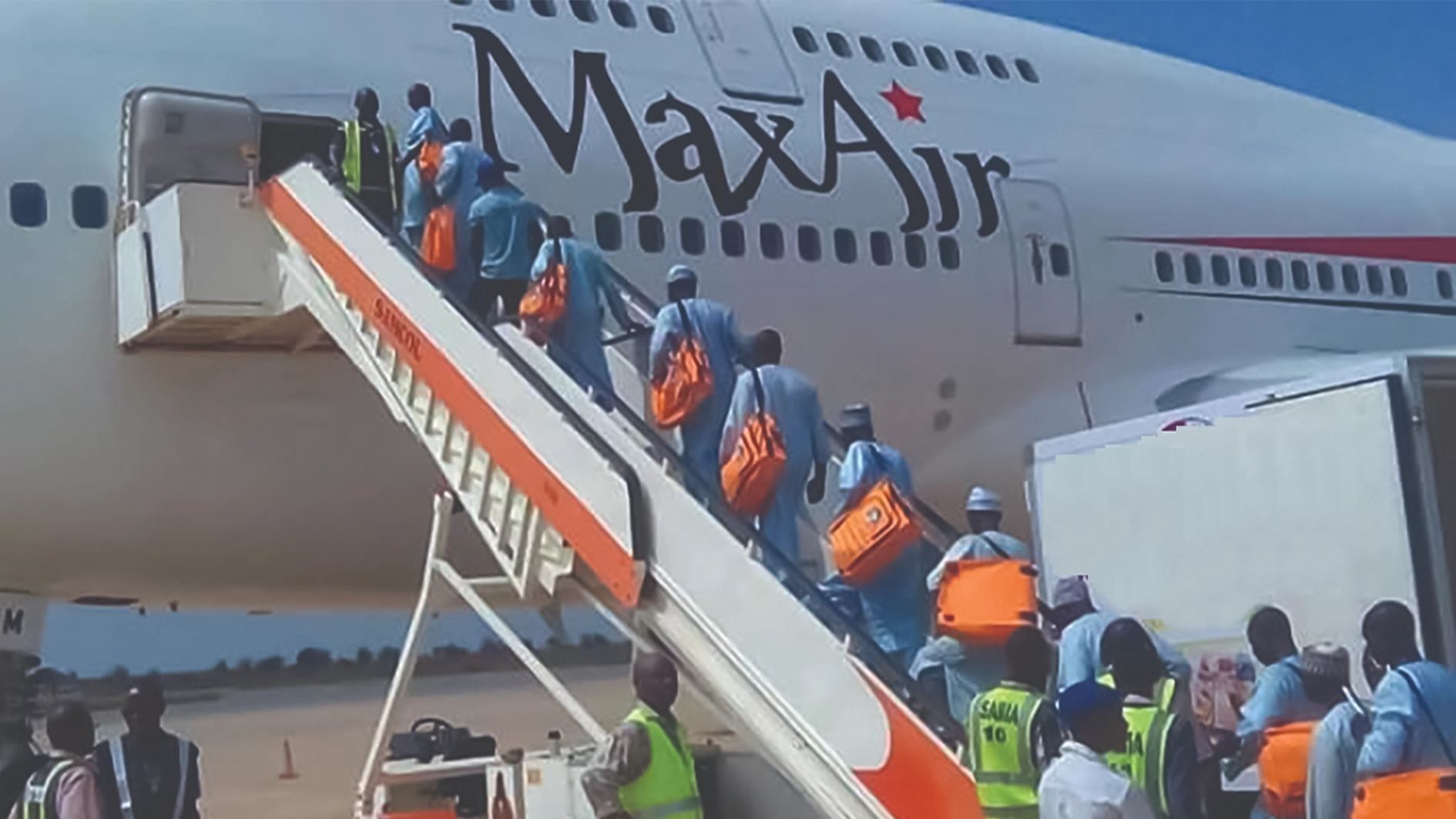
By Kabir Alabi Garba
In the name of the Almighty, the Beneficent, the Merciful.
“Moreover, you shall proclaim among all people the duty of the Hajj-Pilgrimage. They shall come to you on foot and on every lean mount. They shall come through every faraway passage.” Quran 22V27.
The picture is bold and sharp. The 2026 Hajj season is here as the National Hajj Commission of Nigeria (NAHCON) has scheduled the inaugural flight to Saudi Arabia for Sunday, May 3, 2026 at the recently inaugurated Gateway International Airport, Iperu-Remo, Ogun State.
The inaugural flight, to be operated by FlyNas, will mark the first-time pilgrims from Ogun state will depart directly to Saudi Arabia from the home soil following the construction of the airport, which was commissioned on April 4, 2026 by President Bola Ahmed Tinubu.
Other flights slated for the same day include Umza and Max Air operations from Abuja conveying pilgrims from Kogi and Nasarawa states; Air Peace from Lagos with Oyo pilgrims, and another FlyNas flight from Birnin Kebbi.
For Ogun State, the hosting of the inaugural flight is a dream come true. Days leading to the airport commissioning, the state government had announced that “the first international operation planned for the airport is the airlift of Muslim pilgrims travelling to Saudi Arabia for 2026 Hajj. The initiative forms part of a broader strategy by the state government to strengthen aviation infrastructure, stimulate economic growth and position Ogun as a major logistics and transportation hub in Nigeria’s South-West region.”

Indeed, to ensure a seamless airlift, a series of high-level engagements with federal agencies whose responsibilities are critical to the commencement of international operations at the airport was undertaken. The consultations focused on ensuring that all regulatory, operational and security requirements were fully met before the airport begins handling international passenger services.
Key agencies involved in the process included the Nigeria Immigration Service, the Nigeria Customs Service, the National Drug Law Enforcement Agency, the National Hajj Commission of Nigeria and other regulatory and security institutions responsible for airport operations in the country. And they all certified the facility before it was commissioned on April 4. And one month after, the first batch of pilgrims from Nigeria is set to commence their spiritual journey to Saudi Arabia from the Gateway International airport.
In a solid preparation for this Sunday flight, arrangement is being perfected on measures required to ensure seamless Hajj operation, one of which is the establishment of a temporary pilgrims’ camp at the airport to process the pilgrims expected to depart for the Holy Land.
Also, at the NAHCON level, the stage is more than set as Advance Team including members of the National Medical Team, departed on Tuesday to Saudi Arabia ahead of the pilgrims’ arrival.
The psycological well-being of the pilgrims is also paramount as NAHCON advised intending pilgrims to adhere strictly to their flight schedules, noting that airlift operations would be conducted zone by zone. “Once airlift is concluded from a zone, the carrier will not return. Pilgrims who miss their flight will have to wait to be regrouped for subsequent movement,” the commission warned.
The hajj supervising agency also directed pilgrims to travel strictly in their groups of 45, as required for Nusuk card arrangements in Saudi Arabia, and urged them to familiarise themselves with group members before departure.
Pilgrims were further advised to obtain contact details of their group leaders and accompanying state officials.
The NAHCON Chairman, Ismail Abba Yusuf, assured that adequate arrangements had been put in place for a smooth and successful Hajj exercise.
In fact, the pace and organisation of pre-Hajj activities are noted to have recorded noticeable improvement since the appointment of the NAHCON head on February 11, 2026.
Particularly noticed is the shift in operational focus, with greater emphasis on planning, coordination and service delivery to pilgrims. One of the key changes is the delegation of responsibilities to NAHCON commissioners representing geopolitical zone, who now lead inspection visits to state Muslim pilgrims’ welfare boards and Hajj camps across the country.
These inspections, which assess facilities and readiness ahead of airlift operations, mark a departure from what observers described as routine courtesy visits to political figures under previous administrations.
There has also been increased sensitisation and coordination by state pilgrims’ boards, alongside stronger involvement of NAHCON zonal officials in state-level activities. This has improved collaboration between the commission and states in planning and executing Hajj operations.
The impact of leadership with focus in NAHCON has to be felt across all hajj operational structure like Private Tour Operators and States Muslim Pilgrims Welfare Boards because NAHCON by its establishment act is a regulatory agency.
While the task ahead is still daunting, there is hope in horizon going by the gradual improvement in State and Private Tours activities.
A major highlight of the preparations is the early deployment of Nusuk cards for Nigerian pilgrims. Officials of Mashariq Al Dhahabia were recently in Nigeria to activate and deliver the cards to NAHCON for onward distribution to pilgrims in Abuja and Lagos zones.
This represents a departure from the 2025 Hajj, when many Nigerian pilgrims received their Nusuk cards only after arrival in Saudi Arabia, leading to challenges. Some pilgrims were reportedly unable to access the Grand Mosque and a few were detained before being released.
Under the current arrangement, pilgrims departing from Lagos and Abuja are expected to receive their Nusuk cards before departure, a move seen as improving their experience and mobility during the pilgrimage.
In addition, the release of flight manifests by states such as Kebbi, Ondo and Bauchi has helped intending pilgrims prepare ahead of their travel dates.
NAHCON’s communication strategy has also shifted towards greater public enlightenment, with more focus on pilgrim-related information rather than administrative activities.
Although many of the preparatory processes were already underway before Yusuf’s appointment, stakeholders say his leadership style is driving a quiet but notable shift in the system.
Certainly, the 2027 Hajj exercise will authenticate the Abba Yusuf’s capacity and serve as a critical test of the commission’s ability to consolidate reforms and align Nigeria’s operations with global best practices as obtainable in countries such as Indonesia, Malaysia and Pakistan.

