 Follow Us on Google News


 Follow Us on Google Discover
In a bold fusion of Nigerian literary satire and European classical tradition, Wole Soyinka’s celebrated satirical work, The Trials of Brother Jero, is set to break fresh artistic ground as it is being reimagined as a full-scale opera.
The adaptation marks a significant milestone in the global evolution of African high art, elevating the mischievous Prophet Jero from the seaside beach to the operatic stage. The ambitious move signals a growing evolution in how African literary classics are performed and preserved.
According to the Executive Producer and Director of the opera performance, Rosalyn Aninyei, the decision to adapt the work into an operatic form reflects a deliberate effort to elevate African storytelling within global performance traditions.
She noted that in the developed cultural landscapes of Europe, particularly Italy, opera has long served as the ultimate vehicle for social satire. “It is known for its ability to fuse music, drama, and emotional intensity into a powerful theatrical experience,” Aninyei said.
“By translating Soyinka’s The Trials of Brother Jero — a sharp satire into this format, we aim to deepen the narrative’s emotional resonance while introducing it to broader international audiences. It’s strategic and not aesthetic.
“We took permission to do this. We have written to him and he said he’s coming. He was very interested; he gave us permission about three years ago when I met him. Now we’re ready,” she added.
On the choice of opera instead of musical, Aninyei explained that the operatic version is expected to incorporate a rich blend of orchestral composition, vocal performance, and indigenous musical influences, ensuring that the cultural authenticity of the original text is preserved even as it is reimagined.
The fusion, she said, “offers a unique opportunity to bridge traditional African storytelling with classical Western performance structures. I feel it’s time we can iterate our literature in different ways. It’s been played in schools and in theatres. So we can take it up a notch and show what kind of talent exists in Nigeria.”
She noted that like a stage play, the casts of the performance will all be acting, but instead of speaking, the lines are songs. “So you, the audience, are caught up. It’s not just acting now or talking; they are now singing and the songs stick. That’s what makes an opera so beautiful. The audience follows the entire time the way children do a song,” the executive producer cum director enthused.
Aninyei stated that in theatre arts, you have someone called a playwright which is already done by Soyinka, and then you have someone called the librettist. That person takes all of the scenes and breaks them into song verses. And then you have a composer who now takes those song verses and puts music behind them.
“So for the libretto, we have Kehinde Oretimehin, a very popular songwriter. He’s a conductor, and a composer. And the composer who took the songs and puts music behind is Seun Owoaje, and his music is very ethno-African as they call it.
“It is said to be ethno-African because it is based on our African original sound; it doesn’t follow the European patterns. So what you hear is a lot of music that is familiar because of the pattern of the music. With the drums and all of that that comes in,” she explained.
Speaking further, the founder and Artistic Director, Vesta Orchestra and Opera Foundation added that apart from one of two that is changed in the production, the characters, dialogues, scene, costume and declarations remain the same. For instance the opening line, “I’m a prophet by birth and by incarnation.”
She said, “For instance, the market woman is the same as the woman who is chasing after the drummer boy because we didn’t think there was any reason to split two of them. We combine her into one person. So first off, she’s a market woman quarreling with Amope about smoked fish, and then the next time you see her, she’s quarreling with the drummer boy.”
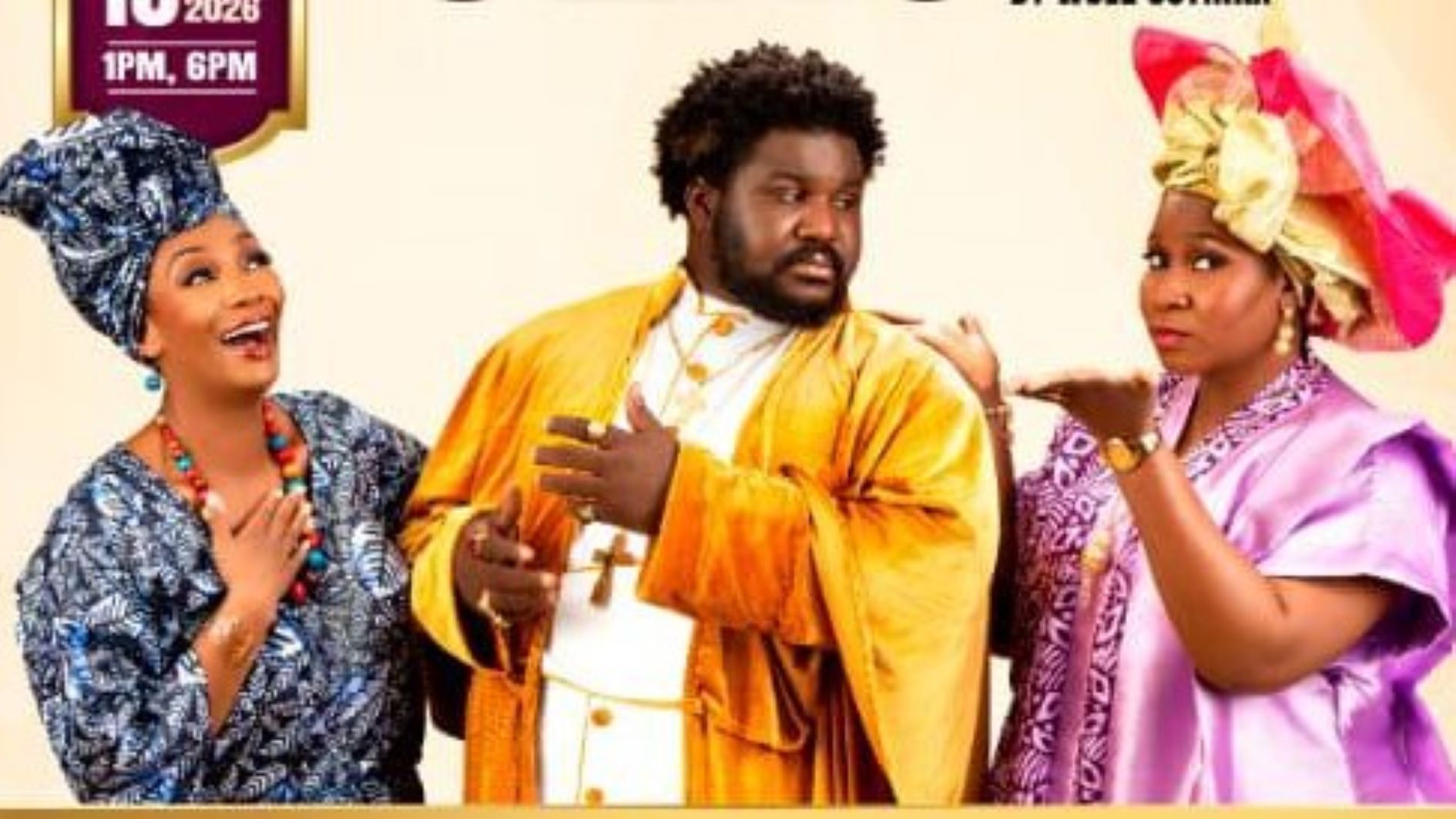
On the duration of the performance, Aninyei said, “It will be 40 minutes for the first act and then 45 minutes for the second act. So all together about 100 minutes.” She added that the show will be staged at the main auditorium of the National Theatre Iganmu, Lagos on Saturday, May 16. The first show is slated for 1:00pm, while the second show is at 6:00pm.
Soyinka’s The Trials Of Brother Jero set for grand opera performance May 16
Date: 2 May 2026 4:17am WAT
Showmax
Showmax

