 Follow Us on Google News
 Follow Us on Google Discover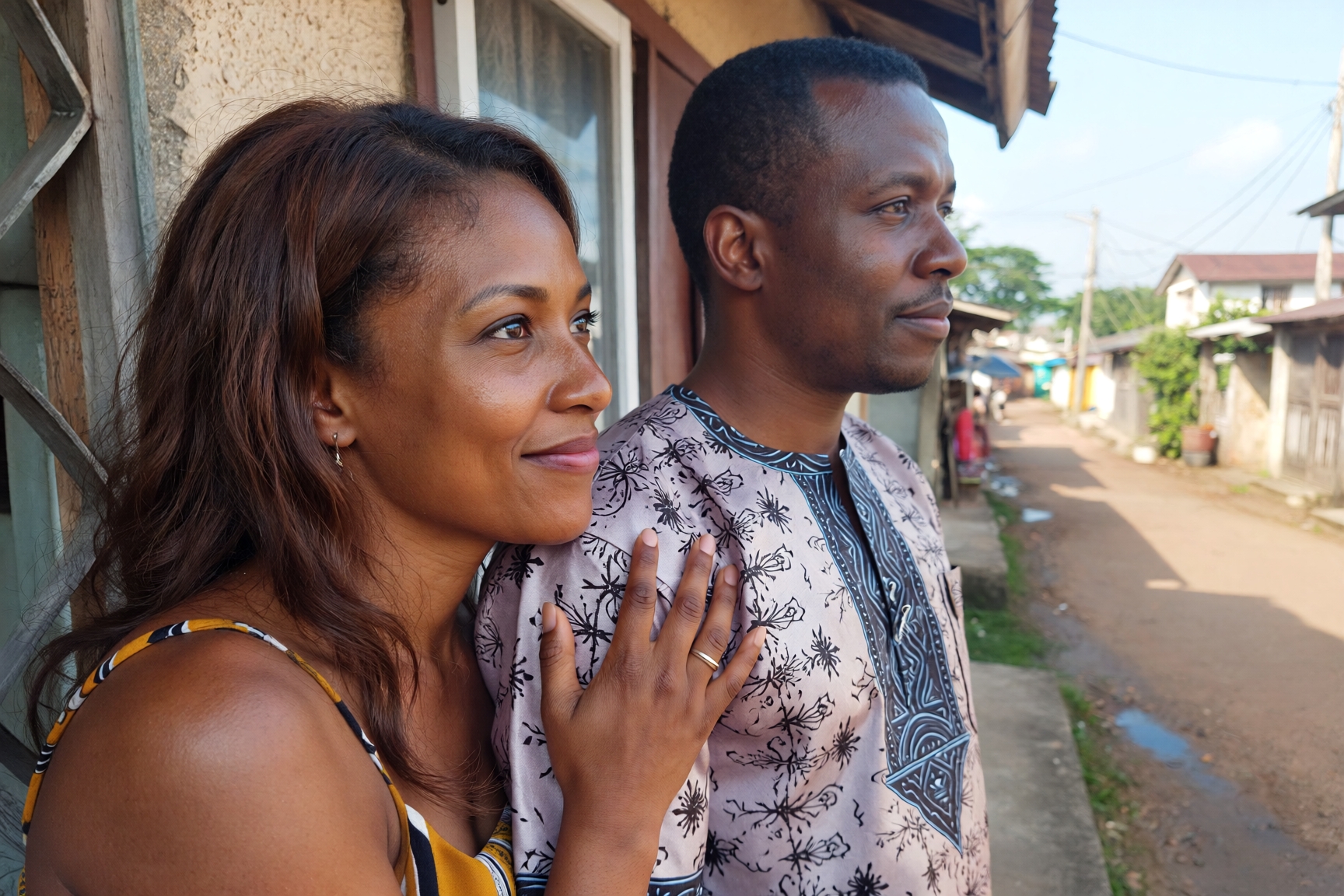
Hello, and welcome! I am genuinely delighted you are here, because this is one of those subjects I have been circling for months, gathering material, having conversations I was not sure how to start, and sitting with observations that took time to make sense of. This article is the conclusion of months of dedicated research into Nigerian marriage dynamics, drawn from conversations with wives and husbands across Lagos, Kano, Enugu, Port Harcourt, Ibadan, and places in between, combined with years of professional experience documenting how families are built, sustained, and sometimes strained in this country. Whether you are a young woman approaching marriage for the first time, a husband trying to understand what his wife is quietly carrying every day, or simply someone curious about how culture and modern life collide inside Nigerian homes, I hope what follows feels like a genuine conversation rather than a sermon.
The question of what are the duties of a Nigerian wife carries far more weight than most people pause to examine before walking down the aisle. These duties are not simply a list of chores or inherited obligations passed from grandmother to mother to daughter without examination. They are something far more layered and more interesting than that: an ongoing negotiation between cultural heritage, religious conviction, personal ambition, economic reality, and the very particular expectations of whichever family your husband happens to come from. And if you have ever sat across a table from an Igbo mother-in-law with very specific opinions about the correct thickness of egusi soup, you will know exactly what I mean by “very particular.”
The Nigerian Ministry of Interior’s marriage registration framework, which governs statutory unions under the Marriage Act, does not enumerate a wife’s duties in explicit legal terms. Those duties emerge instead from a rich, sometimes bewildering interplay of customary law, religious teaching, and the cultural grammar of each ethnic community. This is precisely why two Nigerian wives from different states can hold completely different understandings of what their role requires and both be entirely correct within their own tradition.
I have sat in Abuja kitchens at 11pm watching women who have worked full office days since 7am still standing over a pot because, as one of them told me with a tired but genuinely warm smile, “this is just what we do.” I have also spoken with wives in Lekki who have negotiated entirely different domestic arrangements with their husbands, dividing cooking, school runs, and household management without any sense that tradition has been violated or abandoned. Both realities are real. Both are Nigerian. And the distance between them tells you something important about exactly where we are as a society right now.
What are the Five Duties of a Wife in Nigerian Marriage?
Across the six geopolitical zones and the hundreds of distinct ethnic traditions this country contains, certain duties appear again and again. They wear slightly different cultural clothing depending on which part of Nigeria you are standing in, but the core shape remains recognisable. These are not mandates carved in stone. They are lived expectations that carry real social weight, and understanding them honestly is the first step toward navigating them wisely.
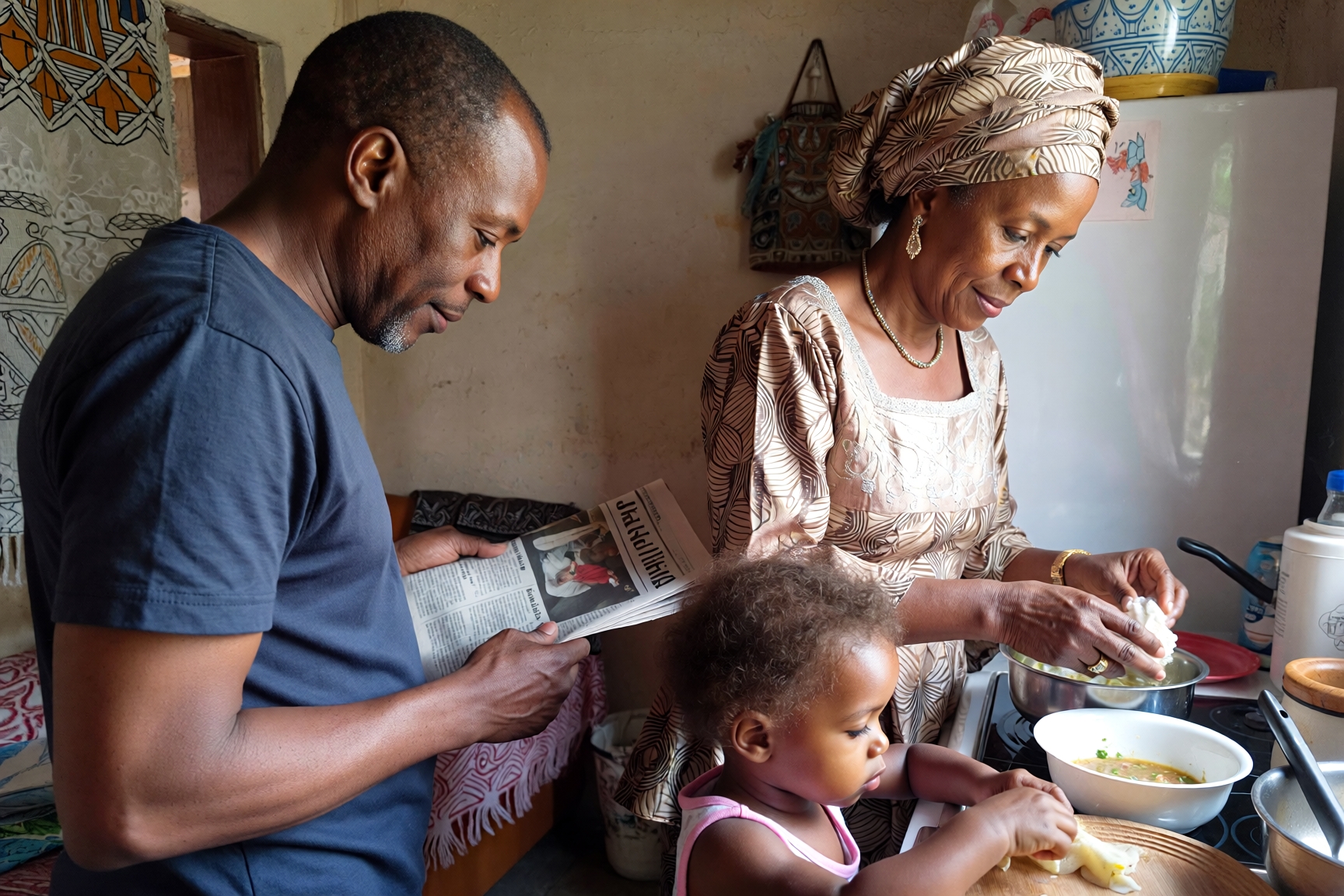
Homemaking and household management sits near the top of nearly every list, regardless of whether a wife holds a postgraduate degree or has never been inside a university lecture hall. In most Nigerian homes, the wife bears primary responsibility for the running of the domestic space. Meal planning, coordinating household help where finances allow, managing children’s daily routines, and maintaining the kind of order that transforms four walls into something that actually feels like a home. Running a Nigerian household, with its generator fuel negotiations, irregular water supply, and the occasional extended family member who arrives with luggage and no announced departure date, is genuinely demanding work that rarely receives the credit it deserves.

Emotional support and companionship is a duty that older generations rarely named explicitly but that contemporary Nigerian wives describe, with remarkable consistency, as one of the most energy-intensive parts of marriage. A wife is expected to be her husband’s confidante, his encourager, and often his primary emotional anchor. In a society where men are frequently socialised to suppress vulnerability, many husbands rely entirely on their wives for emotional processing that cannot happen anywhere else. That is a significant load.
Child-rearing. Not simply having children, though the social pressure to do so and to do so quickly deserves its own lengthy article, but the daily, decade-long labour of raising them. School runs, homework supervision, midnight illnesses, the difficult conversations about faith and identity and peer pressure, the emotional attunement required to raise children who are grounded and confident. This is understood, in most Nigerian households, to be primarily the wife’s domain.
Extended family relations is the duty that catches the most young wives by surprise. Marrying a Nigerian man means marrying his entire family, full stop. Managing those relationships with grace and patience is considered a genuine marital duty rather than an optional social courtesy. This might mean hosting in-laws for extended visits, contributing to extended family financial needs, navigating the politics of sisters-in-law who have very firm opinions about your kitchen, and maintaining warm relations with people you did not choose.
Financial contribution has shifted dramatically over two generations. Whilst the husband has traditionally been cast as sole provider, economic realities in contemporary Nigeria, including persistent inflation, rising costs, and wage pressure across many sectors, mean that most middle-class families now genuinely depend on two incomes. The wife’s financial contribution, once framed politely as supplementary, is now often structural and essential. The complication is that domestic duties have not decreased proportionally. Which means a great many Nigerian wives are, in practice, working two full-time jobs simultaneously.
A Practical Guide to Navigating Wife Duties in Nigerian Marriage
Every wife benefits from approaching these duties with deliberate intention rather than silent assumption. Here is a practical step-by-step guide drawn from the research and conversations that built this article.
- Have the conversation about expectations before the wedding, not after. Sit down with your partner and talk specifically about who will handle cooking, school runs, finances, and in-law visits. Assumptions left unnamed during engagement become grievances left to fester across years of marriage, and the couples who build the strongest foundations are consistently those who had the uncomfortable conversations early.
- Understand your legal rights under Nigerian marriage law. Statutory marriages carry specific protections for wives, including rights to maintenance and property. The National Judicial Institute’s documentation on maintenance and spousal obligations confirms that marital obligations run in both directions. Knowing your rights does not threaten a marriage. It protects one.
- Identify the non-negotiable cultural duties specific to your husband’s tradition. A Yoruba family’s expectations will differ meaningfully from a Hausa-Fulani family’s, which will differ from an Ijaw family’s. Knowing what is genuinely required by tradition versus what is simply personal preference, your in-laws’ or your husband’s own, is a distinction that saves enormous energy over time.
- Communicate your bandwidth honestly and revisit it regularly. If you are employed full-time, managing the home, raising children, and maintaining extended family relationships simultaneously, say so. The cultural resistance to admitting overwhelm causes far more long-term marital damage than any honest conversation ever could.
- Build your support network deliberately. Nigerian marriage was never designed to be managed by two people in isolation. Trusted friends, family members who genuinely help, and where finances allow, reliable household help are not luxuries. They are the infrastructure that makes everything else sustainable.
- Protect your independent identity with the same energy you invest in the marriage. The wives who appear most grounded and most genuinely fulfilled in their marriages are consistently those who maintained friendships, professional engagement, and personal interests alongside their domestic duties. A wife who pours everything into the marriage and nothing into herself is not a better wife. She is a more exhausted one.
- Revisit the division of responsibilities at different life stages. What works when children are babies does not work when they are teenagers. What worked when one partner was unemployed changes dramatically when both are working demanding careers. Build the habit of regular, low-stakes conversations about how duties are distributed rather than waiting for accumulated resentment to force the issue.
What are the Duties of a Wife in a Marriage? The Nigerian Legal Framework
What are the duties of a wife in a marriage when seen through the specific lens of Nigerian customary and statutory law? The legal answer and the cultural answer are not always identical, which makes this worth examining carefully.
The Edo State Judiciary’s customary law documentation acknowledges that spousal obligations exist on both sides of a marriage and that consistent failure to fulfil them can constitute grounds for marital dissolution. What it does not do is enumerate a definitive list of a wife’s specific duties. Rather, customary law recognises what the community already understands: the wife maintains the matrimonial home, supports the husband’s household leadership, and bears and raises children. Everything beyond that is shaped by the particular ethnic tradition of each community.
Guardian Nigeria’s frank examination of why Nigerian women stay in difficult marriages offers an important counterpoint here. The same cultural duties that bind a family together with genuine love and shared purpose can become instruments of harm in an unhealthy relationship. Understanding your duties clearly is not the same as accepting mistreatment in their name.
Religious frameworks add further dimensions to the picture. Christian wives, drawing on New Testament teaching, often describe submission and service as spiritual callings they have chosen freely rather than cultural impositions they are enduring. Rather like how a professional might describe their demanding career as a vocation rather than a burden, the framing changes what the same set of actions feels like from the inside. Islamic wives operate within a framework that specifies the husband’s religious duty to provide materially, which defines the wife’s primary role as maintaining the home and raising children, with her own professional earnings remaining entirely her personal property, a detail that surprises many people.
What strikes me across all the conversations I have had is that the most durable Nigerian marriages are not those where the wife has perfectly fulfilled a checklist of duties. They are those where both partners have internalised those duties as expressions of love and freely chosen commitment rather than obligations extracted by cultural pressure.
How Wife Duties Compare Across Nigeria’s Major Ethnic Traditions
| Ethnic Group | Homemaking Expectation | Financial Contribution | Extended Family Role | Child-Rearing Lead | Decision-Making Style |
|---|---|---|---|---|---|
| Yoruba | High | Increasingly shared | Active and diplomatic | Wife primary | Consultative |
| Igbo | Very high | Wife earnings stay hers | Central and visible | Wife primary | Varies by household |
| Hausa-Fulani | Very high | Lower expectation | Home-centred | Wife primary | Husband-led |
| Ijaw | High | Meaningfully shared | Moderate involvement | Wife primary | Collaborative |
| Tiv | High | Wife often farms | Extended compound duties | Wife primary | Traditional male-led |
| Edo | High | Increasingly shared | Active and visible | Wife primary | Negotiated per couple |
The pattern this table reveals is striking: across all six ethnic groups, the wife carries primary responsibility for homemaking and child-rearing without exception, whilst financial contribution and decision-making authority vary considerably. An Igbo wife’s earnings are traditionally her own property entirely, meaning her financial contribution to the household is at her own discretion, whereas a Yoruba wife may be expected to pool resources more explicitly. These distinctions carry enormous practical weight when couples from different ethnic backgrounds marry and bring unstated assumptions into the same home.
What are the 5 Qualities of a Good Nigerian Wife?
Qualities differ from duties in an important way. A duty is what you do. A quality is who you are. The women I have observed who are most admired within their communities and most fulfilled within their marriages tend to share a recognisable set of characteristics that go well beyond practical competence.
Resilience appears at the top of every list because Nigerian family life demands it. Infrastructure pressures, extended family obligations, economic uncertainty, and the sheer logistical complexity of running a household in a country where nothing goes entirely according to plan require a woman who can absorb difficulty without breaking. True resilience is not suffering in silence, which is suppression masquerading as strength. It is the capacity to absorb difficulty whilst remaining whole, functional, and even occasionally cheerful, which is a genuinely remarkable skill.
Warmth and hospitality are prized across every Nigerian tradition I have encountered. A wife who makes guests feel genuinely welcomed, who feeds people with evident pleasure and generosity, who creates an atmosphere of abundance even when household finances are stretched, is spoken of with real admiration. Nigerian hospitality is not a social courtesy. It is a moral statement about what kind of family you are.
Wisdom, in the practical sense of knowing when to speak and when to hold back, when to involve extended family and when to protect marital privacy, when to push and when to yield, is something Nigerian elders describe consistently as the invisible architecture of a successful marriage. It is the thing that holds everything together without anyone quite being able to see how.
Loyalty, which extends beyond fidelity (assumed, rarely celebrated) to something deeper: being fundamentally and demonstrably on your husband’s side even when you disagree with him privately. The wife who speaks critically of her husband to her siblings, her church group, or her hairdresser is considered to have violated something essential to the relationship, regardless of whether her criticisms are entirely fair.
Adaptability, finally, because marriage in Nigeria requires holding multiple, sometimes contradictory realities simultaneously. Your professional ambitions and your domestic responsibilities. The modernity you have embraced and the tradition your community expects you to uphold. The woman you were before marriage and the wife your husband’s family expects you to become. Navigating these tensions without losing yourself in the process is, as many Nigerian wives have told me, the work of a lifetime.
What are the Top 5 Things a Nigerian Man Needs from His Wife?
I asked this question directly, in conversations with men across age groups, social classes, and ethnic backgrounds. The answers were more honest and more vulnerable than I had anticipated.
Respect was named most consistently, and it matters to understand what Nigerian men mean by it. They are not asking for servility or performative deference. They are asking for genuine regard: for their perspective to be considered seriously, for their authority within the household to be acknowledged rather than constantly undermined, and for their dignity to be maintained in front of others, particularly in front of their children. Nigerian men feel the absence of respect with remarkable acuity and respond to its presence with a warmth and openness that many wives discover only when they stop fighting it.
Peace in the home. Multiple men, from entirely different backgrounds and traditions, described their deepest need from their wives as simply a peaceful place to return to. A home where conflict is not constant, where tension does not define the atmosphere, where they can genuinely exhale rather than brace themselves at the front door. This speaks directly to the wife’s role as emotional regulator of the household environment.
Intimacy, both physical and emotional, named together by most men because they are experienced together. Men described feeling most connected to their wives, most willing to be genuinely vulnerable, most open to partnership and collaboration, when both forms of closeness were present in the relationship. These are not separate things in a marriage. They are the same currency.
Support for ambitions. Nigerian men carry significant performance pressure: to provide, to succeed, to build, to be seen as capable by their families and communities. They need a wife who believes in them when external evidence is thin, who encourages rather than undermines during difficult periods, and who understands that her confidence in him is not a small thing but a genuinely practical resource.
Discretion. The Nigerian man’s reputation is closely bound to his household, and men spoke repeatedly of needing a wife who understands that marital difficulties stay within the marriage. Financial struggles shared with siblings, marital tensions aired to in-laws, private failures discussed at church: these are experienced as betrayals of the first order, regardless of what prompted the sharing.
Related Articles
Two of my earlier pieces offer useful companion reading to everything discussed here. My article exploring the duties of a Nigerian husband examines the corresponding obligations Nigerian men carry within marriage and reads as a natural counterpart to this one. And for the broader cultural context within which these marital duties operate, my piece on the culture of marriage in Nigeria traces how our marriage traditions arrived at where they are today and where they appear to be heading.
What are the Duties of a Nigerian Wife? Thoughts for the Journey Ahead
There is no single clean answer to what are the duties of a Nigerian wife that satisfies every tradition, every household, every religious framework, and every stage of a marriage. The duties are real, substantial, demanding, and often invisible. They require energy, emotional depth, practical intelligence, and the kind of daily commitment that no job description could adequately capture.
The ongoing Guardian Nigeria conversation about how women’s roles are being redefined in contemporary Nigeria reflects exactly how much is shifting and how much remains contested. The wives who seem to navigate this moment most successfully are neither those who have abandoned tradition wholesale nor those who have surrendered entirely to it, but those who have engaged with it thoughtfully, on their own terms, and with clear eyes.
- Name your expectations before friction names them for you. The earlier you have the honest conversation about how duties will be shared, the less damage assumption does over the years that follow.
- Protect your wellbeing as a strategic priority rather than a guilty afterthought. A depleted wife cannot fulfil any of these duties well, and the best thing you can do for your marriage is to remain a whole, healthy person within it.
- Choose the duties you can genuinely own with love. A duty performed with sustained resentment slowly poisons the marriage that depends on it. A duty chosen freely and executed with warmth becomes one of the primary ways love is made visible in a household, and that distinction is worth everything.
FAQs: What are the Duties of a Nigerian Wife?
What are the duties of a Nigerian wife under customary law?
Under customary law, a Nigerian wife is generally expected to maintain the matrimonial home, care for children, and show respect to the husband and his extended family. These obligations vary by ethnic tradition but consistently centre on homemaking, child-rearing, and the kind of household management that holds a family together from the inside.
Are Nigerian wives legally required to perform domestic duties?
Nigerian statutory law under the Marriage Act does not prescribe a specific list of domestic duties for wives in explicit terms. However, customary law frameworks across different states recognise certain spousal obligations, and a consistent failure to maintain the matrimonial home has been cited in matrimonial proceedings as evidence of marital breakdown.
How have the duties of Nigerian wives changed in recent decades?
The most significant shift is the addition of substantial financial contribution to an already demanding domestic workload, driven by economic necessity rather than cultural evolution. Whilst homemaking and child-rearing expectations have remained largely constant, more Nigerian wives now contribute meaningfully to household income, often without a proportional reduction in their domestic responsibilities.
What duties does a Nigerian wife owe to her husband’s family?
A Nigerian wife is widely expected to show genuine warmth and hospitality to her husband’s extended family, participate in family ceremonies and obligations, and maintain cordial relations with in-laws even when those relationships are complicated. The extent of these duties varies by ethnic tradition, with Igbo and Yoruba extended family obligations generally the most formalised and visible.
What is the duty of a Nigerian wife regarding household finances?
A Nigerian wife is generally expected to manage household finances wisely, whether she is contributing her own professional income or administering a housekeeping budget provided by the husband. In many Nigerian homes, the wife is the de facto day-to-day financial manager, handling school fees, food, utilities, and domestic costs whilst the husband oversees larger financial decisions.
Does a Nigerian wife have to cook every day?
Cooking is widely regarded as one of the core domestic duties of a Nigerian wife, and in many households, preparing meals daily remains a strong cultural expectation. This varies considerably by household though: wealthier families may employ domestic cooks, dual-career couples in major cities sometimes share cooking duties more flexibly, and the arrangement ultimately depends on what each couple negotiates for themselves.
What are the spiritual duties of a Nigerian wife?
In Christian households, a Nigerian wife is often expected to pray for her home, model faith for her children, and support her husband’s spiritual leadership of the family. In Muslim households, the wife’s duties include raising children within Islamic practice, maintaining modesty, and fulfilling the domestic responsibilities that Islamic jurisprudence describes as her primary obligation within the home.
How should a Nigerian wife handle disagreements with her husband?
The cultural expectation across most Nigerian traditions is that marital disagreements should be handled privately and respectfully, raising concerns directly with the husband rather than involving third parties. Many Nigerian women describe choosing the right moment carefully, maintaining a calm and respectful tone, and framing concerns as shared challenges rather than personal accusations as the most practically effective approaches.
What are the duties of a Nigerian wife toward her children?
A Nigerian wife’s child-rearing duties span physical care, educational support, emotional nurturing, character formation, and active management of children’s social development across their entire childhood. Beyond the logistics, mothers in Nigerian households are typically the primary architects of their children’s inner lives, and most Nigerian women take this responsibility with profound seriousness.
Can a Nigerian wife work and still fulfil her marital duties?
Yes, and the majority of Nigerian wives in urban areas do work, with dual incomes now essential for middle-class household stability in most Nigerian cities. The genuine challenge is that professional employment has not typically reduced domestic expectations, meaning most working Nigerian wives are managing two substantial sets of responsibilities simultaneously and need real support structures to do so sustainably.
What does a Nigerian wife owe herself within marriage?
A Nigerian wife owes herself mental and physical health, the maintenance of her own identity and interests, honest communication about her needs, and the freedom to grow as a person throughout the course of the marriage. The most grounded and genuinely fulfilled wives I have encountered are those who remained whole people within their marriages rather than dissolving entirely into their domestic roles.
How can a Nigerian wife balance traditional duties with modern ambitions?
The most effective approach observed across many marriages is not choosing between tradition and modernity but integrating both with intention and honesty. This means honouring the cultural duties that carry genuine meaning whilst openly negotiating with your partner about those that feel constraining, building the support systems that make dual demands manageable, and maintaining a clear sense of what you have chosen freely versus what still needs to be renegotiated.

