 Follow Us on Google News
 Follow Us on Google Discover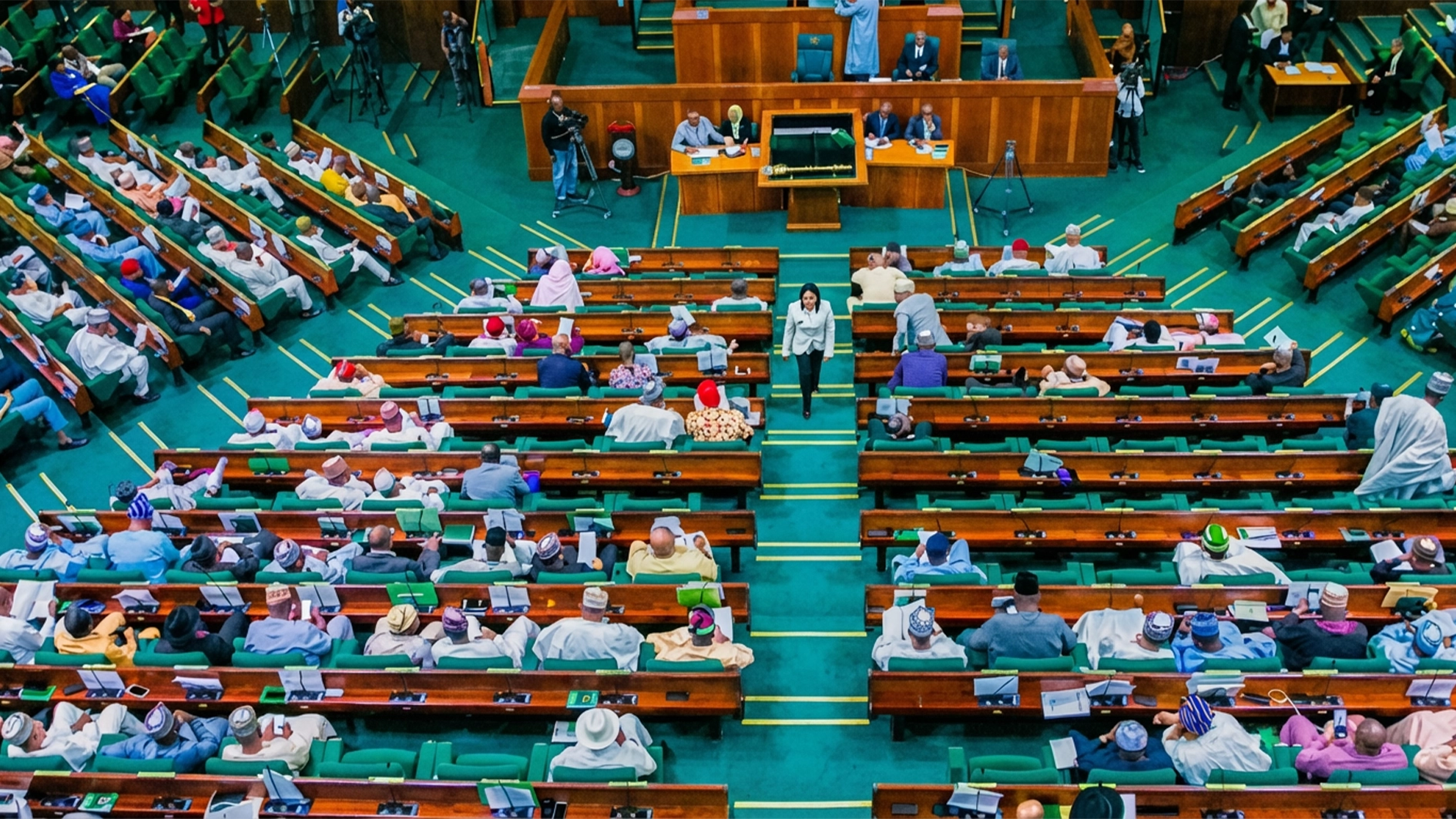
• NESG urges govt to boost revenue, sustain reforms amid fragile recovery
The House of Representatives yesterday constituted an ad hoc committee to investigate debts owed to the Federal Government by state actors, private entities and Ministries, Departments and Agencies, appointing the member representing Obokun/Oriade Federal Constituency of Osun State, Oluwole Oke, as chairman of the panel.
The move came as the Nigerian Economic Summit Group (NESG), following the release of its Macroeconomic Condition Monitor, urged the Federal Government to prioritise domestic revenue mobilisation and improve fiscal efficiency to sustain macro-economic stability and support economic recovery.
The group also called for reforms aimed at easing inflationary pressures and boosting productivity across key sectors of the economy.
The House committee was inaugurated following the adoption of a motion moved at plenary by Salisu Yusuf and five other lawmakers.
The panel is expected to examine outstanding liabilities owed to the Federal Government, identify debtors, assess recovery efforts by relevant agencies and recommend measures for recovering the funds.
Speaking on the motion, Yusuf expressed concern over Nigeria’s growing debt burden and declining revenue profile, warning that failure to recover monies owed to the government was worsening the country’s fiscal challenges.
He stated, “As of September 30, 2025, Nigeria’s total public debt surged to N153.29tn, driven by increased domestic borrowing and currency depreciation.”
He added, “The debt portfolio is composed of over 53 per cent domestic debt and roughly 47 per cent external debt, with debt servicing consuming a significant 47.85 per cent of government revenue in the first nine months of 2025.”
The lawmaker recalled that countries across the world, including Nigeria, resorted to borrowing and other fiscal interventions in the aftermath of the COVID-19 pandemic to stabilise their economies.
He said, “Most countries around the world, including Nigeria, had recourse to borrowing and deploying other monetary policy tools to deal with economic challenges.
“Some of these tools have been effectively and pragmatically deployed by the current administration, and a notable effect is the stable and strong position of the naira over the last 15 months.”
Yusuf, however, argued that while successive governments had focused heavily on debt servicing and fresh borrowing, insufficient attention had been paid to recovering funds owed to the Federal Government.
He said, “The House is aware that the Federal Government of Nigeria is owed huge sums of money within and outside the country, including judgment debts.
“These sums are held by state and non-state actors, Ministries, Departments and Agencies of government.”
He also referenced the establishment of the Presidential Initiative on Continuous Audit in 2015, which was created to strengthen oversight of government finances and improve accountability in public spending.
“We are further aware of the establishment of the Presidential Initiative on Continuous Audit in 2015 to set up systems and frameworks to oversee the finance and spending of Federal Government revenue aimed at achieving improved efficiency, effectiveness and accountability,” he added.
The House of Representatives also raised concern over the persistent rise in the cost of building materials across the country and moved to investigate the factors driving the surge, amid fears that the trend is worsening Nigeria’s housing deficit and increasing the cost of infrastructure delivery.
The resolution followed a motion moved by Oboku Abonsizibe Oforji during plenary on Thursday, where lawmakers noted that despite Nigeria’s abundant raw materials, prices of key construction inputs have continued to rise sharply.
The House observed that materials such as limestone, sand, granite and timber, which are locally available and widely used in construction, have not translated into affordable building costs for citizens.
The Nigerian Economic Summit Group (NESG) has urged the Federal Government to prioritise domestic revenue mobilisation and improve fiscal efficiency to sustain macro-economic stability and support economic recovery.
The group also called for reforms aimed at easing inflationary pressures and boosting productivity across key sectors of the economy.
In its Macroeconomic Condition Monitor released yesterday, the NESG said Nigeria’s macro-economic environment had shifted from a period of intense adjustment in 2024 to gradual stabilisation in 2025 following a series of economic reforms.
According to the report, policy measures introduced between 2023 and 2024, including exchange rate liberalisation, fuel subsidy reforms, monetary tightening and fiscal restructuring, initially heightened economic pressures before signs of improvement began to emerge.
The NESG stated: “However, recent data indicate that these reforms are beginning to moderate systemic imbalances.
“While the direction of change is now positive, the pace remains uneven, and underlying vulnerabilities, particularly in the fiscal and real sectors, continue to constrain a full recovery.”
The report noted that Nigeria’s Macroeconomic Condition Index (MCI) declined to –3.0 points in 2024, describing it as the weakest level recorded in decades due to persistent inflationary pressures, fiscal stress and sustained exchange rate depreciation.

