 Follow Us on Google News
 Follow Us on Google Discover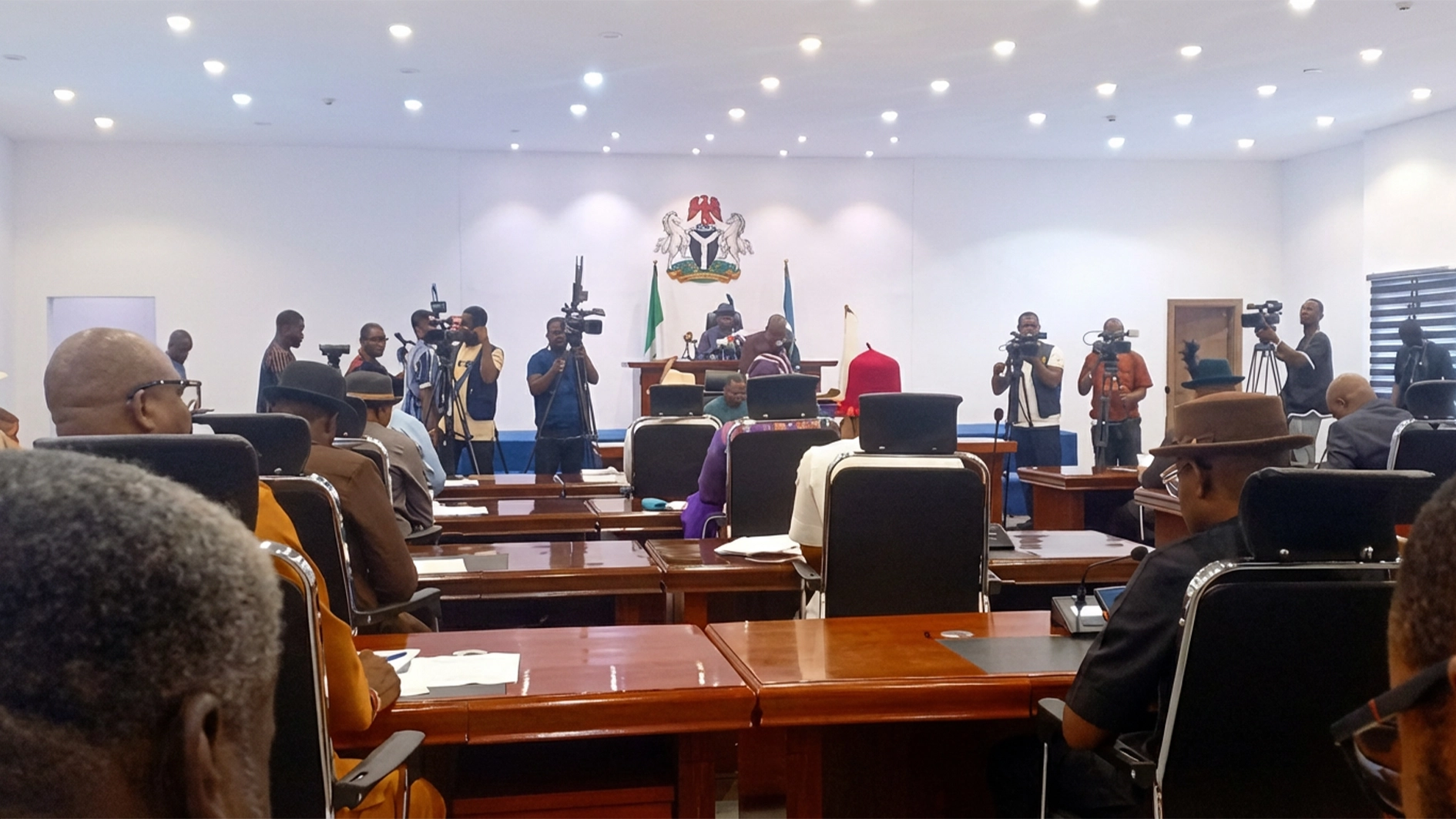
Nearly two months have passed since the Rivers State House of Assembly last convened, and this
has generated concern among residents, with many questioning what they describe as the lawmakers’ unusual silence.
Although the Assembly did not adjourn sine die, its last sitting was on March 9 2026, during its 63rd legislative session. That session focused on the screening of nine commissioner nominees, a process that later sparked controversy after some nominees were rejected. In contrast, others, believed to be politically neutral, were approved into the state executive council.
Since then, the Assembly has remained quiet with no activity from its committees or performing its oversight functions, a development that has fueled speculation across political circles.
While some observers interpret the silence as a calculated political strategy, others believe it reflects shifting alliances ahead of the 2027 elections.
Amid this, Governor Siminalayi Fubara has been at the centre of the unfolding dynamics, with political watchers suggesting that the Assembly’s posture may be linked to an alleged understanding involving the Minister of the Federal Capital Territory, Nyesom Wike.
Although, across party lines, including the Peoples Democratic Party (PDP), the All Progressives Congress (APC), and the African Democratic Congress (ADC), the polity in the state has been docile, not until recently where photages are emerging of aspirants declaring their interest to run for different offices.

Among those who have come publicly to display their purchased forms, are both Wike and Fubara loyalists, setting the stage for keenly contested primaries in the state.
The likes of Victor Oko-Jumbo, who was Fubara’s henchman during the Assembly crisis, have confirmed purchasing his form to return to the Assembly, including a former caretaker committee chairman of Obio-Akpor Council, Chijioke Ihunwo, who incidentally hails from the same ward as the current speaker of the Assembly, Martin Amaewhule.
While at the camp of the FCT minister, a handful of Assembly members have publicly displayed their forms with some purchasing the PDP expression of interest forms.
Until now, there had been little or no public reaction, leaving many to conclude that the state is operating without the usual level of legislative oversight.
Notably, observers argue that there has been no visible progress on the state’s 2026 appropriation bill as nothing has been said about it in the second quarter of the year.
Public affairs analyst Kingsley Eme described the seemingly docile nature of the Assembly as a possible political tactic by the Assembly aimed at testing the governor’s compliance with existing power arrangements.
According to him, under normal circumstances, legislative activity—particularly around the budget—would have continued uninterrupted.
“The real crisis in Rivers State, from all indications, is not yet over,” he said. “The refusal of the Assembly to address issues relating to the state budget appears deliberate. If the lawmakers truly wanted the budget passed, they would have prompted the governor, given the constitutional checks and balances between the executive and the legislature.”
Eme argued that the Assembly’s silence may be a strategy to create a political “loophole” that could be exploited in the future, particularly if disagreements resurface.
“If this crisis had been fully resolved, the Assembly would have been sitting frequently, as seen during the impeachment saga when they met almost weekly.
“What we are seeing now suggests a power tussle. The Assembly may be keeping its options open in case there is a need to act,” he added.
He further pointed to the outcome of the last screening exercise, noting that nominees perceived to be close to the governor were rejected, while others considered neutral were approved, reinforcing the perception of underlying political calculations.
Another political analyst, Charles Nnam, also expressed concern over the prolonged hiatus, stating that no official reason has been given for the Assembly’s inactivity.
“For me, there is no clear explanation in the public domain as to why the Assembly has not sat for this long,” he said. “What appears evident is a deliberate attempt to monitor the governor’s political moves, especially in relation to any agreements that may have been reached behind closed doors.”
Nnam added that the quiet political atmosphere in Rivers contrasts sharply with developments in other states where governors seeking re-election are already engaging in visible political activities.
“In Rivers State, it seems that until the ‘Oga’ speaks, no one is willing to make a move,” he said. “This silence cuts across all political positions, not just the governorship.”
As the stalemate continues, residents remain concerned about the implications for governance, particularly in the absence of legislative deliberations on key state matters such as the budget.

