 Follow Us on Google News


 Follow Us on Google Discover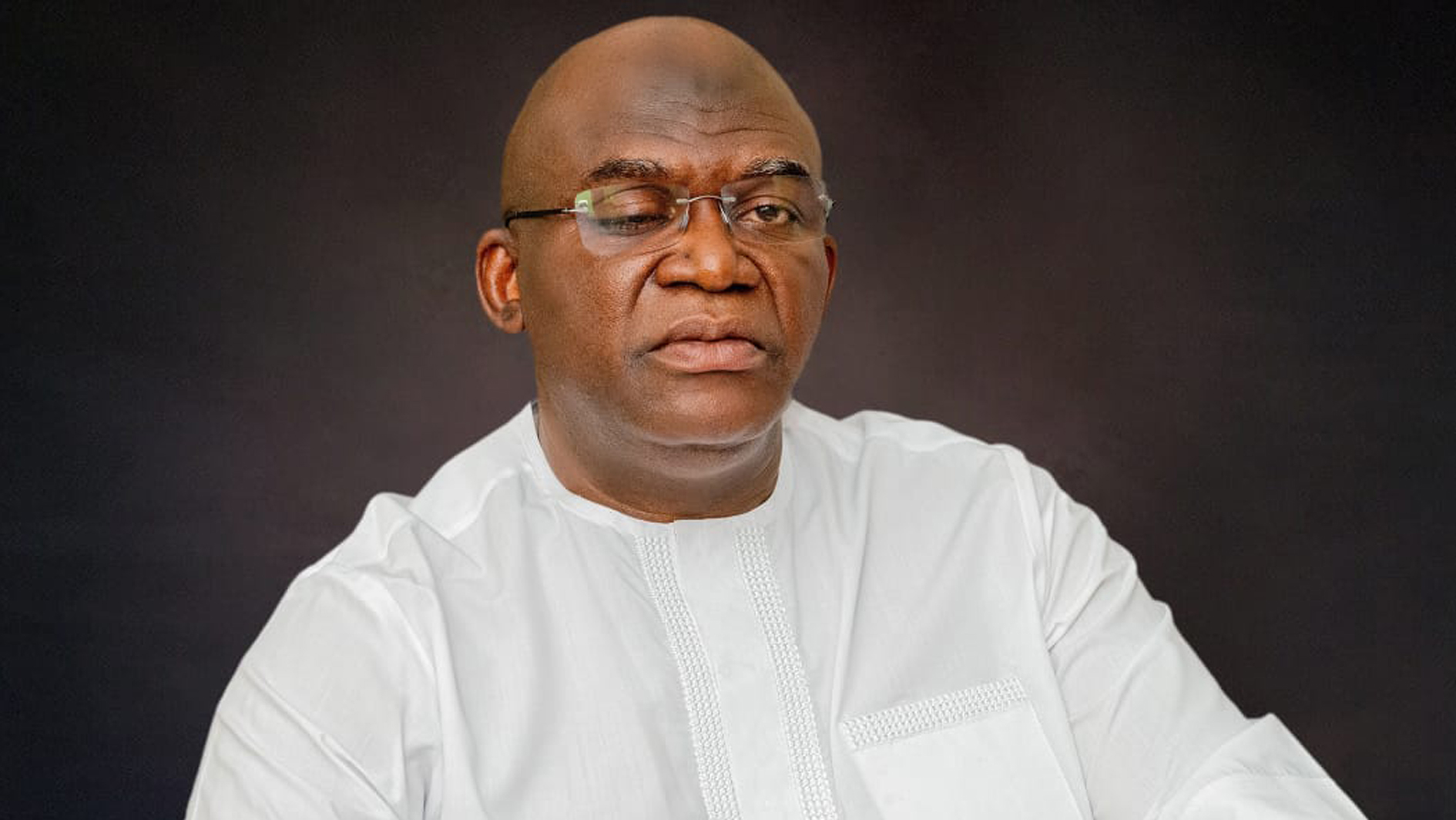
In many Nigerian cities, the pace of construction often tells a story of ambition. New estates rise where forests once stood, highways stretch across wetlands and bridges climb over rivers that have shaped communities for generations. Yet within this restless tide of development, a quieter philosophy has begun to take root among a handful of engineers who believe that the beauty of infrastructure is not only in the structures built but in the responsibility behind every line drawn and every block laid. Among those voices is Alexander Tobechukwu Onuegbu. He is a builder whose over twenty-year journey through the nation’s construction and consulting sector has evolved into a mission to redefine how engineering serves society.
Onuegbu speaks often of the idea he calls Responsible Engineering. It is a philosophy anchored in integrity, social accountability and a commitment to the greater good. His approach insists that engineering is first a social contract and only second a technical pursuit. The principle has shaped every project he has touched since his earliest days on construction sites and has guided him toward a career defined not only by landmark work but by an insistence on climate friendly solutions at a time when Nigeria’s infrastructure footprint is rapidly expanding.
His career began with the curiosity of a young undergraduate at Ahmadu Bello University in Zaria. Studying Building at a time when Nigeria was trying to modernise its construction sector exposed him to a landscape of opportunity but also to a culture that often-chased completion timelines at the expense of durability or community impact. He recalls watching workers rely on outdated techniques that produced short term wins and long term problems. Those lessons formed the foundation of the engineer he would become. By the time he left Zaria, he carried with him not just technical credentials but a conviction that every structure must answer to the society that funds it and the environment that hosts it.
That conviction followed him to his first major assignment. In 2003, he was part of the team that worked on the design and construction of the Olympic pool at the Abuja Stadium for the COJA Games. It was a high visibility project that tested the discipline, coordination and precision required for international sports infrastructure. Yet, Onuegbu remembers it mainly for what it taught him about efficiency and responsible sourcing. Materials had to meet global standards. Waste had to be controlled. Energy use had to be monitored carefully. The experience exposed him to sustainability conversations that were still new in Nigeria two decades ago.
More projects followed across the country. The turnkey development of the Gombe State Deputy Governor’s Lodge deepened his understanding of site planning in climates that swing between dry heat and sudden rainfall. The Olympic pools he delivered for the KADA Games in 2009 and the GCG Games in 2011 broadened his expertise in water management systems. Work on the Presidential Lodge in Bauchi and the ULO Plaza in Abuja allowed him to combine architectural elegance with structural integrity. Yet even as the scale of his projects increased, Onuegbu maintained an eye for choices that promoted environmental responsibility.
By the early 2010s, Nigeria’s construction boom was in full stride. Estimates from the National Bureau of Statistics show that the building and construction sector contributed more than four percent to the country’s GDP during those years. By 2023 the sector had grown to over five percent of GDP, representing one of the strongest non-oil performers in the economy. Behind that growth, however, lay challenges that Responsible Engineering aims to correct. Nigeria generates millions of tonnes of construction waste annually and poorly regulated sites have contributed to environmental degradation, flooding and the loss of green cover in major cities.

It is against this backdrop that Onuegbu’s advocacy for green and socially accountable engineering emerged as a steady voice. He began urging clients and colleagues to adopt practices that minimised waste, improved energy efficiency and protected surrounding ecosystems. In his work on a mini residential estate in Asokoro and the Asaba Airport, he incorporated sustainable materials and emphasised design choices that reduced operational costs. When he supervised the construction of 105 Primary Health Centres for Rivers State, he pushed for layouts that supported natural ventilation and daylighting, two techniques that lower energy dependence in public buildings.
He believes that sustainability is not a luxury reserved for wealthy nations. For him, it is a duty that any society must uphold if it hopes to protect future generations from the consequences of climate change. Nigeria remains one of the world’s ten most vulnerable countries to climate hazards, according to data from the Notre Dame Global Adaptation Initiative. Extreme heat, flooding and erosion have become more common, with the 2022 floods alone affecting more than two million people. Onuegbu argues that engineering sits at the heart of how countries respond to such risks. Every building that withstands heavy rain, every drainage channel that prevents urban flooding and every energy efficient facility that lowers carbon emissions is a step toward resilience.
His work across states revealed how design decisions can shape social outcomes. When he consulted on Abuja’s Phase Two Masterplan, he approached the assignment with the clarity that urban planning must prioritise people before concrete. His contributions focused on functionality, environmental balance and community accessibility. A similar mindset guided his input on the masterplan for Taraba State covering the years 2025 to 2050. For him, long term planning should not merely predict population growth or economic patterns but must answer deeper questions of sustainability, environmental management and social well-being.
Onuegbu’s philosophy became even more visible in his consultancy work for major public and private sector clients. His engagements on projects such as the Garden City Galleria in Port Harcourt, the redesign of Federal Government College Sokoto and the mechanical and electrical services consultancy for the NCC headquarters underscored his belief that responsible engineering is strengthened by interdisciplinary thinking. He often bridged the gap between design boards and construction sites, ensuring that safety standards and environmental considerations survived the transition from concept to implementation.
Safety is one of the pillars of his philosophy. Nigeria records hundreds of construction site accidents every year. Research published by the Nigerian Building and Road Research Institute indicates that more than 60 percent of building collapses in the country are linked to poor construction practices, inadequate supervision, or the use of substandard materials. For Onuegbu, these statistics are not academic figures. They represent lives that could have been protected through stricter compliance and a culture that respects the profession. His insistence on Health, Safety and Environment Management is therefore not procedural. It is deeply personal.
Over the decades, his portfolio has grown into a map of Nigeria’s infrastructure aspirations. His fingerprints appear on projects as varied as the Central Bank’s branch in Bauchi, the upcoming 18 storey Code of Conduct Bureau headquarters, planning for the International Conference Centre in Makurdi and consultancy for the 9 Amazon Hotel Apartments. In each, his role illustrates the interconnectedness of technical judgment, ethical practice and environmental awareness.
Perhaps his most significant argument for Responsible Engineering lies in his belief that society must trust its builders. Trust is shaped by transparency, accountability and an engineer’s willingness to defend the public interest even when it is inconvenient. He often reminds younger colleagues that the true measure of a project is not how quickly it is completed but how well it serves people and how kindly it treats the environment.
The Nigeria he works in today faces emerging challenges. Rapid urbanisation has placed pressure on existing infrastructure. The housing deficit is estimated at over 20 million units. Public facilities in some states are strained. Climate risks continue to rise. Yet within these challenges lie opportunities for transformation. The global shift toward green construction is influencing practices at home. Recycled aggregates, low carbon cement alternatives and energy efficient building envelopes are slowly entering market conversations. Environmental regulations are tighter than they were two decades ago. Consumers are more aware of the impact of design on quality of life.
Onuegbu is at the intersection of these changes. His years of experience have given him both a platform and a responsibility to guide the next generation of builders. As a member of the Nigerian Institute of Builders, the Council of Registered Builders of Nigeria and the Remote Sensing and Geoinformatics Association of Nigeria, he continues to advocate for reforms, improved professional standards and the integration of modern technologies such as geospatial mapping in project planning.
When he describes his career, he speaks less about the structures he has completed and more about the principles that shaped them. From the Olympic pools of Abuja and Kaduna to the health centres of Rivers State, each project is a chapter in a story about what engineering can be when guided by empathy, foresight and integrity. He envisions a future where construction in Nigeria is judged not only by height, width or grandeur but by sustainability, functionality and fairness.
He imagines, in that future, children walking safely into schools built with quality assurance, cities breathing easier because green spaces were protected during construction, and communities rising because infrastructure was planned with them at the center. It is a future where engineering lives up to its promise as a force for human advancement.
With Nigeria moving through a century defined by climate urgency and rapid development, the need for engineers who build with conscience has never been greater. Onuegbu’s journey from the dust of early construction sites to the complexity of national infrastructure planning is more than a professional biography. It is a reminder that progress is not only measured by concrete poured but by the care invested in decisions that outlive the builder.

