 Follow Us on Google News


 Follow Us on Google Discover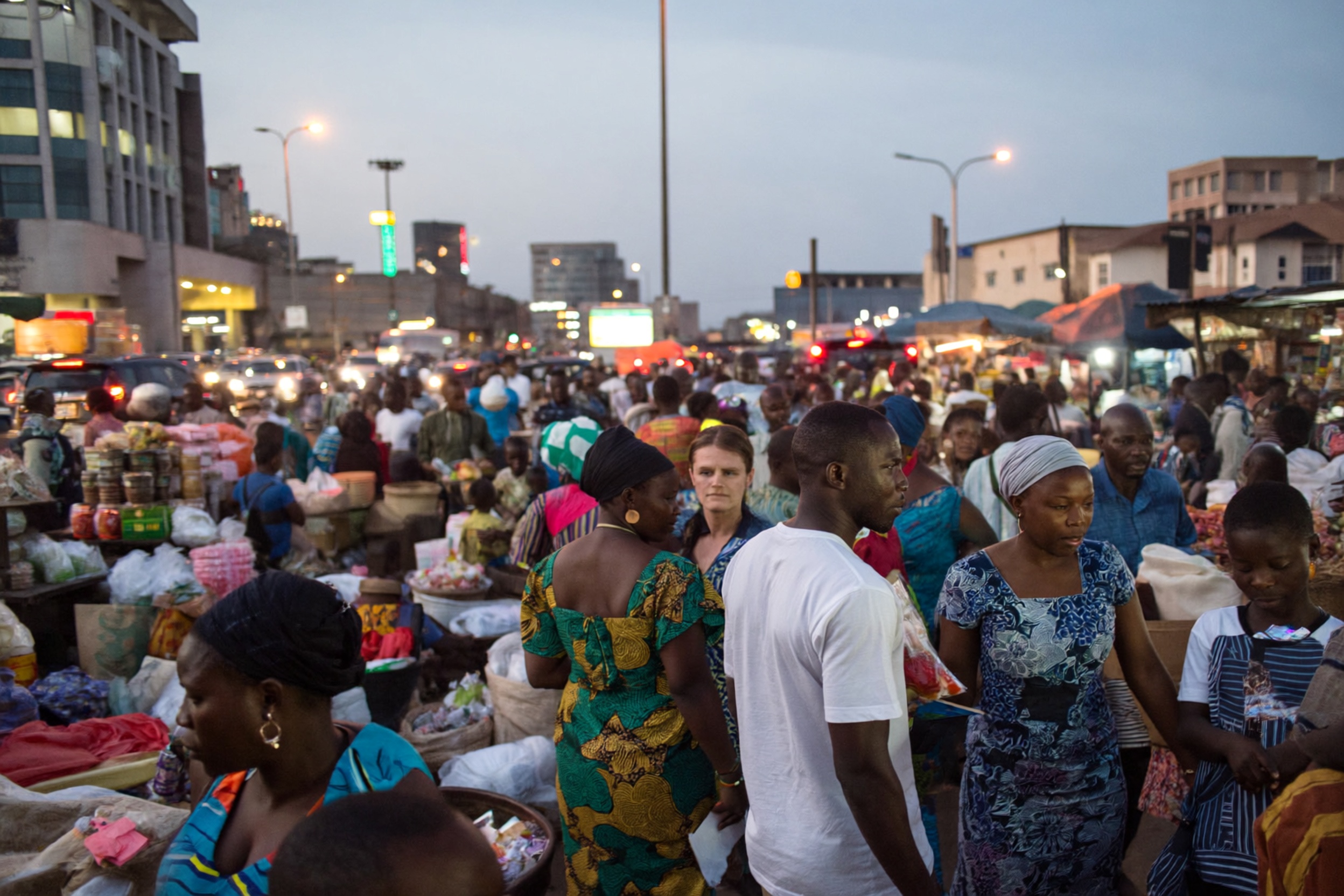
Welcome, and thank you for stopping by. This article is the result of months of concentrated research into Nigeria’s demographic makeup and years of professional experience documenting how our country’s population actually looks, lives, and earns. The question of the white population in Nigeria is one of the most searched demographic queries about our country, and it deserves a thoughtful, honest, and properly researched answer rather than a rushed paragraph pulled from a forum thread.
I remember the first time someone asked me this at a press event in Lagos. A visiting European journalist leaned over and whispered the question as if it were somehow awkward. I laughed and told him the honest answer involves far more nuance than any simple percentage can capture. So let us get into it properly.
What Percent of Nigeria’s Population Is White?
Nigeria’s population as of 2026 sits at approximately 242 million people, making us the most populous nation in Africa and the sixth most populous on Earth. Of that vast, extraordinary number, the proportion classified as white by international racial standards is genuinely tiny.
According to demographic data from the National Bureau of Statistics Demographic Statistics Bulletin, Nigeria’s population data does not formally record racial breakdowns, because our census framework has historically focused on ethnicity, religion, and geography rather than race. This is actually quite logical when you think about it. A country of 371 ethnic groups does not need race as a sorting tool; it already has more than enough meaningful distinctions without borrowing Western racial frameworks.
That said, using international racial classification systems as a guide, Nigeria is approximately 99.7% to 99.8% Black African. The white population in Nigeria, meaning people of predominantly European heritage, is estimated at somewhere between 20,000 and 35,000 individuals. In a country of 242 million people, that works out to roughly 0.01% to 0.015% of the total population. Calling it a fraction of a fraction would be an understatement.
To understand who these individuals are and where they live, it helps to understand the history that brought them here in the first place. As this excellent historical analysis in The Guardian Nigeria explores in depth regarding foreign business communities in Nigeria, the presence of non-African communities in Nigeria has roots stretching back to colonial administration, trade, and the gradual internationalisation of our economy.

White people in Nigeria today fall broadly into these categories:
- Oil and gas sector workers and engineers, concentrated in Port Harcourt and the Niger Delta
- Diplomats and embassy staff in Abuja and Lagos
- Missionaries and faith-based development workers across multiple states
- NGO and humanitarian workers, particularly in the north and in conflict-affected zones
- Business executives and entrepreneurs in Lagos, Abuja, and Port Harcourt
- Academic researchers and lecturers at universities across the country
- Long-term residents who married Nigerians or built lives and businesses here over decades
The Nigeria Immigration Service’s CERPAC system provides the formal structure through which foreign nationals, including white expatriates, legally reside and work in Nigeria. Obtaining a Combined Expatriate Residence Permit and Aliens Card requires employer sponsorship, an approved expatriate quota, and a proper work visa. This bureaucratic trail gives us some sense of the scale of the formal expatriate community, though it cannot fully capture every long-term white resident.
In terms of geography, the white population in Nigeria clusters heavily in three cities. Lagos, as Africa’s largest city and our commercial capital, hosts the largest share. Abuja, the federal capital, houses most of the diplomatic community and international organisation staff. Port Harcourt draws those connected to the oil industry. Beyond these three centres, white residents become rare indeed.
How to Understand Nigeria’s Expatriate and White Population in 7 Steps
Understanding the white population in Nigeria is not simply about finding a number. It requires understanding context, history, and the lived reality of Nigeria’s extraordinarily diverse demography. Here is how I would guide anyone approaching this topic:
- Recognise that Nigeria does not formally classify population by race. Our census data tracks ethnicity, language, and religion. Any racial percentage is an estimate derived from applying external frameworks to a country that did not build those frameworks.
- Distinguish between white Nigerians and white expatriates. A handful of individuals born in Nigeria to European parents, particularly children of long-serving missionaries or business owners, may hold or be eligible for Nigerian citizenship. They are categorically different from temporary expatriate workers.
- Understand the role of oil in shaping the expatriate community. Nigeria’s petroleum sector, managed through frameworks overseen by relevant federal agencies, has historically attracted large numbers of European and American technical workers. Their numbers have fluctuated with oil prices and the growth of local engineering talent.
- Check the Nigeria Immigration Service’s expatriate quota guidelines for formal data. Companies operating in Nigeria must justify expatriate positions and demonstrate that suitably qualified Nigerians are unavailable before approvals are granted. This system has reduced the number of white expatriates in many sectors over recent decades.
- Look beyond Lagos and Abuja. Development organisations, faith missions, and academic exchanges bring white individuals to states like Borno, Kaduna, Cross River, and Enugu in small numbers. Their presence is less visible but no less real.
- Contextualise the 0.01% figure honestly. In absolute terms, 20,000 to 35,000 people is not nothing. These individuals contribute to our economy, teach in our universities, fund development projects, and in many cases raise their children as Nigerians. The number is small proportionally but the community is not invisible.
- Understand that the data will always be approximate. Without a census question on race, and with a large informal and undocumented foreign presence in Nigeria, any figure you read should be treated as an informed estimate rather than a verified statistic.
Which City Never Sleeps in Nigeria?
Anyone who has spent a Friday night in Lagos already knows the answer to this one before the question is even finished. Lagos is without question the city that never sleeps in Nigeria, a title it wears with extraordinary, chaotic, often exhausting pride.
I moved to Lagos for work in my late twenties, coming from a quieter background in the south-south. The first thing that struck me was that the city had no real concept of closing time. Buka restaurants in Surulere serving jollof rice at two in the morning. Okada riders navigating the Third Mainland Bridge before sunrise. Market traders in Mile 12 beginning their days at four in the morning, voices rising above the sound of generators and distant traffic.
Lagos generates approximately 30% to 35% of Nigeria’s entire GDP, according to economic analysis, and this economic engine does not pause. The city’s informal economy alone employs millions around the clock. As one Guardian Nigeria opinion piece on the informal economy as a hidden engine of growth notes, over 80% of Nigeria’s population works in the informal sector, and Lagos is where that sector reaches its most visible, most energetic, most relentless expression.
Beyond Lagos, Abuja has developed a credible case for the second-most sleepless city, particularly in its hospitality, political, and diplomatic quarters. Port Harcourt’s oil industry creates round-the-clock activity, while Kano in the north maintains a trading culture that has historically operated across time zones through its connections to trans-Saharan commerce.
But Lagos remains the undisputed answer. The city’s iconic traffic jams, which Lagosians navigate with a philosophical patience that I have come to deeply admire, continue well into the early hours on major corridors like the Lagos-Ibadan Expressway and the Lekki-Epe Expressway. If any city in Nigeria could be said to have a pulse that beats without interruption, it is Lagos.
What Sells Very Fast in Nigeria?
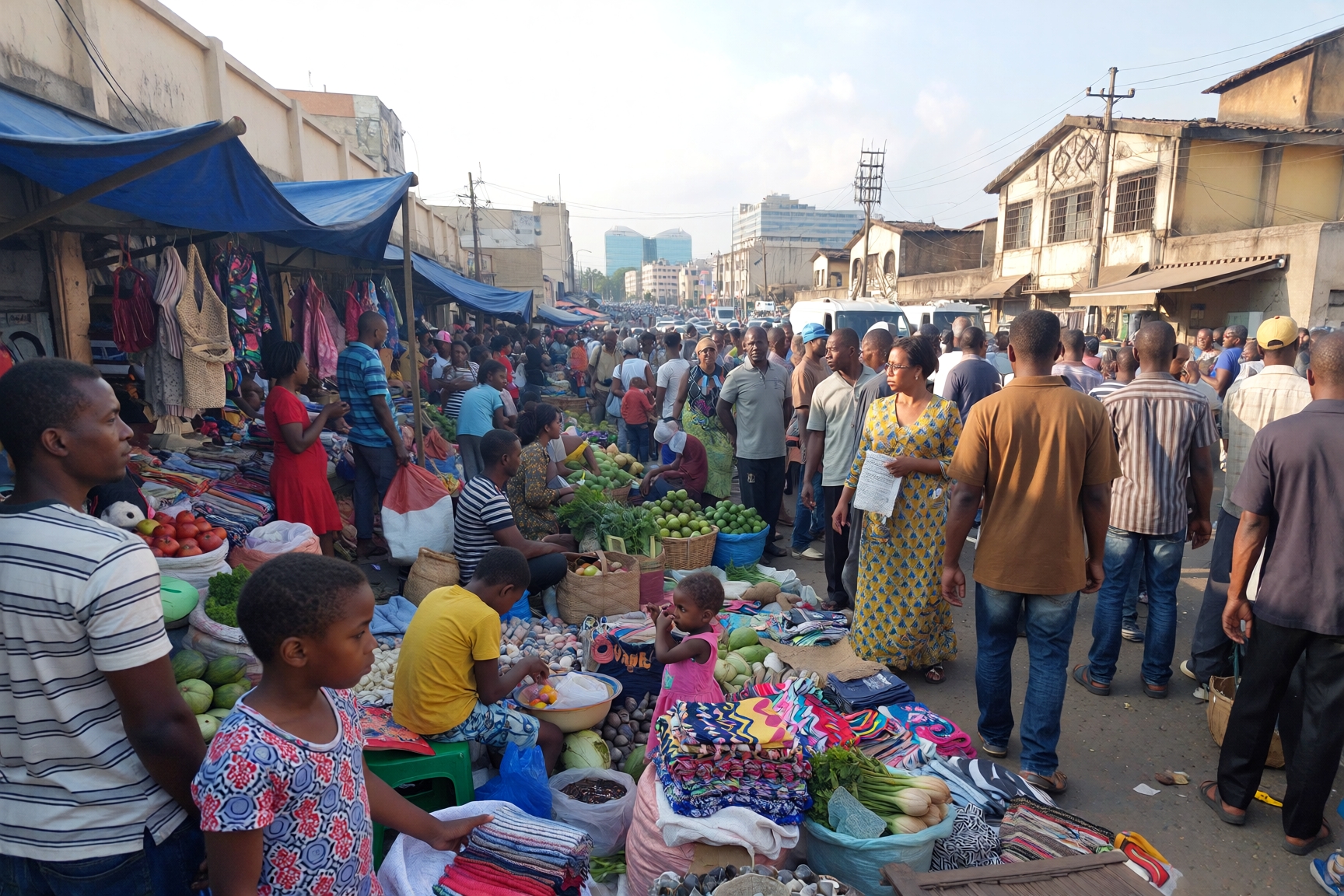
This is one of my favourite questions because the answer reveals so much about who we are as a society and what we genuinely value. Nigeria is a nation of traders, a country where commerce is both culture and survival, and certain categories of goods move with a speed that would astonish observers from slower markets.
From my own experience researching Nigeria’s consumer economy, and from conversations with traders at markets in Lagos Island, Onitsha, Kano, and Aba, a clear picture emerges.
Fast-moving consumer goods (FMCG) are the undisputed kings of quick sales. Noodles (particularly the indomitable Indomie), packaged water sachets, cooking oil, soap, and seasoning cubes like Maggi and Knorr sell in quantities that would stagger the imagination. Walk through any open market and you will see these items being bought in bulk by traders who will then sell them individually at a modest markup. The margins are thin, but the volume is extraordinary.
Mobile data and airtime move faster than almost anything else in our country. With over 220 million active SIM cards in a country of 242 million people, the demand for MTN, Airtel, Glo, and 9Mobile recharge is constant and urgent. Airtime resellers in every neighbourhood make reliable livings from this volume.
Ready-made food is a sector of remarkable velocity. Suya, pepper soup, jollof rice, fried plantain, shawarma in urban areas, puff-puff, and chin-chin all sell with almost no lag between production and consumption. Nigerians eat constantly and enthusiastically, and food vendors who understand their market rarely lack customers.
Second-hand clothing (popularly called “okrika” or “bend-down boutique”) remains a massive market, particularly among middle and lower-income urban consumers. The throughput at okrika markets in Yaba, Katangowa, and similar locations across the country is genuinely remarkable.
Smartphones and mobile accessories have seen explosive growth. Nigeria’s young, tech-aware population has a genuine appetite for devices, earphones, phone cases, chargers, and accessories. The computer village in Ikeja, Lagos, is a monument to this demand.
Nigeria’s Fastest-Selling Product Categories
Fast-Selling Products in Nigeria by Category and Market Performance
The table below summarises key product categories that consistently move at high velocity in Nigerian markets. The figures are representative estimates based on market research and industry reporting.
| Product Category | Primary Market | Typical Margin | Monthly Volume Estimate | Key Retailers | Growth Trend |
|---|---|---|---|---|---|
| Packaged water (sachets) | Nationwide | 20-35% | Billions of units | Street vendors, kiosks | Stable |
| Instant noodles (Indomie) | Urban/semi-urban | 15-25% | 4.5 million packs/day | Shops, open markets | Growing |
| Airtime and mobile data | Nationwide | 3-8% | N500bn+ monthly | POS agents, resellers | Rapid growth |
| Fast food and street food | Urban centres | 30-60% | N200bn+ monthly | Vendors, restaurants | Growing |
| Second-hand clothing | Urban markets | 50-150% | 3,000+ containers/year | Okrika markets | Stable |
| Smartphones and accessories | Lagos, Abuja, PH | 10-25% | 2 million units/quarter | Computer Village, Slot | Growing |
The table above highlights an important truth: high-volume, low-margin products compete very differently from high-margin specialty goods. The most successful Nigerian traders in fast-moving categories understand that velocity beats margin at scale.
Which State in Nigeria Is the Best to Make Money?
I have thought carefully about this question over many years of covering Nigeria’s economic geography, and my answer is Lagos, with certain important caveats that every serious person needs to hear.
Lagos State generates roughly 30% to 35% of Nigeria’s GDP from roughly 4% of its land area. This is a city that has become one of Africa’s most powerful economic engines not through oil wealth but through commerce, services, technology, and the sheer density of human ambition packed into an area bounded by the Atlantic and a handful of lagoons.
That Lagos leads in internal revenue generation is well-documented. As one compelling Guardian Nigeria opinion piece on Lagos’s record in internal revenue generation points out, the state’s approach to revenue capture, SME support, and commercial infrastructure development has created conditions where the motivated individual can genuinely earn far more than in most other Nigerian states.
But here is the caveat I always add: Lagos costs more to live in than almost anywhere else in Nigeria. Rents in Lekki, Victoria Island, and Ikoyi are eye-watering. Transport costs accumulate quickly in a city built on traffic. The cost of simply showing up and staying in Lagos must be subtracted from any income comparison to arrive at an honest picture.
With that in mind, here is how I would rank the top states for earning potential, depending on what you bring to the table:
Lagos State remains the overall champion for most sectors: technology, finance, entertainment, fashion, media, trade, and professional services.
Rivers State, and specifically Port Harcourt, offers extremely high earning potential in oil and gas, maritime, and related engineering sectors. Housing and living costs are lower than Lagos for comparable accommodation.
Abuja (Federal Capital Territory) is the choice for anyone in government, politics, law, or consulting. The proximity to federal contracts and regulatory bodies creates unique earning opportunities that Lagos cannot replicate.
Delta State and Akwa Ibom State benefit from oil revenue that funds relatively high civil service salaries and significant infrastructure contracts.
Kano State remains Nigeria’s commercial north, offering opportunities in trade, agriculture processing, and manufacturing that the south often underestimates.
The honest truth is that the best state to make money in Nigeria is whichever state best matches your particular skills, network, and risk tolerance. A brilliant Igbo trader may make more in Nnewi than anywhere else. A sharp tech developer might find remote work from Enugu just as rewarding as being physically in Lagos. Nigeria’s economic geography is more fluid than the Lagos-versus-everywhere-else framing suggests.
Related Articles
If you have found this article helpful, you might enjoy exploring two of my earlier pieces that dig deeper into Nigeria’s economic and demographic landscape. In my article on what is the racial mix of Nigeria, I look at the full spectrum of Nigeria’s 371 ethnic groups and how international racial categories both illuminate and obscure the truth about who we are. And in my research on how the average person makes a living in Nigeria, I explore the income structures, informal economy realities, and practical financial strategies that define economic life across our 36 states.
Making Sense of Nigeria’s White Population and What It Tells Us About Our Country
Understanding what is the white population in Nigeria ultimately tells us something more interesting than a percentage ever could. It tells us that Nigeria is a country so vast, so populous, so internally complex, that even communities numbering in the tens of thousands become statistically invisible. It tells us that our diversity story is fundamentally about the 371 ethnic groups, the 500-plus languages, the six geopolitical zones, and the extraordinary cultural negotiations that happen every day between them.
The white population in Nigeria, small as it is, contributes real value to specific sectors of our economy. The expatriate engineers who trained Nigerian counterparts in the early decades of oil production. The missionaries who built schools and hospitals in communities that government had not yet reached. The development workers tackling disease, hunger, and education gaps. These individuals matter, even if they represent a fraction of a percentage point.
And our cities, our markets, and our ambitions tell the larger story. Lagos that never sleeps. The suya seller who moves stock faster than a Lagos Island bank moves foreign currency. The young Lagos-Ibadan corridor tech worker who has decided to make more money from a Wi-Fi connection in Ibadan than from a crowded office on the mainland.
Nigeria’s demographic reality is enormous, dynamic, and ultimately hopeful.
Here are three actionable takeaways from everything we have covered:
- When reading demographic percentages about Nigeria, always ask what framework produced them. Our census does not track race, so any racial figure is an informed estimate. Treat it as a starting point for understanding, not a settled fact.
- If you are planning to earn more in Nigeria, start by matching your skills to the right state, not just chasing Lagos by default. Rivers, Abuja, and even mid-tier cities offer better income-to-cost ratios for the right individual.
- Nigeria’s fastest-selling products tell you where to find your market. Fast-moving consumer goods, mobile data, and street food dominate because they meet daily, non-negotiable needs. Building any business around this principle, meeting a genuine daily need at the right price point, is a proven foundation for sustainable income.
Frequently Asked Questions About the White Population in Nigeria
What is the white population in Nigeria?
The white population in Nigeria is estimated at between 20,000 and 35,000 individuals, representing approximately 0.01% to 0.015% of the total national population of around 242 million. This community consists primarily of expatriate workers in oil, diplomacy, NGOs, faith missions, and business, with a small number of long-term residents who have built lives and families in Nigeria over many years.
What percent of Nigeria’s population is white?
The white population in Nigeria represents less than 0.02% of the total population, making it one of the smallest demographic minorities in any major country. Unlike South Africa or Zimbabwe, Nigeria does not have a historically settled white population of significant size, as colonial policies actively discouraged permanent European settlement.
Is there a formal census of white people in Nigeria?
Nigeria’s most recent comprehensive census was conducted in 2006, and it did not include questions on racial identity, focusing instead on ethnicity, religion, age, and geographic distribution. Without a racial category in the census framework, any figure for the white population in Nigeria is an estimate derived from expatriate registration data, immigration records, and demographic analysis.
Where do most white people in Nigeria live?
The majority of white residents in Nigeria are concentrated in Lagos, Abuja, and Port Harcourt, which are the commercial capital, the political capital, and the oil industry hub respectively. Small communities of missionaries, development workers, and academics can also be found in states across the north and south, but their numbers outside these three major cities are very small.
Which city never sleeps in Nigeria?
Lagos is universally recognised as the city that never sleeps in Nigeria, driven by its extraordinary concentration of commerce, entertainment, nightlife, street food culture, and around-the-clock informal economic activity. Abuja and Port Harcourt maintain significant nocturnal activity too, particularly in their hospitality and energy sectors, but neither matches Lagos for sheer relentless energy.
What sells very fast in Nigeria?
The fastest-selling products in Nigeria include packaged sachet water, instant noodles, airtime and mobile data, street food, second-hand clothing, and mobile phones and accessories. These categories succeed because they meet constant, daily, non-negotiable needs at price points accessible to most Nigerians across income levels.
Which state in Nigeria is the best to make money?
Lagos State offers the highest earning potential for most professional and commercial sectors, generating approximately 30-35% of Nigeria’s GDP and boasting the deepest labour market in the country. However, Rivers State is superior for oil and gas earnings, Abuja is better for government and consulting work, and mid-sized cities like Ibadan and Enugu offer better value for remote workers due to lower living costs.
Are white people born in Nigeria considered Nigerian citizens?
A person born in Nigeria to parents of any racial background is not automatically a Nigerian citizen unless at least one parent is a citizen, as Nigeria follows jus sanguinis rather than jus soli citizenship law. Some individuals born in Nigeria to long-serving expatriate parents, particularly those of earlier generations, may have acquired citizenship through naturalisation or marriage.
Why is the white population in Nigeria so small?
Nigeria’s historically small white population reflects deliberate colonial policy, which discouraged permanent European settlement in West Africa during the British period due to health concerns, administrative preferences, and racial segregation policies. After independence in 1960, many colonial administrators departed, and subsequent Nigerian governments introduced nationality requirements and expatriate quota systems that further limited permanent foreign settlement.
How has Nigeria’s expatriate population changed over time?
In the immediate post-independence decades of the 1960s and 1970s, Nigeria had a significantly larger community of European and American technical experts, often working in oil, construction, and public services. As Nigerian professionals were trained and developed through institutions like the University of Lagos and Ahmadu Bello University, expatriate quotas were gradually tightened, replacing foreign workers with Nigerian ones. Today, formal expatriate numbers are considerably lower than their peak.
What industries employ the most white expatriates in Nigeria?
Oil and gas remains the single largest employer of white expatriates in Nigeria, followed by international development, diplomacy, faith-based organisations, financial services, and multinational consumer goods companies. The technology sector has seen growing numbers of international workers, though many of these are African diaspora rather than white Europeans or Americans.
Can white foreigners own businesses in Nigeria?
Foreign nationals, including white foreigners, can own businesses in Nigeria and invest in the Nigerian economy, though certain sectors require minimum local partnerships under Nigerian law. The Nigeria Investment Promotion Commission provides frameworks for foreign direct investment, and many white business owners operate successfully in construction, hospitality, agriculture, and professional services across the country.

