 Follow Us on Google News
 Follow Us on Google Discover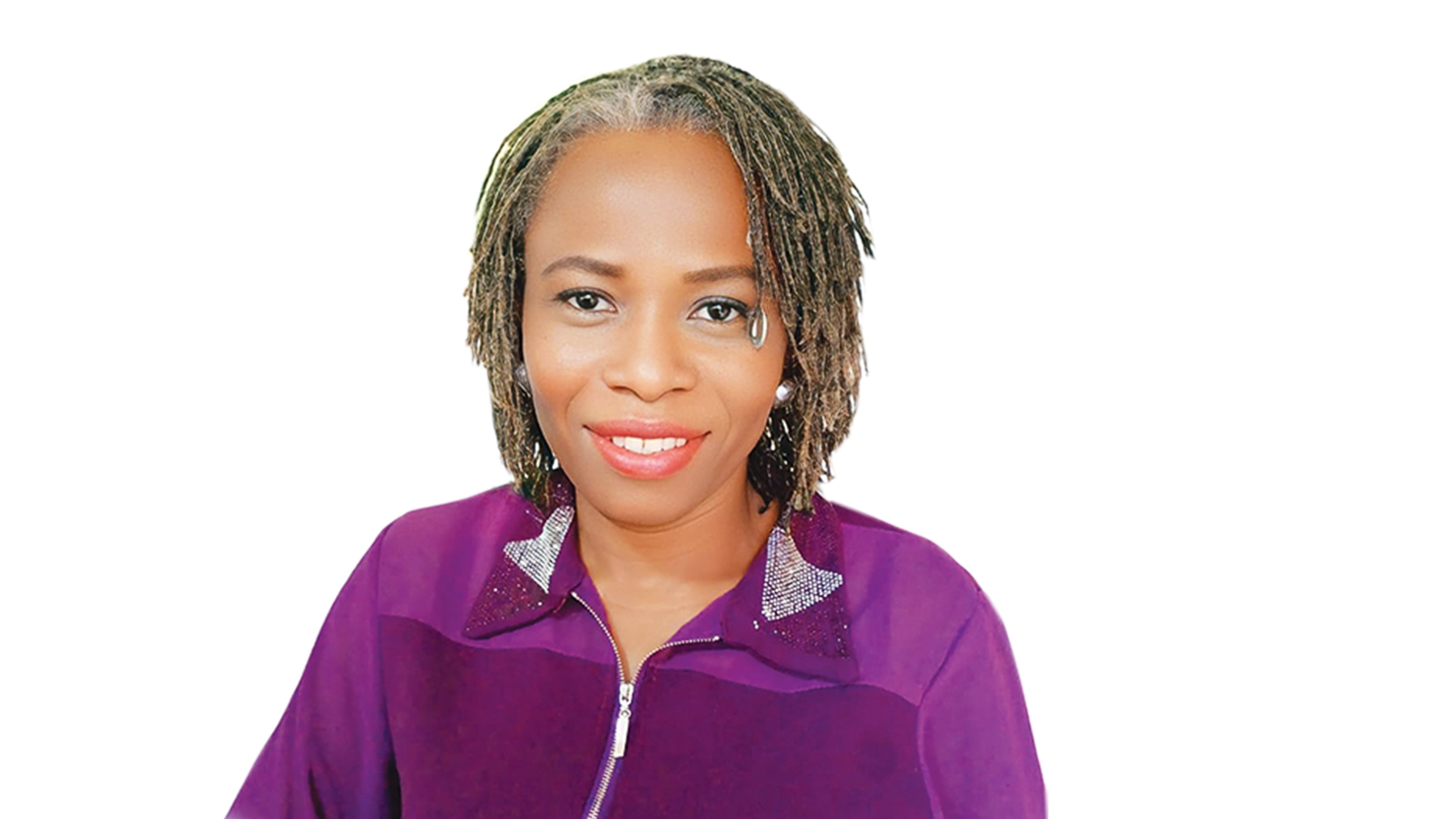
Oluwatumininu Lawanson, the Director of Dew of Hermon Montessori School, Gbagada, Lagos, in this interview with IYABO LAWAL, spoke about staffing and material costs, misconceptions about Montessori education, and why Nigeria must reform its curriculum to prioritise intrinsic motivation, teacher welfare, and real understanding over memorisation.
How did you get involved in Montessori education, and what inspired you to establish your own school?
How I got involved in Montessori education and what inspired me to open my own school was deeply personal. Growing up, I wanted to be a paediatrician because of my love for children. I believed medicine would be a way to care for them and help shape their lives. However, I didn’t gain admission into medical school and ended up studying Zoology, not out of passion, but simply to get a certification.
After university, I worked in an insurance company, but I still felt unfulfilled. One day, I saw an advert for a school seeking a computer teacher. I applied, and that’s how my teaching journey began. Finally, I felt that love for children was fulfilled. But I felt there must be more to education than the traditional methods I was seeing, and I wasn’t wrong.
That curiosity led me to research, and I stumbled on the Montessori method of teaching. The training was life-changing. Montessori education is holistic and child-centred.
Teachers are trained not just in methodology, but also in understanding themselves and their unique role, the science and art of teaching, human development, and the intentionality needed to prepare an environment where children can reach their full potential.

I learned that every stage of a child’s development matters (planes of development), and that if one plane is neglected, it affects the next. That depth of understanding hooked me.
Over time, I completed training for three to six hours. This whetted my appetite to go for more, and then I enrolled in the six-to-12 age group. I’m currently on the zero to three years course, and I truly began to see the child in detail.
I worked in various schools, including my alma mater, Lara Day Nursery and Primary School, Ikeja, where I designed and arranged my learning environment. I had also been involved in teacher training, home lessons, and coordinating various club activities.
In July 2012, with my husband’s encouragement, I founded the school. Since then, despite challenges such as the COVID-19 pandemic and the mass emigration of the past few years, we have remained strong and growing.
In retrospect, the Montessori method of learning is not just my career; it is my calling, my way of shaping children to grow into their full potential.
What are some of the biggest challenges you face as a Montessori school proprietor in Lagos, and how do you address them?
Like every meaningful journey, ours has not been without its challenges. In fact, the very things that test us have also shaped us. Our biggest challenges have been staffing, the cost of Montessori materials, rent, multiple taxation, and perhaps, most significantly, the lack of accurate information about Montessori education among parents and the wider community.
Yet, I often remind myself, a vision that does not face resistance is a vision that has not been tested. Staffing remains one of our greatest concerns. As I mentioned earlier, Montessori training is intensive; it requires time, discipline, and deep commitment.
Certified Montessori educators are not only scarce, but many who are trained often go on to establish their own schools or require salaries that a growing institution may struggle to pay or sustain, and rightly so, quality deserves value.
However, this creates a delicate balance for us. It is like trying to build a world- class orchestra, when skilled instrumentalists are few you must either wait, train, or create your own. So, we choose to build, because we understand that “if you cannot find the right people, you must be willing to grow them.”
Another significant challenge is the cost of Montessori materials and maintaining a prepared environment. Authentic Montessori materials are not just teaching aids, they are scientifically designed tools for development. They are precise, purposeful, and often expensive.
Many people do not fully understand Montessori education, and as a result, assumptions are everywhere. Some believe Montessori is only for children with special learning needs, others think Montessori children cannot adapt to traditional school systems.
But the reality is far from these assumptions. I can confidently say that Montessori prepares children not just for school, but for life. A clear example is one of our students who graduated just last year. She had been with us from her toddler years through primary six. Today, she attends Baptist Girls Secondary School, and was ranked third in the Lagos State School Mathematics competition out of 60 schools.
Montessori does not limit a child; it liberates such a pupil. It equips children with independence, confidence, critical thinking, and adaptability skills that transcend any system or environment.
And so, despite the obstacles, we remain committed to raising children who will not just fit into the world, but transform it anywhere, world over.
How do you see the future of education in Nigeria, and what role do you think Montessori schools can play?
When I think about the future of education in Nigeria, I see more than a system, I see the engine of national transformation. Because truly, education is not just a sector; it is the soil from which every other sector grows. Any nation that is serious about its future must take education seriously. While I am optimistic about the future, I am also aware that there is still much work to be done.
First, our curriculum must move beyond chasing grades, applause, and rewards. It should focus on cultivating intrinsic motivation in children; a child should not learn just to pass an exam, but to understand, to explore, and to grow.
When learning is driven by curiosity, excellence becomes a habit, not a performance. Relying only on external validation is like fuelling a car with borrowed energy it will eventually run out. But intrinsic motivation? That is a renewable source from within.
Secondly, standardised examinations, especially at preschool and elementary levels, need to be revisited. We must ask ourselves: Are we measuring learning, or just memorising?
Not everything that can be tested is truly learned, and not everything learned can be tested. Assessments should be meaningful, reflective, and aligned with real understanding. After all, evaluating a child solely through exams is like judging a fish by its ability to climb a tree.
Third, education policies should not be made in isolation from the classroom. Seasoned, well-trained educators must be at the decision-making table, because you cannot design a road you have never walked.
Those who understand the child, the classroom, and the learning process must help shape the systems that govern them.
Also, teachers must be properly motivated and compensated on par with professionals in other critical fields. A nation cannot rise above the quality of its teachers. If we want a first-class future, we must first invest in first-class teachers. Expecting excellence from teachers without valuing them is like asking a lamp to shine without oil.
Finally, we must remain open to adopting teaching methods that truly work. Education should not be trapped in tradition for tradition’s sake. What worked yesterday may not prepare a child for tomorrow.
The world is evolving, and so must our approach to teaching. We must be guided by research, by evidence, and most importantly, by the needs of the child. Holding on rigidly to outdated systems is like trying to navigate today’s world with an old map; it simply will not lead us where we need to go. In the end, the future of education in Nigeria is not just about reform, it is about reimagining.
When you change how a child learns, you change how a nation grows, and if we get it right, we will not just raise educated individuals, we will raise thinkers, creators, and leaders who can shape Nigeria and the world.
What advice would you give parents considering Montessori education for their children?
My advice to parents is to first take time to do their research and truly understand the method. Knowledge is your compass; without it, it is easy to lose direction. When parents are well-informed, they are less likely to fall prey to schools that claim to be Montessori but do not uphold its principles. Unfortunately, such situations exist, which is why I often say that not everything that carries a name carries the essence.
Understanding Montessori is like learning to recognise the difference between a real seed and a plastic one both may look similar on the outside, but only one has the power to grow.
Secondly, I encourage parents to focus on raising a happy, well-rounded, and holistic child, rather than comparing their child with others. Every child is uniquely wired, with his own pace, strengths, and purpose. Even twins, who share the same womb, grow differently and express life in their own distinct ways.
Comparison is the thief of joy and the enemy of true growth. Raising a child is not a race; it is a journey. When we compare, we rush the process. But when we understand, we nurture it.
It is also important for parents to understand that Montessori is a global curriculum. Authentic Montessori materials are consistent worldwide because the philosophy is universally rooted in the natural development of the child. What differs slightly across countries are cultural expressions, especially within practical life and cultural studies.
The roots remain the same, even when the branches look different. When parents understand this, they are better equipped to choose the right environment for their child and to partner meaningfully with the school.
How do you stay up-to-date with the latest developments in Montessori education and incorporate innovation into your school?
Learning, for me, is not a destination; it is a rhythm. It is like tending a flame; if you do not keep feeding it, it slowly goes out. When the mind is stretched by new knowledge, it never returns to its original size.
What you see refines what you know. Observation is one of the most powerful tools for growth. It is like holding up a mirror; you begin to see both your strengths and the areas that need adjustment. It humbles you, stretches you, and sharpens your vision.
All of this continuous learning is driven by one clear purpose: to raise children who are not just academically sound, but well-rounded, well- mannered, cultured, and truly educated. At the end of the day, true education is not what a child knows; it is who the child becomes.

