 Follow Us on Google News
 Follow Us on Google Discover
As we look back through the history books this week, one name stands out as a true pioneer: King Sunny Adé (KSA). Often called the “Minister of Enjoyment,” Ade did more than just play music; he changed the way African artists perform on the global stage.
In the early days, Orchestras typically performed seated, maintaining a formal, praise singing composure that focused heavily on lyricism and steady percussion. Ade changed everything by choosing to stand up. By moving his band from a seated position to a dynamic, standing one, he brought a new energy to the stage.
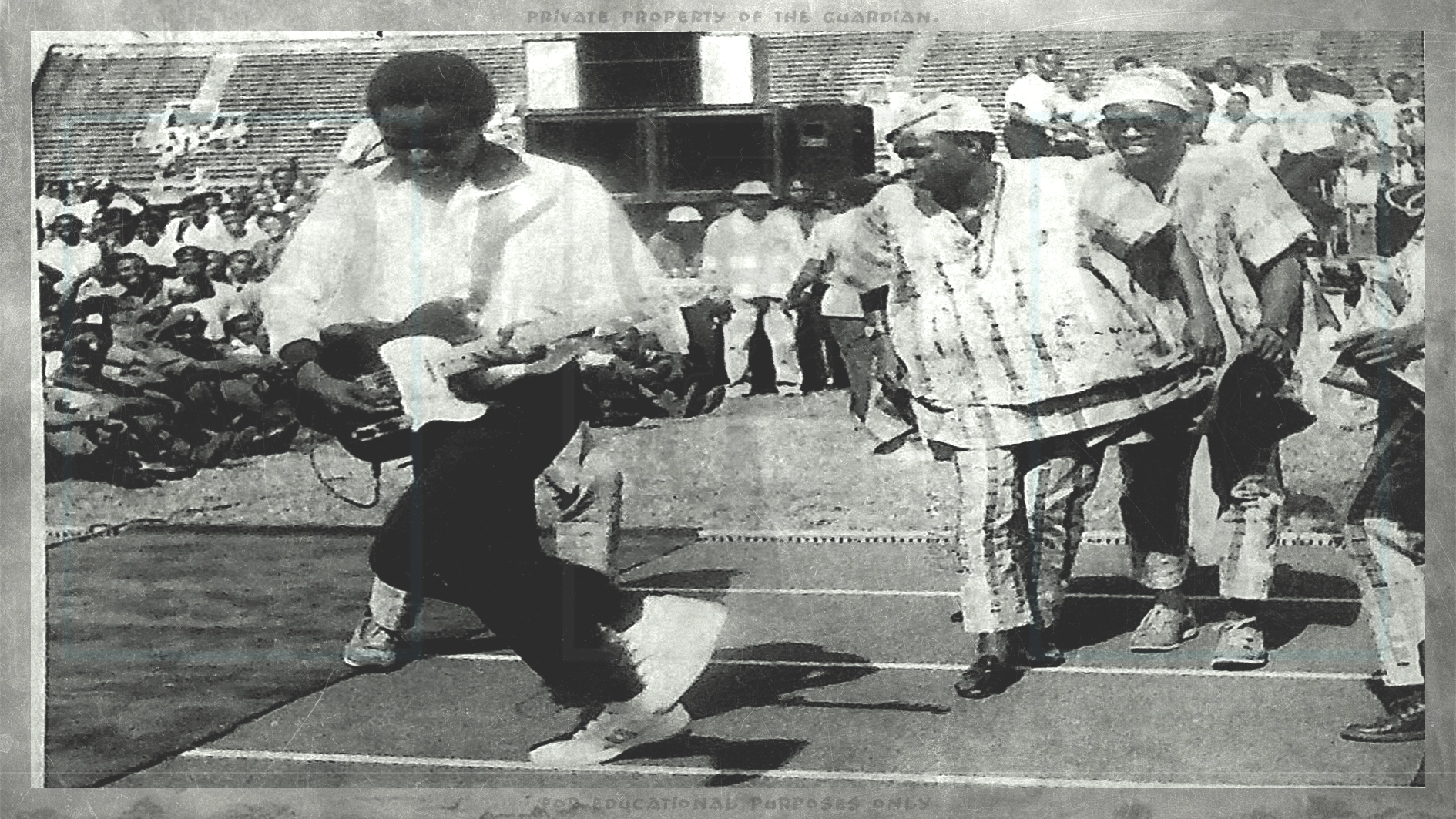
This change allowed for high-octane choreography, more physical engagement with the audience, and the athletic movements that the Juju star became famous for. He combined his skilled guitar playing with fast-paced footwork, making his shows a must-see. By adding instruments like the pedal steel guitar and synthesizers, he created a modern sound that felt both traditional and fresh.
Making Grammy History
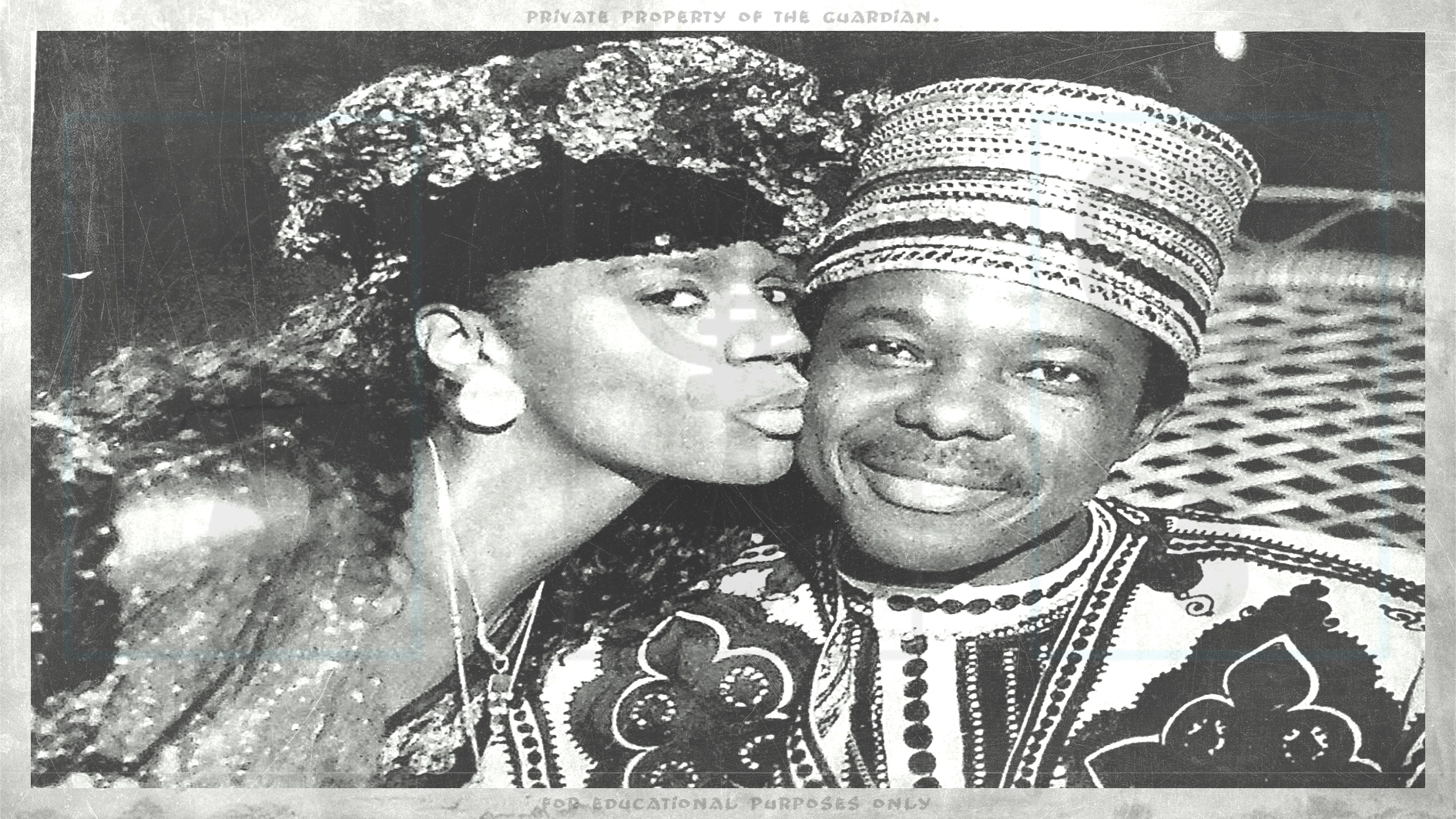
Ade’s hard work led to a historic moment in 1983. He became the first Nigerian ever to be nominated for a Grammy Award. His album, Synchro System, was recognized in the Best Ethnic or Traditional Folk Recording category. This was a massive win for Nigeria, showing that our local music could compete with the best in the world. He proved his talent again in 1999 with his album Odù. Produced by Andrew Frankel, a sophisticated exploration of Yoruba folklore and poetry earned him a second Grammy nomination.
A Symbol of Success
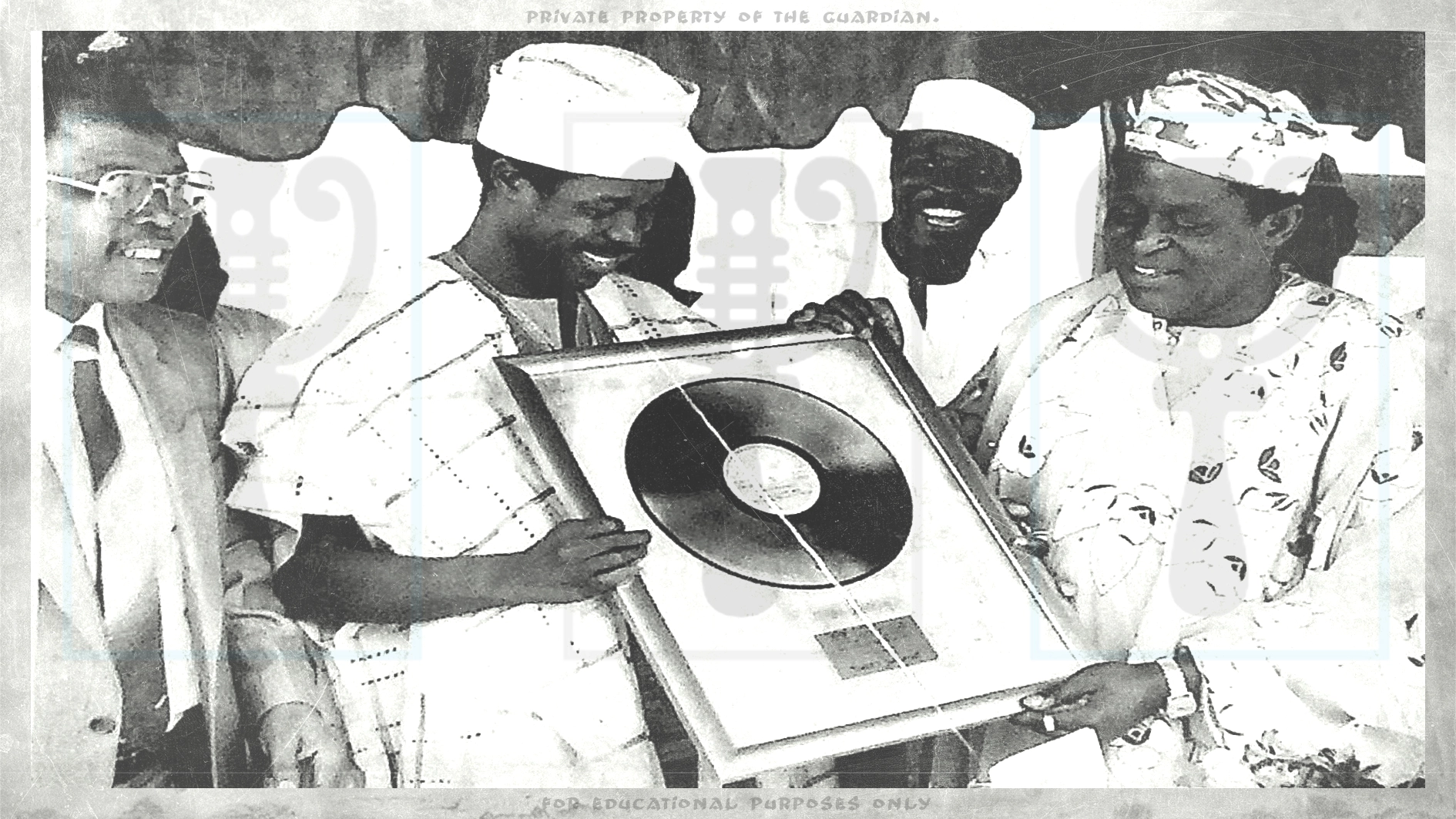
Photos from our archive show a great moment of success: the young Juju star receiving a gold record. This image is the perfect visual for his story of international success. He wasn’t just a local star; he sold out stadiums across the globe.
Today, Nigerian artists are topping the global music charts
