 Follow Us on Google News
 Follow Us on Google Discover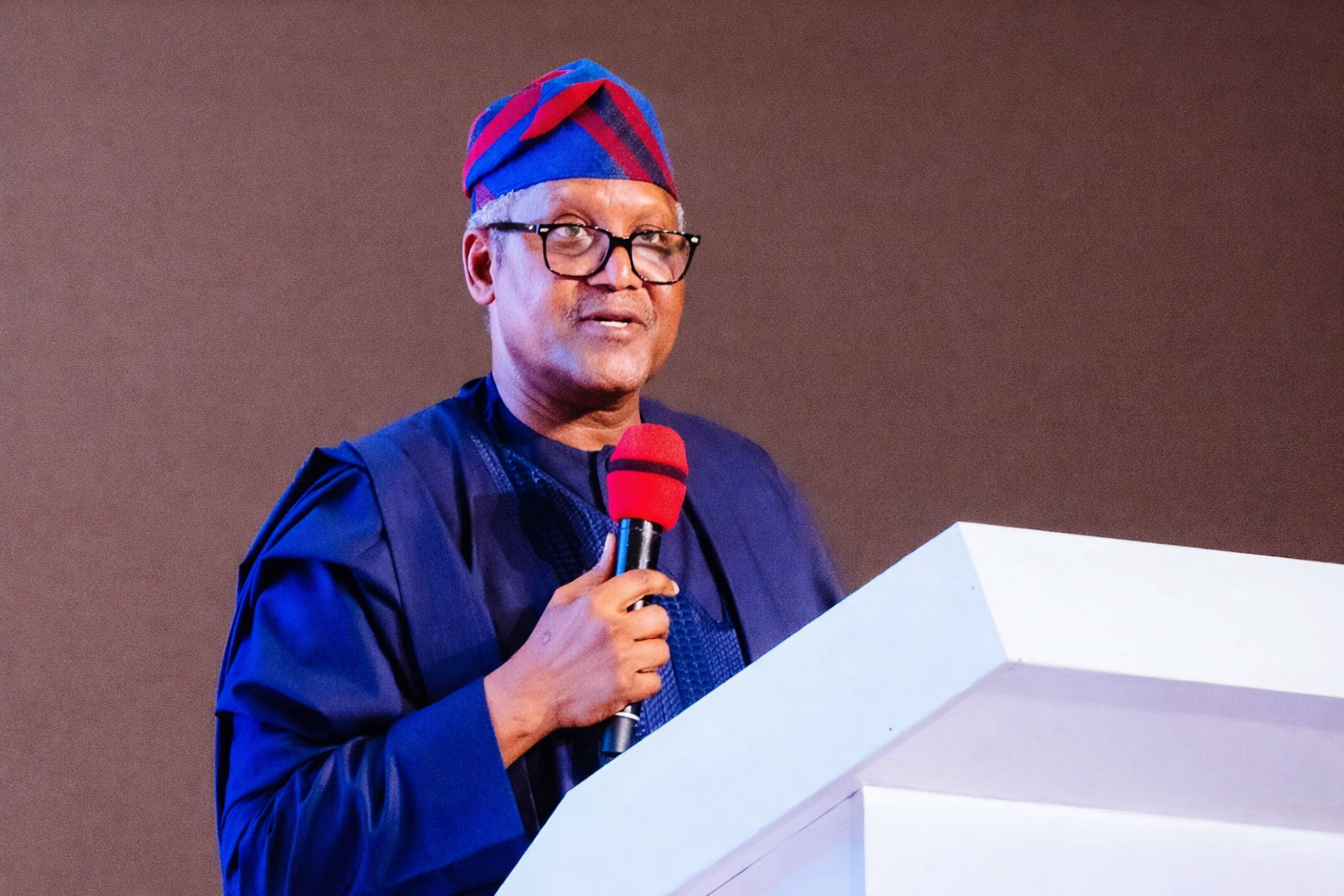
President of the Dangote Group, Aliko Dangote, has opened up on the reasons behind his decision to exit the flour and textile sectors, saying the move was part of a broader strategy to focus on industries capable of driving long-term industrial growth and value creation in Nigeria.
Speaking on the challenges that shaped some of his business decisions over the years, Dangote explained that the company withdrew from sectors where it believed sustainable local value addition had become difficult due to structural and policy-related limitations.
According to him, the flour business was heavily dependent on imported wheat, a model he said contributed little to real industrialisation because the core raw materials were sourced externally rather than produced locally. He noted that the company had initially hoped to develop local agricultural capacity around wheat production, but broader market realities made the vision difficult to sustain.
Dangote also reflected on the group’s experience in the textile industry, describing it as one of the most challenging phases in the company’s manufacturing journey. He explained that despite investing heavily in textile operations in Kano and other parts of the country, the sector struggled under the weight of inadequate policy protection, high operating costs, and intense competition from imported products.
He noted that the collapse of local textile manufacturing at the time significantly affected businesses that had committed substantial resources to domestic production, forcing many operators to either shut down or scale back operations.
The billionaire industrialist stressed that his company’s long-term strategy has remained focused on sectors capable of generating stronger economic impact, creating jobs, and reducing Nigeria’s dependence on imports. He added that industrialisation must go beyond simple importation and processing, insisting that real growth comes from building local production chains and strengthening domestic capacity.

Dangote further argued that developing countries must reduce excessive dependence on imports if they hope to achieve sustainable economic transformation, noting that local industries require deliberate support and enabling policies to survive and compete effectively.
Over the years, the Dangote Group has shifted its focus toward cement production, fertiliser, petrochemicals, sugar refining, and oil refining, sectors the company considers strategic to Nigeria’s industrial and economic development.
Industry observers say Dangote’s comments reflect the broader challenges faced by manufacturers in Nigeria, particularly in sectors affected by import dependency, infrastructure deficits, and unstable industrial policies.

