 Follow Us on Google News
 Follow Us on Google Discover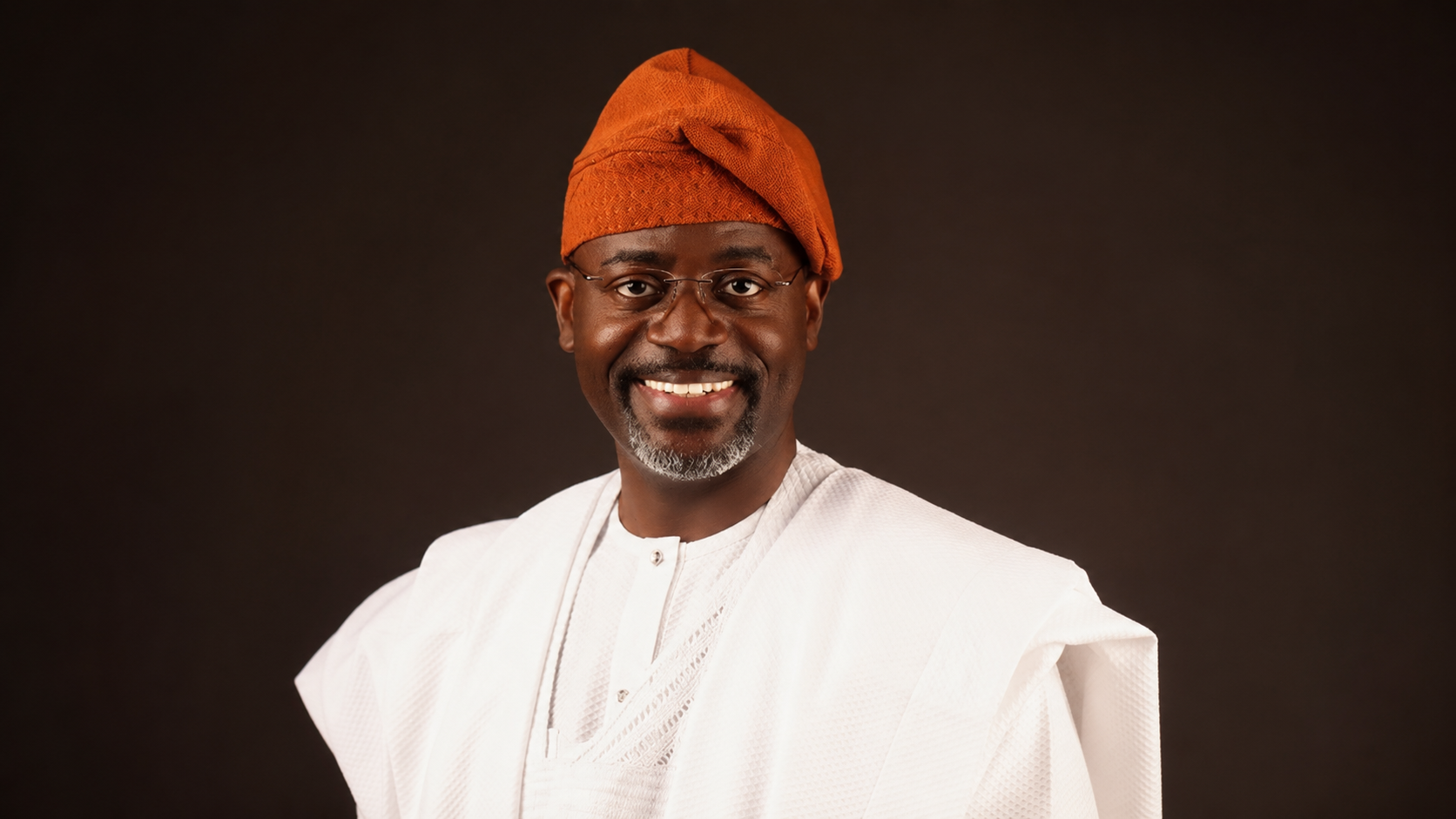
A politician, technocrat and Founder of Barachel Realty Limited, Samuel Obafemi George, in this interview with journalists, speaks on Nigeria’s economy, the reforms of President Bola Ahmed Tinubu and the resistance trailing efforts to derail the new order. SEYE OLUMIDE was there.
There is a growing perception that the ruling All Progressives Congress (APC) and President Tinubu’s administration lack the policy direction needed to curb rising poverty, especially amid Nigeria’s poor ranking on the global poverty index. How would you respond to this concern?
First, from my perspective as a political scientist, not every data set on Africa from the Western world is objective. It is in the interest of the West to paint Africa as a dark continent, a jungle that needs a messiah from Washington, New York or London. They try to control the global narrative.
When COVID-19 came, Bill Gates and others like him said they would be picking up corpses on the streets of Africa. The same thing happened during the Ebola pandemic. But they were shocked. Our medical institutions, doctors, nurses, paramedics, government and wealthy individuals rose to the occasion and beat the pandemic hands down.
The West knows that once Nigeria gets its economy right, Africa will get its right. And once Africa gets it right, whether people admit it or not, it will affect Western economies negatively. So it is not in their interest for us to get it right economically. I would rather focus on the statistics that show we are making progress.
Don’t forget the poverty question…
The government of President Bola Tinubu is investing massively in infrastructure, from roads to airports and seaports. There is also investment in tertiary education supported by a transparent scholarship programme. These are long-term investments that can take a nation out of poverty.
Let me give you an example. China created a pathway to lift almost a billion people out of poverty. They invested massively in infrastructure and education. They also created special economic zones comparable to what we call free trade zones. Those are the three things they did.

In the first 10 years, not much happened. China’s economy only grew by about 100 per cent. But they did not stop. They kept investing in those same areas. By 1999, about 20 years later, they had crossed the one-trillion-dollar threshold from a 99-billion-dollar economy two decades earlier. By 2019, China’s economy was worth about $44 trillion. So, when you see data suggesting poverty is increasing in Nigeria, that is only one side of the story.
Can we quantify our investments in education, infrastructure and free trade zones?
Beyond Western criticism, how have we performed as a country?
Let’s track growth and review the data together. APC came into power in 2015. By 2016, the global price of crude oil had dropped to $27 per barrel from about $100 in 2014. Let’s personalise it. If your salary was N100,000 per month and it suddenly dropped to N27,000 while your obligations and expenses kept increasing, what choice would you have but to borrow?
Since 1970, every government has promised the Second Niger Bridge during political campaigns, but nobody has delivered it. In fact, a former president launched the bridge in 2014 without a drawing or an actual construction plan. An APC government eventually started and completed that bridge, even though former President Muhammadu Buhari did not win any South-East state during the election.
Secondly, since 1908, when the first railway station was built in Lagos, no government, colonial or Nigerian, had successfully started and completed a major rail project until the APC-led administration.
Thirdly, the Lagos-Ibadan Expressway had been under reconstruction since 2006 and was only completed under President Buhari. As of 2015, when President Goodluck Jonathan left office, his administration had spent about N3 billion on the flag-off of the Sagamu Interchange project, but the interchange itself was only completed recently under President Tinubu’s administration.
Then there is the Lagos-Calabar Coastal Highway, where construction is ongoing at a rapid pace. Funding for the Sokoto-Badagry Expressway has also been approved.
Many Nigerians argue that despite the Tinubu administration’s heavy borrowing running into trillions of naira, the economic hardship facing ordinary citizens continues to worsen, with poverty levels rising across the country.
Here is the thing: when you borrow to build legacy infrastructure, it can be justified. The United States passed the Federal-Aid Highway Act of 1956, which enabled the construction of massive highway infrastructure across the country. Today, America’s road network is phenomenal and has contributed significantly to its economic growth.
The same aggressive infrastructure development helped make China the second-largest economy in the world. That is why our government must remain aggressive in developing road, rail and waterway infrastructure.
The Lagos-Calabar Coastal Highway has been on the agenda since the 70s to open trade and travel within Nigeria and align with the vision of an African Continental Highway, first conceived by the OAU (now the African Union). Again, only the APC-led government under Tinubu has taken this on. It is a visionary 50-year project that previous administrations abandoned. It will cut across three economic zones, the South-West, South-East and South-South.
Besides, World Bank figures show that for every $1 billion spent on infrastructure, at least 150,000 direct jobs can be created, not to mention the ripple effect of indirect jobs. So, if anyone says poverty has increased, I believe it is temporary.
When these infrastructural investments begin to stimulate the economy, we will all look back and appreciate these decisions. As a nation, we either pay now and enjoy later, or enjoy now and pay a much heavier price later.
How does this align with the level of economic pain Nigerians are facing today? Has it ever been this bad?
This reality is painful for every right-thinking Nigerian. As of December last year, Nigeria’s economic indicators were positive in many respects, even at the macroeconomic level. By January this year, the economy was on what many would call cruise control. Then suddenly, we woke up to the news that Israel had attacked Iraq.
The effect of that, coupled with the escalation of the Russia-Ukraine war, disrupted the global economy and Nigeria does not exist in isolation. That singular crisis affected Nigeria’s economic projections, and that is beyond anybody’s control. Just two weeks ago, Germany, the strongest economy in Western Europe, cut its economic projections by half. No country or president has complete control over global economic shocks. Where we are as a nation is temporary, and I believe we are on the right path to prosperity. But those benefiting from Nigeria’s old system are fighting President Tinubu’s reforms.
Are you allowing party loyalty to cloud your judgment and ignore the harsh economic realities Nigerians are currently facing, given the arguments you are making?
I am a party loyalist, no doubt about that, but I do not follow people blindly. There are hard decisions this government must take, not just to rescue Nigeria, but to position it for true continental leadership. Tinubu’s predecessors avoided many of the tough choices the country needed.
Let me give you an example. When President Tinubu came in, one of the first things he did was remove fuel subsidies. He did not allow prolonged public debate about it. In his inaugural speech, he declared that the subsidy was gone. For years, Nigeria had been spending billions of dollars subsidising fuel while our own refineries remained dysfunctional. It is painful now, but it is a sacrifice many believe is necessary for a better future. I do not have a second passport, neither do I plan to relocate, so we must make Nigeria work for all of us.
How about the constant blackouts and repeated collapse of the power grid? What is the APC government doing about this?
President Tinubu, as Governor of Lagos State around 1999/2000, concluded through what he described as visionary foresight that power generation had to move from the exclusive list to the concurrent list. He believed the only way to solve Nigeria’s electricity problem was to allow states to generate, transmit and distribute power independently.
That was why he attempted to bring Enron barges to Ijora in Lagos, although the ruling party at the time frustrated the project. This explains why one of the first major bills he signed as president was the Electricity Act of 2023. As we speak, about 15 states have established their own electricity regulatory commissions to enable them to generate, transmit and distribute electricity independently.
Speaking realistically about politics, doesn’t former Anambra State Governor Peter Obi pose a major challenge to President Tinubu ahead of 2027, amid allegations that efforts are being made to stop him from appearing on the ballot?
People would say that if anyone wants to sew clothes for me, I need to first look at what he is wearing. Some would argue that after all, they are both former governors. I say a big no. A former governor of Lagos State is not comparable to a former governor of Anambra State.
This year, Anambra’s budget is about N766 billion, whereas Lagos State’s budget is over four times higher at N4.3 trillion. Without intending any disrespect to Obi, some would argue that at best he could serve as Commissioner for Works in Lagos State.
When Tinubu was governor of Lagos, almost all the states were struggling financially. Yet within eight years, he created about 14 agencies that many governors criticised at the time, but today more than 20 states have replicated similar agencies for more efficient governance.
In terms of infrastructure, Lagos under Governor Babajide Sanwo-Olu remains the only state in Nigeria to build a modern rail system. The Red Line and Blue Line have transported millions of passengers. Lagos also boasts of a deep seaport and a refinery located in the Lekki Free Trade Zone. The foundations for many of these projects were laid during Tinubu’s tenure as governor.
Can anyone point to similar legacy projects executed in Anambra under Peter Obi? Some would argue the answer is no.
Let’s look at the BRT buses, which even Ghana reportedly studied. Some of these buses are air-conditioned and far more comfortable than the dangerous Molue buses that once dominated Lagos roads.
Tinubu also created the Lekki Free Trade Zone in 2003, which now houses the Dangote Refinery, one of the largest industrial investments in Africa. A visionary leader does not always do what is popular, but what is necessary.
Tinubu was heavily criticized for creating the free trade zone and for promising a deep seaport that many doubted would materialize. But today, Lagos has a functioning deep seaport. Land that once sold for about N80,000 per plot has appreciated massively, turning many indigenous landowners into billionaires.
The United Nations has described the Lekki corridor as one of the fastest-growing economic corridors in Africa.
In terms of policy, most of the candidates in the 2023 election promised to remove fuel subsidy, but many Nigerians doubt whether they would actually have had the courage to implement it once confronted with entrenched interests. Former President Jonathan could not do it.
To govern a country as complex as Nigeria, you need someone who is politically smart, globally exposed and willing to take difficult decisions based on conviction. Some would argue that Nigeria would overwhelm Peter Obi completely. Looking at the potential candidates for 2027, supporters of Tinubu believe none currently possess his level of political experience, capacity or strategic depth.
But security-wise, many believe the Tinubu-led administration has failed.
The dynamics of insecurity differ across regions. In the North-West, especially in places like Zamfara, criminality linked to illegal mining is a major factor. In the North-Central states like Plateau and Benue, the conflict is rooted in long-standing disputes over land between predominantly Muslim settlers and predominantly Christian indigenous communities.
Some trace the roots of these tensions back to historical conflicts dating as far back as the 1804 Jihad and later crises such as the Tiv disturbances of 1963/64. Resolving such issues requires justice, collective national effort and perhaps state policing, which many believe could help curb insecurity.
In the North-East, the challenge is largely religious extremism carried out by radical insurgent groups with international affiliations. That situation requires international cooperation because Nigeria cannot tackle it alone. The Federal Government is also trying to address illegal mining in the North-West by formalising the sector. According to officials, three mining-related factories have been established in Nasarawa State within the last three years of this administration.

