 Follow Us on Google News
 Follow Us on Google Discover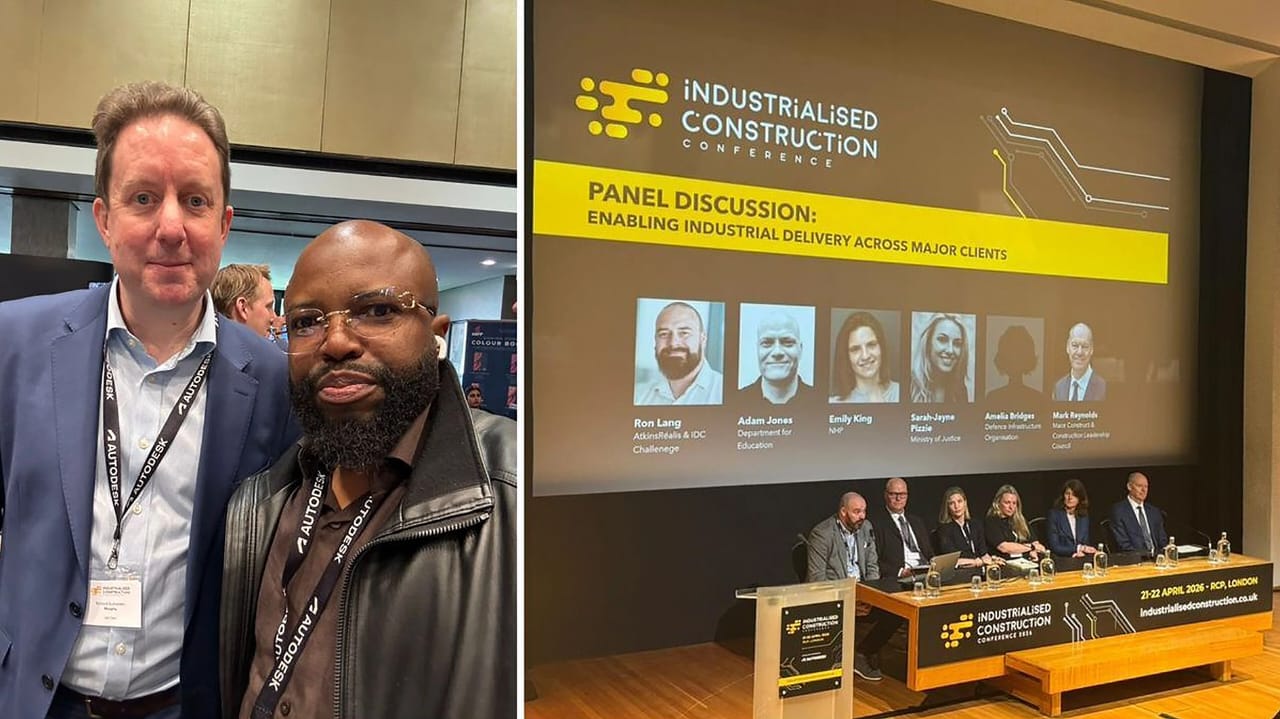
……Charge them to collaborate more effectively
The Chief Executive Officer (CEO) of Cemex Portals Limited, Abiodun Odewale has called for a stronger industry platform for architects, engineers, builders, developers, financiers, manufacturers, technology providers, policymakers and artisans to share knowledge and collaborate more effectively.
According to him, “We must learn, adapt and localise ideas to address our current realities, including rising material costs, affordability concerns, unstable supply chains, infrastructure gaps, land issues and regulatory delays.”
This was at the recently concluded Industrialised Construction Conference, held in London, where global experts discussed the future of construction through factory-based building.
The conference showed how global markets are rethinking construction, but the more urgent question is what Nigeria must begin to do differently.
Odewale stated that Nigeria’s construction industry remains one of the key pillars of national development, supporting housing, infrastructure, job creation, urban renewal and wider economic growth decrying that despite its importance, the sector continues to face recurring challenges such as poor coordination, weak documentation, inconsistent execution, rising costs and avoidable delays.
His words: “The biggest challenge in the Nigerian design and construction sector is not the absence of talent, rather, it is the absence of repeatable systems.
Nigeria has brilliant architects, engineers, builders, designers, project managers, artisans and developers. But many projects still struggle because talent is not always supported by strong systems, clear processes and disciplined execution. Good ideas are often weakened by poor planning, weak supervision, unclear briefs and fragmented coordination.”
After more than three decades in the industry, Odewale believes the next phase of growth will not be driven by creativity alone, but by systems, process discipline, technology adoption, stronger leadership and a deliberate culture of learning.
Speaking on some of the issues facing the built economy in Nigeria, identified better problem-definition as a key priority.
“Many projects begin with drawings, budgets and timelines, but without enough clarity on scope, risks, responsibilities and long-term value. When this foundation is weak, delays, cost overruns, redesigns and disputes become likely,” Odewale said.
He also emphasised the need for better documentation as too many completed projects end only as photographs or portfolio images, instead of becoming case studies that capture what worked, what failed and what lessons should guide future projects.
Odewale stressed the need for the creation of practical construction playbooks to guide planning, communication, procurement, supervision, quality control, site coordination and project close-out.
“Such systems help teams deliver with greater consistency, speed and quality. Technology must also play a bigger role. Digital tools should help construction teams communicate better, track progress, control costs, reduce errors, improve accountability and deliver better outcomes.
“As demand for housing, infrastructure and better urban environments grows, the Nigerian construction industry must move from improvisation to intelligence, from hustle to structure, and from isolated brilliance to collective excellence.
“Nigeria cannot keep building the future with yesterday’s methods. The sector must build better systems, lead better teams, document better knowledge, adopt better tools and deliver better outcomes,” he stated.

