 Follow Us on Google News
 Follow Us on Google Discover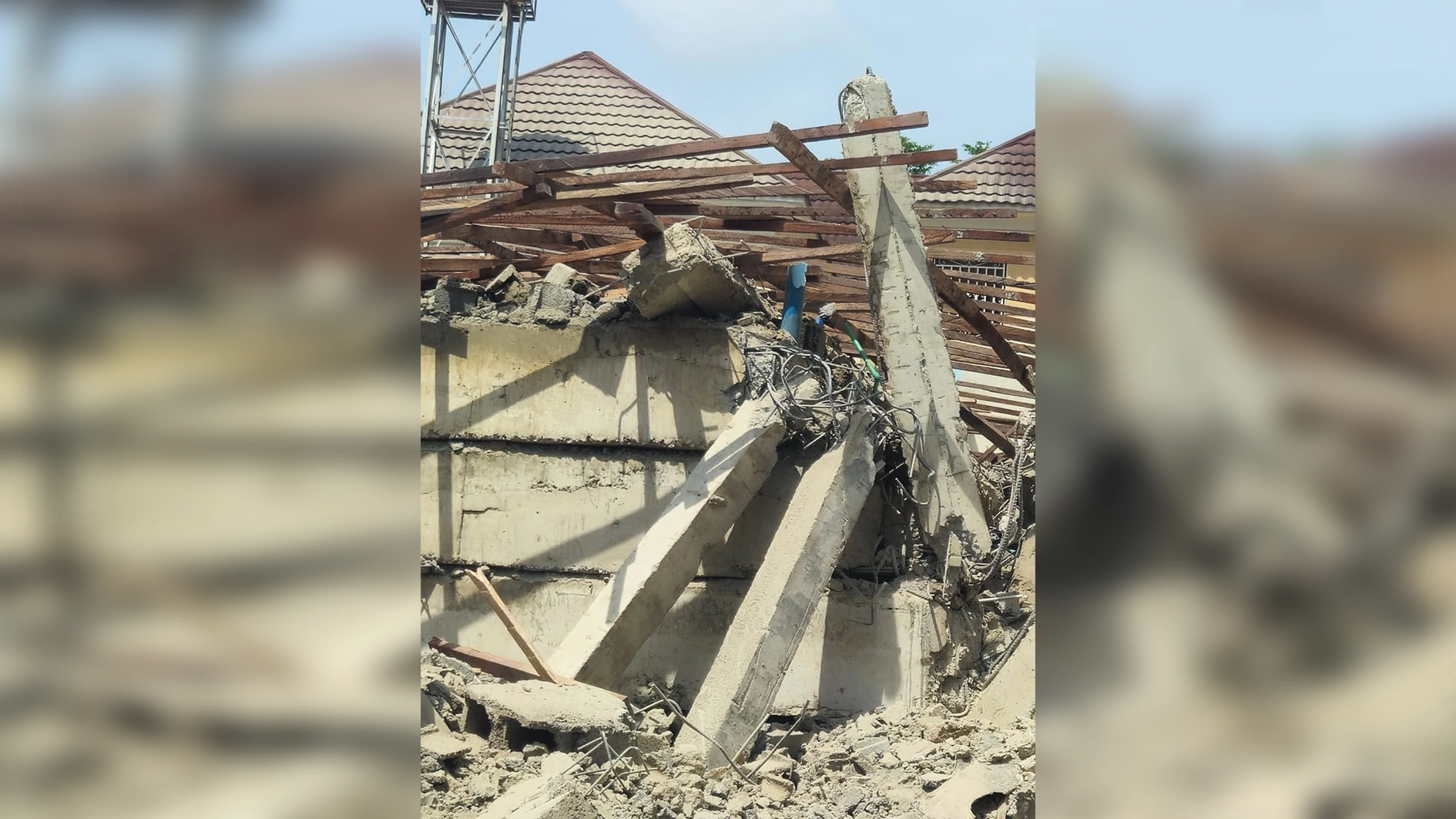
The Human Rights Writers Association of Nigeria (HURIWA) has blamed systemic corruption, weak regulation, and political failure for recurring building collapse tragedies in the Federal Capital Territory (FCT).
This followed the death of five persons after the collapse of a three-storey building under construction in the Gudu District of Abuja. The structure, located behind Gudu Market, reportedly collapsed at about 3:30 a.m. on Saturday.
The FCT Emergency Management Department (FEMD) Search and Rescue team said 16 persons had so far been rescued, with 11 of them taken to the Federal Medical Centre, Abuja, Asokoro District Hospital, and Maitama Hospital for treatment.
Officials of FEMD, the National Emergency Management Agency (NEMA), the Federal Fire Service, the FCT Fire Service, and the FCT Police Command were among responders at the scene. Most of those trapped in the rubble were said to be labourers working on the building.
Meanwhile, HURIWA expressed deep sorrow and concern over the incident, describing it as another reflection of longstanding structural and institutional failures in the administration of the Federal Capital Territory.
The group stated that Abuja had witnessed repeated cases of collapsed residential and commercial buildings over the years, many of which could have been prevented if regulatory institutions had functioned professionally, transparently, and without political interference.

In a statement signed by its National Coordinator, Emmanuel Onwubiko, HURIWA said the recurring building collapses reflected a dangerous mix of regulatory negligence, compromised engineering standards, weak enforcement mechanisms, institutional corruption, political patronage, and the use of substandard construction materials by profit-driven developers.
“The painful truth is that many buildings collapsing in Abuja are products of systemic failure long before they physically cave in. Professional engineers, architects, urban planners, builders, and quantity surveyors have repeatedly identified common technical factors responsible for these disasters.
“These are the use of substandard reinforcement materials, weak concrete mixtures, structural overloading, illegal modifications, poor soil analysis, compromised foundations, non-compliance with approved engineering specifications, and the absence of rigorous integrity testing during construction stages.
“Yet despite repeated warnings from professionals and regulatory bodies, successive FCT administrations have failed to establish a sustainable, transparent, and technologically driven compliance mechanism capable of preventing structural disasters,” the group stated.
HURIWA recalled that since 2015, Abuja had recorded multiple building collapses in areas including Jabi, Gwarinpa, Kubwa, Lokogoma, Sabon Lugbe, Lifecamp, Guzape, and other rapidly developing districts where real estate expansion had outpaced regulatory oversight.
According to the group, investigations were often announced after such incidents, committees constituted, and promises made, but without meaningful accountability or enforcement. It argued that the absence of consequences for regulatory failures had allowed the cycle of building collapses to persist.
HURIWA further alleged that Abuja was increasingly being governed more as a political estate-sharing arrangement than as a carefully regulated capital city guided by strict urban planning standards.
The group accused successive FCT administrations of prioritising land allocations to political allies and influential interests over sustainable urban development and safety compliance.
According to the organisation, the result has been chaotic construction patterns, overstretched infrastructure, compromised environmental standards, and unsafe structural practices across the FCT.
“Abuja was designed to be a modern, properly regulated capital city governed by strict masterplan principles. Sadly, what Nigerians increasingly witness today is the commercialisation of land administration without a corresponding commitment to structural safety and urban integrity,” it added.
HURIWA therefore demanded the establishment of an independent judicial panel of inquiry into recurring building collapses in the FCT since 2015.
It also called for the prosecution of developers, contractors, engineers, and regulatory officials found culpable in acts of negligence or approval fraud.
The group further advocated structural integrity audits of ongoing high-rise and major construction projects across Abuja, as well as the digitalisation and public transparency of building approval processes.
Other demands included mandatory integrity certification at every critical construction stage, stronger collaboration among the Council for the Regulation of Engineering in Nigeria (COREN), the Nigerian Society of Engineers (NSE), the Nigerian Institute of Architects (NIA), and urban development regulators, alongside criminal sanctions for officials approving illegal or compromised structures.
HURIWA also urged the Minister of the FCT, Nyesom Wike, to move beyond reactive sympathy visits and emergency responses by initiating lasting institutional reforms capable of restoring confidence in Abuja’s urban regulatory framework.
The group acknowledged the government’s provision of medical treatment for survivors but stressed that preventing avoidable deaths should remain the primary responsibility of government. “Nigeria cannot continue normalising building collapses as routine urban occurrences.
“Every collapsed structure represents institutional failure. Every avoidable death represents regulatory negligence. Every compromised building approval represents corruption with deadly consequences. The lives lost in Gudu must not become another forgotten statistic buried beneath official statements and temporary outrage,” the statement added.

