 Follow Us on Google News
 Follow Us on Google Discover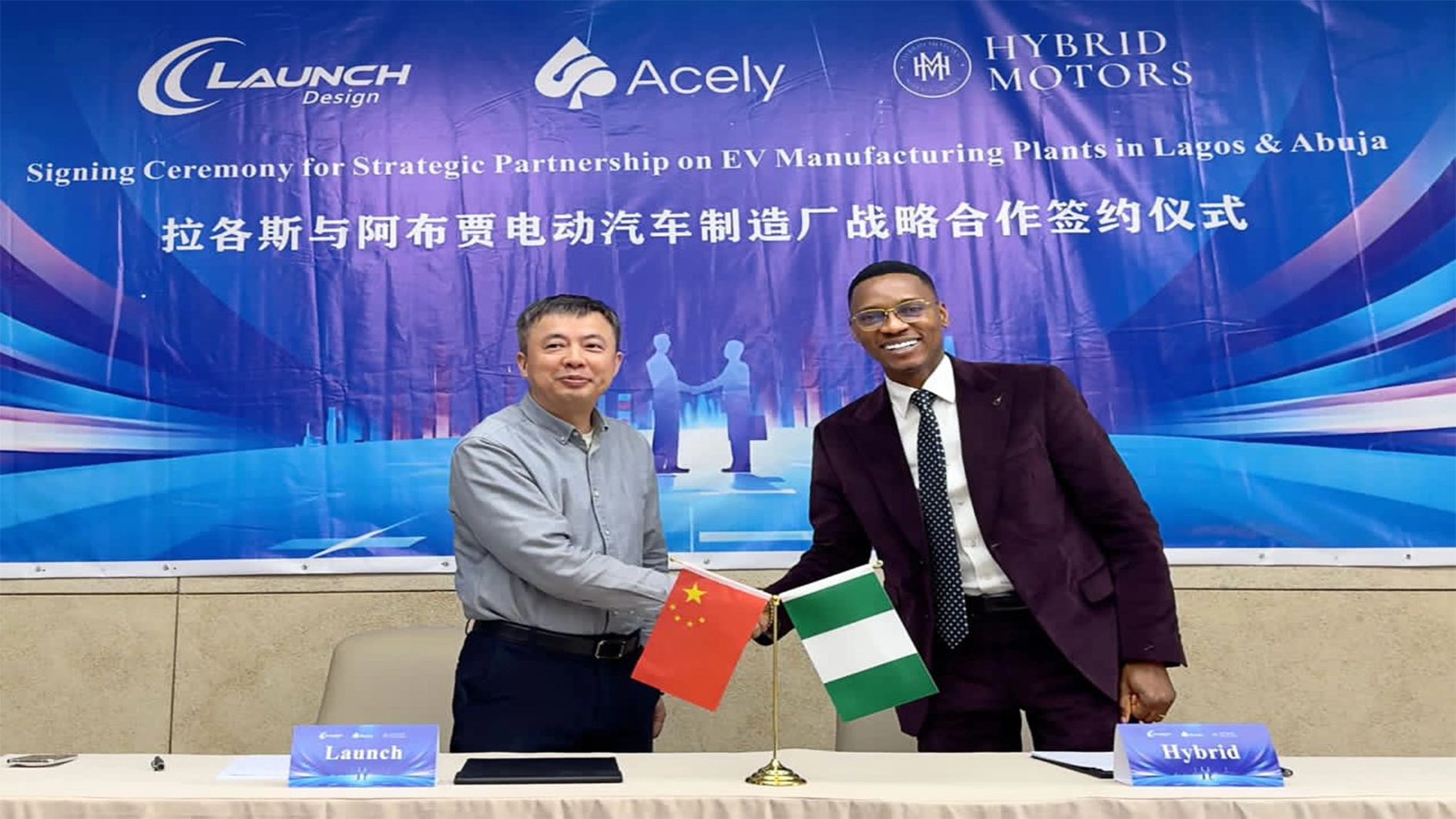
Launch Design Shanghai and Hybrid Motors Nigeria have entered into a strategic partnership to establish Electric Vehicle (EV) manufacturing plants in Lagos and Abuja.
The move is aimed at strengthening Nigeria’s automotive industry and positioning the country as a regional vehicle export hub.
The agreement, signed in Shanghai, China, would support the production of “Acely,” Hybrid Motors Nigeria’s indigenous automobile brand designed specifically for Nigerian roads and driving conditions.
The collaboration combines Hybrid Motors Nigeria’s local market knowledge with Launch Design Shanghai’s automotive engineering expertise, as the two companies described the initiative as a significant milestone for Nigeria’s industrial and clean mobility development.
Speaking at the signing ceremony, the Chief Executive Officer of Hybrid Motors Nigeria, Jubril Arogundade, said the project demonstrated the company’s commitment to building a sustainable automotive ecosystem in Nigeria.
According to him, the partnership was beyond commercial interests, representing a long-term investment in the future of Nigeria’s automotive sector.

“With Acely, we are showing that globally competitive vehicles can be conceived, designed and assembled in Nigeria by Nigerians for Nigerians,” Arogundade said.
He added that the collaboration with Launch Design would bring international engineering standards to the company’s operations while maintaining the Acely brand’s local identity.
On his part, the Chief Executive Officer of Launch Design, Wang Xun, described the partnership as an opportunity to contribute to the development of Africa’s automotive manufacturing capacity.
“Launch Design is proud to partner with Hybrid Motors Nigeria in this transformative venture.
“Our turnkey engineering capabilities, combined with Hybrid Motors’ understanding of the Nigerian market, provide a strong foundation for success. Beyond vehicle production, this partnership is about building an industry,” he said.
Under the agreement, both companies plan to establish manufacturing operations in Lagos and Abuja, with a projected combined annual production capacity of 70,000 vehicles upon full operation.
The Lagos facility, to be located along the Lekki-Epe corridor, would serve as the primary production and assembly centre with an estimated annual capacity of 50,000 units.
Its proximity to the Lekki Deep Sea Port is expected to support export activities to West African countries, including Ghana, Benin Republic, Togo and Côte d’Ivoire.
The companies said the Lagos plant would leverage the state’s commercial and maritime infrastructure to enhance regional distribution and international trade logistics.
The Abuja facility, expected to be situated within the Free Zone Business Area of Centenary Economic City, would function as a secondary manufacturing and technology hub with an annual production target of 20,000 units.
According to the firms, the Abuja plant would serve Northern Nigeria and neighbouring Sahel markets while benefiting from free-zone incentives and the Federal Capital Territory’s strategic location.
The companies noted that operating two manufacturing facilities would help reduce logistics costs, improve operational efficiency and create jobs across different parts of the country.

