 Follow Us on Google News


 Follow Us on Google Discover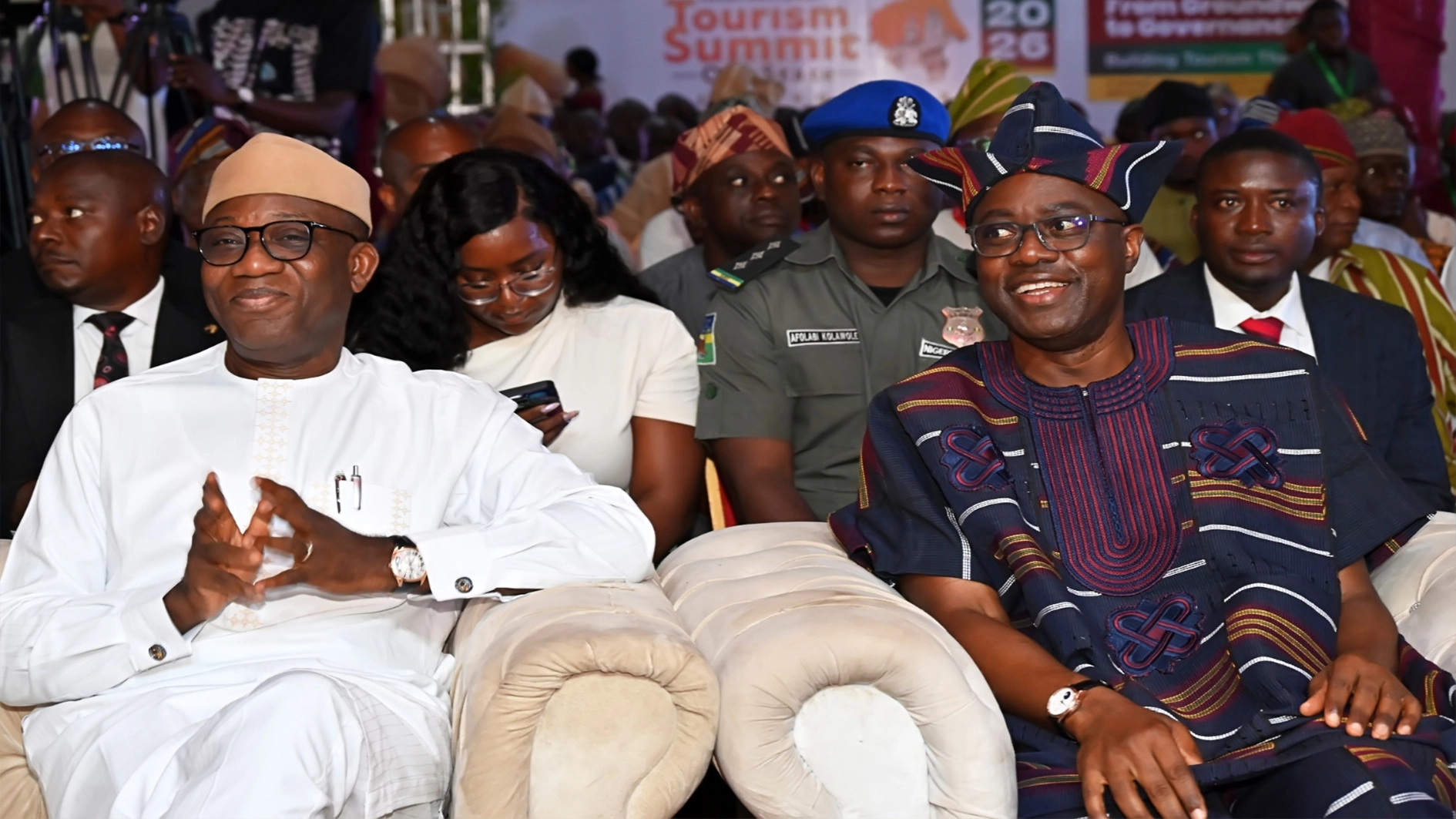
Nigeria has more than 1,000 tourism sites spread across the 36 states and the Federal Capital Territory (FCT). However, insufficient government support and limited private sector involvement are depriving the country of valuable exposure and economic benefits, OLUSEGUN KOIKI reports.
Across Nigeria, tourism events have become more than colourful celebrations of culture and tradition. They are gradually evolving into economic platforms capable of attracting investment, creating jobs, preserving heritage, and projecting states onto the global stage.
From the active streets of Calabar Carnival to the regal splendour of Ojude Oba Festival and from the spiritual depth of Osun-Osogbo Festival to the cultural prestige of Ofala Festival, tourism events are increasingly becoming strategic tools for economic diversification.
Yet despite their popularity and cultural significance, many of these events continue to struggle with sustainability, funding gaps, weak infrastructure, inconsistent planning, and overreliance on government budgets.
Almost all states organise various tourism events yearly or regularly that draw thousands of tourists, both local and foreign, to their states, boosting their internally generated revenue (IGR).
For instance, the Cross River State Government reportedly generated an estimated N17 billion during the 2025/2026 Carnival Calabar festival, with about 248,000 visitors and an estimated 780,000 on-site spectators.

Also, for the Ojude Oba Festival, the Ogun State Government earned about N2 billion from the event, while no fewer than 200,000 who gathered physically around the main pavilion and festival grounds projected 100 million through television and social media exposure.
Argungu Fishing Festival is a major tourism attraction in Northern Nigeria that returned in 2026 after years of suspension. The 2026 edition had about 50,000 fishermen participation, while the Kebbi State Government also generated about N3 billion revenue from the weeklong event.
Other major tourism events organised in Nigeria are the Osun-Osogbo Festival (Osun State), the Eyo Festival (Lagos), Carniriv by the Rivers State Government, the Ofala Festival (Anambra State), the Durbar Festival (Kano State) and the International Tourism Summit by the Oyo State Government.
But, in all these, the State governments primarily bankroll the tourism events with little private participation.
Globally, such events are no longer viewed merely as entertainment gatherings. They are major economic assets capable of driving hospitality, transportation, retail, and creative industries, as well as foreign investment.
In Nigeria, industry experts have, over the years, called for stronger private-sector participation to treat tourism as a business, enhance government revenues, and address numerous deficiencies in the sector.
A tourism expert, Ifeanyi Obiorah, in an interview with The Guardian, mentioned infrastructure deficiencies, poor road networks, inadequate accommodation, weak transportation systems, unreliable power supply, and limited tourism facilities as major obstacles to the growth of tourism in Nigeria.
According to him, these often reduce visitor experience and discourage tourists from returning.
Obiorah also mentioned the seasonal nature of many events. Several festivals, he said, attract huge crowds for a few days annually, but fail to generate year-round tourism value because supporting tourism ecosystems are underdeveloped.
He argued that without long-term commercial frameworks, tourism events risk remaining ceremonial gatherings rather than sustainable economic drivers, adding that private-sector participation offers the structure, continuity, innovation, and investment required for sustainability.
He said: “Private investors are more likely to approach tourism as a long-term business ecosystem involving hospitality, event management, branding, transportation, digital promotion, merchandising, entertainment, and destination development.
“PPPs can also reduce pressure on government funding while improving efficiency and professionalism. In many successful tourism destinations globally, governments create enabling environments while private operators drive execution, marketing, infrastructure, and customer experience.”
At the recent International Tourism Summit 2026, with the theme: ‘From Groundwork to Governance: Building Tourism That Endures’, held by the Oyo State, various participants said tourism would not thrive in the country until governments at all levels create an enabling environment that encourages greater private-sector participation.
Participants – investors, policymakers and tourism developers- insist that infrastructure, policy consistency and governance frameworks are necessary to unlock the sector’s economic potential.
They declared that sustainable tourism growth would only be possible through deliberate collaboration between government and private investors.
The Managing Director of Whatadeal Africa, Obafela Bank-Olemoh, said private investors were willing to commit resources to tourism development when governments create transparent and supportive investment structures.
According to him, his company became involved in the redevelopment project in Oyo State after responding to a public advertisement by the government, which he described as evidence that private investors were ready to participate when opportunities are clearly defined.
He noted that many tourism assets across Nigeria remained underutilised and underdeveloped despite their enormous economic value.
“We feel like several tourism sites in the state and in Nigeria generally are under-utilised, underdeveloped, and we feel like we can bring something more attractive to these sites and be able to transform how people look at our tourism,” he said.
Bank-Olemoh disclosed that plans were already underway to develop Bower’s Tower Heritage into a world-class tourism destination capable of attracting global visitors, with the first phase expected to open in December.
He commended the support received from the State Government, stressing that collaboration between public institutions and investors was essential for tourism projects to succeed.
Also speaking, Founder of KAP Film Village, Kunle Afolayan, emphasised the need for governments to provide basic infrastructure to enable tourism and creative investments to thrive.
Afolayan said that although private investors were willing to invest heavily in culture, heritage, film and tourism, they regretted that inadequate infrastructure continued to increase operating costs and slow expansion.
He revealed that his film village had relied heavily on generators due to a lack of stable electricity supply, with diesel expenses rising from about N10 million monthly to nearly N19 million following increases in fuel prices.
He said: “Look, it does not take rocket science for someone who is knowledgeable, who is a visionary, to see something that will benefit his people, and not to be confused.
“So after all of those things that we have done, that I showed you earlier, even before I met the governor or before the opening, I reached out to someone and I said we don’t have electricity, and I think a month or two after, they brought a transformer, and they brought cable, and all of that, but we are yet to get power supply to the transformer.”
He, however, commended the Oyo State Government for ongoing road construction linking Okaka and Komu, noting that improved access roads would benefit not only tourism investors but also the entire host communities.
According to him, tourism development should be seen as a long-term economic investment capable of creating jobs, supporting local businesses and preserving cultural heritage.
Besides, the Director-General of the Oyo State Investment and Public-Private Partnership Agency, Folami Tilewa, stated that the government was working to create structured investment frameworks capable of attracting credible private-sector participation in the sector.
Tilewa explained that the state’s tourism development strategy was now moving beyond conceptual discussions into clearly defined investment structures, particularly around the Eleyele tourism corridor project.
According to him, the state had now completed detailed surveys and spatial definition processes to give investors clarity and confidence.
“In 2025, when we presented the Eleyele Discover Blue Gold initiative, investors showed interest but repeatedly asked where the boundaries were because, without clearly defined boundaries, there can be no structure to development,” he said.
Tilewa added that clearly defined governance and planning structures were necessary to ensure orderly tourism expansion and long-term sustainability.
Similarly, a member of the International Tourism Summit Oyo State 2026, Dr Sulaimon
Olanrewaju, stressed that tourism development without governance direction could eventually weaken investor confidence and create environmental and infrastructure pressures.
He argued that tourism should no longer be treated merely as isolated attractions or periodic events, but as an integrated economic and governance system requiring long-term planning.
He argued that investors do not think “site by site,” but rather consider connectivity, accessibility, infrastructure, regional integration, and long-term sustainability before committing capital.
He assured that Oyo State was gradually shifting towards a tourism model built around corridors, clusters, anchor assets, and interconnected tourism economies rather than isolated projects.
Olanrewaju warned that destinations lacking proper governance frameworks risk unregulated expansion, land pressure, encroachment, and investor uncertainty.
Olanrewaju maintained that for Nigeria’s tourism sector to attract significant domestic and foreign investment, governments must prioritise policy continuity, infrastructure development, spatial planning, investor-friendly regulations and stronger PPPs capable of sustaining projects beyond political administrations.
He added: “Over the last two years, Oyo State has gradually begun shifting tourism away from being treated as isolated attractions or occasional events.
“Instead, the emerging direction is attempting to treat tourism as a long-term governance and economic system.”

