 Follow Us on Google News
 Follow Us on Google Discover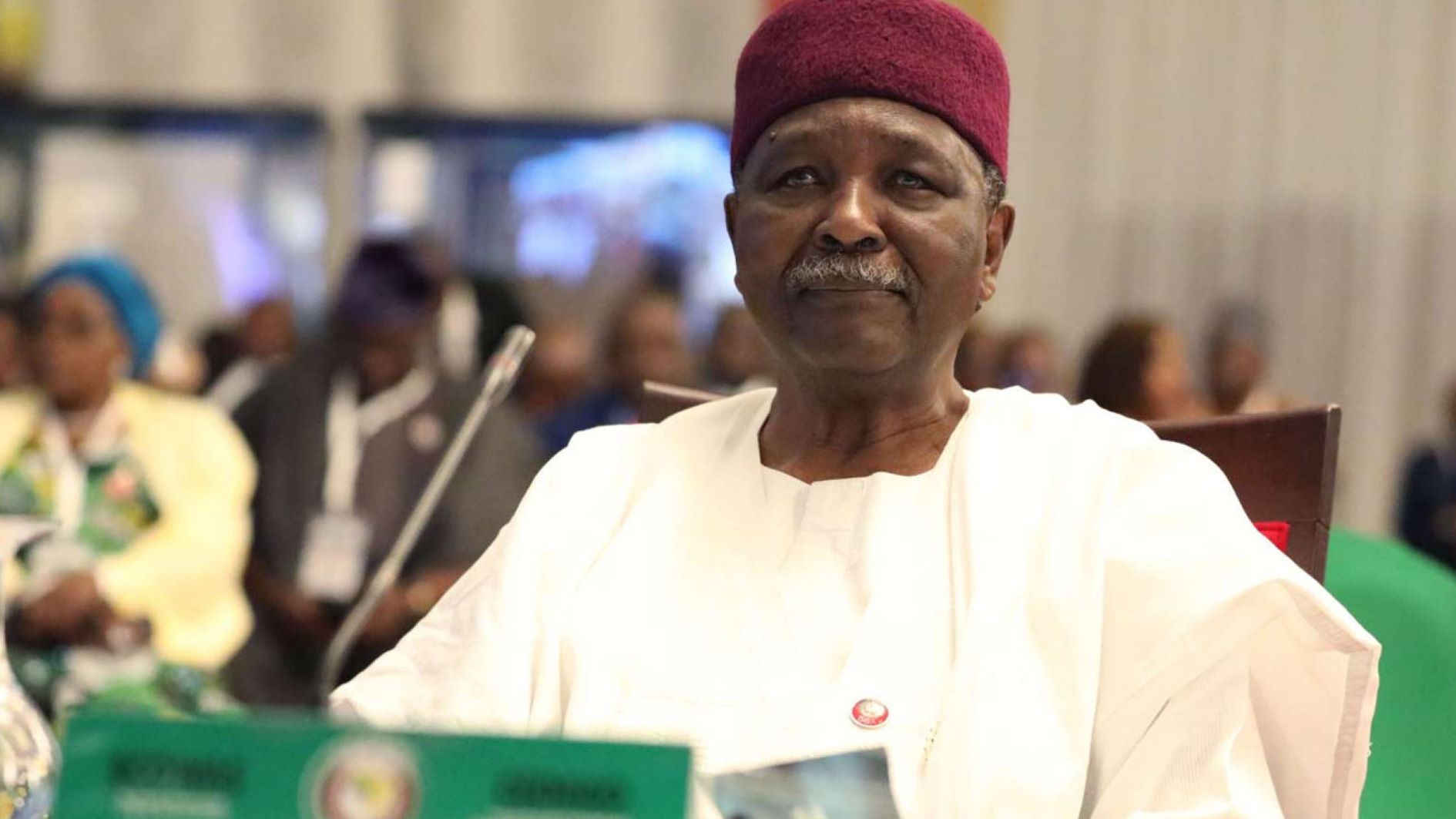
More than five decades after Nigeria’s civil war, the country’s oldest living former military Head of State, General Yakubu Gowon, has reopened conversation around one of the most contentious issues among the country’s military elite – the question of seniority between him and the late Biafran leader, Chukwuemeka Odumegwu Ojukwu.
The 92-year-old elder statesman maintains that he outranks Ojukwu, then governor of the Eastern Region, stressing that he was commissioned into the military before him.
Gowon made this known in his 859-page autobiography, ‘My Life of Duty and Allegiance.’
Gowon’s remarks revived historical memories of the political tensions that culminated in Nigeria’s 30-month civil war, fought between 1967 and 1970, following Ojukwu’s declaration of the Republic of Biafra.
In the 37-page chapter, which was both his historical account and a personal reckoning of the Aburi meeting in Ghana, Gowon blames Ojukwu’s conduct in the months before the meeting.
The revelations are contained in Chapter Nine of the book titled, ‘Aburi and the road to nowhere.’

While accusing Ojukwu of playing a mind game with him in the buildup to the 1967 civil war, he accuses him of being driven by “personal ambitions.”
“He declined about every proposition and dismissed invitations to meet with me and other members of the Supreme Military Council anywhere in Nigeria where there are Northern troops.”
He admits that they both had mutual suspicions for each other, recalling how Ojukwu described him as a “Bible-thumping ‘Jack’ who would pick his Bible and pray rather than stand up to fight.”
On the seniority question, the former military ruler insists that the issue should never have been controversial within military circles, arguing that by the established order in the Nigerian Army at the time, he clearly ranks above Ojukwu.
Gowon states that he was commissioned before the former Eastern Region governor and had risen through the ranks ahead of him, stressing that the records were clear on the matter.
According to him, the disagreement over hierarchy became one of the underlying factors that deepened mistrust within the Supreme Military Council after the January and July 1966 coups. He suggests that Ojukwu’s refusal to fully acknowledge his emergence as Head of State complicated efforts to restore unity within the country during the fragile post-coup period.
He says: “Ojukwu anchored his objections to any meeting with me in ‘Nigeria’ on his discomfort with the presence of ‘Northern’ soldiers in the Eastern and the Western Regions. Deep down, however, was his fear of being seen as obeying instructions from his ‘junior’ in the military hierarchy, a fact he openly spoke about during our heated telephone conversation in January 1966. He preferred to believe he was my senior, never minding that I was commissioned two years before he received his commission. I was commissioned in 1956, with service number N/20 while he, with service number N/29, was commissioned in 1958, and he was one of the first set of university graduates to be directly recruited from outside the army.
“As it happened, we were both promoted to the rank of Lt. Col on the same day, April 1, 1963. I was subsequently appointed as Adjutant General while he was Quartermaster General of the Nigerian Army. We held these posts until May 1965 when l attended the JSSC Course in Latimer, UK while Ojukwu was posted as Commanding Officer of the Fifth Battalion, Nigerian Army in Kano. After the January 15, 1966 coup, he was appointed the Governor of the Eastern Region while I was appointed the Chief of Staff (CoS) to the GOC, General Ironsi. In strict military hierarchy, therefore, I was senior to him by my appointment, yet Ojukwu refused to recognise me as such.”
He also reveals that several Nigerian military officers were already university graduates before Ojukwu joined the Army.
According to him, Colonel Victor Banjo was already a degree holder and qualified mechanical engineer before Ojukwu enlisted in the Nigerian Army. He adds that by 1963, the military already had more than six graduate officers across different disciplines.
Gowon lists notable officers at the time to include Colonel Olufemi Olutoye, Brigadier Oluwole Rotimi, Colonel Austen Peters, and Dr. Ahmadu Ali, whom he identified as medical doctors alongside Peters. Others mentioned were Major Adewale Ademoyega and Major Emmanuel Ifeajuna.
He also reflects on the Aburi Accord negotiations, describing them as a missed opportunity to preserve Nigeria’s unity peacefully. He argues that while agreements were reached during the meeting, differing interpretations and growing suspicions between both sides ultimately pushed the country closer to war.
The Guardian reports that at least three other former Nigerian leaders have so far documented their personal journeys and years in power through memoirs, offering rare insights into some of the country’s most defining political moments.
Among them is former president Olusegun Obasanjo, whose expansive three-volume memoir, ‘My Watch’, chronicles his military career, presidency and views on national issues.
Former military president, Ibrahim Babangida, also joined the list with his autobiography, ‘A Journey in Service’, a book that generated widespread attention for its reflections on governance, military rule and the June 12 crisis.
Similarly, former President Goodluck Jonathan authored ‘My Transition Hours’, a memoir centred on his presidency and the dramatic 2015 election that led to the first democratic transfer of power from a ruling party to an opposition in Nigeria’s history.

