 Follow Us on Google News
 Follow Us on Google Discover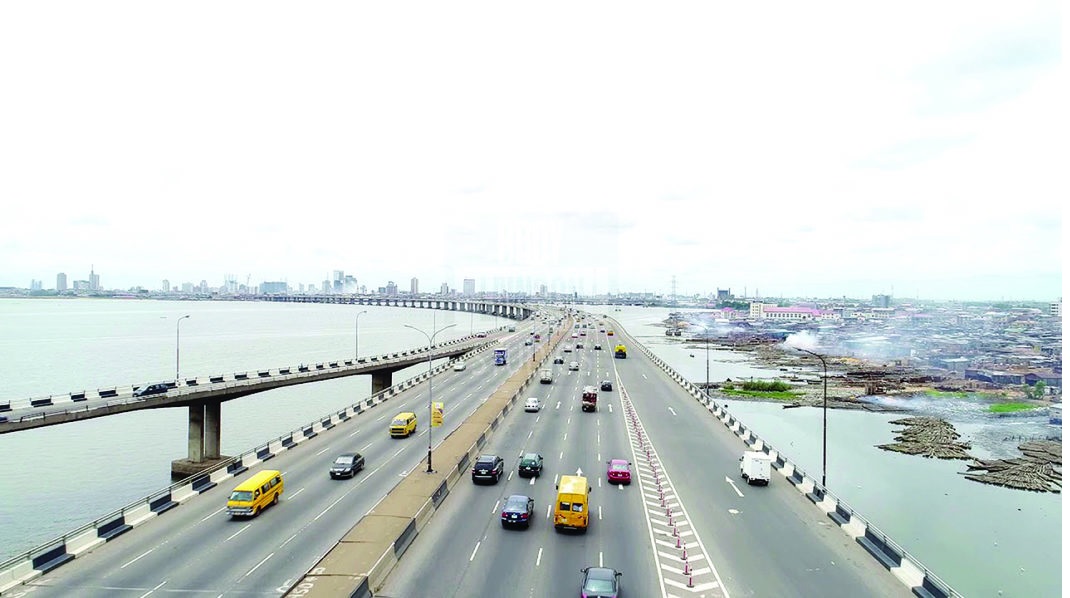
Julius Berger Nigeria Plc yesterday provided updates on the extensive bridge rehabilitation programme in Lagos State following its engagement by the Federal Ministry of Works in 2023.
The project is aimed at addressing years of severe structural deterioration affecting critical infrastructure across the state.
Construction work commenced in January 2024 on four major transport links: the Third Mainland Bridge, Carter Bridge, Iddo Bridge, and the Iddo Bridge Underpass.
The rehabilitation programme focuses on long-standing structural damage, particularly in underwater components affected by marine corrosion, tidal forces, and sustained heavy traffic.
In a statement yesterday, the construction company said rehabilitation works on Carter Bridge focused on degraded underwater sections and substructure elements to mitigate the effects of corrosion and tidal movement.
According to the company, physical work on the bridge was completed in January, while the project has now entered its close-out phase.

For the Third Mainland Bridge, engineers are carrying out structural repairs on critical components, including the deck soffit, piers, and underwater pile caps.
The project is currently about 80 per cent physically completed, with only the monitoring phase remaining.
The monitoring phase, expected to last one year, is now in its third month. Financially, approximately 60 per cent of the budget has been allocated, with 21 per cent of the total project value executed so far.
At press time, no major construction work was outstanding on this bridge as the focus was entirely on performance validation.
The rehabilitation of Iddo Bridge involves more intensive reconstruction due to severe deterioration.
Significant portions of the bridge have been demolished and are being rebuilt using reinforced concrete girders, enhanced reinforcement systems, and strengthened structural supports.
The project is ongoing and has reached 30 per cent physical completion.
At the Iddo Bridge Underpass, the existing structure was completely removed to enable full reconstruction.
The scope of work includes continuous reinforced concrete pavement (CRCP), improved drainage systems, and the installation of modern street lighting and utility infrastructure. Construction progress at the underpass has reached 38 per cent.
According to the company, CRCP systems are designed to control cracking rather than eliminate it, as cracks occur at regular and closely spaced intervals, while the reinforcement keeps them tight and prevents widening.
Overall, the rehabilitation projects are expected to improve commuter safety, extend the lifespan of critical infrastructure, and reduce structural risks along some of Lagos State’s busiest transport corridors.
The company added that the improvements would also ease traffic flow and support economic activities across the state.

