 Follow Us on Google News
 Follow Us on Google Discover
Policy formulation and business experts have x-rayed the newly unveiled Nigeria Industrial Policy (NIP) 2025 and its regulatory drawbacks, stressing the need for concerted efforts to achieve effective implementation.
They examined the document during the Policy Breakfast Session organised by the Udo Udoma & Belo-Osagie (UUBO) law firm, themed, ‘Translating Nigeria’s new industrial policy into productivity: Navigating legal & regulatory bottlenecks.”
Participants at the event also deepened conversations on how organisations can navigate roadmaps and capture incentives.
In her welcome remarks, Managing Partner at UUBO, Jumoke Lambo, said the subject of legal and regulatory bottlenecks and potential impact on NIP influence project financing decisions, procurement negotiations and other boardroom conversations.
To her, the real test is not only in the design, but in the implementation.
“The effectiveness of the policy will depend on how it is translated into practical outcomes within the constraints of the legal and regulatory environments,” she said.
Lagos State Commissioner for Commerce, Cooperatives, Trade & Investment, Folashade Ambrose-Medebem, noted that industrialisation drives productivity, creates jobs, expands exports, deepens value chains and strengthens innovation.
Saying no economy achieves sustainable prosperity without industrial growth, she added that long-term national resilience is also built on industrialisation.
Ambrose-Medebem further disclosed that Lagos launched its own Lagos State Industrial Policy (LSIP) in response to the nation’s NIP agenda.
She highlighted LSIP’s six strategic pillars as building a competitive and productive industrial base, infrastructural development, advancing regulatory reforms and ease of doing business.
Others are access to affordable finance; skills development and workforce readiness; promotion of innovation, technology adoption, sustainability and industrial growth.
Reviewing Nigeria’s 2026 policy landscape and what to expect, Godson Ogheneochuko, a partner at the firm, urged Micro, Medium and Small Enterprises (MSMES) to target sectors and operations that attract incentives and other fiscal measures; explore collaborations to secure ‘seat-at-the-table’; keep an eye on backward integration measures; and escalate constraints to funding access especially in view of ongoing Bank of Industry recapitalisation.
He also shared key policy developments since January 2026, such as the implementation of the new tax bills, ban on sachet alcohol, security and public safety, and electricity reforms, among others.
There was also a panel that explored the theme. The panellists included Chief Executive Officer, Construction Kaiser Limited, Sefan Euchenhofer; President & Chairman of Council, Lagos Chamber of Commerce & Industry (LCCI), Leye Kupoluyi and Partner at UUBO, Lolade Ososami.
The Government Relations and Public Practice (GRPP) group was also formally inaugurated to serve as an advocacy between policy formulators and the public.
Another partner at UUBO, Amina Ibrahim, insisted that proactive government relations is not just relevant, but indispensable to industrial competitiveness.
On his part, Assistant Comptroller, Nigeria Customs Service, Mohammed Mukhtar, argued that the role of the Customs in the country’s quest to achieve industrialisation cannot be overemphasised.
Experts examine NIP framework, regulatory bottlenecks
Date: 26 May 2026 4:54am WAT
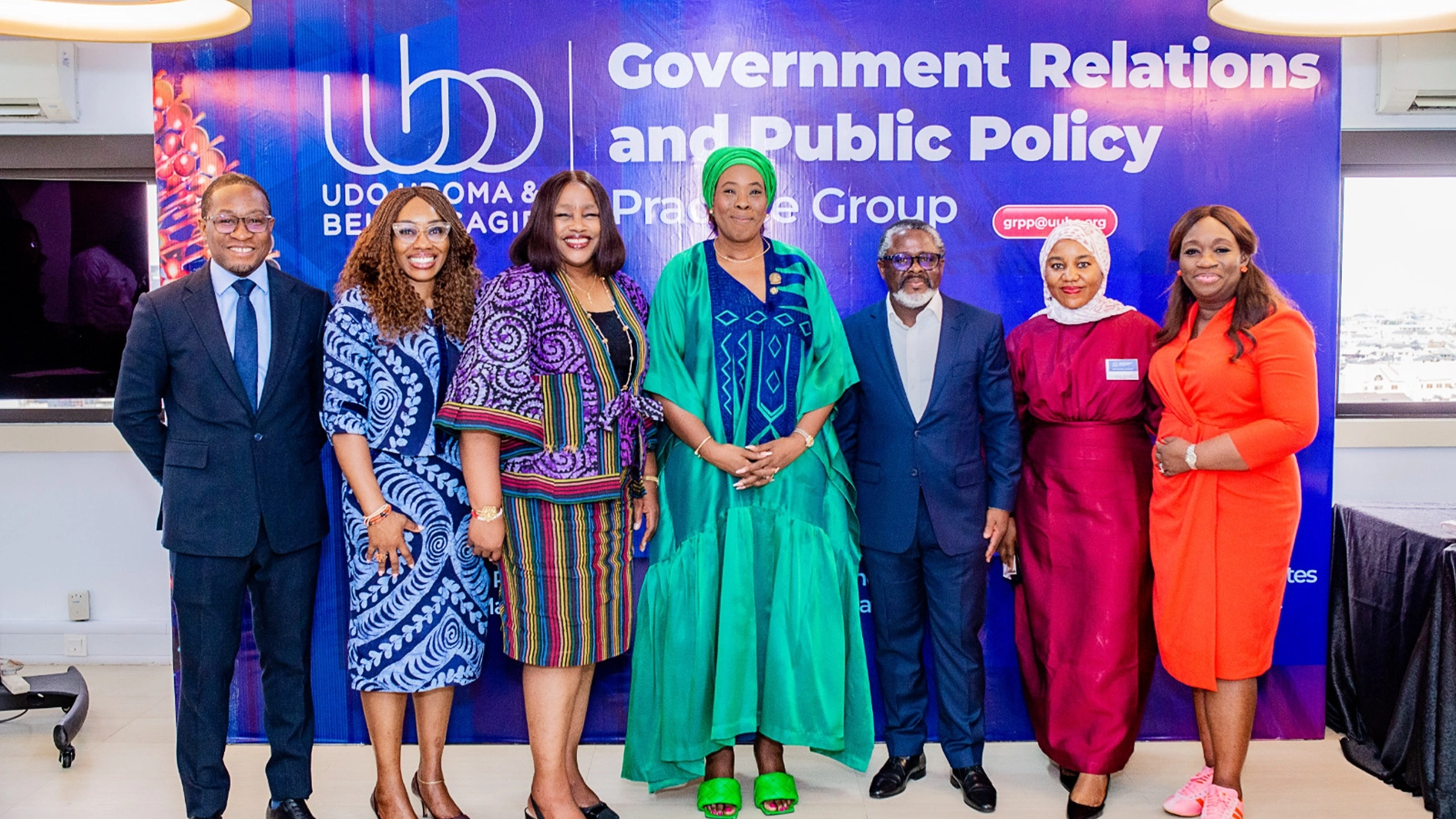
Godson Ogheneochuko, Partner, UUBO (left); Deputy Managing Partner, UUBO, Ozofu Ogiemudia; Managing Partner, UUBO, Jumoke Lambo; Commissioner for Commerce, Cooperatives, Trade & Investment, Lagos State, Folashade Ambrose Medebem; Senior Partner, UUBO, Aniekan Ukpanah; Partner, UUBO, Amina Ibrahim and Partner, UUBO, Folake Elias-Adebowale at the inaugural UUBO Policy Breakfast Session in Lagos.
Godson Ogheneochuko, Partner, UUBO (left); Deputy Managing Partner, UUBO, Ozofu Ogiemudia; Managing Partner, UUBO, Jumoke Lambo; Commissioner for Commerce, Cooperatives, Trade & Investment, Lagos State, Folashade Ambrose Medebem; Senior Partner, UUBO, Aniekan Ukpanah; Partner, UUBO, Amina Ibrahim and Partner, UUBO, Folake Elias-Adebowale at the inaugural UUBO Policy Breakfast Session in Lagos.

