 Follow Us on Google News
 Follow Us on Google Discover
IN recent years, a younger generation of Nigerian visual artists has emerged with renewed urgency around questions of memory, identity and cultural preservation.
Among this evolving voicescape is Bayelsa-born visual artist and fine art photographer, Douye Bekefula, whose body of work continued to celebrate nation’s heritage in its purest form.
Born and raised in Yenagoa, in the heart of the Niger Delta, Bekefula belongs to a lineage of artists shaped not only by aesthetics but by the quiet resilience of communities that have survived historical erasure and ecological trauma.
Her practice, which moves fluidly between painting and fine art photography, carries the sensibility of both documentarian and storyteller. She is less concerned with spectacle than with preservation: preserving gestures, symbols, identities, histories and emotional truths.
At the core of Bekefula’s artistic philosophy is a compelling act of reclamation. Her works insist that African stories must no longer remain mediated solely through external lenses.
Instead, she reconstructs those narratives through symbols, portraiture, indigenous iconography, feminine presence, ancestral memory and the visual language of everyday African life.
Her recent paintings, ‘What My Hands Know – Past, Present and Uncurtailed’ stands as her most ambitious conceptual undertaking so far. The collection functions simultaneously as visual archive, socio-cultural commentary and philosophical meditation on Africa’s historical continuity.
Through a sequence of symbol-laden paintings and photographic interpretations, Bekefula excavates forgotten narratives buried beneath colonial distortions and modern amnesia.
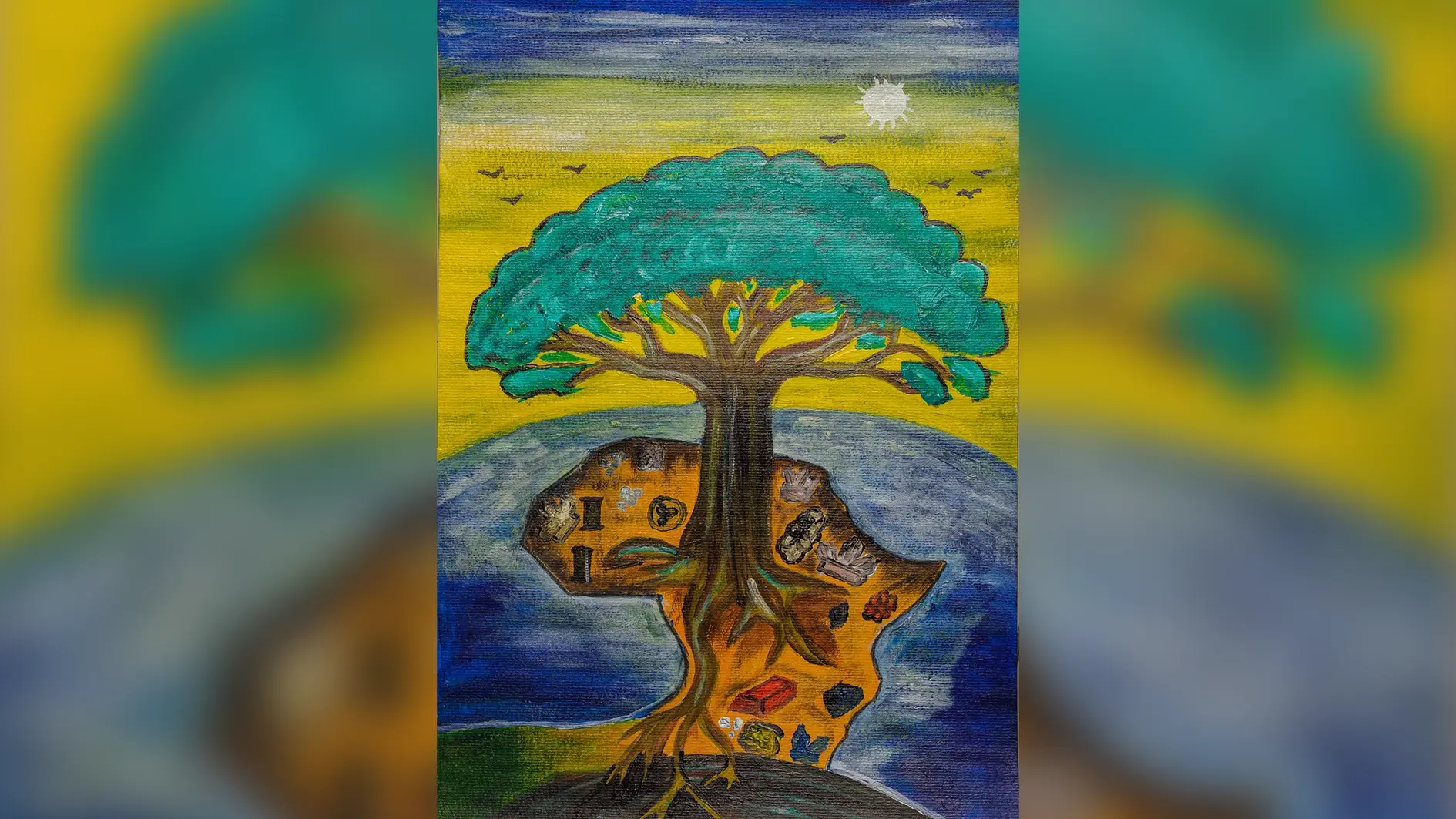
The project’s thematic preoccupation is clear: before invasion, before extraction, before imposed definitions, Africa already possessed systems of governance, beauty, spirituality, craftsmanship and civilisation. Bekefula approaches this not with romantic nostalgia but with visual conviction.
One of the most striking works in the series, ‘Ooni Luwo Gbagida’ revisits the legendary 10th-century female Ooni of Ife, the only woman historically recorded to occupy the sacred stool. In reintroducing ‘Luwo Gbagida’ into contemporary visual discourse, Bekefula performs an important archival intervention.
The artwork challenges patriarchal historical omissions while reaffirming the existence of female political authority within precolonial African societies. The artist transforms portraiture into historical restoration.
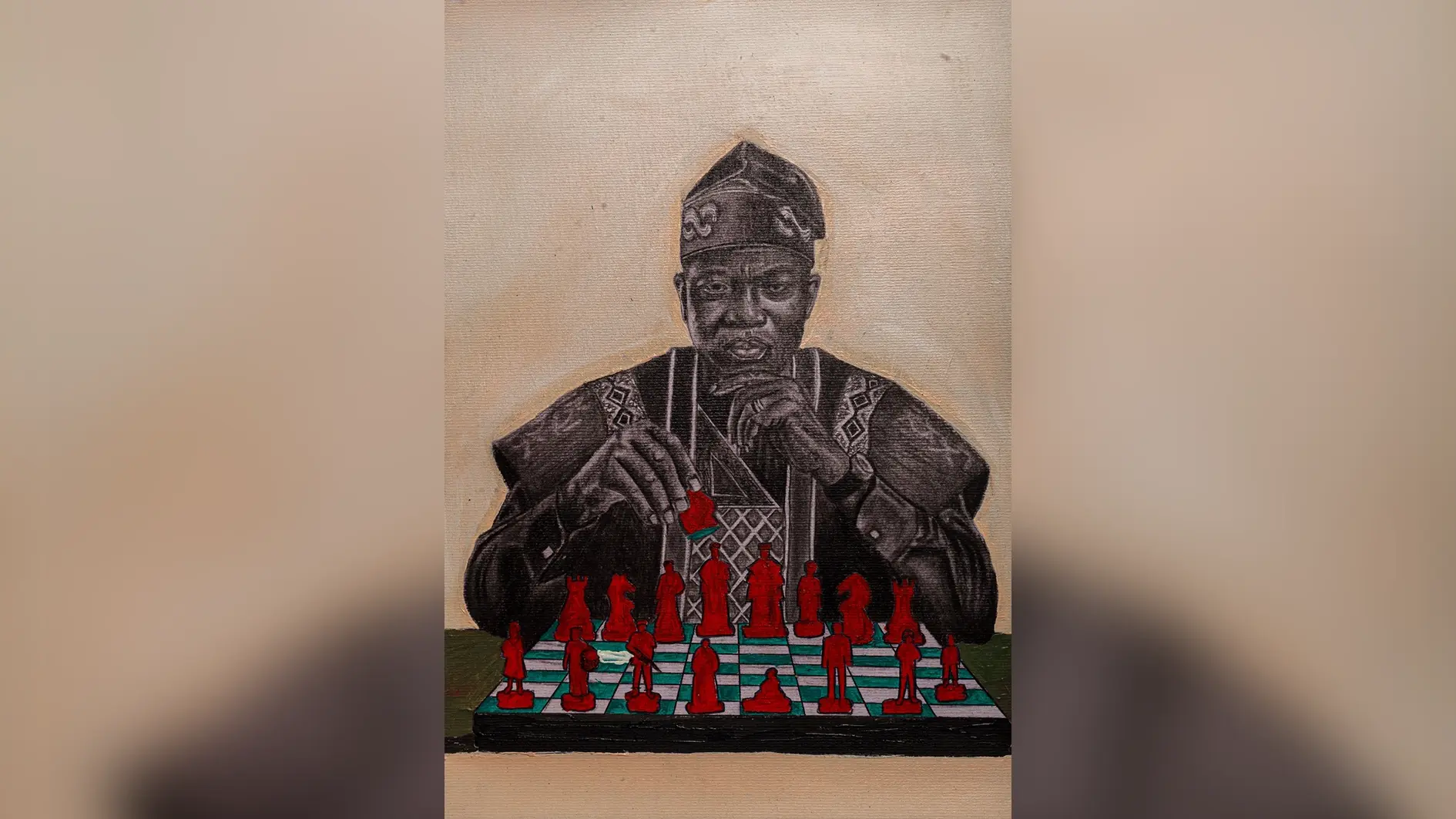
With ‘The Board of Lives’, a politically charged metaphor rendered through the imagery of chess. The work interrogates leadership, governance and the consequences of power. The chess pieces become symbolic citizens.
In a continent where political decisions continually shape the realities of ordinary lives, Bekefula’s metaphor resonates with unsettling clarity.
Her recurring engagement with womanhood and labour appears poignantly in ‘Baby Cradle, the African Way’. The image of a mother carrying her child across her back using cloth evokes one of Africa’s oldest indigenous technologies of care and survival.
Yet beyond maternal tenderness lies commentary on invisible labour, endurance and generational continuity. The woman’s hands remain free to work, build, trade and survive. Bekefula recognises motherhood not merely as sentiment but as infrastructure.
Perhaps the most emotionally arresting piece in the series is ‘Red Tears’. In the painting, an eye contains the African landscape itself with wildlife, sunset and ancestral earth glowing within the iris.
But beneath the eye falls a crimson tear. The image is devastating in its simplicity. Africa sees, remembers, survives but not without pain. Bekefula compresses centuries of violence, displacement, ecological loss and historical grief into a single symbolic gesture.
Bekefula’s works occupy an expressive territory between realism and symbolism. Her visual language prioritises emotional resonance over technical rigidity.
Textured surfaces, muted monochromes interrupted by vibrant accents, elongated forms and sparse spatial arrangements create compositions that feel psychological rather than merely representational.
There are traces of contemporary African expressionism in her handling of form, yet her sensibility remains distinctly personal and regionally grounded.

