 Follow Us on Google News


 Follow Us on Google Discover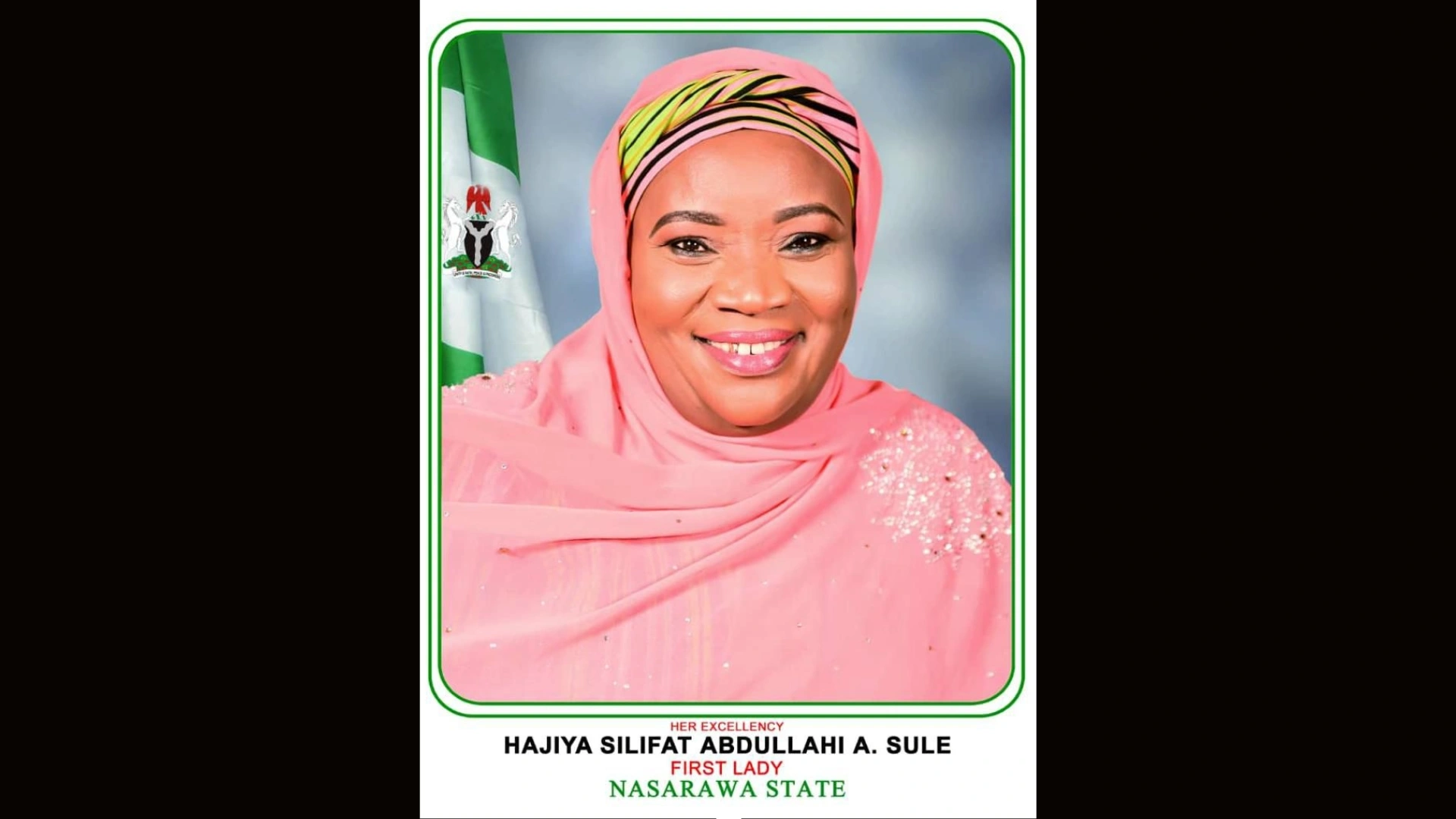
Hajiya Silifat Abdullahi A. Sule has used her tenure as First Lady of Nasarawa State, which began in May 2019, to reshape the office into something far more active than tradition suggests. Instead of limiting herself to formal duties, she has made it a direct channel for reaching women, children and young people who are routinely left out of mainstream services. With a background in education and home economics, she founded the Silifat Abdullahi Sule Hope Foundation, also known as SAS Hope Foundation, to deliver practical support where it matters most. What started as a personal initiative after her husband, Engineer Abdullahi A. Sule, became Governor has since grown into one of the state’s most recognisable charitable outfits, centred on restoring dignity, widening opportunity and improving health for those who need it most.
Born on 10 October 1963, she spent her formative years in Kakumi, within Bakori Local Government Area of Katsina State. Her early schooling began at Baptist Primary School in Sabon Gari, Kano, before she moved on to complete her secondary education at Kabomo Teachers College in Bakori, at the time part of Kaduna State. She later advanced her studies at the College of Education, Akwanga, earning an NCE in Home Economics, and went on to obtain a BSc in Food and Nutrition from A.B.U. Zaria’s Akwanga branch. It is this blend of academic training and lived experience that has shaped her approach to philanthropy, enabling her to design programmes that address the immediate realities faced by families across Nasarawa State.
At the heart of the foundation’s mission is a commitment to dismantle the social barriers that trap women, youth and children in cycles of disadvantage. From its inception, Hajiya Silifat has prioritised eradicating rape and drug abuse, expanding access to education for girls, and opening pathways for women and young people to become economically self-reliant, while also intervening in family health for communities with limited care. By framing the foundation’s work as complementary to government efforts, she ensures that each intervention is both immediate in its impact and measurable in its outcomes, turning the administration’s blueprint for growth and inclusion into lived improvements across Nasarawa State.
Hajiya Silifat Abdullahi A. Sule’s work is closely woven into the broader development agenda of Nasarawa State. Through the SAS Hope Foundation, she has deliberately aligned grassroots interventions with the Nasarawa Economic Development Strategy and the Renewed Hope Initiative, ensuring that programmes on maternal health, girl-child education, skills training and economic support translate government policy into real change for families in both towns and rural communities. Rather than operating on the sidelines, she steps in where service gaps are widest, pairing a practical, hands-on approach with a clear focus on dignity, access and opportunity. It is this combination of purpose and presence that has restored a sense of possibility for many who once felt overlooked, strengthening public confidence that development can reach those who need it most.
In education and health, the record is substantial. SAS Hope Foundation has sponsored the schooling of over 500 orphans across Nasarawa State and worked with the ABOC Foundation to distribute over 10,000 exercise books to pupils in every one of the state’s 13 local government areas. At the height of the COVID-19 pandemic in October 2020, she led the donation of 3,800 gallons of liquid soap, thousands of hand sanitisers and hand-washing basins to 248 secondary schools, an intervention the State Commissioner for Education described as the first of its kind in Nasarawa. Beyond the pandemic response, the foundation has taken on the medical bills of seven cancer patients – five women and two children – up to surgery level, and routinely visits hospitals to provide new mothers with baby materials and “mama’s kits” designed to encourage safe hospital deliveries.
Social protection for vulnerable youth runs alongside these health interventions. In Gudi Station, Akwanga LGA, the foundation supports over 150 children by covering feeding and schooling costs to keep them off the streets. It has paid tuition for young people living with disabilities who gained admission to higher institutions and awarded scholarships to students of Nasarawa State Polytechnic to study abroad. Recognising the challenges facing Almajiri pupils, Hajiya Silifat has met directly with mallams, providing clothing, food, drugs, cash and learning materials to reduce street begging and support safer, more structured Qur’anic education.

Economic empowerment has been pursued through a blend of skills training and seed funding. About 400 women have received training in cosmetology and were provided with soft capital to start small businesses, while another 300 women in Nasarawa West Senatorial District were given financial assistance each after completing skills acquisition programmes. Widows and people living with disabilities have also benefited from tailored training and grants. The model of her foundation is deliberate: move beneficiaries from training to income generation, reduce household dependency and strengthen local economies from the ground up.
Hajiya Silifat’s advocacy extends into public health and youth protection. Working with NYSC medical teams, the foundation has organised free medical outreaches in communities across the state. In partnership with the NDLEA and other agencies, she has led programmes to curb drug and substance abuse among young people and women, urging mothers to be vigilant about peer influences. On gender-based violence, she has encouraged victims to speak out and supported measures to ensure perpetrators face justice, working closely with the Office of the First Lady of Nigeria and the Nasarawa State Ministry of Women Affairs. During the 16 Days of Activism Campaign, she presented the foundation’s work to the Nasarawa State House of Assembly, securing a pledge of legislative and practical support to end violence against women and girls.
Prominently, Hajiya Silifat Abdullahi Sule did not just ensure restoration of the health condition of Rukayya, a three months old baby raped by a twenty-five years old man, but stood her grounds until the perpetrator got convicted.
Her initiatives, such as the mother-child care program, have reached the remote and grassroots areas, ensuring that no one is left behind. She has also confronted gender-based violence and female genital mutilation head-on, pairing public advocacy with support for those affected, while her push for the rights of girls to learn and live free from harm has shifted attitudes on the ground and given thousands of young women a stronger footing to shape their own futures.
Hajiya Silifat Abdullahi Sule’s work has drawn notice well beyond Nasarawa State, earning her a string of honours that reflect both the breadth and focus of her advocacy. She has been named African Peace Ambassador by the African Youth Assembly for Peace, appointed Grand Matron of the Mada Development Association, and recognised as a Breastfeeding Champion for her efforts to improve maternal and child health. Added to this, she received the award for Best Performing First Lady on Girl Child Education. Each recognition underscores a consistent theme: turning policy into practical support for women, girls and families.
Across Nasarawa’s communities, that impact has not gone unnoticed. In gratitude for her hands-on engagement, traditional councils have conferred several honorary titles on her, including Ozi of Toto, Onyawole of Alago land, Jaruman Matan Nku, and Giwar Mata of Nasarawa State. These titles, rooted in local culture, signal a broader appreciation for a First Lady who has made herself accessible and responsive to the people she serves.

