 Follow Us on Google News
 Follow Us on Google Discover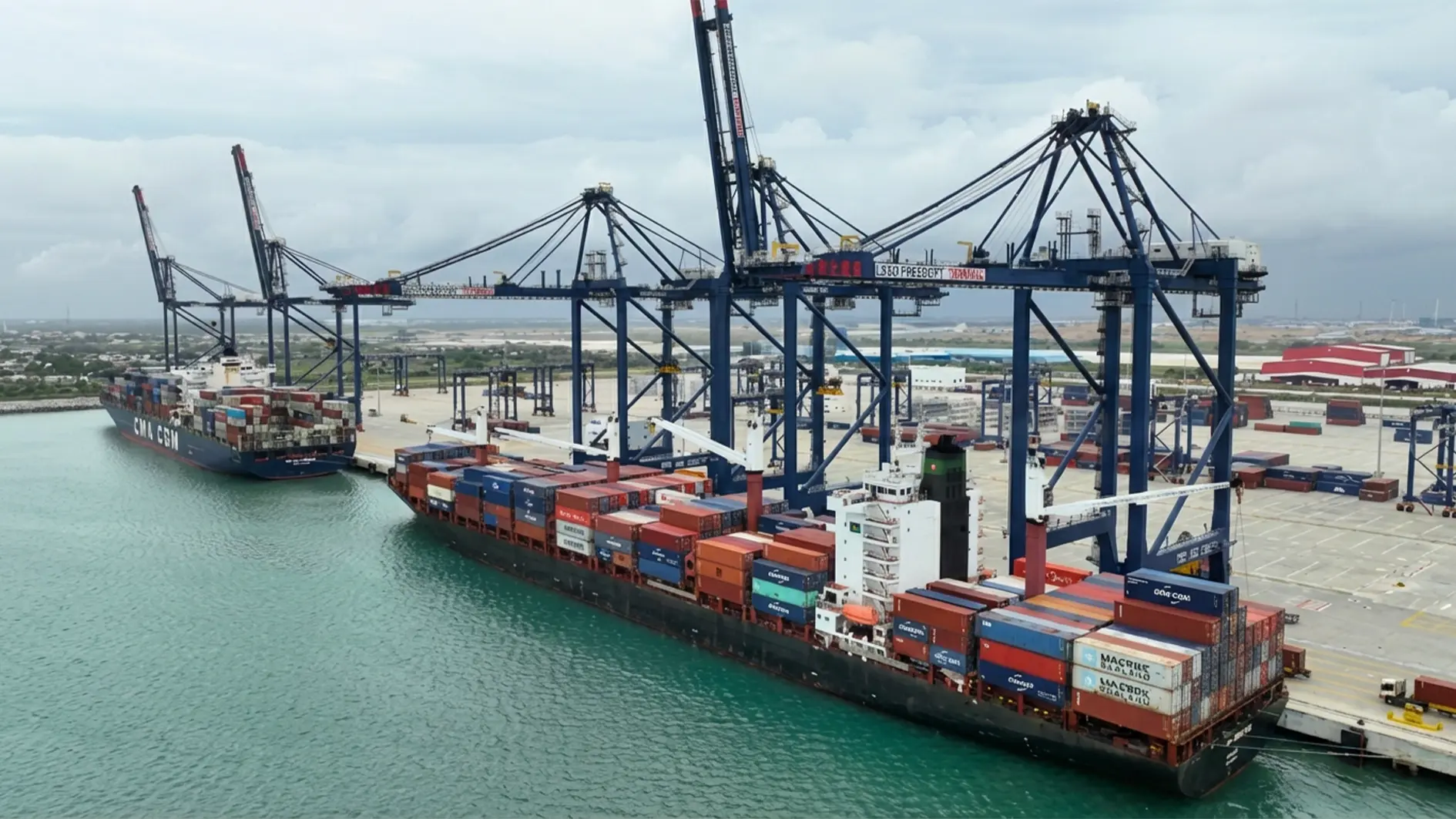
Experts have warned that as African nations are investing billions of dollars in building deep seaports, only foreign shipping firms would benefit from it due to the absence of strategic national and regional marine fleets.
They said the gap in fleet ownership would allow foreign shipping interests to capture a significant share of the value generated by African trade, logistics, and maritime services.
The Executive Director of Seamate Maritime Integrated Services Limited, Ladi Olubowale, said a boom in deep seaport constructions in different parts of Africa is not enough to drive the continent’s economic future alone, except for massive investments in strategic marine assets.
He listed the assets needed to sustain trade movement to include vessel acquisition, coastal shipping systems, offshore support fleets, inland waterways logistics, marine engineering capabilities, cargo distribution networks and integrated supply chain operations.
The seasoned shipping professional criticised the total neglect of African countries and investors to invest in these strategic marine assets that can drive the deep-seaport economy.
Olubowale, who is also the immediate past president of the African Shipowners Association (ASA), said governments in Nigeria, Ghana, Senegal, Angola, Namibia, Kenya, Tanzania, and South Africa are committing billions of dollars toward maritime infrastructure development.
He stated that for many policymakers, these projects symbolise economic growth, industrialisation, regional trade integration and global competitiveness.
Olubowale said that beneath the optimism lies a structural reality that Africa must urgently confront, as ports alone do not create maritime power.
He pointed out that major maritime economies from Singapore, the UAE, to China, Norway, Greece, and South Korea did not become maritime powers solely through infrastructure spending, but from their private sector strategic investment in marine assets, shipping capacity, industrial logistics systems, and trade-linked maritime ecosystems.
Expressing great concerns about how Africa will compete with foreign shipping lines in providing marine assets needed by industrial giants such as Dangote Group or for supporting the African Continental Free Trade Area (AfCFTA), Olubowale asserted that Africa’s next economic battle will be fought through logistics.
He noted that the scale of these transformations will generate unprecedented demand for coastal cargo movement, refined petroleum distribution, offshore marine support services, bulk commodity transportation, regional logistics integration, industrial marine supply operation and strategic shipping support infrastructure.
On the way out, Olubowale said Africa requires maritime companies capable of building in integrated marine logistics systems, strategic tanker and coastal fleet operations, offshore support infrastructures, port-linked industrial supply chains, inland waterways transportation networks, maritime intelligence and safety systems, trade corridor logistics platforms and regional marine asset management capabilities.
Also speaking, the Director of International Trade, Maritime Researchers and Authors Association of Nigeria (MARASSON), Sunday Ademuyiwa, said Dangote Petroleum Refinery’s expansion is a wake-up call for Nigeria’s maritime sector.
He said policies remain on paper, while trade routes are poorly protected, with foreign vessels dominating routes that should belong to Nigerian operators.
He said Dangote Petroleum Refinery had over 600 vessel calls in its first year, which could have created jobs, stimulated indigenous shipping and boosted marine services for Nigerians.

