 Follow Us on Google News
 Follow Us on Google Discover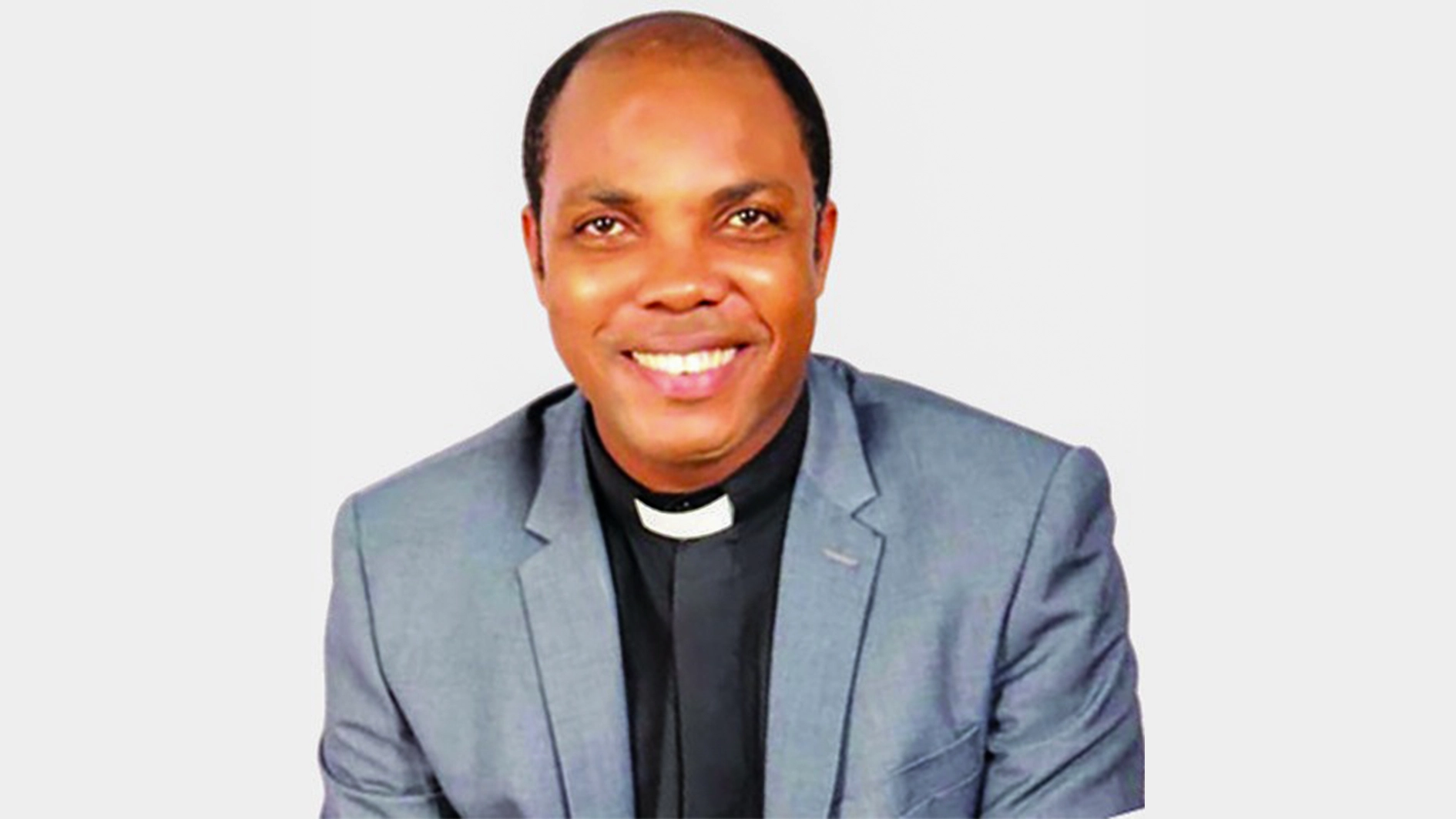
By Stephen Wolemonwu
“You are the salt of the earth; but if the salt loses its flavor, how shall it be seasoned? It is then good for nothing but to be thrown out and trampled underfoot by men. You are the light of the world. A city that is set on a hill cannot be hidden. Nor do they light a lamp and put it under a basket, but on a lampstand, and it gives light to all who are in the house. Let your light so shine before men, that they may see your good works and glorify your Father in heaven,” (Mathew 5:13-16).
Introduction
The Church is positioned to represent Christ and make the difference in all ages. Christ’s metaphors of salt and light are rooted in the socio-religious context of Second Temple Judaism. Salt was indispensable in covenantal offerings (Leviticus 2:13): “And every oblation of thy meat offering shalt thou season with salt; neither shalt thou suffer the salt of the covenant of thy God to be lacking from thy meat offering: with all thine offerings thou shalt offer salt” this symbolised permanence and purity. It also preserved food from decay, a metaphor for the Church’s vocation to restrain moral corruption. Light, equally, was a central biblical motif for divine revelation-
Isaiah 60:1–3: “Arise, shine; for thy light is come, and the glory of the Lord is risen upon thee. For, behold, the darkness shall cover the earth, and gross darkness the people: but the Lord shall arise upon thee, and his glory shall be seen upon thee. And the Gentiles shall come to thy light, and kings to the brightness of thy rising.
John 1:4–5: “In him was life; and the life was the light of men. And the light shineth in darkness; and the darkness comprehended it not.”
To be “a city set on a hill” recalls Zion theology, where Jerusalem was envisioned as the beacon of God’s truth to the nations (Micah 4:1–2): “But in the last days it shall come to pass, that the mountain of the house of the Lord shall be established in the top of the mountains, and it shall be exalted above the hills; and people shall flow unto it. And many nations shall come, and say, come, and let us go up to the mountain of the Lord, and to the house of the God of Jacob; and he will teach us of his ways, and we will walk in his paths: for the law shall go forth of Zion, and the word of the Lord from Jerusalem.”

Thus, the Church’s mission is not ornamental, but ontological: to embody holiness that preserves society and to radiate truth that dispels darkness. Paul’s description of the Church as “pillar and ground of the truth” (1 Timothy 3:15): “But if I tarry long, that thou mayest know how thou ought to behave thyself in the house of God, which is the church of the living God, the pillar and ground of the truth;” this situates ecclesial identity within the architecture of stability and witness. John’s assertion that “the whole world lieth in wickedness,” (1 John 5:19) underscores the urgency of this vocation.
Historical Witness Of The Church In Decaying Societies
Patristic Era
• City Of God (5th century) responded to Rome’s collapse by distinguishing the transient civitas terrena (earthly city) from the eternal civitas Dei (City of God). The Church was called to embody the eternal city amid political disintegration. The civitas terrena is driven by self love and earthly dominance, which is different from civitas Dei is defined by selfless love of God of which we are to represent.
John Chrysostom emphasised the Church’s prophetic rebuke of imperial excess, insisting that bishops must be “watchmen” (cf. Ezekiel 33:7).
Medieval Christendom
The Church preserved literacy, moral order and social cohesion during the so-called Dark Ages. Monastic communities became centres of ethical formation and social stability.
Reform movements (e.g., Cluniac, Cistercian) arose precisely when corruption threatened ecclesial witness, reminding us that renewal is intrinsic to the Church’s identity.
Reformation And Post-reformation
Reformers like Luther and Calvin denounced ecclesial materialism and called the Church back to holiness. Calvin’s Geneva became a model of moral discipline, where civic and ecclesial life were intertwined.
The Catholic Counter-Reformation (Council of Trent, 1545–63) reaffirmed the Church’s role as guardian of truth, emphasising catechesis, liturgical purity, and pastoral accountability.
Modern Africa
Kenya (2017): Anglican leaders sparheaded anti-corruption campaigns.
• Malawi: Bishops denounced electoral malpractice, framing corruption as a spiritual disease.
• Democratic Republic of Congo (DRC): Catholic leaders mobilised against systemic injustice.
• Nigeria: Catholic Bishops’ Conference of Nigeria (CBCN) communiqués and Caritas Nigeria initiatives exemplify institutional advocacy.
This historical trajectory demonstrates that the Church’s prophetic role is perennial: to stand as conscience, rebuke and guide in times of decay.
• The Ven. Stephen Wolemonwu, Rector, The Ibru Ecumenical Centre, Agbarha-Otor
[email protected], 08035413812.

