 Follow Us on Google News


 Follow Us on Google Discover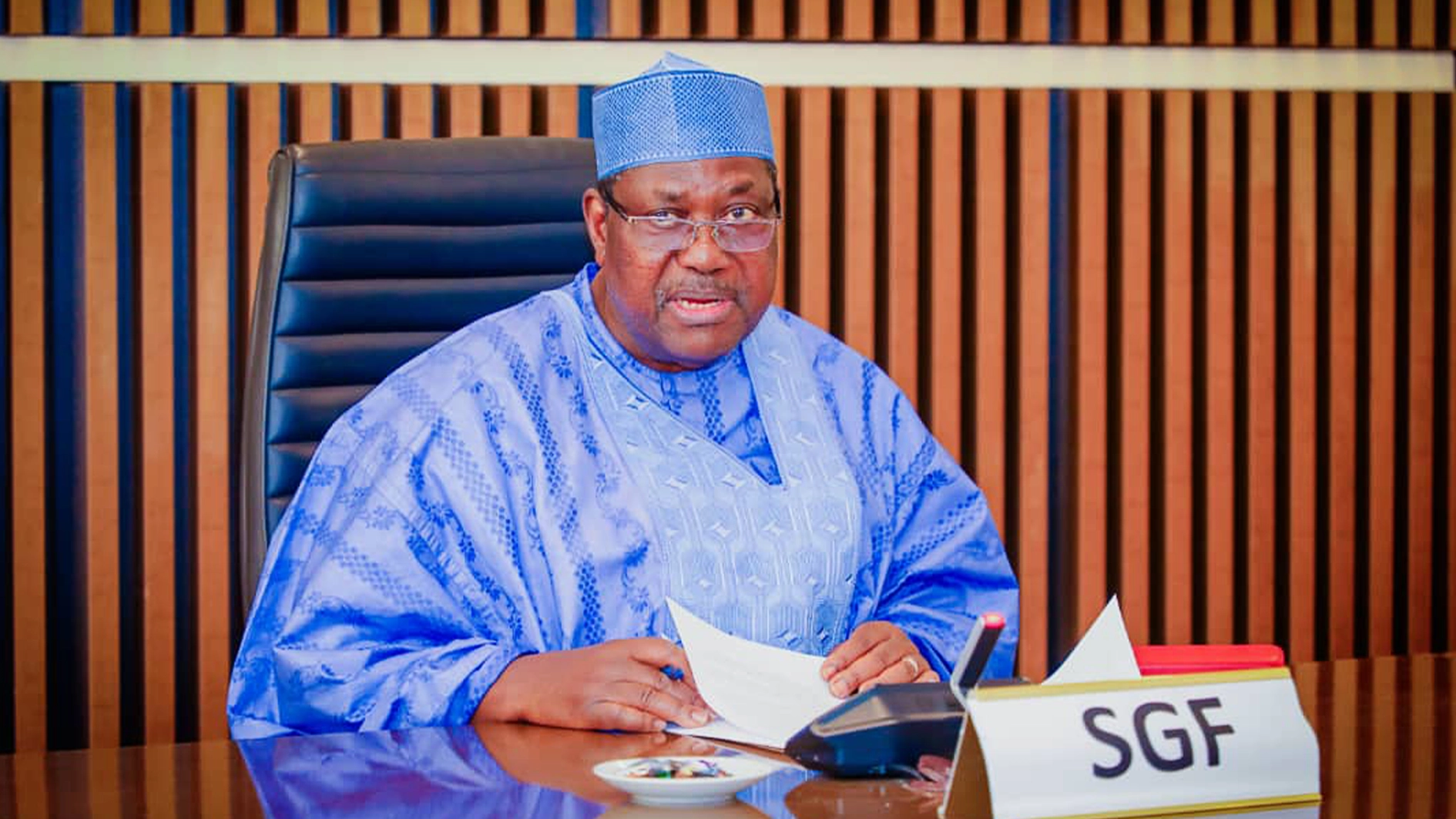
Secretary to the Government of the Federation (SGF), Senator George Akume, on Tuesday disclosed that former Vice President Atiku Abubakar was among key political figures who endorsed the principle of rotational presidency in the aftermath of the annulment of the June 12, 1993 presidential election.
Akume made the revelation in Abuja during a World Press Conference organised as part of activities marking Nigeria’s 27th Democracy Day anniversary.
His comments come amid renewed national conversations over power rotation and equity in Nigeria’s political arrangement.
According to the SGF, the controversial annulment of the June 12 election, widely regarded as Nigeria’s freest and fairest poll and believed to have been won by Chief Moshood Kashimawo Olawale (MKO) Abiola, forced political leaders to seek a consensus capable of preserving national unity and stabilising the country’s nascent democracy.
Recounting events that followed the crisis, Akume said leaders of the Peoples Democratic Party (PDP) met in Kaduna under the leadership of the late Chief Solomon Lar and Alhaji Adamu Ciroma, where the issue of zoning the presidency between the North and South was extensively debated.
“It was a tough argument before the issue of rotational presidency was agreed on. At the end, we had to concede. We must do this. The June 12 annulment had complicated the whole thing.

“It was finally agreed that we would be alternating between North and South.
“Atiku was one of the leaders at that meeting, which was convened by Chief Solomon Lar. He was part of that agreement,” Akume said.
The SGF explained that the decision to rotate presidential power emerged as a political response to the grievances and divisions triggered by the annulment of the June 12 mandate, with the objective of promoting inclusiveness and strengthening national cohesion.
Reflecting on the significance of June 12, Akume described the annulment as one of the darkest moments in Nigeria’s democratic journey.
“Abiola won that election round and square. That election was annulled by the military government. It was very painful because the people spoke and they spoke freely. They made their own choice,” he said.
He said the enduring lesson from the June 12 experience was the inviolability of the people’s mandate in a democratic system.
“The first lesson is that the voice of the people must always be supreme; it must be sacrosanct. That’s the beauty of democracy. We prefer the ballot to bullets,” he stated.
Expressing confidence in the country’s democratic institutions, particularly the Independent National Electoral Commission (INEC), Akume said Nigeria had learnt painful lessons from the events of 1993 and would not tolerate another annulment of a credible election.
“If an election is conducted very fairly, and one wins, no problem. The actors at the Independent National Electoral Commission are not young people; they were adults when this thing happened.
“If we were to take a poll at that time, over two-thirds of Nigerians would have condemned that act of annulment.
“Fortunately for us, those at INEC are men of honour and integrity. They are well-read, patriotic Nigerians, and they are determined to make a difference. Never again would such happen in this country.
“You win, you win. When you lose, go back and prepare for another election. Look at the American example. President Trump lost to Joe Biden. He didn’t bring America down. He went back, prepared and came back and won. That’s the beauty of democracy.”
Akume said Nigeria’s 27 years of uninterrupted democratic rule reflected the nation’s commitment to freedom, the rule of law and peaceful political participation.

