 Follow Us on Google News


 Follow Us on Google Discover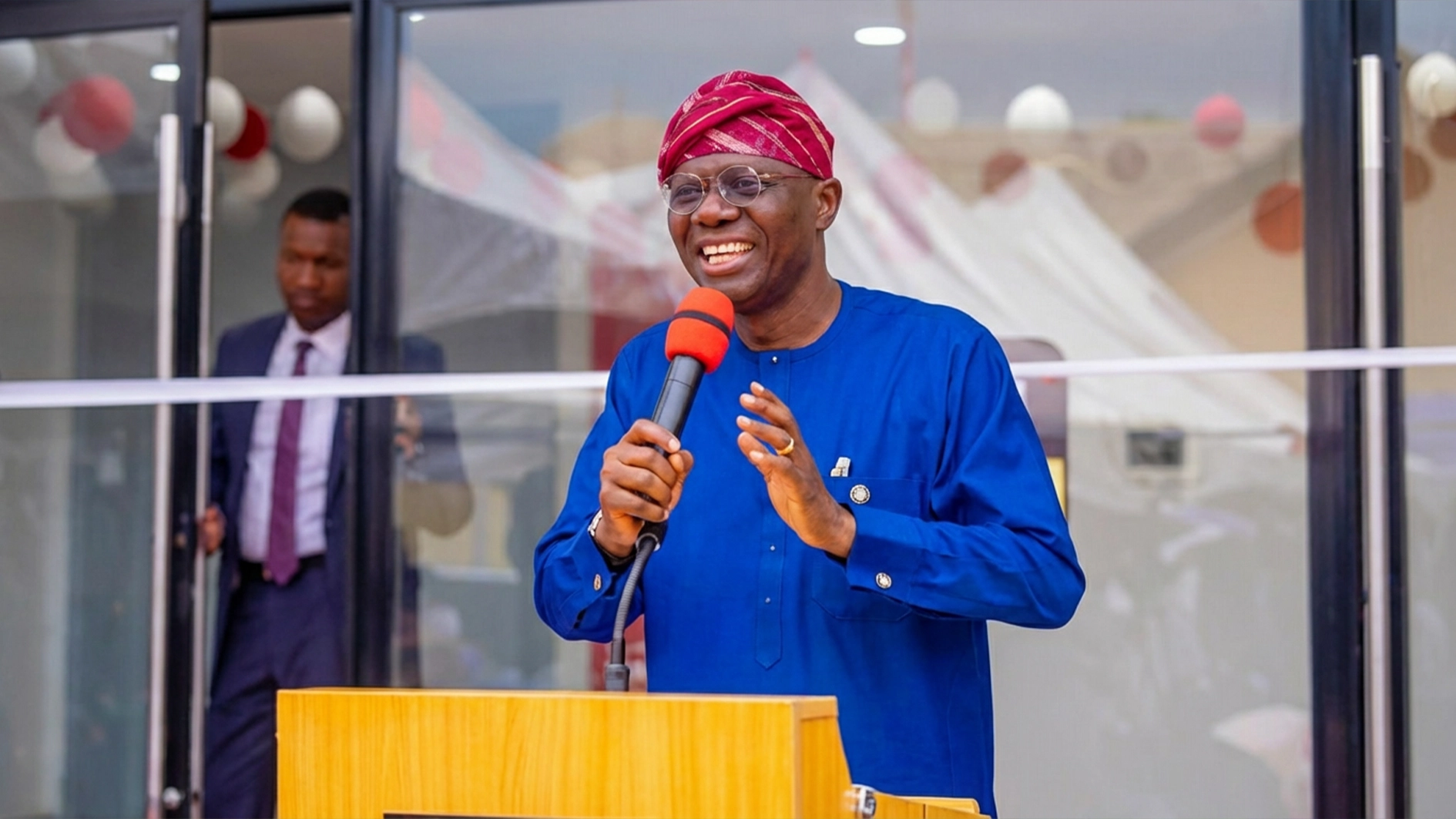
The Lagos State Government’s (LASG) recent signing of a Power Purchase Agreement (PPA) with three Independent Power Project (IPP) firms is not merely a localised administrative milestone. It is a radical act of economic defiance. By taking the reins of its own energy destiny, Lagos is signalling that the era of waiting for a centralised, faltering miracle from the national grid is over. Nothing less is expected of a rapidly evolving megacity.
For decades, the Nigerian dream has been fitfully pursued under the hum of diesel generators and the flicker of unreliable lanterns. While the rest of the world marches toward a Fourth Industrial Revolution powered by seamless energy and intentional investments in technology, Nigeria has remained tethered to a national grid that is less a source of power and more a symbol of systemic fragility. The move by Lagos State may be a significant crack in the wall of a comatose national energy system.
Specifically, at the signing ceremony, presided over by Governor Babajide Olusola Sanwo-Olu at Lagos House, Marina, the state formalised agreements with Mainland Power Limited, Fenchurch Power Limited (in partnership with Aggregate Utilities Limited), and Viathan Engineering Limited.
These agreements cover three out of the four IPPs deployed by the state to meet its growing electricity needs, towards strengthening Lagos’ drive to build a reliable, sustainable, and efficient electricity market. Governor Sanwo-Olu described the agreements as a defining step in Lagos State’s journey toward energy security and economic growth.
“These partnerships go beyond contracts; they represent our determination to power homes, industries, and critical infrastructure with reliability and efficiency. We are laying a strong foundation for a future where Lagos has the capacity, stability, and independence required to drive sustainable development and prosperity,” the governor stated.
On his part, the Commissioner for Energy and Mineral Resources, Biodun Ogunleye, noted that the agreements have been strategically restructured to align with the evolving electricity market in Lagos. He explained that the assets are now being positioned as foundational generation anchors within their respective networks, while regulatory processes with distribution companies are being finalised.

Painfully, the statistics governing Nigeria’s power sector have long bordered on the tragicomic. For a nation of over 200 million people, the national grid frequently struggles to distribute more than 4,000 to 5,000 megawatts, while the country’s immediate requirement hovers above 20,000 MW. No Minister of Power in Nigeria, even to the immediate past, Adebayo Adelabu, have been able to chase out the monster, darkness, out of the shores of Nigeria, amid humongous funding of the sector.
In perspective, checks showed that the city of New York alone consumes over 11,000MW during peak summer periods. Lagos, as West Africa’s commercial nerve centre, requires a minimum of 10,000MW to truly thrive as a 24-hour economy. Yet, it often receives a measly fraction of that from the national pool. It need not be overstressed that this “Megawatt Mirage” has stifled industrial growth, murdered small businesses, and forced the citizenry into an expensive, lung-choking reliance on fossil-fuel generators.
According to data from the Manufacturers Association of Nigeria (MAN), power crises in 2023 forced 767 manufacturing firms to close their shops. In 2024, an additional 300 followed and some 18,000 jobs were lost too. In 2025, over 60 per cent of manufacturers exited the national grid, at a cost, either of folding up, relocating outside the country or producing at high cost borne by consumers. As such, the LASG’s move to partner with IPPs is a long-overdue acknowledgement that the federal umbilical cord is no longer providing the sustenance Lagos needs to survive.
Perhaps the most stinging indictment of our current energy landscape is the “gentrification” of electricity. In Nigeria, consistent power has become the ultimate status symbol—a luxury reserved for the ultra-wealthy and the political elite. To worsen matters, electricity now belongs to the rich, with the introduction of “energy apartheid”. Here, the quality of one’s life is determined by the “Band” they belong to. The current Band A system, while designed to reflect the cost of service, has become predatory and exploitative. Residents in these zones are slapped with exorbitant tariffs that consume a disproportionate share of their disposable income, often without the guaranteed 20-hour supply they were promised. For the average Nigerian, the grid is a ghost; for the Band A subscriber, it is an expensive hostage situation.
As analysts postulate, when light becomes a luxury, the economy becomes a shadow. The country cannot build a middle class on the back of N225 per kilowatt-hour while the national minimum wage remains a pittance.
When the grid failed, many looked to the sun. However, the hope that solar energy would be the great equaliser is rapidly fading. As the Naira fluctuates and global supply chains tighten, the cost of high-quality lithium batteries, inverters, and Tier-1 solar panels is skyrocketing. What was once a viable alternative for the middle class is fast slipping out of reach for the “ordinary” Nigerian.
Without state-level intervention and large-scale IPPs to drive down costs through competition and infrastructure, Nigerians face a future where the sun only shines for those who can afford the hardware to catch it. The LASG-IPP agreement is a necessary hedge against this looming exclusion, aiming to provide grid-scale solutions that don’t require every citizen to own a private power plant on their roof. The government must be ready to confront associated problems, such as distribution.
The three IPP firms entering this agreement will do well to represent a shift toward decentralised energy governance. By bypassing the bureaucratic bottlenecks of the national utility framework, these firms can focus on localised distribution, efficient billing, and most importantly, accountability.
This is not just about generating more power; it is about creating a “willing-buyer-willing-seller” environment that works. When the state government acts as a facilitator rather than a sole provider, it creates a competitive ecosystem where efficiency is rewarded and failure has consequences.
This PPA is Lagos’ most critical experiment yet, as well as a litmus test for the state government. But Lagos cannot be an island of light in a sea of darkness. The success of this initiative should serve as a loud, urgent cue for other states, particularly industrial hubs like Kano, Rivers, and Anambra.
The 2023 Constitutional Amendment, which moved electricity from the Exclusive List to the Concurrent List, removed the last legal excuse for state-level inertia. The Lagos Model is proving that: State Sovereignty over energy is possible; private capital is ready to invest if the regulatory environment is transparent and conducive. Local solutions are the only way to bypass the endemic national grid collapse.
For this move to be successful, impactful and lasting, the state, and indeed, the country must be blunt because this intervention is decades late. The billions of dollars lost in productivity due to outages cannot be recovered. However, agreements of this nature, if diligently followed up on, offer a path toward redemption.
If the Lagos State Government executes this PPA with the transparency and urgency it deserves, it will do more than just light up streetlights and factories. It will provide the spark for a national revival. Electricity should not be a reward for the rich; it is a fundamental right of any citizen in a modern state.
Lagos has taken the first step. For the rest of Nigeria, the era of the megawatt mirage should end, beginning from now.

