 Follow Us on Google News
 Follow Us on Google Discover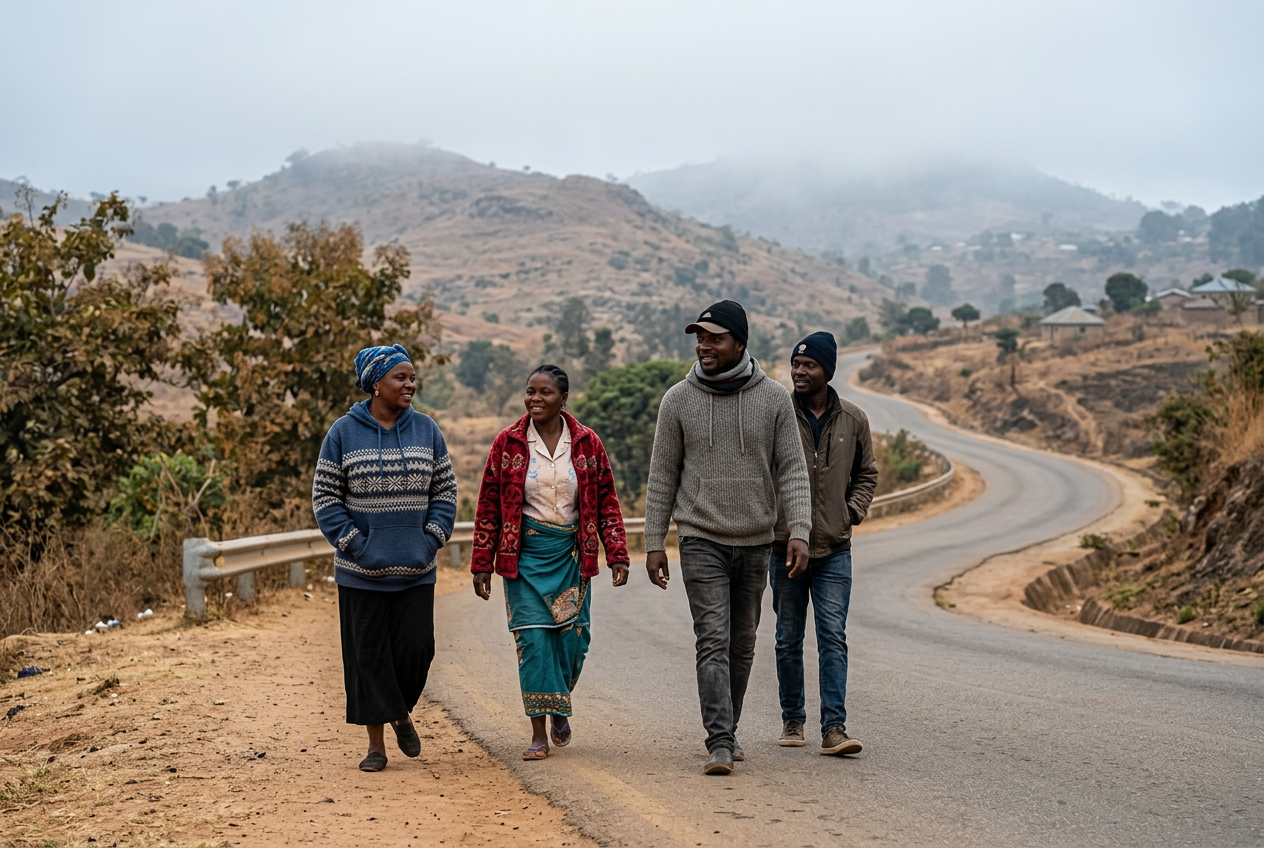
Welcome, and thank you so much for joining me on what I can honestly say is the conclusion of months of careful research into Nigerian seasonal patterns and years of personal experience navigating our country’s wonderfully diverse climate. Whether you are shivering through a Jos harmattan morning, sweating through an Abuja April afternoon, or trying to plan your calendar around the most comfortable time of year, this article is exactly for you.
Which month is the coldest in Nigeria? It is a question that comes up every year as the dry season settles in, and yet the answer turns out to be considerably more layered than most people expect. Nigeria’s harmattan season sits at the heart of it, and I want to walk you through everything you need to know, from the coldest recorded temperatures to the states that feel it most sharply.
I have spent years travelling across Nigeria’s climate zones for my work, and the contrast never stops surprising me. The morning I arrived in Jos one December and genuinely needed a thick jumper at seven in the morning was the same week my family in Lagos was complaining about the heat. That gap in experience tells you everything about why this question deserves a proper, nuanced answer.
Understanding Nigeria’s Cold Season and the Role of the Harmattan
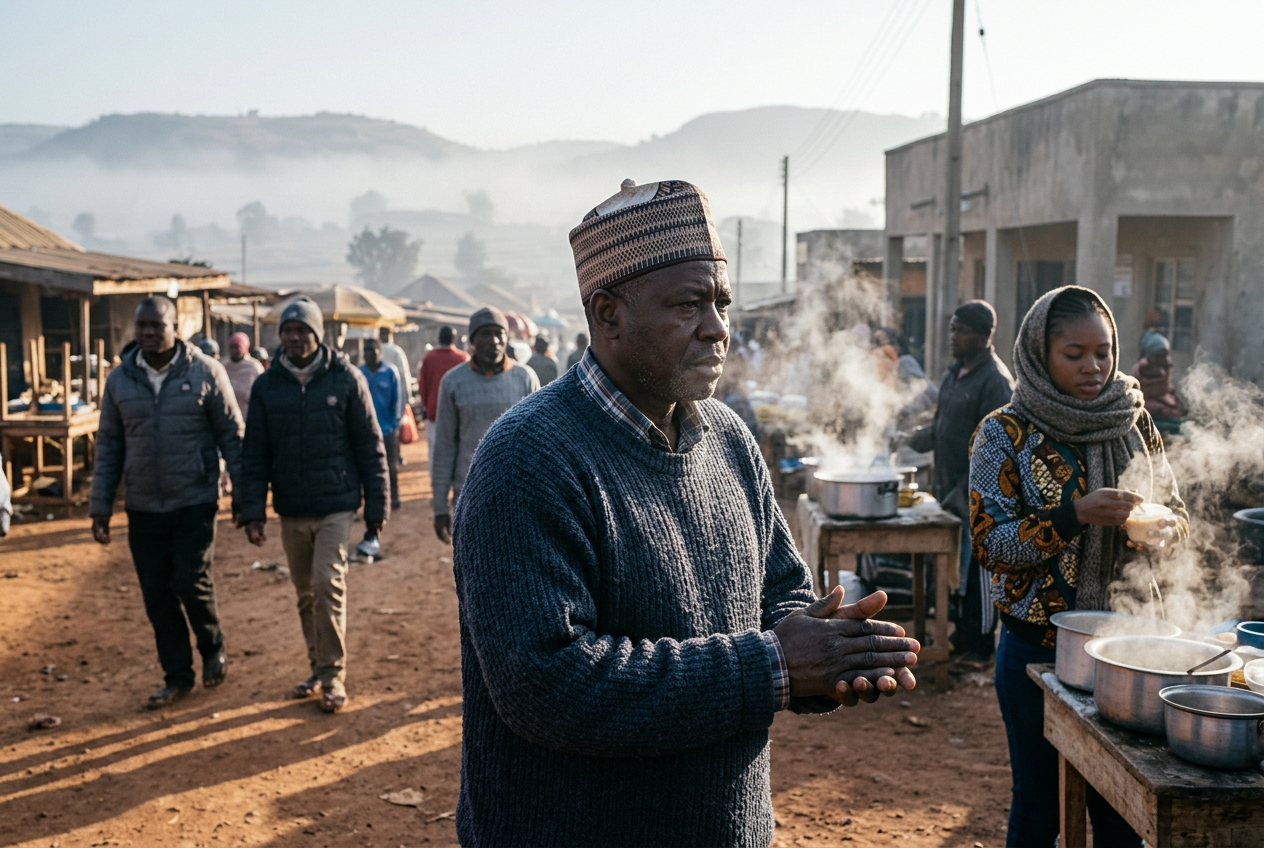
To understand which months feel coldest, you first need to understand the driving force behind Nigerian cold weather. The harmattan is a dry, dusty north-easterly trade wind that originates from the Sahara Desert and sweeps southward across West Africa between roughly late November and mid-March. The Nigerian Meteorological Agency (NiMet), which publishes annual Seasonal Climate Predictions to help farmers, health workers, and the public plan around seasonal weather patterns, identifies this harmattan window as the core cold period in Nigeria’s climate calendar.
The wind carries low humidity, often dropping atmospheric moisture to as low as 15 per cent in affected zones, and brings noticeably cooler overnight and early-morning temperatures. During the day, harmattan can paradoxically feel dry and uncomfortably warm because of the intensity of the sun without cloud cover. But dawn and dusk are a different matter entirely, particularly in northern and highland states.
The harmattan peaks in the north around December and January, but its effects ripple south as the weeks progress. By February, even coastal cities like Lagos and Port Harcourt feel a drier, cooler edge to the air, even if temperatures rarely drop below 22°C in those areas. The further north you travel, or the higher the altitude, the more dramatic the cold becomes.

Healthwise, this season carries real consequences. Guardian Nigeria’s features section has reported extensively on the health challenges that accompany harmattan, with respiratory infections, cardiovascular stress, and skin conditions all rising sharply as humidity plummets and cold, dusty air settles over communities.
Which Month Is the Coldest in Nigeria?
January is the coldest month in Nigeria.
This is true across most of the country’s climate zones, though the intensity of that cold varies enormously depending on geography. In January, the harmattan is at full strength. NiMet’s State of the Climate in Nigeria reports consistently show January recording Nigeria’s lowest mean temperatures, with overnight and early-morning readings dropping to their annual minimums during this period.
In practical terms, here is what January cold looks like across Nigeria’s main regions:
- Jos and the Plateau State highlands: Temperatures can fall to between 7°C and 12°C on cold harmattan nights, with daytime highs sitting around 22°C to 25°C. The Mambilla Plateau in Taraba State records even lower figures on occasion.
- Kano and the far north: January mornings regularly fall to 14°C to 17°C, which feels shockingly cold to anyone accustomed to the heat of April in the same region.
- Abuja: Early January mornings can reach as low as 15°C to 17°C, giving the Federal Capital Territory some of its most pleasant daytime weather of the year, even as the nights require a blanket.
- Lagos and the south-west coast: Temperatures moderate at around 22°C to 24°C overnight, cool by Lagos standards but still far warmer than anywhere in the north.
- Port Harcourt and the Niger Delta: Even during harmattan, the humidity and proximity to the Atlantic keep nighttime temperatures above 23°C, limiting how cold the south truly feels.
December runs January very close, and in the far north, the last two weeks of December can feel indistinguishable from January. But if you had to pick a single month that is coldest across the broadest swath of the country simultaneously, January wins clearly.
Monthly Temperature Ranges Across Nigeria’s Key Climate Zones
Understanding the full range helps you plan practically, whether you are travelling, managing livestock, or simply deciding what to pack for a trip to see family upcountry.
| Month | Lagos (°C) | Abuja (°C) | Kano (°C) | Jos (°C) | Maiduguri (°C) |
|---|---|---|---|---|---|
| November | 25 to 32 | 23 to 33 | 19 to 34 | 18 to 28 | 22 to 36 |
| December | 23 to 32 | 17 to 32 | 14 to 32 | 12 to 26 | 15 to 33 |
| January | 22 to 31 | 15 to 30 | 13 to 30 | 10 to 24 | 14 to 32 |
| February | 23 to 32 | 18 to 34 | 15 to 34 | 14 to 28 | 16 to 35 |
| March | 25 to 33 | 22 to 37 | 20 to 39 | 17 to 30 | 22 to 40 |
| April | 26 to 33 | 24 to 38 | 22 to 40 | 18 to 30 | 25 to 42 |
The table above makes it plain that January consistently records the lowest overnight temperatures in every climate zone listed. The Jos column tells the most dramatic story, with January minimums sometimes falling below the figures shown here on exceptional harmattan nights, reinforcing its reputation as Nigeria’s coldest city.
Is 2026 Going to Be Cooler or Warmer Than 2025 in Nigeria?
This is a question many Nigerians are asking, particularly after several recent years of noticeably weaker harmattan seasons. The short answer, based on what the science tells us, is that 2026 is unlikely to be significantly cooler than 2025, and may well prove warmer in several key months.
NiMet’s 2026 Seasonal Climate Prediction, released in February of this year, forecast that daytime and nighttime temperatures across most of Nigeria in January, February, March, and May 2026 are expected to be warmer than the long-term average. This is part of a broader pattern of rising baseline temperatures that climatologists have been documenting across the West African sub-region.
What this means practically is that while January 2026 will still be the coldest month, the cold itself may feel less severe than it once did. Many Nigerians in their forties and older will tell you that harmattan in their childhoods brought a genuinely biting chill that seems harder to find today. That lived experience matches the data. Guardian Nigeria’s opinion section has raised alarms about this trend, noting that the weakening of harmattan in recent years represents more than an inconvenience but a genuine climate signal worth taking seriously at policy level.
That said, individual weeks within January and December can still produce very cold snaps, particularly in highland areas. Climate change shifts averages, but it does not eliminate variability. You can still wake up in Jos in January 2026 and need a heavy coat.
Which Month Is the Hottest in Nigeria?
If January is when Nigeria shivers, March and April are when it sweats most intensely.
April consistently ranks as Nigeria’s hottest month across most of the country. The rains have not yet arrived in earnest, the harmattan has fully retreated, the sun is near its seasonal zenith, and humidity in the south begins climbing again. In the far north, April brings extreme heat in cities like Maiduguri and Nguru, with temperatures regularly reaching 40°C to 43°C in the afternoon. These are genuinely dangerous temperatures for outdoor work.
March is a close rival, particularly in the Middle Belt and north, where the transition from dry-season cool to pre-rain heat is rapid. Lagos and the south-west coast tend to find their hottest stretch in March and early April before the Atlantic southwesterlies and the first rains bring some relief.
The contrast between January and April in the north of Nigeria is one of the most dramatic seasonal temperature swings in West Africa. A Kano resident might experience 13°C on a January morning and 41°C on an April afternoon just three months later. That is a range that most European countries spread across six months or more, compressed into a single Nigerian dry season.
Which Season Is October in Nigeria?
October sits in a transitional zone that many Nigerians find particularly interesting.
For most of the country, October is the tail end of the rainy season. In the south, the second rainy season (which typically runs from September through November, though exact dates vary by year) is still active during October, meaning Lagos, Ibadan, Benin City, and Port Harcourt can expect regular rainfall. Temperatures during October in the south sit in the warm and humid range, typically between 25°C and 32°C, with high relative humidity making it feel warmer than the numbers suggest.
In the north, October is already feeling drier. The main rainy season wraps up closer to September in states like Kano and Sokoto, and by October the harmattan precursors begin creeping in, with noticeably lower humidity and clearer skies. Daytime temperatures in Kano in October hover around 34°C to 36°C but the evenings start feeling distinctly more comfortable than the peak heat of April.
The harmattan itself typically begins arriving in earnest from November, so October is genuinely the last month before the cold season starts. If you enjoy warm, pleasant weather without the dust and dry air of full harmattan, late October in the Middle Belt and north can be lovely.
Guardian Nigeria’s features writers have documented how October and November represent a period of heightened health awareness, as communities begin preparing for the dry season ailments that accompany the transition into harmattan.
Which State Has the Most Cold Weather in Nigeria?
Plateau State wins this question without much contest.
Jos, the capital of Plateau State, sits at an elevation of approximately 1,220 metres above sea level. That altitude changes everything about how temperature behaves there. According to GRID3’s official state climate profile for Plateau, despite being located within the tropics, Plateau State has a near-temperate climate with an average temperature range of between 18°C and 22°C throughout the year, and the coldest weather occurs between December and February driven by harmattan winds.
That near-temperate character means Jos is cold by Nigerian standards in ways that genuinely shock visitors from the coast. I have seen people arrive from Lagos in December, having packed for warmth relative to their home city, and spend their first Jos evening scrambling for the thickest clothes in their bag. The Mambilla Plateau in Taraba State, which peaks at around 1,600 metres above sea level, rivals Jos and may actually record the country’s most extreme cold snaps. However, Plateau State’s larger population and higher profile mean it is more commonly cited in conversations about Nigerian cold.
Other states with notably cold weather during the harmattan season include:
- Taraba State (particularly the Mambilla Plateau), where temperatures can fall below 7°C on extreme nights
- Adamawa State, especially the highland areas bordering Cameroon
- Borno State in the far north, which gets extremely cold harmattan nights despite lower elevation
- Kaduna State, which experiences sharp harmattan conditions and cool nights from December through February
The south produces its own version of cold, of course. A chilly, harmattan-kissed January morning in Ibadan at 19°C might feel bitterly cold to a Lagosian, even though a Jos resident would consider that rather mild.
Seven Practical Steps for Managing Nigeria’s Coldest Months
Whether you are in Jos, Abuja, or Lagos, the cold months reward a bit of preparation. Here is what I have learned works well across different parts of the country.
- Layer your clothing rather than reaching immediately for a heavy coat. Nigeria’s cold is often concentrated in the early morning hours, and temperatures can rise significantly by midday. A fleece layer over light clothing that you can remove by 11 a.m. beats a thick coat that leaves you sweltering after noon.
- Protect your skin from harmattan dryness aggressively. The low humidity strips moisture from skin faster than many people realise. Apply a good shea butter or petroleum-based moisturiser morning and night during December, January, and February, and keep lip balm accessible at all times.
- Stay well hydrated even when you do not feel thirsty. Harmattan’s dry air causes significant fluid loss through breathing and perspiration even when it does not feel hot. Dehydration during the cold season catches many people off guard.
- Protect your eyes and respiratory system when dust is heavy. A dust mask or even a simple cloth over the nose and mouth during peak harmattan dust days is worth the minor inconvenience. For those with asthma or sickle cell, take this step seriously.
- Prepare your home for cold nights in highland areas. If you live in or are visiting Jos, Mambilla, or similar highland areas in January, have blankets ready. The nights are not European-cold, but they are genuinely cold enough to disrupt sleep if you are accustomed to southern Nigerian warmth.
- Adjust outdoor exercise timing during the harmattan. Early morning workouts in January in Abuja or Jos can be uncomfortably cold and dusty. Mid-morning, after the temperature has risen, is usually the sweet spot.
- Check NiMet’s seasonal predictions for the year. Before assuming each harmattan will behave identically, look at NiMet’s annual forecast. As 2026 demonstrates, climate variability means some years produce weaker harmattan seasons than others, and adjusting your expectations to the specific year helps you plan more accurately.
Related Articles
Key Takeaways
- January is Nigeria’s coldest month across the broadest range of climate zones, driven by the peak of the harmattan season, with the most extreme cold recorded in Plateau State and the Mambilla highlands.
- The contrast between Nigeria’s coldest month (January) and its hottest (April) can exceed 30°C in temperature range across a single day in northern Nigeria, one of the most dramatic seasonal swings in West Africa.
- NiMet’s 2026 Seasonal Climate Prediction signals that temperatures this year are likely to run warmer than the long-term average for several months, reflecting the ongoing impact of climate change on Nigeria’s historically reliable harmattan patterns.
Frequently Asked Questions About Which Month Is the Coldest in Nigeria
Which month is the coldest in Nigeria?
January is the coldest month in Nigeria, with overnight and early-morning temperatures at their annual minimums across most of the country. The harmattan wind is at its peak strength during this period, driving cold, dry air from the Sahara southward across all climate zones.
Is December colder than January in Nigeria?
December and January are very close, and in the far north the final two weeks of December can match or rival January. However, January edges ahead because the harmattan has fully established itself and its cooling effect is most intense and widespread during that month.
What temperature does Nigeria reach in January?
Temperatures in January range from approximately 22°C overnight in coastal Lagos to as low as 7°C to 10°C on cold harmattan nights in Jos and the Mambilla highlands. Northern lowland cities like Kano and Maiduguri typically see overnight lows between 13°C and 17°C during January.
What causes Nigeria’s cold weather?
The harmattan, a dry and dusty north-easterly trade wind blowing from the Sahara Desert, is the primary cause of Nigeria’s cold season. It brings very low humidity levels, clear skies, and cooler air temperatures that are most intense from December through February.
Does it ever get truly cold in Nigeria?
By global standards, Nigeria’s cold is mild, but in highland areas like Jos and the Mambilla Plateau it is genuine cold that requires warm clothing, blankets, and fire. People in these areas have adapted their lifestyles to these conditions, and temperatures below 10°C on clear January nights are a real part of highland Nigerian experience.
Is October part of the cold season in Nigeria?
October is not part of the cold season in Nigeria. It is the tail end of the rainy season in the south and a transitional period in the north, with harmattan conditions typically beginning to arrive from November onwards in most parts of the country.
Which month is the hottest in Nigeria?
April is generally Nigeria’s hottest month, particularly across the north and Middle Belt, where temperatures routinely reach 40°C to 43°C before the rains arrive. March runs it close, especially in northern states, as the dry season heat intensifies rapidly after the harmattan retreats.
Which Nigerian state is coldest?
Plateau State, and specifically Jos, is widely considered the coldest state in Nigeria due to its elevation of approximately 1,220 metres above sea level, which gives it a near-temperate climate with average temperatures between 18°C and 22°C throughout the year. The Mambilla Plateau in Taraba State may record more extreme individual cold readings but is far less populated and less well documented.
Will the 2026 harmattan be colder or warmer than usual?
According to NiMet’s 2026 Seasonal Climate Prediction, temperatures across most of Nigeria in January and February 2026 are forecast to be warmer than the long-term average. This means the cold season will likely be milder than what older Nigerians remember from decades past, though individual cold snaps are still possible.
How should I dress for Nigeria’s cold season?
Layering is the most practical approach, as harmattan mornings can be genuinely cold while afternoons warm up considerably. In Jos or highland areas, you will need fleeces, jumpers, and blankets for night use, whilst in Lagos and the south coast a light jacket or cardigan is usually sufficient for the coolest days.
Does harmattan affect all parts of Nigeria equally?
No, harmattan affects Nigeria very unequally. The northern states feel its full cold and dusty force from November through February, whilst southern coastal states experience a milder version with lower humidity and marginally cooler nights but temperatures that remain well above 20°C. Highland areas feel a version intensified by altitude.
Why is the harmattan season getting weaker over time?
Climate scientists attribute the weakening of Nigeria’s harmattan season to rising global temperatures that disrupt the atmospheric pressure systems driving the trade wind south from the Sahara. This trend has been documented by NiMet across multiple years of climate data and is consistent with broader West African warming patterns linked to climate change.

