 Follow Us on Google News


 Follow Us on Google Discover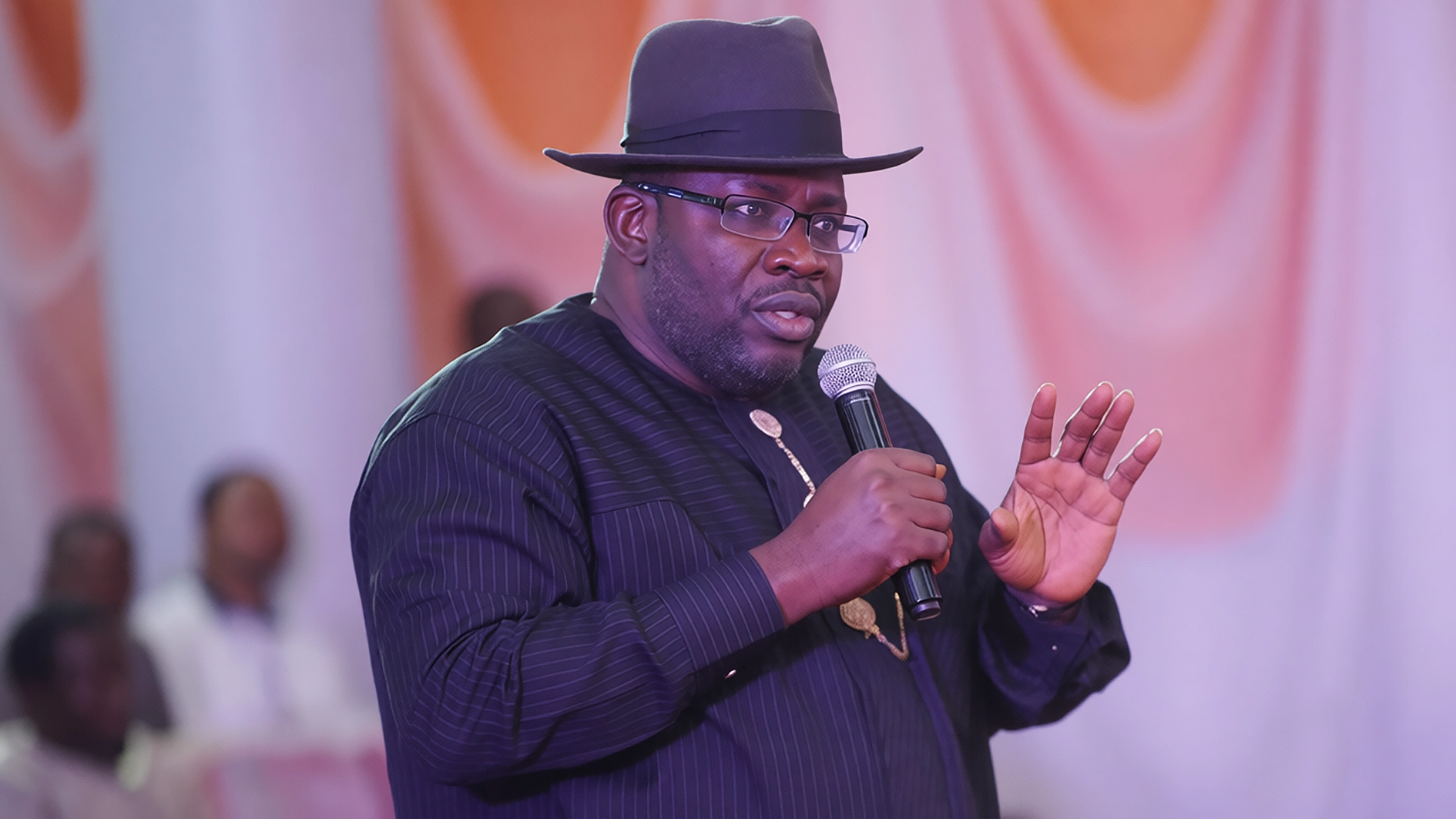
The Nigeria Democratic Congress (NDC) may be heading for a fresh crisis following the submission of a list of candidates purportedly produced from the party’s governorship, National Assembly and House of Assembly primary elections in Abia State directly to the Independent National Electoral Commission (INEC) by the Chairman of the Primary Election Committee, Asukewe Ikoawaji.
Amid the crisis of confidence among the party’s leadership, its presidential candidate, Peter Obi; and his running mate, Rabiu Kwankwaso, NDC National Leader and National Chairman, Senators Seriake Dickson and Cleopas Moses, respectively, yesterday declared that Obi and Kwankwaso, as well as their loyalists, were effectively integrated into the party structures in states and at the national secretariat.
Meanwhile, Dickson has defended the conduct of the party’s primaries, urging aggrieved aspirants to show understanding, even as activist Aisha Yesufu criticised his public remarks, accusing him of self-focus and poor political messaging.
The law requires the leadership of political parties to forward the names of candidates to INEC, not party committees, and the chairman appears to have complied.
The development has sparked controversy within the party, with critics arguing that the action may have contravened established procedures governing the submission of candidates’ names to the electoral commission.
Party officials familiar with the process contend that the responsibility for communicating and submitting the names of nominated candidates to INEC rests with the party’s national leadership, particularly the chairman and secretary.

However, documents obtained by journalists indicate that Ikoawaji wrote directly to the INEC Chairman, Prof. Joash Amupitan, through the Resident Electoral Commissioner (REC) in Abia on May 30, 2026, forwarding the outcome of the party’s primary elections conducted on May 29.
In the letter, ‘The Outcome of the NDC Primary Election in Abia State’, Ikoawaji stated that election results from all local councils and constituencies in the state had been collated and finalised at the party’s headquarters in Umuahia.
He further claimed that the collation was witnessed by an INEC official, Mrs Chioma, alongside security personnel, members of the election committee, and party officials.
In a separate letter addressed to the Abia REC, Ikoawaji sought to correct what he described as errors in an earlier list of members of the governorship, National Assembly and House of Assembly Electoral Committee previously forwarded to the commission.
In the correspondence, he presented himself as the sole returning officer for the primary elections conducted across the state’s 17 local councils on May 29. The letter stated that the revised submission superseded all previous lists sent to INEC regarding the conduct of the state’s primaries.
At press time, neither the national leadership of the NDC nor INEC had issued an official statement on the matter. Efforts to obtain comments from key parties involved were unsuccessful.
DICKSON and Moses, at a session with senior media executives, clarified that there had been a power-sharing disagreement, particularly in Kano, between members of the Kwankwasiyya Movement in the NDC and other members.
During a media briefing at Transcorp Hilton, Abuja, the National Chairman of the NDC, Moses, said Obi and Kwankwaso were handed the structures of the party in their respective states and geopolitical zones.
He said: “The party had structures and formations in all 36 states and the Federal Capital Territory (FCT) before the arrival of Obi and Kwankwaso.
“We cannot take away the fact that their coming added tremendous value to the party, but there was already an existing structure. Take the South-East, for instance; the whole region was considered strategically important because we had a presidential candidate from there. Their leaders were consulted and carried along. They had their representatives and input in the process.”
The NDC chairman also defended the outcome of the primaries, revealing that both the presidential candidate and his running mate had input into the selection of those responsible for conducting the elections.
In his remarks, Dickson maintained that there was no dispute in the party, but expressed concern that both Obi and Kwankwaso refused to rein in their supporters, who continue to demonise him and the National Working Committee (NWC) of the party.
He said: “I think if they were truly carried along, they ought to call their supporters to order. Their principals are now party candidates — one is the presidential candidate and the other is the vice-presidential candidate.
On allegations that he has refused to insulate himself from the running of the party, Dickson said: “NDC is our baby; a three-month-old baby that we are nurturing. Should I abandon it for whom? It is not going to work in the NDC. My role is non-executive, such as serving as a member of the Board of Trustees (BoT). There is an NWC.
“My house isn’t the national headquarters; only non-official consultations happen there. We have a presidential candidate and a running mate. We hold consultations.”
The federal lawmaker representing Bayelsa, however, defended the party’s position of requiring aspirants seeking elective office on its platform to swear an affidavit of loyalty to the NDC.
“We have no apologies for asking aspirants and candidates to swear an affidavit of membership and loyalty to the party. If we are giving you a platform, you must swear an affidavit that you believe in the party. We want people elected on the NDC platform to remain and help build the party.
“The culture of politicians winning elections and immediately jumping to another party must stop. For some of us, the NDC is our last political bus stop. We are not building a party merely for the next election; we want a party that will outlive all of us.”
IN a post-interview statement yesterday following his appearance on Arise Television, Dickson said the party was navigating a difficult early stage of its formation, noting that it had been “thrown into the middle of a very tight electoral timeframe” despite being only four months old.
He acknowledged that the primaries were not perfect but insisted the party had performed relatively well under the circumstances.
Blaming structural challenges in the country’s electoral framework, he reiterated his criticism of the Electoral Act’s compulsory direct primaries, which he described as problematic for political parties.
According to him, complaints about irregularities in direct primaries were not unique to the NDC, but were common across political parties.
Dickson also cautioned the public against relying on unofficial reports of primary results circulating on social media, stressing that no official winners had been announced.
“The results of party primaries are not announced like school results; they are communicated through formal channels,” he said, adding that a reconciliation committee had been constituted to address grievances arising from the exercise.

