 Follow Us on Google News


 Follow Us on Google Discover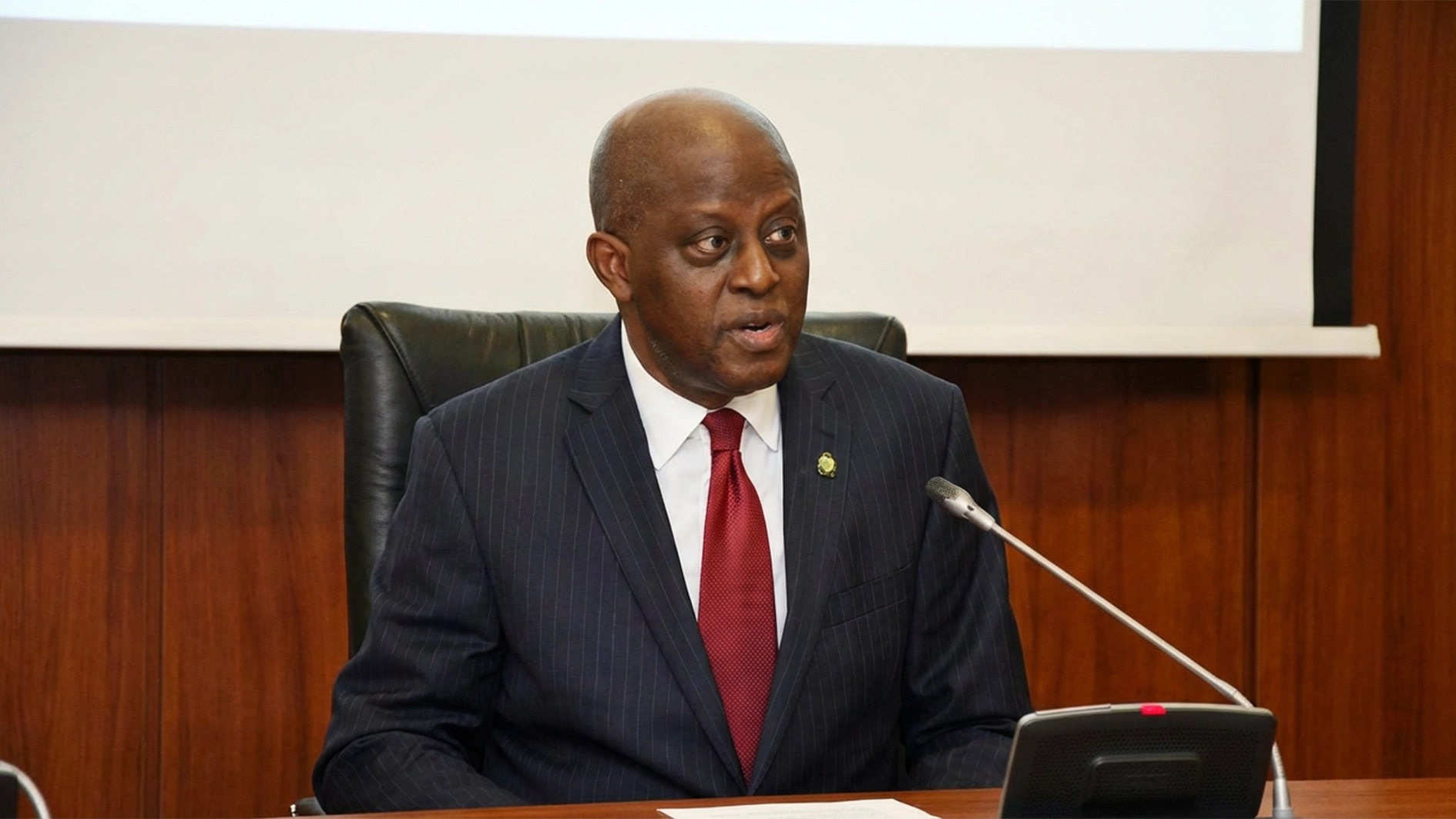
By Maduka Okafor
The Central Bank of Nigeria (CBN) Governor, Olayemi Cardoso last week, received the Central Bank of the Year 2026 Awards by the Central Banking Awards Committee in London. The recognition reflects CBN’s roles in Nigeria’s major economic management and turnaround. The award, announced during the 13th annual Central Banking Awards, places global attention on Nigeria’s financial sector reforms and the role of the apex bank in stabilising the economy.
The award represents significant international recognition for the Central Bank of Nigeria at a time when monetary and financial sector reforms remain central to the country’s economic recovery and long-term growth agenda. Beyond that, the honour further highlighted pre-reforms challenges and ongoing rebound in exchange rate, foreign investment inflows and stability in domestic economy.
Cardoso expressed optimism about the progress made so far through the financial sector reforms and the renewed investors’ confidence emerging across the economy.
For him, the award was not a personal achievement but fallout of collective efforts of the apex bank’s professionals whose dedication, integrity, and expertise have strengthened and reinforced confidence in Nigeria’s economy.
“I accept this award on behalf of the Board, Management and staff of the Central Bank of Nigeria,” Cardoso said. “Above all, it belongs to the many dedicated professionals who serve our institution with integrity, expertise, and an unwavering commitment to the public good.”

Reflecting on the global economic landscape, Cardoso noted that recent years had presented significant challenges for central banks worldwide, with Nigeria facing its own share of economic pressures and policy tests.
He highlighted several difficult but necessary measures undertaken by the CBN, including efforts to address elevated inflation, implement major reforms in the foreign exchange market, and invest in critical digital and financial infrastructure to support the country’s long-term economic development.
Key milestones achieved during the period, include Nigeria’s removal from the Financial Action Task Force (FATF) grey list and the successful completion of the banking sector recapitalisation exercise. These accomplishments reflected the collaborative efforts of multiple institutions and stakeholders.
As the Governor noted, the Bank’s reform agenda has been guided by a clear objective: restoring confidence, strengthening institutional resilience and policy credibility, and laying a solid foundation for sustainable economic growth.
Cardoso attributed these gains to the support of the Federal Government, market participants, development partners, and, most importantly, the resilience and confidence of the Nigerian people. “We receive this recognition with humility,” he said. “We see it not as a destination, but as encouragement to continue the important work ahead.”
According to the Central Banking Awards Committee, Nigeria’s economy was in a deep crisis before the current reforms began. When President Bola Tinubu took office in May 2023, the committee noted that he met an economy close to what they described as “hyperinflation” and “fiscal bankruptcy,” with the naira losing value rapidly and inflation rising continuously. The administration responded with key reforms, including the removal of fuel subsidies and the liberalisation of the foreign exchange market.
However, the early impact of these policies was difficult for many Nigerians, as prices rose sharply and inflation climbed to 34.80 per cent by December 2024, the highest level in nearly three decades.
Despite these challenges, the committee observed that the CBN, under Cardoso, introduced reforms aimed at restoring stability, rebuilding confidence and strengthening the financial system. The approach focused on disciplined monetary policy, institutional changes and improved transparency.
Indeed Cardoso had moved to end quasi-fiscal interventions where the central bank had been lending directly to sectors of the economy, a practice that contributed to rising inflation. The bank also carried out internal restructuring, reducing staff numbers, addressing misconduct and redeploying workers to areas where they were needed.
One of the most important reforms was in the foreign exchange market. The CBN introduced a willing-buyer, willing-seller system to replace multiple exchange rate windows. It also launched an electronic foreign exchange matching system to improve transparency and pricing.
The reforms have significantly reduced the gap between official and parallel market rates to less than two per cent, compared to over 60 per cent previously, with the bank clearing the backlog of foreign exchange obligations, which helped restore confidence among investors and businesses.
The country’s external reserves have also improved, reaching about $46.7 billion by November 2025, the highest level in nearly seven years. The International Monetary Fund commended Nigeria’s efforts, noting that reforms in the foreign exchange market have improved liquidity and price discovery.
The CBN has also taken steps to strengthen the financial markets by working with the Securities and Exchange Commission and the National Pension Commission to improve transparency in the fixed-income market and support long-term investment.
On inflation, the apex bank raised interest rates from 18.75 per cent in 2023 to 27.5 per cent by late 2024 in a bid to control rising prices. These measures have started to yield results, with inflation dropping to about 15.69 per cent by April 2026.
But the current level is still too high. Cardoso explained that the bank is working towards adopting an inflation-targeting framework with support from the International Monetary Fund and the Bank of England.
Chairman of the Central Banking Awards Committee, Christopher Jeffery, said the Nigerian central bank showed strong leadership during a difficult period.
“The CBN’s leadership team has demonstrated plenty of courage and the CBN showed significant institutional strength to facilitate the rebuilding of unencumbered FX reserves and declining inflation, facilitating measurable progress toward sustainable growth and enhanced financial inclusion,” he said.
Another area that contributed to the award is the modernisation of Nigeria’s payments system. The central bank has been working on new frameworks to improve digital payments, encourage innovation and expand financial inclusion.
These efforts are particularly important in a country where millions of people still lack access to formal banking services. By improving payment systems and supporting fintech innovation, the CBN aims to bring more Nigerians into the financial system.
Taken together, these reforms have started to change how investors view Nigeria. There is now growing confidence that the country is on a more stable and predictable economic path. This confidence was evident during recent engagements with global investors in London, where Cardoso explained the direction of the reforms and their impact on the economy.
Managing Director and Chief Executive Officer of Ambosit Capital Managers, Dr. Wahab Balogun, stated that “this award for the Central Bank of Nigeria is more than just recognition—it sends a strong signal about where Nigeria’s economy is heading and how the global financial community now views the country.”
For Nigeria, it means credibility is returning. Balogun noted that “for several years, investors were uncertain about Nigeria because of policy inconsistencies, foreign exchange restrictions and high inflation. When a respected global platform names Nigeria’s central bank the best for the year, it tells investors that the country is becoming more stable and more predictable. That matters because investors don’t just look at profits—they look for environments where rules are clear and risks are manageable.”
Okafor, a financial analyst wrote from Lagos.

