 Follow Us on Google News


 Follow Us on Google Discover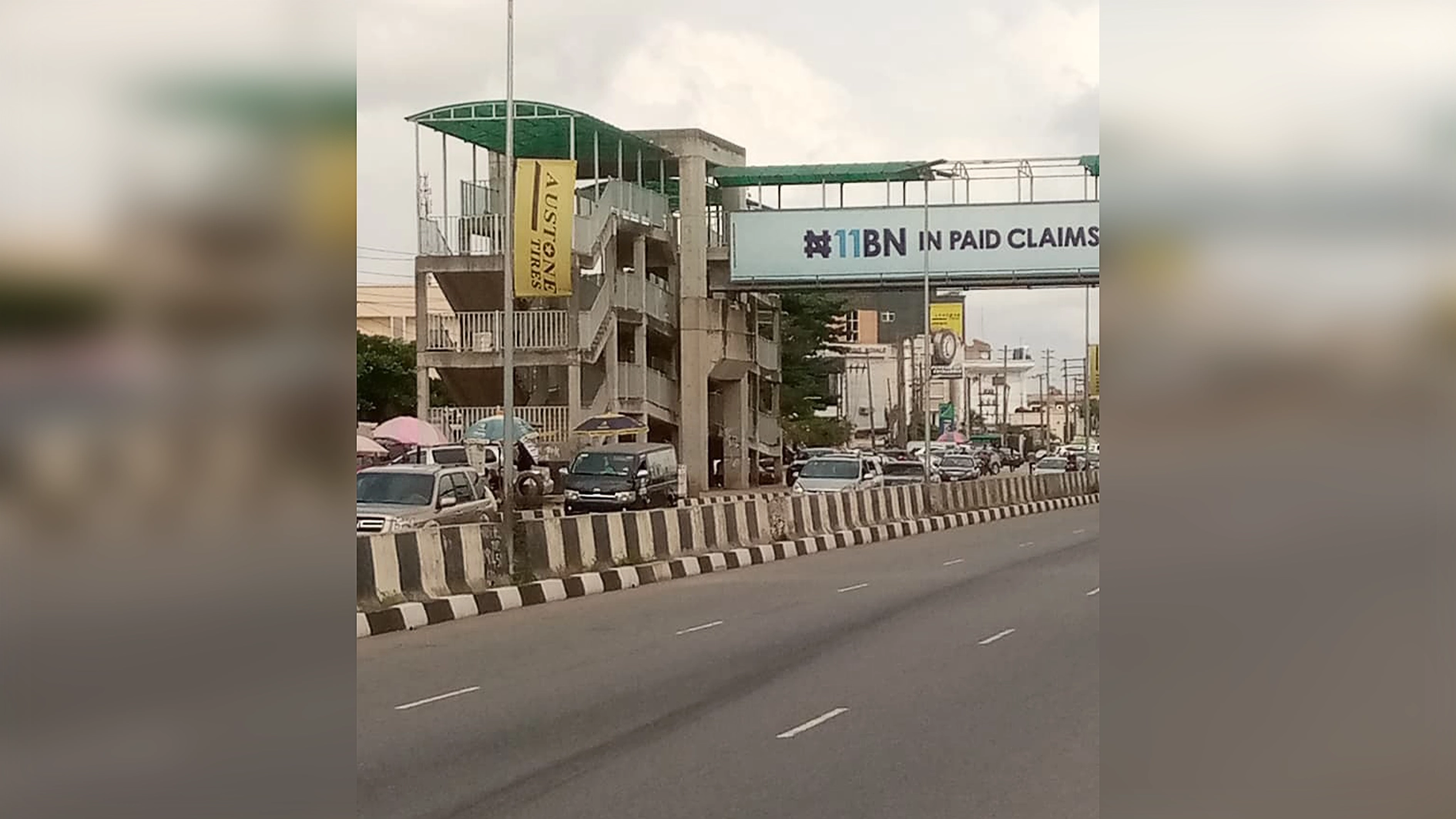
Pedestrians in Lagos have continued to show a disdain for life-saving bridges, preferring instead to cross busy expressways, notwithstanding the ongoing enforcement by state authorities.
This trend is raising concerns over road safety in the state, with officials of the Lagos State Environmental Sanitation Corps (LAGESC) saying that enforcement against unsafe highway crossing is ongoing, and offenders are regularly being arrested and prosecuted.
Head of Public Affairs and Advocacy Unit of LAGESC, Lukman Ajayi, told The Guardian that pedestrians who fail to use designated bridges are routinely apprehended and charged to court, where they are sanctioned.
He added that enforcement, as well as public awareness campaigns and stakeholder engagement, is part of broader efforts to promote a safer use of public infrastructure.
However, commuters across key corridors, including Airport Junction, Oshodi, Mile 2, Toyota and Iyana Ipaja, have been observed to continue crossing the expressways, often weaving through moving vehicles, even where pedestrian bridges are located nearby.
A commuter, Francis Mathew, explained that crossing the road is often faster than using pedestrian bridges, stating that before one climbs up and down, those who crossed the expressway would have reached the other side.
However, some commuters cited the distance between pedestrian bridges and bus stops as a deterrent, noting that in many cases, they have to walk several minutes to access a bridge and then return to their destination after crossing.
Also, some have raised concerns about the design and accessibility of pedestrian bridges, describing the structures as physically demanding to use. Several respondents said long climbs and steep steps make the bridges difficult for the elderly, people carrying loads, and those with mobility challenges, making road crossing appear easier in spite of the risks.
Safety concerns are equally said to influence how pedestrians use bridges, with many commuters avoiding certain structures, particularly at night, for fear of robbery or harassment.
Some respondents said bridges that appear deserted during the day could be unsafe, especially where loiterers or suspected miscreants are present.
For Goodness Dozie, who is a POS operator commuter along the Lagos Airport Road, some occupiers monitor the movement of officials of the LAGESC Corps (KAI), leaving the bridges during enforcement operations and returning afterwards.
Unfortunately, the absence of pedestrian bridges at some locations, including parts of Mile 2 and Toyota bus stop, has left commuters with limited options, forcing them to navigate the busy expressways.

At Isolo, Cele and Mile 2, some pedestrians rely on makeshift means such as wooden planks and stones to cross the expressway, highlighting gaps in formal infrastructure. An Isolo resident, Agatha Chukwuemeka, said she sometimes waits for long periods for a chance to cross, due to fear of oncoming vehicles.
Sometimes you think you can cross, then you see trailers or big buses coming, and you step back,” she said, adding that the surrounding environment, often crowded and unclean, makes crossing the expressway more attractive.
Meanwhile, a Professor of Transport Policy and Logistics and a former Dean of Lagos State University (LASU), Samuel Odewumi, said the situation reflects a disconnect between how pedestrian infrastructure is designed and how people move.
According to him, many pedestrian bridges and walkways in Nigerian cities are supply-driven rather than demand-responsive, often built where space is available rather than where people naturally want to cross. He noted that poor accessibility, including steep stairs and a lack of ramps, as well as safety concerns and weak enforcement, discourage usage.
“Ultimately, pedestrians optimise for time, comfort and perceived safety, not simply compliance,” he said, adding that many people choose more direct routes even when they are riskier.
Odewumi described this as a planning issue, noting that when infrastructure does not align with real-world movement patterns, non-compliance becomes common. He added that improving pedestrian compliance requires more people-centred planning, including placing crossings along natural walk paths, improving accessibility, enhancing safety, and integrating pedestrian infrastructure with public transport systems.
Also speaking, a civil engineer and former chairman of the Lagos chapter of the Nigerian Institution of Civil Engineers (NICE), Omolola Adetona, said the design and placement of some pedestrian bridges discourage usage.
She noted that steep steps and poor positioning relative to bus stops reduce convenience, while safety concerns around some bridges further limit their use. Adetona said such infrastructure can only deliver intended benefits when aligned with how commuters move and are willing to use it.
On his part, a director at Safety Beyond Borders, Patrick Adenusi, said the issue reflects a combination of infrastructure gaps and learnt behaviour among road users. He explained that in many parts of Lagos where pedestrian bridges are limited or later introduced, residents have become accustomed to crossing the highways, making it a default habit even when bridges are available.
“In areas where people have not been exposed to pedestrian bridges over time, crossing the road becomes the natural state of mind,” he said.
He added that measures such as controlled or zebra crossings may be less effective where motorists fail to yield, stressing that addressing the issue requires improved infrastructure, public awareness and behavioural change.

