 Follow Us on Google News
 Follow Us on Google Discover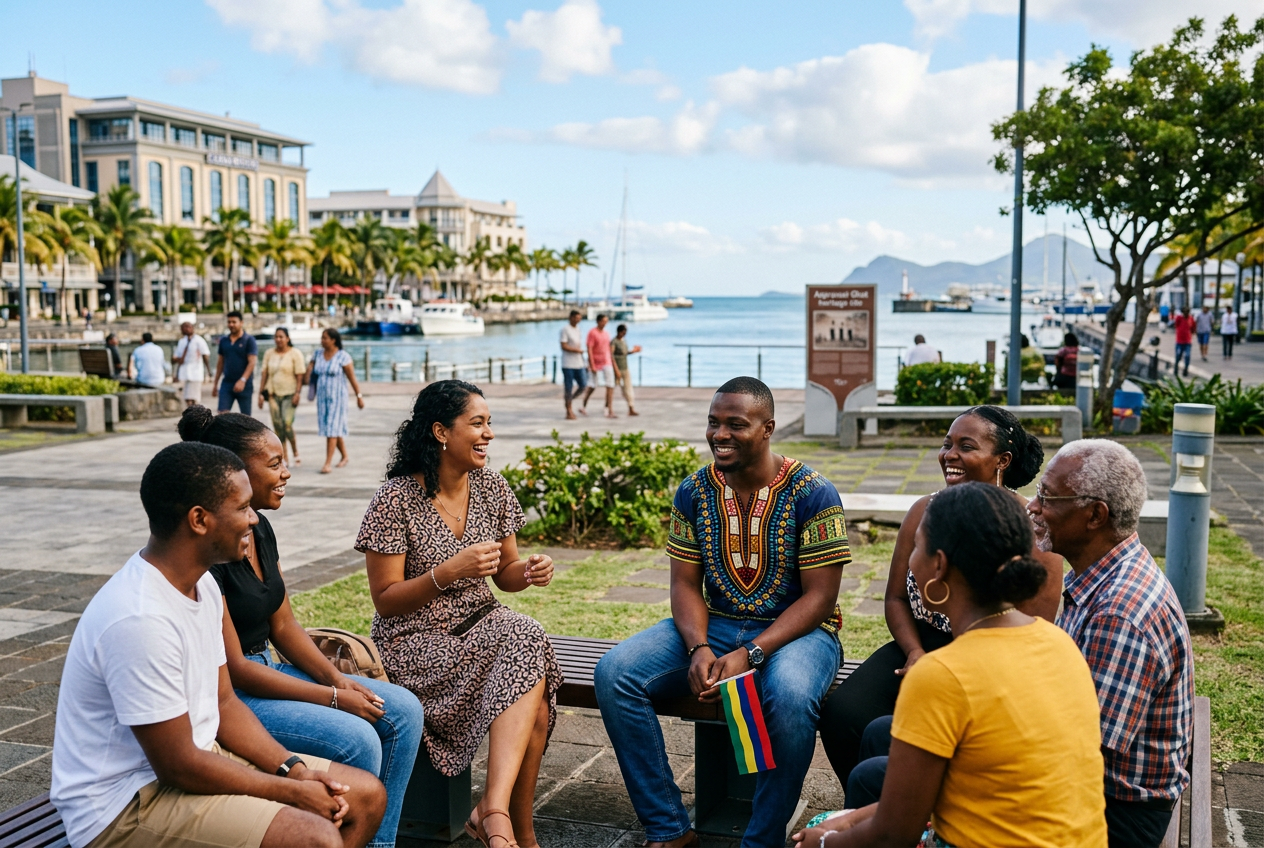
I will be honest with you: this question has followed me around for years. Every time I sit down with a Nigerian friend who is thinking about relocating, or a family member who is curious about studying on the continent, or a colleague weighing a business move to a new African city, the question comes up in some form or another. What is the safest country in Africa? Where can I actually feel at ease? Where does security not feel like a gamble?
So I decided to answer it properly. What you are about to read is the result of months of careful research into peace indices, crime data, governance scores, and on-the-ground realities across the continent, filtered through years of writing about African affairs for this newspaper. I wanted to cut through the noise and give you something genuinely useful.
The short answer, backed by the Global Peace Index, is Mauritius. But as with most things on this continent, the full picture is far richer and more interesting than a single name.
What Is the Top 10 Safest Country in Africa?
To answer this properly, we need to understand how safety is actually measured. The Global Peace Index (GPI), published each year by the Institute for Economics and Peace, ranks 163 countries across three key domains: societal safety and security, ongoing domestic and international conflict, and militarisation. The lower the score, the more peaceful the country.
The 2026 edition, released this month, found that global peace has declined for the 15th time in 18 years. It is a sobering headline. Yet Africa’s story is more nuanced than the summary suggests. Several countries on the continent continue to demonstrate that stability, good governance, and low violence are genuinely achievable, even as conflict flares in pockets of the Sahel, the Great Lakes, and the Horn.
Here are the ten safest countries in Africa according to the 2026 Global Peace Index, with their global rankings alongside:

- Mauritius (GPI score: 1.586, ranked 18th globally)
- Equatorial Guinea (GPI score: 1.720, ranked 38th globally)
- Botswana (GPI score: 1.823, ranked 50th globally)
- The Gambia (GPI score: 1.837, ranked 56th globally)
- Madagascar (GPI score: 1.849, ranked 59th globally)
- Namibia (GPI score: 1.872, ranked 63rd globally)
- Morocco (GPI score: 1.887, ranked 65th globally)
- Sierra Leone (GPI score: 1.937, ranked 74th globally)
- Senegal (GPI score: 1.939, ranked 75th globally)
- Ghana (GPI score: 1.943, ranked 76th globally)
What strikes me every time I look at that list is the geographic diversity. You have island nations, landlocked southern African states, West African democracies, and a North African kingdom all sharing space in the top ten. Safety on this continent does not belong to any one region.
As The Guardian Nigeria’s reporting on Nigeria’s role in continental security highlights, West Africa in particular has had to grapple with complex security dynamics in recent years. The Sahel region has seen rising instability, which makes the presence of Senegal, Ghana, and The Gambia in this top-ten list all the more remarkable. You can read more context on the broader peacekeeping challenges facing the continent in this analysis of Africa’s peacekeeping paradox.
Now, I want to give you something more than a ranked list. Let me walk you through the countries that matter most to Nigerians specifically, because context changes everything.
Mauritius is in a class of its own. An island nation off the east coast of Africa, it combines a multicultural population, a functioning democratic system, and an economy built on tourism, financial services, and manufacturing. Very little violent crime occurs there, and the government publishes its own crime statistics through the Statistics Mauritius portal, which shows intentional homicide rates among the lowest on the continent.
Botswana is the one that always surprises people. Landlocked, sparsely populated, with a small diamond-backed economy, it has maintained democratic governance since independence in 1966 and has never experienced a coup. That is a record very few African nations can claim.
Namibia is similarly quiet. Its low population density, strong rule of law, and history of stable elections make it one of the continent’s most dependable environments. Windhoek, the capital, consistently ranks as one of Africa’s cleaner, more organised cities.
Ghana is the one that resonates most with Nigerians. Familiar language (sort of), a similar Jollof rice rivalry (I will not get into that here), and a long reputation as West Africa’s democratic anchor. Accra has become a genuine destination for Nigerian professionals, creatives, and entrepreneurs. More on this in a moment.
It is worth noting that with over 20 million Nigerians living abroad, according to the Nigerians in Diaspora Commission (NiDCOM), the question of which African country feels safest is increasingly personal and practical. The NiDCOM’s recent confirmation of Nigerian diaspora figures underlines just how seriously Nigerians are weighing their options across the continent and beyond.
The Nigerian government’s own foreign affairs ministry has consistently tracked these regional stability patterns, and the Ministry of Foreign Affairs resources offer guidance to Nigerian citizens considering travel or relocation across Africa.
Africa’s Top 10 Safest Countries: Key Metrics at a Glance
| Country | 2026 GPI Score | Global Rank | Capital | Population |
|---|---|---|---|---|
| Mauritius | 1.586 | 18th | Port Louis | 1.3 million |
| Equatorial Guinea | 1.720 | 38th | Malabo | 1.5 million |
| Botswana | 1.823 | 50th | Gaborone | 2.6 million |
| The Gambia | 1.837 | 56th | Banjul | 2.7 million |
| Madagascar | 1.849 | 59th | Antananarivo | 28 million |
| Namibia | 1.872 | 63rd | Windhoek | 2.6 million |
| Morocco | 1.887 | 65th | Rabat | 37 million |
| Sierra Leone | 1.937 | 74th | Freetown | 8 million |
| Senegal | 1.939 | 75th | Dakar | 17 million |
| Ghana | 1.943 | 76th | Accra | 33 million |
This table reveals something important: the safest countries in Africa are not necessarily the largest or wealthiest. Mauritius, with just 1.3 million people, consistently outperforms much bigger nations because its small size allows for tighter governance and social cohesion. The correlation between smaller populations and higher peace rankings is a pattern worth watching.
Which African Country Is Most Peaceful?
By every major global measurement, Mauritius holds the title of Africa’s most peaceful country, and has done so consistently for several years running.
What makes Mauritius different? It helps to think about what the GPI actually measures. It is not just about crime statistics. It weighs political stability, military spending, relations with neighbouring countries, the prevalence of violent demonstrations, and perceptions of criminality among the population. Mauritius scores well across almost all of these because it has no land borders, no history of civil war, a functioning multi-party democracy, and an economy that depends heavily on international tourism and finance, sectors that create powerful incentives for maintaining a safe, welcoming environment.
I remember reading a profile of a retired Lagos banker who had moved to Port Louis with his wife after three decades in financial services. He described the experience as “arriving somewhere where the government actually works.” Dramatic, perhaps. But his sentiment captures something real. Mauritius has a functional public health system, courts that operate without too much interference, and a police force that is, by African standards, reasonably responsive. These are not small things.
The island’s Tourism Police is another detail that struck me during my research: a dedicated unit specifically for visitor safety. That kind of institutional intentionality around security tends to produce real outcomes.
Botswana is arguably the most peaceful of the larger, continental African nations. It has no island advantage, no natural moat. What it has is something rarer: decades of consistent democratic governance, responsible management of diamond revenues, and a political culture that has, so far, resisted the coups and constitutional crises that have derailed neighbours. That is no small achievement.
What Country in Africa Has the Lowest Crime Rate?
This is where things get nuanced, because “crime rate” can mean different things depending on the measurement being used. For intentional homicides, one of the most reliable internationally comparable statistics, Mauritius consistently records among the very lowest figures on the continent, with rates hovering around 2 to 3 intentional homicides per 100,000 people in recent years. For context, some of the continent’s more turbulent nations record rates ten to twenty times higher.
Seychelles, while a small island nation that does not always appear prominently in GPI rankings, also records very low violent crime figures and is worth mentioning for anyone specifically weighing crime data.
Among the larger continental nations, Namibia and Botswana stand out. Both record relatively low rates of violent crime for their region, particularly in their capital cities, though petty crime in tourist areas remains something any visitor should be aware of.
Ghana’s crime picture is more mixed than its GPI ranking suggests. Accra is a vibrant, busy city and comes with the petty crime risks you would expect from any major urban centre. But violent crime against individuals is comparatively rare, and the country has a functioning criminal justice system that processes cases with more regularity than many of its neighbours.
I have spoken to several Nigerian professionals based in Accra, and their consistent feedback is that daily life feels calmer than Lagos even accounting for the obvious lifestyle and infrastructure differences. One woman, a media executive who relocated in 2022, told me she no longer thinks about her personal safety as a daily variable. That kind of low-grade safety stress, she said, had been constant in Lagos. In Accra, it is simply not part of her mental load.
The Guardian Nigeria’s own reporting on where Nigerians in the diaspora tend to settle has found that safety perceptions play a meaningful role in destination choices, alongside economic opportunity and migration policy.

What Is the Safest Country in Africa to Live In?
Here is where I want to give you a direct, practical answer: if you are asking what is the safest country in Africa based on peace rankings, government stability, crime data, and quality of life combined, Mauritius leads the continent. It is followed by Botswana and Namibia for those who want a mainland African experience.
But “safest” is not the only criterion when you are thinking about actually living somewhere. Let me walk you through seven practical steps I would encourage anyone, particularly Nigerians weighing an African relocation, to work through before making a decision.
Seven Steps to Assess Safety When Relocating Within Africa
- Check the current Global Peace Index ranking for your target country. The annual GPI, published by the Institute for Economics and Peace, is the most comprehensive publicly available peace benchmark. A lower score is better. Mauritius, Botswana, and Namibia are your benchmarks for what “genuinely safe” looks like.
- Review the Nigerian Ministry of Foreign Affairs travel advisories. Nigeria’s Ministry of Foreign Affairs publishes periodic guidance for Nigerian citizens travelling or residing abroad. The MFA resources are particularly relevant for understanding which countries currently have active security concerns.
- Look at the US State Department travel advisory level for the country. Even though you are Nigerian, not American, the State Department advisories (Level 1 through Level 4) are publicly available and are based on rigorous on-the-ground assessments. Level 1 means normal precautions; Level 4 means do not travel.
- Talk to Nigerians already living there. The Nigerian diaspora community in almost every African country is active and usually accessible through social media, professional networks, or local Nigerian associations. Their lived experience will tell you things no index can.
- Research the specific city, not just the country. Country-level safety data can mask significant city-level variation. Accra is safer than many parts of Kumasi. Windhoek is calmer than some rural northern Namibian towns. Always drill down to the specific location.
- Assess healthcare and emergency services. Safety is not only about crime. If you have a medical emergency, how quickly can you receive treatment? Countries with stronger health infrastructure, such as Mauritius and South Africa, offer security that extends well beyond physical safety.
- Consider political stability over recent election cycles. A country that has managed peaceful democratic transitions over the past decade is almost always more reliably safe than one with a recent history of electoral violence or constitutional changes. Botswana, Ghana, and Namibia all tick this box clearly.
Which Is the Best Country to Live in Africa?
Here is where I need to separate the question of safety from the broader question of quality of life, because the safest country is not necessarily the best country to live in for every Nigerian.
Mauritius is extraordinary for safety and governance. But it is small, expensive, and can feel isolating if you are used to the scale and energy of Lagos or Abuja. Buying property as a foreigner requires navigating specific regulations. The job market, outside of financial services and tourism, is limited.
Botswana is peaceful, stable, and has a genuine frontier quality that some people find deeply attractive. The wildlife is spectacular, the air is clean, and Gaborone is a genuinely pleasant city. But it is landlocked, quiet, and relatively small. For Nigerians used to a dense urban social scene, it can take adjustment.
Ghana, to my mind, is the most compelling overall destination for Nigerians specifically. It is not the safest country on the continent by GPI ranking, sitting tenth in Africa in 2026. But it combines reasonable safety, linguistic compatibility, a shared cultural warmth, a growing economy, and a genuine policy welcome for African diaspora professionals through programmes like the Year of Return legacy initiative. Accra is a city where a Nigerian can feel culturally at home while experiencing a measurably different security and infrastructure environment.
Namibia is the dark horse I would encourage more Nigerians to consider. Its human development index is among the highest in Sub-Saharan Africa, its governance is clean and predictable, and Windhoek has a small but growing professional community. The Nigeria-centred research into diaspora migration patterns shows that Nigerians are increasingly choosing African destinations for relocation, and Namibia is beginning to appear on that map.
Morocco deserves a specific mention for Nigerians interested in North Africa. Ranked 65th globally and seventh in Africa in 2026, Morocco has invested heavily in infrastructure, security, and economic development over the past two decades. Casablanca and Rabat are well-developed cities with strong professional communities, and Morocco’s role as an economic and diplomatic bridge between Africa and Europe gives it a strategic appeal that safety rankings alone do not capture.
What Is the Safest Country in Africa: A Direct Answer
So let me bring all of this together and answer the central question directly.
The safest country in Africa in 2026, according to the Global Peace Index, is Mauritius, ranked 18th globally with a GPI score of 1.586. It records the continent’s lowest levels of societal violence, the most stable political environment, and consistent governance that has produced real public safety outcomes over decades. Its intentional homicide rate sits among the lowest on the continent, and its population reports relatively high perceptions of personal safety.
If you are specifically looking for safety on mainland Africa, the title goes to Botswana, ranked 50th globally, followed closely by Namibia at 63rd. Both are stable, democratic, and maintain low levels of violent crime in their major cities.
For Nigerians specifically, Ghana is the most practically accessible safe country on the continent: familiar in culture, connected by air, welcoming to African professionals, and stable enough for long-term life planning.
The key entities any discussion of African safety should account for include the Global Peace Index, the Institute for Economics and Peace, ECOWAS (whose member states Ghana, Senegal, The Gambia, and Sierra Leone all feature in the top ten), and the specific governance indicators of democratic durability, rule of law, and institutional strength.
Finding Safety Across Africa: Practical Steps and Final Thoughts
After all of this research and reflection, what I want to leave you with is not just a ranking but a mindset.
Africa is a continent of 54 countries, over 1.4 billion people, and extraordinary variation in every measurable dimension of life. The tendency to treat it as a monolith, a single undifferentiated place of risk, does enormous damage to how Nigerians and other Africans make decisions about where to live, work, travel, and invest. The 2026 GPI makes clear that many African countries are not just safe by African standards but safe by global standards. Mauritius outranks most of Europe in peace metrics. Ghana has a lower crime rate than Canada, per some measurements. Namibia’s residents report feeling safer on the streets than citizens of several Latin American countries.
That is a story worth telling loudly.
For those of us who remain in Nigeria, understanding which neighbouring and regional countries are genuinely safe is also practically important. It shapes where we send our children to study, where we open businesses, where we attend conferences, and increasingly where we consider retiring or establishing second homes. The N1,500 it costs to check the GPI data for yourself is zero, because the report is free online, and that knowledge has real financial and personal value.
Africa’s safest countries have not arrived at their peace rankings by accident. They have been built by consistent governance choices, democratic culture, investment in institutions, and a resistance to the easy shortcuts of authoritarianism. That is the real lesson embedded in every line of the peace index.
Choose wisely. And do not be afraid of this continent. Most of it is far safer than the headlines would have you believe.
Related Articles
If this piece has sparked your curiosity about life and migration across the African continent, you might find these two of my recent articles useful:
What Is the Best African Country to Live in? explores the broader question of quality of life, economic opportunity, and cultural fit for Nigerians considering a continental move.
Where Do Most Nigerians Go? examines the most popular migration destinations among Nigerians, both on the continent and beyond, with data on where the community has taken root most strongly.
Key Takeaways
- Mauritius is the safest country in Africa according to the 2026 Global Peace Index, ranked 18th globally with a GPI score of 1.586, driven by stable governance, low violent crime, and strong institutions.
- For Nigerians specifically, Ghana offers the most practical combination of safety, cultural familiarity, and economic opportunity among the continent’s top ten most peaceful nations.
- Safety decisions should always combine GPI data with city-level research, local Nigerian community feedback, healthcare infrastructure, and a country’s democratic track record over at least the past decade.
Frequently Asked Questions About What Is the Safest Country in Africa
What is the safest country in Africa in 2026?
Mauritius is the safest country in Africa in 2026, according to the Global Peace Index, ranked 18th globally with a GPI score of 1.586. It has maintained this position for several consecutive years due to its stable democracy, very low violent crime rate, and strong public institutions.
Which African country has the lowest crime rate?
Mauritius records among the lowest intentional homicide rates on the continent, with figures consistently in the range of 2 to 3 per 100,000 people. Among larger mainland nations, Botswana and Namibia consistently report the lowest levels of violent crime in their peer group.
Is Ghana a safe country to live in as a Nigerian?
Ghana is generally considered safe for Nigerians and is one of the most popular African relocation destinations for the Nigerian professional community. Accra experiences petty crime typical of any large city, but violent crime against individuals is comparatively rare, and daily life feels meaningfully calmer than Lagos for most residents.
Is Botswana safer than Nigeria?
By every major peace and crime index, Botswana ranks significantly more peacefully than Nigeria. Botswana placed 50th globally in the 2026 GPI with a score of 1.823, while Nigeria faces persistent security challenges including insurgency in the north-east and banditry in the north-west that place it much further down the rankings.
Which West African country is the most peaceful?
According to the 2026 GPI, Senegal and Ghana are the most peaceful countries in West Africa, ranked 75th and 76th globally respectively. The Gambia also performs well at 56th globally, though its small size limits its economic and institutional capacity compared to Senegal and Ghana.
Is Namibia a good country for Nigerians to relocate to?
Namibia is increasingly emerging as an attractive option for Nigerian professionals, particularly those in mining, finance, and professional services. It offers stable governance, clean cities, a low crime environment, and an open business culture, though its small population and geographic isolation from Nigeria require adjustment.
What makes Mauritius the safest country in Africa?
Mauritius benefits from several reinforcing advantages: it is an island nation with no land borders and no history of civil war, it has maintained a functioning multi-party democracy since independence, its economy depends on tourism and finance creating strong incentives for public safety, and its small population makes governance more manageable. These factors combine to produce consistently low violence and high institutional trust.
Is Morocco safe for Nigerians?
Morocco is ranked seventh safest in Africa and 65th globally in 2026, making it one of North Africa’s most secure countries. It is generally safe for Nigerian visitors and residents, with well-developed cities and a significant expat community, though cultural differences and the Arabic and French language environment require preparation.
Has Africa become more or less safe in recent years?
Sub-Saharan Africa’s average peace score actually deteriorated slightly in 2025, according to the Institute for Economics and Peace, continuing a broader global trend of declining peacefulness. However, individual countries like Senegal, Liberia, and Ghana have improved their rankings, showing that national governance choices can buck regional trends.
How does Nigeria rank on the Global Peace Index?
Nigeria faces significant security challenges including Boko Haram and ISWAP activity in the north-east, banditry across the north-west, and communal violence in the Middle Belt, which place it much further down the GPI rankings than the continent’s top ten. Nigerian authorities and international partners continue working to address these challenges through military, diplomatic, and development approaches.
What is the best African country for Nigerians specifically?
For Nigerians weighing both safety and practical livability, Ghana consistently emerges as the most recommended African destination. It combines a familiar West African cultural environment, direct air links from Lagos and Abuja, a growing professional economy in Accra, and a stable democratic governance record that earns it a place among Africa’s top ten most peaceful nations.
Is Sierra Leone safe despite its civil war history?
Sierra Leone’s inclusion in Africa’s top ten safest countries in 2026 (ranked 74th globally) represents one of the continent’s most remarkable peace transformations. The civil war ended in 2002, and over the past two decades sustained democratic institution-building has produced a measurably more stable environment, though visitors should still exercise standard caution, particularly in urban areas at night.

