 Follow Us on Google News
 Follow Us on Google Discover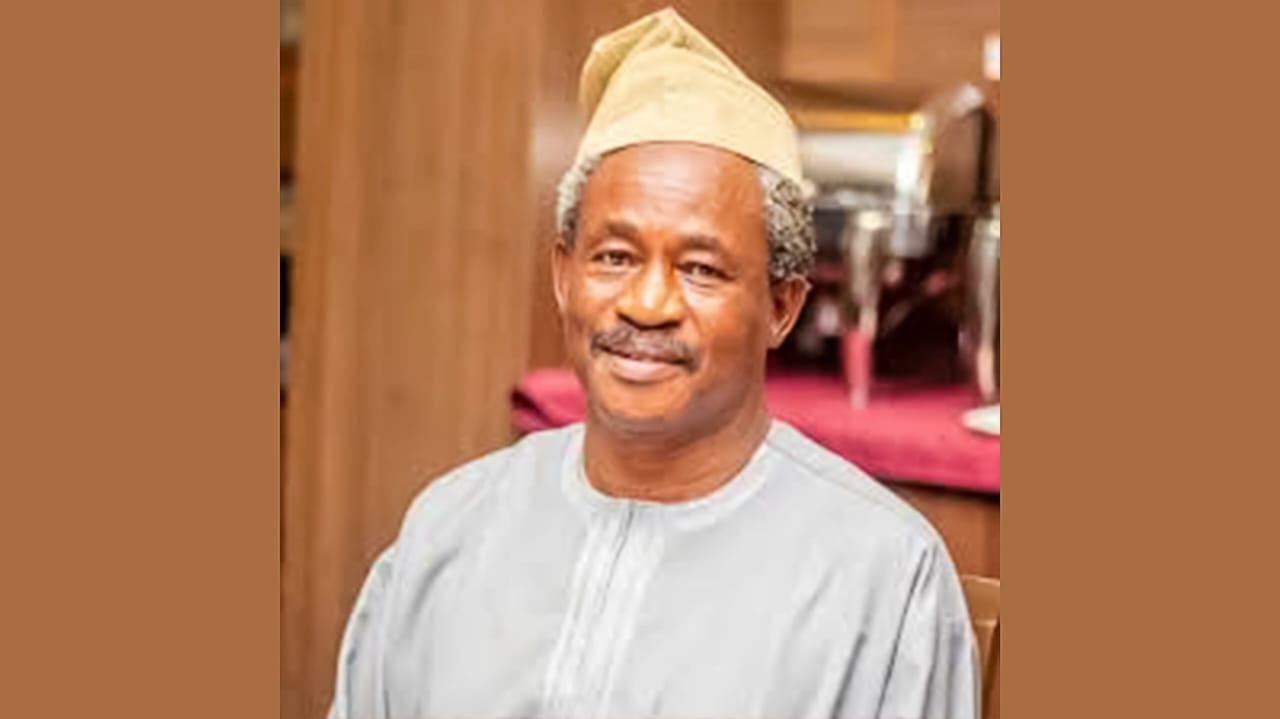
A Professor of Sports Management at the Lagos State University (LASU), Clement Oluseun Fasan, has called for a comprehensive overhaul of Nigeria’s education system, stressing that meaningful reforms can only be achieved through active collaboration among government, academia and the private sector.
Fasan made the call while delivering a valedictory distinguished lecture titled, “Reshaping Education in Nigeria and Securing a Better Future: The Imperative of Curriculum Reforms and Stakeholder Engagement,” ahead of his retirement from the university after more than five decades in the teaching profession.
He described educational reform as a process of reviewing and adjusting the philosophy, goals, content, methodology and evaluation mechanisms of education in response to the realities of globalisation and societal change.
According to him, Nigeria’s education system faces multiple challenges, including policy inconsistency, rising population pressure, inadequate infrastructure, skills mismatch and weak technical and vocational education, warning that countries that fail to adapt to changing realities risk being left behind.
The professor expressed concern over what he described as a widening disconnect between graduates produced by the nation’s institutions and the needs of the labour market. He cited growing public concerns about declining academic standards and questioned the quality of outcomes being generated by the system.
“A nation is judged by its products. If there are reforms in education and there are no reforms in society, particularly in governance and leadership, such reforms may become futile,” he said
On the reform process, Fasan advocated a bottom-up approach beginning with problem identification and public consultation, followed by stakeholder engagement, thematic reviews and policy recommendations to government.
He criticised the practice of introducing policies without adequate consultation with teachers and lecturers, insisting that educators who will implement reforms must be actively involved in the decision-making process.
“The teachers are there; the lecturers are there — get them involved. Whatever you arrive at, there will be a sense of belonging,” he said.
Fasan also criticised the conduct of the annual Unified Tertiary Matriculation Examination (UTME) by the Joint Admissions and Matriculation Board (JAMB), arguing that the exercise generates anxiety among candidates without a corresponding improvement in academic standards. He urged the board to address what he described as the contradiction inherent in the country’s admission cut-off marks.
He further advocated the use of tertiary institutions as primary Computer-Based Test (CBT) centres, saying this would strengthen institutional oversight and provide a more suitable environment for the examinations.
“The time has come for tertiary institution campuses to be utilised as the primary CBT centres. This ensures institutional oversight and environment-aligned testing,” he said.
Fasan further questioned the country’s heavy reliance on examinations as the primary measure of learning outcomes. He urged educational institutions to embrace blended learning, project-based assessment and other innovative evaluation methods that promote critical thinking and problem-solving.
Drawing comparisons with practices in more advanced educational systems, he noted that students should be encouraged to engage with learning materials before classroom sessions, allowing lecture periods to focus on discussion, inquiry and presentation.
On teacher development, he argued that professional competence should not be determined solely by a one-time certification examination. He recommended periodic professional development programmes for teachers, similar to continuing education requirements in professions such as law, medicine and engineering.
The professor also called for increased investment in technical and vocational education, broader access routes into tertiary institutions and a review of the practice whereby colleges of education simultaneously run National Certificate of Education (NCE) and degree programmes.
He also proposed the establishment of a “Scholars Research Village” to support outstanding graduates. Under the initiative, first-class graduates would be provided accommodation and stipends to undertake research aimed at strengthening the country’s innovation capacity and advancing academic excellence.
Fasan urged students to see education as a tool for solving societal problems and creating value rather than merely a pathway to paid employment.
“We do not need an education that keeps us waiting for the next vacancy. We need an education system that equips students to convert community challenges into profitable, value-adding enterprises,” he said.
He concluded by warning that Nigeria could no longer afford to delay critical reforms in the sector, stressing that urgent action is required to reverse declining standards and reposition education for national development.

