 Follow Us on Google News


 Follow Us on Google Discover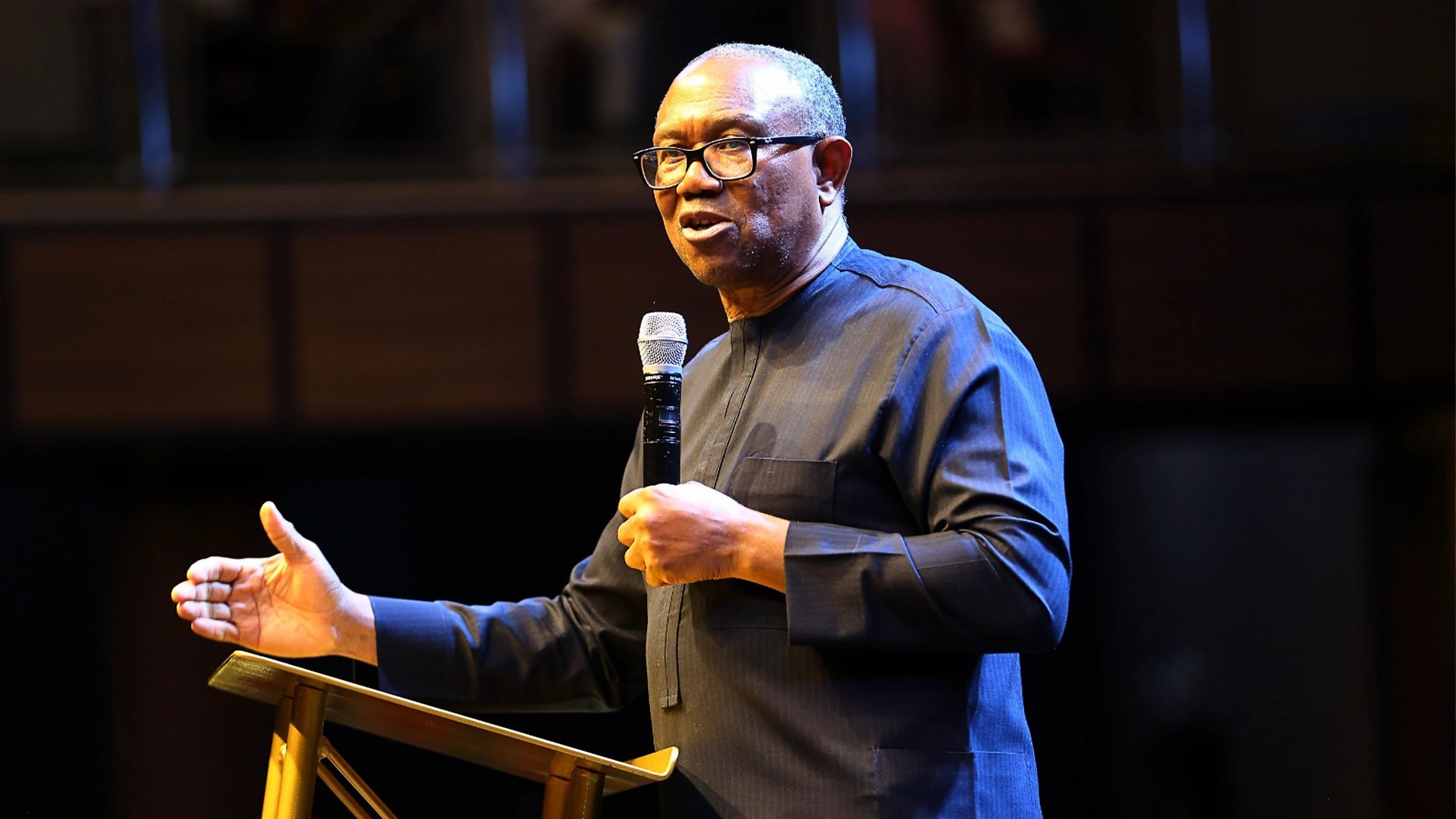
Presidential candidate of the Nigeria Democratic Congress (NDC), Peter Obi, has drawn attention to South Africa’s transparent approach to public borrowing, urging the Nigerian government to provide clearer explanations on how the country’s growing debt burden is being utilised.
Obi, in a statement yesterday, said the recent approval of a $1 billion loan for South Africa by the New Development Bank offers a practical example of accountable borrowing because the purpose of the facility was clearly defined and made public from the outset.
According to him, South African authorities openly disclosed that the loan would be used to upgrade water supply systems, modernise sanitation infrastructure, improve electricity distribution and strengthen waste management services across major cities, allowing citizens to track implementation and assess outcomes.
The former Anambra State governor argued that borrowing is not inherently wrong, stressing that virtually all nations rely on debt financing to support development.
He, however, maintained that transparency, accountability and measurable impact must accompany every borrowing decision.
He contrasted the South African example with Nigeria’s debt trajectory, noting that the country’s public debt had risen significantly in recent years without corresponding clarity on the projects being funded.

Obi observed that Nigeria’s public debt stock has grown from about N87 trillion in 2023 to nearly N200 trillion, raising concerns about transparency and the long-term sustainability of public finances.
Despite the increase in borrowing, he said many Nigerians remain unable to identify specific projects or social investments that directly reflect the scale of the debt accumulated.
Obi warned that borrowing without visible impact risks transferring economic burdens to future generations while doing little to address present-day challenges.
He therefore called for greater fiscal discipline and transparency in the management of public resources, insisting that every borrowing decision should ultimately be judged by its ability to improve the lives of ordinary Nigerians.
His comments come amid growing national conversations over Nigeria’s rising debt profile and increasing calls for stronger oversight of public borrowing and expenditure.

