 Follow Us on Google News


 Follow Us on Google Discover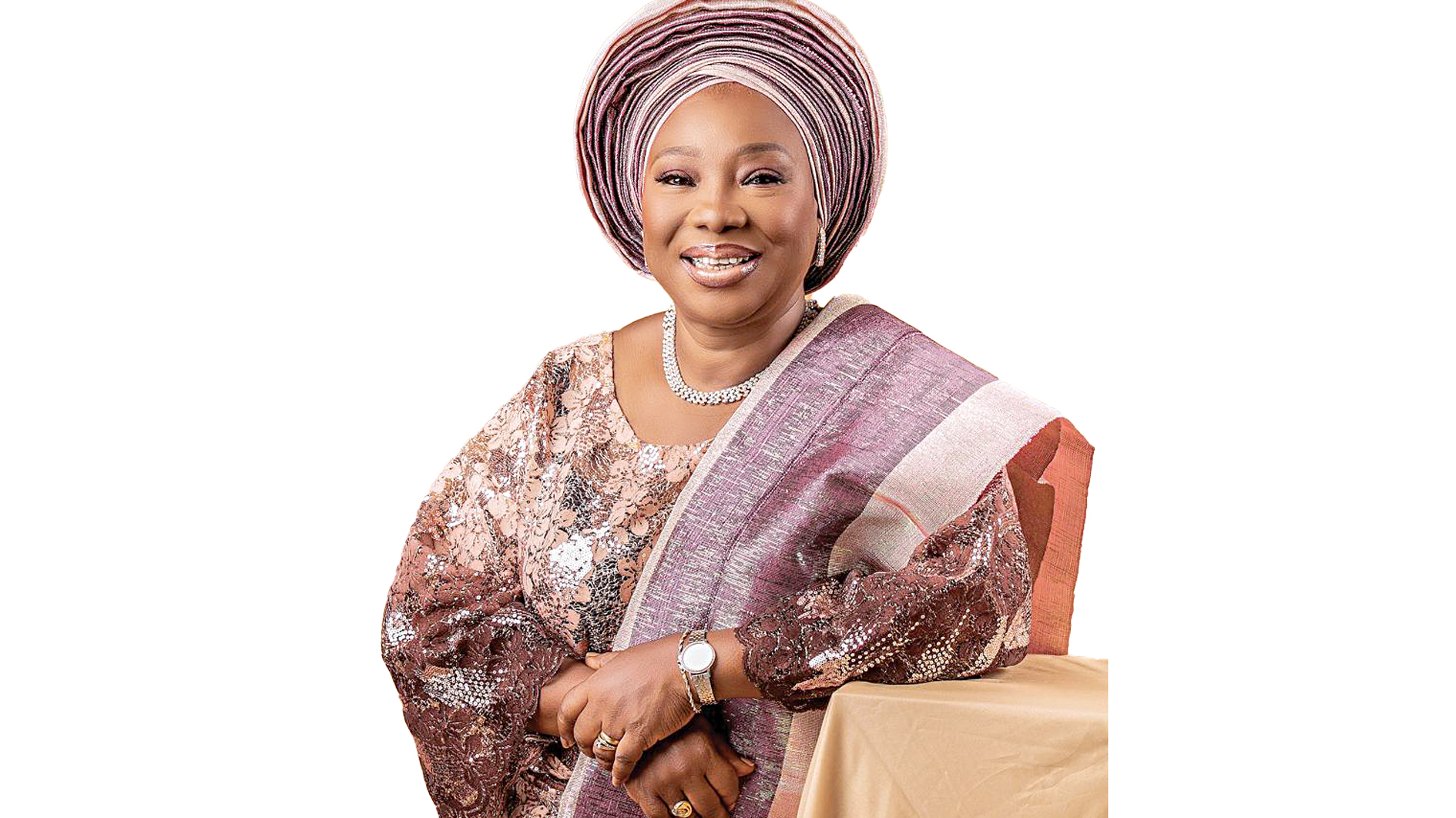
For five of her seven decades of life, Mrs Bolajoko Morolake Falore has lived and breathed education. Setting sail with a Teacher’s Grade II Certificate in hand, Falore, midstream, metamorphosed into a consummate professional who taught primary and secondary school pupils (both public and private) and later adult learners while serving as an inspector of education in Lagos State. In the course of her teaching odyssey, she earned master’s degrees from two reputable Nigerian universities and went on to establish and administer the Mind Builders Schools for nearly three decades. The President of the World Organisation for Early Childhood Education (OMEP), Lagos Chapter, who turned 70 on Tuesday, June 23, offered an incisive appraisal of government education policies over the years. In this interview with ENO-ABASI SUNDAY, she confronts the challenges and prospects of national education, decries the cankerworms of examination malpractice and rising student indiscipline, and underscores the necessity of a sound foundation for educators. The former Chairman of the Ikeja Chapter of the National Association of Proprietors of Private Schools (NAPPS), Lagos State, also makes a compelling case for prioritising girl-child education, emphasising women’s vital roles as mothers, foundational home teachers and, by extension, nation builders.
Having progressed from classroom teacher to education inspector and school administrator in the past five decades, what insights can you share on the challenges and prospects of Nigeria’s education sector?
First and foremost, I give glory to God Almighty for granting me the opportunity to serve Nigeria in virtually every sphere of the education system.
One of the most significant challenges facing education in Nigeria is inadequate funding. No matter how lofty the ideals or policies of government and other stakeholders are, education cannot effectively fulfil its purpose, transforming society through the transmission of knowledge, values, and culture, if it is poorly funded.
Private schools, in particular, require adequate tuition income to attract and retain qualified teachers who are capable of delivering quality education. The salaries demanded by even relatively inexperienced teachers today often exceed what many schools can sustainably afford. At the same time, parents are understandably reluctant to accept increases in school fees, even when such increases are necessary to meet rising personnel costs and investments in modern educational facilities.
As a result, many schools resort to bank loans to finance their operations and development projects. Unfortunately, the high cost of borrowing in Nigeria often makes this option unsustainable.
Another challenge is the mismatch between educational curricula and workplace realities. Many graduates leave school without the practical skills required by employers, contributing to unemployment and underemployment. The education sector itself is affected, as teacher-training programmes do not always adequately prepare graduates for the demands of contemporary classrooms.
To address this challenge, educational institutions must invest continuously in professional development and in-service training for teachers. However, this also requires substantial financial resources.
In addition, examination malpractice, cultism, and bullying have become persistent concerns within our educational institutions. These issues, once associated primarily with higher levels of education, are increasingly being observed even at the primary school level.
Despite these challenges, there are encouraging prospects for education in Nigeria. The increasing adoption of educational technology, digital learning resources, and artificial intelligence has significantly enhanced teaching and learning. Learners now have access to a wealth of information and virtual experiences that enrich the educational process.
Furthermore, the curriculum has increasingly incorporated entrepreneurship and practical skills acquisition, helping students become more self-reliant and capable of creating employment opportunities for themselves and others.
You began your journey with a Grade II Teachers’ Certificate, once regarded as the gold standard of teacher education in Nigeria. How did that foundational training shape your approach to teaching differently from the training teachers receive today?
Thank you for that question. Those of us who passed through the Grade II Teachers’ colleges genuinely embraced teaching as a calling. The training was rigorous, comprehensive, and highly practical. We were trained to teach all subjects at the primary school level and were equipped with a deep understanding of child development and classroom pedagogy.
It is unfortunate that this model of teacher preparation no longer exists. Today, the National Certificate in Education (NCE) serves as the minimum teaching qualification. While the NCE adequately prepares teachers for subject specialisation, particularly at the secondary school level, it does not always provide the broad-based preparation required for primary education.
As a result, many schools now rely heavily on specialist subject teachers. While there is nothing inherently wrong with this, it sometimes affects continuity and commitment, as some teachers move frequently from one school to another.
Our training instilled thoroughness, discipline, and attention to detail. We were taught not merely to teach subjects but to understand the child and apply appropriate teaching methods to meet individual learning needs.
More importantly, we entered the profession out of passion rather than convenience. We taught because we believed in shaping future generations. Today, some individuals enter teaching as a temporary option while pursuing other career ambitions.
The values and professional standards I acquired through Grade II Teacher training have remained with me throughout my career. They have influenced not only my effectiveness as a classroom teacher but also my leadership as an education administrator and proprietor of Mind Builders Schools.
You are a good example of why the girl-child should be educated. How important is it for Nigeria to prioritise girl-child education in the interest of national development?

I remain eternally grateful to my parents, who never discriminated against the girl-child, and I believe Nigeria must continue to prioritise girl-child education if we are to achieve sustainable national development and global relevance. It is heartwarming that the days when educating girls was considered less important than educating boys are gradually disappearing.
Girl-child education is a catalyst for national development. As the popular saying goes, ‘If you educate a boy, you educate an individual; if you educate a girl, you educate a nation.’
The government’s investment in quality girls’ schools, such as Queens College, Yaba, where I had the privilege of teaching in the 1980s, has contributed significantly to changing societal attitudes.
Educated women contribute significantly to poverty reduction by supporting their families economically; they help improve family health outcomes, reduce the incidence of early marriages, and contribute to more informed parenting.
Education also creates opportunities for women to participate more actively in leadership and governance. It is encouraging that conversations are ongoing regarding greater female representation in politics and public service. I look forward to a time when Nigeria will produce a female president and many more female governors. Ultimately, investing in the education of girls is one of the most effective ways of securing the future prosperity and stability of any nation.
At a time when many schools have become “miracle centres,” where examination success is facilitated by school owners and administrators rather than earned through hard work, what steps would you recommend to ensure that students graduate with marketable skills and strong character?
Examination malpractice is not only a violation of educational regulations; it is a crime against humanity. It undermines the integrity of education and destroys the future of the students involved. Beneficiaries of such practices often lack the competence required for higher education, professional practice, and leadership responsibilities.
At Mind Builders Schools, we operate a strict zero-tolerance policy towards examination malpractice. Both staff and students understand that academic dishonesty is unacceptable under any circumstances.
Our philosophy is simple: students should be taught to acquire and apply knowledge, not merely to pass examinations. To achieve this, we have invested heavily in educational technology, digital learning tools, and robotics education. These investments are aimed at exposing our learners to practical and relevant knowledge that builds competence and confidence.
In a country where teaching is often regarded as a “last-resort profession,” what has enabled you to remain passionate and committed to education for over fifty years?
Teaching was never a last-resort profession for me. It was a deliberate choice that I embraced wholeheartedly from the very beginning. That conviction motivated me to pursue every level of professional training available to educators and to continuously invest in my personal development. Much of what I know about teaching, educational leadership, and school administration has been acquired through extensive reading, professional study, and lifelong learning.
I have also been fortunate to work with dedicated teachers who share my passion for excellence. One of the greatest joys of my professional life has been mentoring and training young educators. Many of those teachers have gone on to establish their own schools, and I am proud that we continue to maintain strong professional relationships.
Another source of motivation is my direct interaction with students. Up to this day, I personally teach our graduating Primary Six pupils in a programme I call the “Finishing School,” where I introduce them to important life skills, leadership values, and principles for future success. I also conduct similar sessions for students transitioning from Junior Secondary School to Senior Secondary School, exposing them to entrepreneurship and practical life experiences that complement their formal education.
These engagements keep me intellectually stimulated and connected to the evolving needs of young people. They continually remind me why I chose teaching as a profession and why I remain passionate about it after five decades.
From the introduction of the 6-3-3-4 system in the 1980s to today’s digital era, what is the one educational value you have refused to compromise despite changing trends?
Although the system is now commonly referred to as 9-3-4 because of the integration of primary and junior secondary education into nine years of compulsory schooling, the basic structure remains largely the same as the old 6-3-3-4 system.
What has changed dramatically is the influence of technology and the Internet. Today, students have access to unlimited educational resources and learning opportunities from around the world. Any school that wishes to remain relevant must embrace these global developments.
However, one educational value that I have never compromised is discipline. The schools of my generation placed great emphasis on discipline, punctuality, respect, responsibility, and excellence. While times have changed, I believe these values remain essential for producing successful and responsible citizens.
At Mind Builders Schools, discipline is deliberately cultivated among both students and staff. We place a strong emphasis on time management and punctuality. We do not subscribe to the concept of “African Time.” Programmes begin at the exact times advertised, regardless of the number of people present.
We also encourage our students to pursue excellence in everything they do. These values formed part of my own educational upbringing and have remained central to my philosophy as an educator. In my view, discipline and excellence are timeless virtues. They remain indispensable tools for preparing young people to become productive and responsible members of society.
Having spent more than fifty years in education, how has your perspective on discipline evolved, particularly in balancing traditional values with modern child psychology?
You are correct that a great deal has changed in the area of discipline over the past five decades. For many people of my generation, discussions about discipline immediately bring to mind corporal punishment. During our school days, caning was widely accepted as a legitimate means of correcting undesirable behaviours. Parents and teachers alike subscribed to the belief that strict physical discipline was necessary for proper upbringing.
However, educational practice has evolved significantly over the years. Modern research in child psychology has provided a deeper understanding of children’s emotional, psychological, and developmental needs. As a result, corporal punishment has been prohibited in schools and replaced with more constructive approaches to behaviour management.
As a student of Child Psychology, I fully support this evolution. I have come to appreciate that discipline is not synonymous with physical punishment. Effective discipline is about guiding children towards responsible behaviour through clear expectations, accountability, and consistent consequences.
Discipline remains essential to education, but it must be administered in ways that preserve the dignity of the child while promoting character development, self-control, and personal responsibility.
The ultimate goal is not to instil fear but to cultivate self-discipline. When students learn to make the right choices because they understand their responsibilities and values, genuine character formation takes place. That, in my view, is the true purpose of discipline in modern education.
Most people look forward to retirement after long years of service. What specific gap or challenge inspired you to establish a school rather than settle into retirement?
The public service requires retirement after 35 years of service or upon attaining the age of 60, whichever comes first. In my case, I did not wait for either. I opted for voluntary retirement in 1998 at the age of 52 while serving as an Inspector of Education in Lagos State.
My decision was not driven by any perceived injustice within the system. Rather, it was motivated by a long-standing passion and vision to establish a school where I could fully implement sound educational philosophy and contribute more directly to the development of young minds.
That vision gave birth to Mind Builders Schools in 1998. We started modestly with just 18 pupils and six teachers. Like many worthwhile ventures, the journey began with faith, determination, and a commitment to excellence.
Today, I give all glory to God for the remarkable growth that has taken place over the years. The school has evolved into a respected educational institution comprising two nursery and primary schools and a high school, serving hundreds of students across our campuses in Omole Phase II and Alausa, Ikeja.
Your journey reflects the values of hard work, discipline, continuous learning, compassion, and visionary leadership. But if you must summarise your greatest contributions to education in the country, what would they be?
One of my greatest contributions to education in Nigeria is the establishment and sustained development of Mind Builders School in Lagos State. Founded in 1998 with only 18 pupils and 6 teachers, the school has grown into a respected educational institution providing nursery, primary, and secondary education.
Under my leadership, the school developed modern learning facilities, including science laboratories, ICT centres, language rooms, mathematics clinics, music and art studios, and sports facilities. These investments demonstrate my belief that Nigerian children deserve access to world-class educational infrastructure comparable to global standards.
In diverse ways, I have contributed to the advancement of teacher professional development, mentorship and production of educational leaders; contribution to educational administration and quality assurance; promotion of child-centred education, support for inclusive and accessible education; contribution to educational associations and policy discussions, just as I have contributed immensely to academic excellence and human capital development.
As Chairman of the Ikeja Chapter of the National Association of Proprietors of Private Schools (NAPPS), Lagos State, I introduced innovative administrative ideas that strengthened the operations and effectiveness of the association.
My active participation in the Association of Private Educators in Nigeria (APEN) and my leadership role as President of the Lagos Chapter of the World Organisation for Early Childhood Education (OMEP) further demonstrate my commitment to improving educational standards, early childhood education, teacher development, and policy advocacy in Nigeria.
In the area of promotion of women’s leadership in education, my achievements also represent an inspiration to women in educational leadership and entrepreneurship, especially at a time when many women face limitations in professional advancement in their bid to combine motherhood, academic advancement, public service, and educational entrepreneurship.
QUOTE
Teaching was never a last-resort profession for me. It was a deliberate choice that I embraced wholeheartedly from the very beginning. That conviction motivated me to pursue every level of professional training available to educators and to continuously invest in my personal development. Much of what I know about teaching, educational leadership, and school administration has been acquired through extensive reading, professional study, and lifelong learning

