 Follow Us on Google News


 Follow Us on Google Discover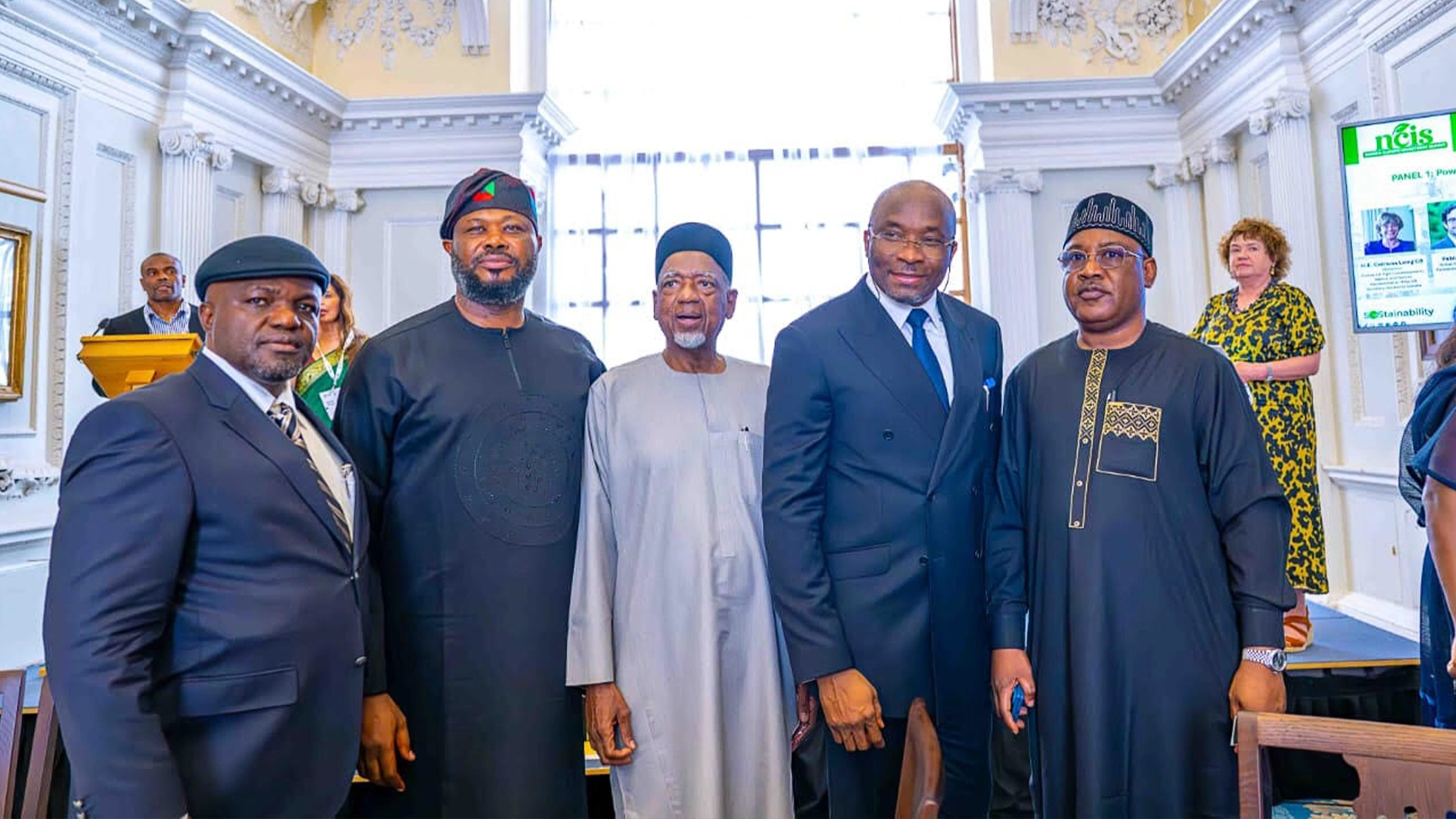
Deputy Speaker of the House of Representatives, Rt. Hon. Benjamin Okezie Kalu, has proposed the establishment of a Nigeria-London Green Finance Partnership to accelerate climate investments and unlock funding for sustainable development projects across Nigeria.
Kalu made the proposal while delivering a keynote address at the Nigeria Climate Investment Summit, a flagship event of the ongoing London Climate Action Week themed, “Catalyzing Nigeria’s Climate Policy Progress into Financial Flows for Green Projects.”
The Deputy Speaker told international investors, policymakers, development partners and financial institutions that Nigeria is ready to translate its climate ambitions into bankable projects capable of attracting global capital while delivering economic growth, job creation and environmental sustainability.
He said the country’s green transition presents practical and immediate opportunities across renewable energy, climate-smart agriculture, sustainable transportation, waste management and climate adaptation infrastructure.
According to Kalu, investment opportunities abound in distributed renewable energy systems, solar mini-grids, battery storage, clean cooking technologies, electricity transmission and distribution infrastructure, and industrial energy-efficiency projects.
He also highlighted climate-smart agriculture, irrigation systems, cold-chain logistics, food processing and resilient rural infrastructure as strategic sectors that can improve food security while boosting incomes for millions of Nigerians.

The Deputy Speaker further identified electric mobility, mass transit systems, low-carbon urban transport, waste-to-value enterprises, methane reduction projects, circular economy initiatives and green manufacturing as viable investment destinations.
He stressed that climate adaptation must receive equal attention alongside emissions reduction efforts, noting that millions of Nigerians are already grappling with the effects of climate change.
“Nigeria’s climate challenge is both a mitigation challenge and an adaptation challenge. Our people are already living with the consequences of extreme weather, flooding, land degradation, food insecurity and climate-related displacement. Climate finance must therefore support both emissions reduction and human resilience,” Kalu said.
He emphasized that Nigeria’s green transition must be inclusive and equitable, ensuring that the benefits of climate investments reach all segments of society.
“Our message is simple: Nigeria’s green transition must be a just transition. It must expand access to affordable energy, create decent work, support communities, equip young people with new skills, promote women’s participation in the green economy and ensure that no region or social group is left behind,” he added.
Kalu linked the country’s climate investment drive to broader economic reforms being implemented by the administration of President Bola Ahmed Tinubu, arguing that a stable macroeconomic environment is essential for attracting long-term climate finance.
He noted that recent reforms aimed at restoring fiscal discipline, improving revenue generation and strengthening the foreign exchange framework have enhanced investor confidence.
According to him, the removal of fuel subsidies has redirected public resources toward infrastructure development and contributed to a significant increase in government revenue, while foreign exchange reforms have improved market transparency and liquidity.
“Climate investment thrives where there is confidence in the broader economic environment,” he said.
The Deputy Speaker assured investors that Nigeria’s legislative framework provides the certainty needed for long-term investment decisions.
He pointed to the Climate Change Act as a critical instrument for climate governance, carbon budgeting, emissions reporting and the development of market-based mechanisms that support low-carbon growth.
Kalu also highlighted the significance of the Electricity Act, which he said has opened a new chapter in Nigeria’s power sector by enabling greater decentralisation and expanding opportunities for state governments and private investors.
The law, he noted, empowers states to develop electricity solutions tailored to local needs, creating fresh opportunities for green investments and sustainable energy projects.
He pledged the commitment of the 10th National Assembly to strengthening the implementation of climate-related laws, supporting carbon market development, improving investor protection and enhancing green finance frameworks.
Kalu also assured stakeholders that lawmakers would continue to provide oversight of climate expenditure and support reforms aimed at reducing bureaucratic bottlenecks for green projects.
Calling for stronger international collaboration, the Deputy Speaker urged investors, pension funds, insurers, banks, development finance institutions and philanthropic organisations to partner with Nigerian institutions in developing innovative financing structures.
He advocated blended-finance mechanisms that combine public, private and concessional funding, as well as green guarantees, first-loss facilities, political risk insurance, local-currency financing and project-preparation support to lower investment risks and attract capital.
Kalu further expressed Nigeria’s readiness to work with global institutions and financial centres to align its green taxonomy, reporting standards and project development systems with international best practices.
To move from dialogue to action, he proposed the creation of a structured Nigeria-London Green Finance Partnership that would focus on developing investor-ready projects across clean energy, transportation, agriculture, resilient infrastructure and the circular economy.
The proposed partnership, he said, would also establish project-preparation and transaction-support platforms capable of moving viable projects from conception to implementation.
“Our objective is straightforward: every pound sterling, dollar, naira or euro invested in Nigeria’s green economy should produce measurable value,” Kalu said.
“Today, I propose that this summit should not end as another important conversation. It should become the beginning of a structured Nigeria-London Green Finance Partnership. This is how ambition becomes action. This is how policy becomes finance. And this is how finance becomes infrastructure, jobs, resilience and shared prosperity.”

