 Follow Us on Google News
 Follow Us on Google Discover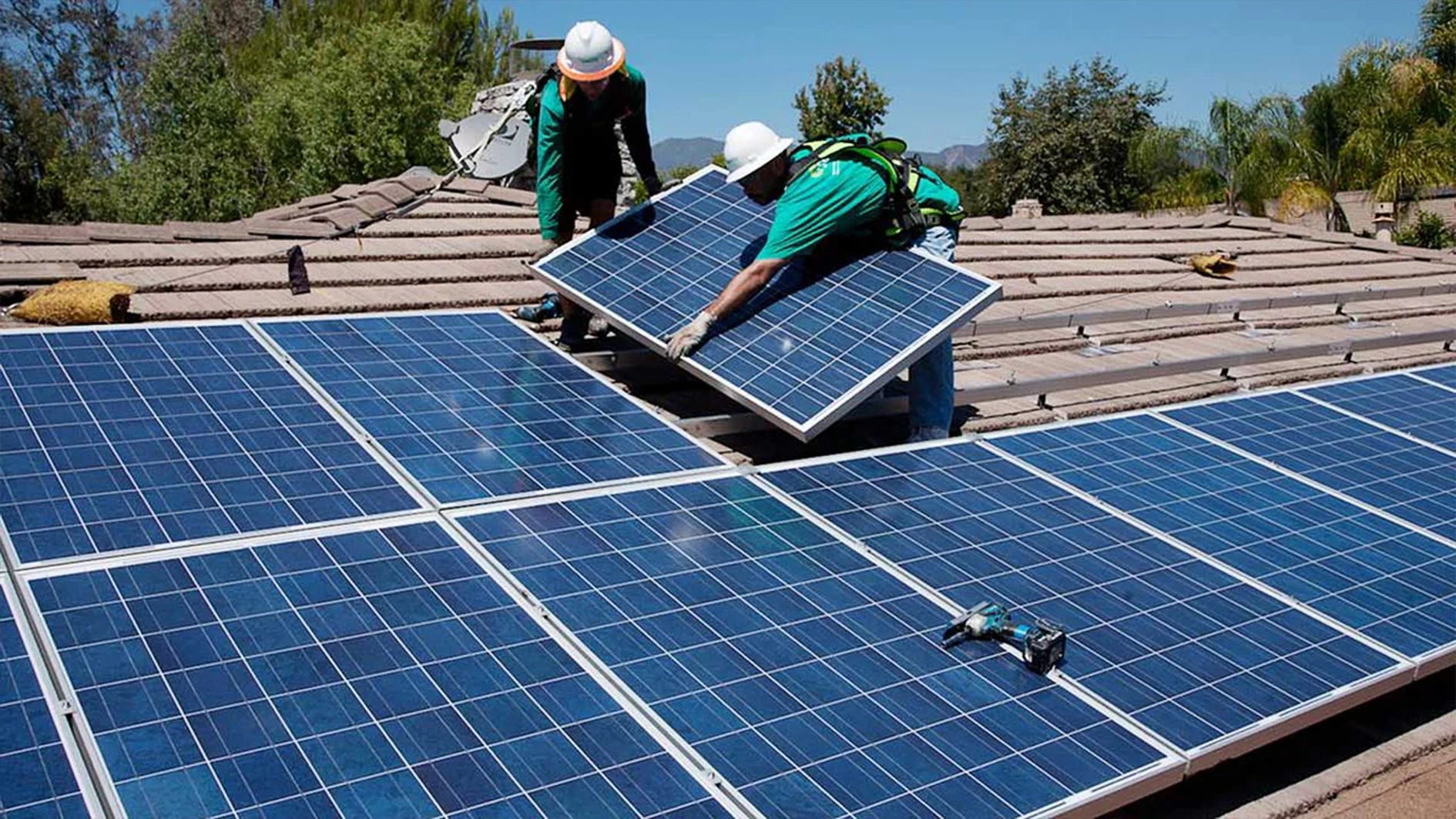
• ‘Over 8,000 residents in Epe communities get access under IMAS’
• Tegbe says reforms breaking supply monopoly
• REA eyes additional 5MW expansion as distributed power model scales up
The Federal Government, in partnership with the European Union (EU), the German Government and the Rural Electrification Agency (REA), has commissioned a 505-kilowatt peak (kWp) interconnected solar mini-grids in Lagos State, delivering electricity to more than 8,000 residents across five underserved communities in Epe.
The project, located in the Mojoda communities in Eredo, Epe Local Council, covers Odogbawojo, Odoshiwola, Odoayan, Ora and Ibowon under the Interconnected Mini-Grid Acceleration Scheme (IMAS), designed to expand distributed renewable energy access and strengthen electricity supply in unserved communities.
The Epe mini-grid, developed by A4&T Solutions Limited under IMAS, is part of a wider push to scale distributed renewable energy solutions across Nigeria and improve integration with the national distribution network.
Minister of Power, Joseph Tegbe, who spoke during the commissioning yesterday, in Lagos, said the project reflects the Federal Government’s ongoing electricity sector reforms under the Electricity Act 2023, which he said had reshaped Nigeria’s power governance structure through decentralisation and the “democratisation of electricity.”
He said the reform framework had enabled stronger participation of sub-national governments, private investors and development partners in the generation, transmission and distribution of electricity across the country.

Tegbe said that the Epe project goes beyond rural electrification, describing it as a fully integrated energy system linking generation, storage and end-user delivery.
The minister disclosed that the government had already prepared for a major expansion of renewable energy infrastructure in Epe, with plans for an additional five megawatts (MW) of capacity to serve wider communities and support growing demand.
He, however, commended the REA for what he described as its transformation into a key driver of Nigeria’s off-grid and renewable energy expansion programme.
Managing Director of the REA, Abba Aliyu, said the Epe mini-grid represents a shift from basic electricity access to economic transformation, where energy is positioned as a driver of productivity and development.
He said the project would supply reliable electricity to households, small businesses, healthcare facilities and educational institutions across the five communities, reducing dependence on petrol and diesel generators.
Meanwhile, Head of Cooperation, German Embassy, Dr Karin Jansen, representing the German Government, said the project would directly benefit over 8,000 people and reflects the deepening energy partnership between Nigeria and Germany.
She said through the Nigerian Energy Support Programme (NESP), jointly funded by Germany and the EU and implemented by GIZ, support had been extended to distribute energy infrastructure serving underserved communities across Nigeria.
Jansen noted that Germany had committed €65 million to development cooperation with Nigeria, including €6.5 million dedicated to strengthening NESP interventions in the power sector.

