 Follow Us on Google News


 Follow Us on Google Discover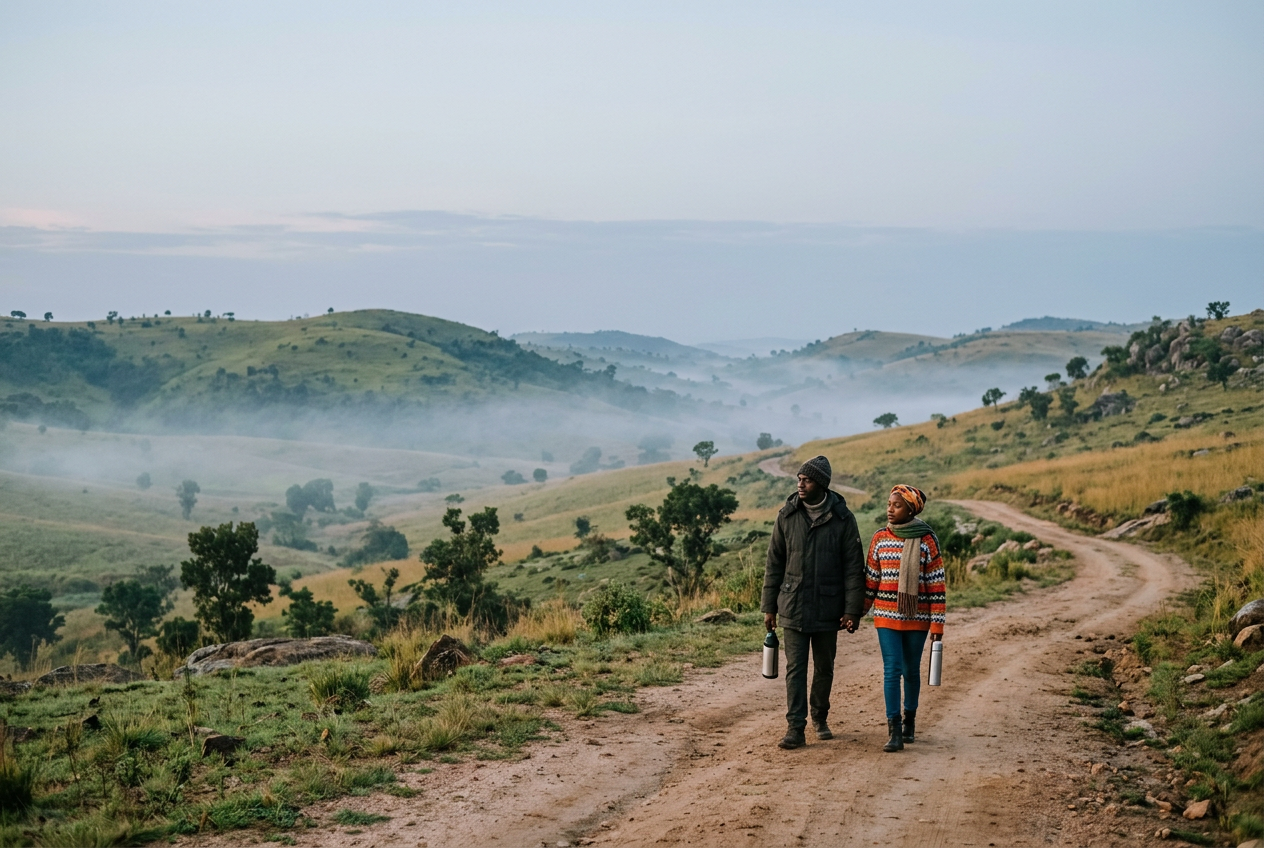
Hello, friend. If you have ever woken up in December shivering under two blankets and wondered whether you were imagining things, let me assure you that you were not. After months of careful research into Nigeria’s seasonal climate patterns and years of travelling between Lagos, Jos, Kano, and practically everywhere in between, I can tell you with confidence that answering what is the coldest month in Nigeria is more nuanced than most people expect. Our country spans a remarkable range of climates, from the rainforest belt of the south to the Saharan fringe of the north, and “cold” means something entirely different depending on where you are standing.
The climate of Nigeria is defined by two seasons rather than four: a wet season and a dry season. Temperature variation between these two seasons is modest compared to what people in Europe or North America experience, but it is very real, and it shapes daily life in ways Nigerians understand instinctively even if they rarely articulate them. That slight chill in the morning air, the haze that hangs over the landscape, the skin that suddenly feels tight and dry, those are the signals that our coolest period has arrived.
I remember my first December posting in Kano, back when I was still getting my bearings as a journalist. I stepped outside at 5 a.m. and immediately went back inside to find a thick jumper I had never imagined needing in Nigeria. It was not snow-country cold, obviously, but it was unmistakably chilly, the kind of cold that makes hot Akara and Koko taste like a revelation. That experience is what sparked my years-long interest in understanding exactly how our seasons work and what they mean for ordinary Nigerians from Sokoto to Calabar.
Understanding Nigeria’s Seasons and Why Coldness Feels Different Here
Nigeria operates on two primary seasons: the rainy season, which runs roughly from April through October in the south and June through September in the north, and the dry season, which covers the remaining months. The dry season arrives with the harmattan, a dusty north-easterly trade wind that sweeps down from the Sahara Desert across West Africa. This wind carries fine dust particles, drops humidity dramatically, and brings the coolest temperatures Nigeria experiences all year.
The Nigerian Meteorological Agency (NiMet), which publishes annual Seasonal Climate Predictions covering temperature forecasts for the entire country, describes the harmattan as the dominant climatic feature of the November-to-March period in the north and a powerful influence on temperature and visibility across the south from December through February. Their data show that harmattan conditions reduce humidity to as low as 15 per cent in northern states, a dramatic shift from the 70 to 90 per cent humidity that characterises the rainy season in the south.
This is worth dwelling on for a moment. Because Nigeria is a tropical country sitting between latitudes 4°N and 14°N, our “cold” is not the biting, bone-chilling cold that a Canadian winter produces. It is more like the best Lagos morning you have ever had, multiplied in the north into something genuinely bracing. What feels cold to a Port Harcourt resident at 22°C would feel perfectly warm to someone from Oslo. Context is everything.

The Guardian has reported on just how dramatically the harmattan is being altered by climate change. As one Guardian Nigeria features piece on the vanishing harmattan documents, the familiar cold mornings and dusty winds that once arrived predictably in November are becoming increasingly unreliable, with some years seeing the cold season delayed well into January or failing to materialise with its usual intensity at all. For those of us who grew up timing the school calendar around harmattan season, this shift feels like losing an old friend.
What’s the Coldest It’s Been in Nigeria?
Nigeria’s absolute cold records make for fascinating reading. According to meteorological data compiled from weather stations across the country, the coldest reliably documented conditions occur on the highlands of Plateau State, particularly in and around Jos, and on the Mambilla Plateau in Taraba State.
Jos, sitting at approximately 1,200 metres above sea level, has recorded morning temperatures as low as 2°C during exceptional harmattan events, though such extremes are rare. More typically, Jos sees harmattan night-time temperatures of 12 to 15°C, dropping from daytime highs of around 22 to 25°C. At the Mambilla Plateau, which reaches elevations above 1,600 metres, temperatures have been recorded near 8 to 10°C during the coldest periods, occasionally accompanied by actual frost on the grass at dawn.
For the lowland majority of Nigeria, the records are considerably warmer. Kano, one of the north’s major cities, sees harmattan mornings around 10 to 14°C. Maiduguri, despite being one of the country’s hottest cities for most of the year, dips to around 14°C on cold harmattan nights. Lagos, buffered by ocean air, rarely drops below 20°C even during the coldest nights of the year.
The NiMet State of Climate reports, which are published annually based on data collected from meteorological stations nationwide, show that Nigeria’s overall mean annual temperature ranges from about 26.5°C to 28.5°C, with the “coldest” recorded temperatures across most of the country still well above what people elsewhere would describe as genuinely cold. Even so, a 14°C morning in Kano feels remarkably different from a 14°C morning in London, because Kano residents are dressed for 30°C most of their lives.
I spoke once with a schoolteacher in Gembu, high on the Mambilla Plateau, who told me that his pupils regularly came to school in the dry season wearing three or four layers of clothing and still shivered through morning assembly. “In Lagos,” he told me with a grin, “they would say we are exaggerating.” He was not exaggerating. The cold of the Nigerian highlands is real, and it deserves to be taken seriously.
Monthly Average Temperature Ranges Across Key Nigerian Cities During Harmattan Season (December to February)
The table below draws on meteorological data from NiMet and climate station records to show how temperatures vary across Nigeria’s major cities and highland regions during the harmattan months. The pattern is clear: northern states and elevated areas experience the sharpest cooldown, while coastal southern cities remain warm year-round.
| City / Region | State | Average High (°C) | Average Low (°C) | Humidity (%) | Season Character |
|---|---|---|---|---|---|
| Jos | Plateau | 24 | 12 | 20 | Cool, misty, frost possible |
| Gembu (Mambilla) | Taraba | 20 | 8 | 25 | Nigeria’s coldest, frost common |
| Kano | Kano | 27 | 10 | 18 | Chilly mornings, intense harmattan |
| Sokoto | Sokoto | 28 | 13 | 15 | Dry, dusty, cold at dawn |
| Abuja | FCT | 30 | 16 | 30 | Mild cooldown, comfortable days |
| Maiduguri | Borno | 31 | 14 | 12 | Cool nights, warm days |
| Ibadan | Oyo | 33 | 20 | 45 | Light harmattan, warm overall |
| Lagos | Lagos | 32 | 21 | 65 | Warm year-round, minimal change |
| Port Harcourt | Rivers | 31 | 22 | 75 | Barely noticeable seasonal shift |
| Calabar | Cross River | 30 | 21 | 80 | Humid, green, mild at most |
The data confirm what any experienced Nigerian traveller already knows: the further north and the higher the elevation, the more dramatic the harmattan cooldown. Jos and Gembu stand in a category of their own, experiencing conditions that feel genuinely cold by any tropical standard, while Lagos and Calabar barely register the season’s passing.
What Is the Coldest Month in Nigeria?
The answer to this question is January. Across Nigeria as a whole, January consistently records the lowest average temperatures of the calendar year, making it the coldest month in the country. This is the peak of harmattan season, when the north-easterly winds from the Sahara are at their strongest, humidity is at its annual minimum, and temperatures across the country are at their most depressed.
December is a close second and is often experienced as colder in practical terms by southern Nigerians, because harmattan typically intensifies through December and reaches its peak in January. By February, the winds begin to weaken and temperatures start climbing again, particularly in the south, though January holds the statistical record for coldest average temperatures at most monitoring stations across the country.
The key factors that make January Nigeria’s coldest month include:
- The Intertropical Discontinuity (ITD), the boundary between dry Saharan air and moist Atlantic air, reaches its southernmost position in January, maximising the coverage of dry, cool harmattan air across the entire country.
- Solar declination shifts the sun’s most direct rays southward during December and January, reducing solar heating in the northern hemisphere where Nigeria sits.
- Nights are longest relative to the calendar, giving temperatures more time to drop before the sun rises.
- The absence of cloud cover during harmattan allows more heat to escape from the ground at night, pushing night-time temperatures to their annual minimums.
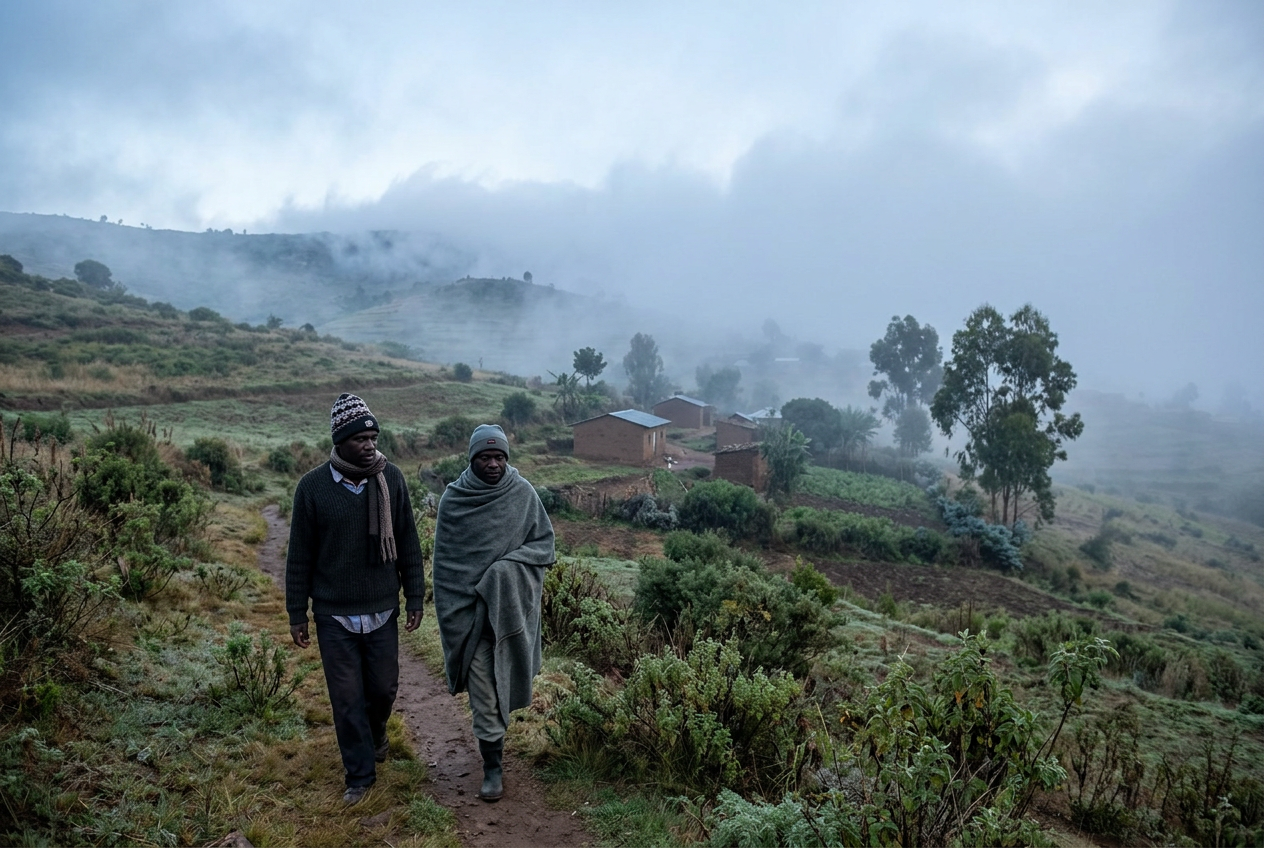
For a practical comparison: December is when most Nigerians first feel the cold arriving, January is when it peaks, and February marks the beginning of the warming that leads into the brutally hot March and April that precede the rains. In Jos, the distinction between December and January is particularly sharp. Residents describe January mornings as the time of year when even seasoned highlanders reach for extra blankets, and when the frost on the grass outside your window is less of a novelty and more of a daily reality.
The NiMet Climate Services division provides health advisories specifically keyed to this cold period, warning of increased risks of meningitis (which spreads more easily in dry, dusty conditions), respiratory infections, and cardiovascular stress during the January harmattan peak. These advisories are not theoretical; they reflect genuine health risks that cold harmattan conditions create, especially for children and the elderly.
A Guardian Nigeria editorial on the country’s warming climate has noted that even as climate change raises Nigeria’s average temperatures, the harmattan cold season is becoming shorter and less predictable. January cold records are not being broken upward; if anything, the coldest harmattan seasons are becoming rarer as baseline temperatures creep higher. This is a sobering context for anyone trying to understand Nigeria’s seasonal climate in the years ahead.
How Hot Is Nigeria in February?
February sits in an interesting transitional zone in Nigeria’s climate calendar. It is the month when the harmattan begins to loosen its grip, and temperatures start to climb, sometimes dramatically. The Guardian Nigeria article on Nigeria’s average temperatures describes February as the month when the cooling effect of harmattan retreats from the south first and then progressively from the north, creating a period of intense dry heat before the rains arrive.
In Lagos and the south-western states, February daytime temperatures typically reach 32 to 35°C, having already left the mild December and January period behind. In Abuja, daytime highs of 34 to 36°C are common. In the north, the transition is sharper still: Kano and Maiduguri can see February temperatures climbing rapidly towards 38 to 40°C by mid-month as harmattan winds diminish and the hot season, what many Nigerians call “hot dry season,” begins its assault.
This is why February in Nigeria can feel hotter than December even though it is technically in the same broad dry season. The cool phase gives way to the hot phase within the same season, and the shift happens quickly. If you have ever wondered why your skin, which was doing beautifully in the December harmattan dryness, suddenly starts rebelling in February with heat rash and discomfort, this is why. The weather has changed under you while you were not paying attention.
For practical purposes, if you are planning any kind of outdoor activity or event in Nigeria, February is the month when you should start preparing for heat rather than cold. Morning temperatures may still be bearable, but by noon, the sun is fierce, the air is bone dry, and hydration becomes a serious priority. A good rule of thumb I have followed over the years: if December and January are blanket months, February is the month you put the blanket away and start stocking up on pure water sachets and rechargeable fans.
Which Season Is October in Nigeria? Understanding the Transition Months
October sits at the very tail end of the rainy season in Nigeria, and it is one of the most interesting months on the climate calendar precisely because it is a month of transition. In the north, the rains typically cease by late September or early October. In the south, October still sees rainfall but declining intensity compared to the peak months of July and August.
The National Bureau of Statistics’s comprehensive climate records describe October through November as the period when north-easterly trade winds begin their southward push, ushering in the dry season with progressively clearer skies, declining humidity, and moderate temperatures. This transition period, sometimes called “back harmattan” informally in parts of Nigeria, is characterised by decreasing rainfall without yet delivering the full force of harmattan.
In practical terms, October feels like the end of the rain rather than the beginning of cold. Temperatures remain high, typically 28 to 33°C across most of the country. Humidity remains elevated in the south, though it begins dropping in the north. For farmers, October is a critical harvest month in many parts of Nigeria, the time to bring in crops before the ground dries and hardens under the advancing dry season.
A Guardian Nigeria opinion piece examining the changing character of Nigeria’s harmattan seasons describes how October and November have become increasingly unpredictable, with late rains sometimes stretching deep into November in some southern states, pushing the arrival of harmattan conditions back by weeks or even months. For those planning travel or outdoor events, October remains a transition month whose character depends enormously on whether you are in the north (likely dry by mid-October) or the south (likely still rainy through the end of the month).
Which State in Nigeria Is Very Cold? A Guide to the Coolest Corners of the Country
If you have ever wanted to experience Nigerian “cold” in its fullest sense, you need to head to the highlands. The geography of Nigeria’s cool zones follows elevation faithfully: the higher the ground, the cooler the air, and this simple principle creates pockets of genuinely cool climate in an otherwise warm country.
Here is a step-by-step guide to understanding and navigating Nigeria’s coldest conditions:
- Head to Plateau State first. Jos, the state capital sitting at 1,200 metres above sea level, is the default answer when anyone asks about cold Nigerian states. Average year-round temperatures of 22 to 24°C make it noticeably cooler than its latitude alone would suggest, and during harmattan season, morning temperatures can dip to 12°C.
- Consider the Mambilla Plateau in Taraba State for extreme cold. Gembu and surrounding communities on the Mambilla Plateau, at elevations exceeding 1,600 metres, experience Nigeria’s absolute minimum temperatures. Morning frost is not uncommon during peak harmattan. If you want to feel genuinely cold in Nigeria, this is the place.
- Pack accordingly and prepare for altitude. Visitors unaccustomed to highland conditions are often caught off guard. Bring a thick jacket, warm socks, and long trousers. A thermos for hot tea or cocoa will serve you far better than you expect.
- Time your visit to December through February. This is when highland cold is at its most pronounced. Outside these months, even Jos is comfortably warm rather than cool.
- Be aware of health considerations. Cold, dry harmattan air at altitude increases the risk of respiratory infections and exacerbates conditions like asthma and sickle cell disease. Travel with appropriate medication and stay hydrated, because the dry air deceives you into forgetting how much moisture you are losing.
- Explore secondary cold zones. The Obudu Plateau in Cross River State offers cool highland conditions. Parts of Adamawa State around the Mandara Mountains experience temperatures below the surrounding lowland norm. These are less famous than Jos but equally rewarding for those seeking a climate change within Nigeria’s borders.
- Monitor NiMet forecasts before travelling. The Nigerian Meteorological Agency issues seasonal and short-range forecasts that are freely available and genuinely useful. For highland travel during harmattan, checking these forecasts before departing can mean the difference between arriving prepared and arriving shivering in a Lagos-appropriate outfit at 2,000 Naira short of enough budget for an emergency jumper.
The contrast between Nigeria’s coldest and warmest states is more dramatic than most people realise. While a Jos resident in January might be wearing a thick jacket and drinking hot Milo before sunrise, a Maiduguri resident is preparing for daytime temperatures that will climb past 30°C before noon. Both of them are in the same country, in the same season, experiencing what their climates define as “winter.”
Bringing It All Together: What Is the Coldest Month in Nigeria and How to Make the Most of It
January is unambiguously the coldest month in Nigeria. It represents the peak of harmattan season, the maximum southward extension of dry Saharan air, and the calendar moment when temperatures across the country are at their annual minimum. December is its close companion, and together these two months constitute what Nigerians experience as their cool season.
Understanding this matters practically. It tells you when to plan highland travel if you want to experience Nigerian cold. It tells you when to schedule outdoor events in cities like Abuja or Kano if you want comfortable temperatures for guests. It tells you when to warn your children about respiratory infections and when to stock up on Vaseline and moisturiser for the harmattan dryness that accompanies the cold. And increasingly, it tells you what to worry about as climate change shortens and weakens the very cold season that millions of Nigerians rely on to bring relief from the relentless heat of the rest of the year.
As someone who has spent considerable time travelling between Nigeria’s climatic extremes, my honest advice is this: embrace the cool season when it comes, prepare thoughtfully for it, and do not take it for granted. The harmattan months of December through February are arguably Nigeria’s most liveable weather period for most of the population, a brief window when the heat relents and the country takes a collective breath. Use it well.
Related Articles
If this piece sparked your curiosity about how Nigeria’s climate shapes life across the country, you might also enjoy these two explorations from my archive:
Which State in Nigeria is Very Cold? takes you deep into the highland communities of Plateau and Taraba states, where cold is not a seasonal novelty but a year-round reality that shapes agriculture, architecture, and daily routine in ways that would surprise most southerners.
What is the Average Temperature in Nigeria? builds a comprehensive picture of temperature variation across all six geopolitical zones, with practical advice for adapting to whichever climate zone you find yourself living, working, or travelling through.
Key Takeaways
- January is Nigeria’s coldest month, representing the peak of harmattan season when dry Saharan winds push temperatures to their annual minimum across the entire country, with highland areas like Jos and the Mambilla Plateau experiencing the lowest readings.
- Cold in Nigeria is relative: what feels genuinely chilly in Lagos at 21°C would feel mild to anyone accustomed to European winters, but in the northern highlands, harmattan mornings below 12°C are a real and practical cold that requires warm clothing and health precautions.
- February marks the beginning of the heat cycle rather than a continuation of the cool season, with temperatures in many northern and central states climbing rapidly towards 38 to 40°C by mid-month as harmattan retreats and the hot dry season begins.
Frequently Asked Questions About the Coldest Month in Nigeria
What is the coldest month in Nigeria?
January is the coldest month in Nigeria, representing the peak of harmattan season when dry north-easterly winds from the Sahara cover the entire country. Temperatures during this period are at their annual minimum, ranging from around 12°C on cold harmattan mornings in Jos to around 20 to 21°C on the mildest nights in Lagos.
Why is January colder than December in Nigeria?
The harmattan wind system reaches its maximum southern penetration in January, meaning a greater portion of the country is covered by dry, cool Saharan air than in December. December sees the harmattan arriving and intensifying, while January is when it peaks before gradually weakening through February.
Does Nigeria ever experience truly cold weather?
By global standards, Nigeria’s cold is mild, but by tropical standards it is significant, particularly in the highlands. Jos and the Mambilla Plateau have recorded temperatures as low as 2°C and 8 to 10°C respectively during exceptional harmattan events, while most lowland cities remain above 18°C even on their coldest nights.
Which part of Nigeria is coldest during harmattan?
The Mambilla Plateau in Taraba State experiences Nigeria’s lowest temperatures, with harmattan mornings occasionally dropping below 10°C at elevations above 1,600 metres. Plateau State, particularly Jos, is the cold state most Nigerians are aware of, with consistent year-round coolness due to its elevation of approximately 1,200 metres.
How cold does it get in Lagos during harmattan?
Lagos, protected by ocean air and maritime humidity, rarely drops below 20 to 21°C even during the coldest harmattan nights in January. Daytime temperatures in Lagos during harmattan typically remain between 30 and 33°C, making the city’s version of cold a mild version compared to what the north experiences.
Is October a cold month in Nigeria?
October is not a cold month; it marks the tail end of the rainy season in the south and the beginning of the transition to dry conditions in the north. Temperatures remain high, typically 28 to 33°C across the country, and while humidity begins dropping in the north, true harmattan cold is still months away for most regions.
What is harmattan and why does it cause cold weather in Nigeria?
Harmattan is a dry, dusty north-easterly trade wind that originates over the Sahara Desert and blows across West Africa from approximately November through March. It causes cold by dramatically reducing humidity, which allows more heat to radiate away from the earth’s surface at night, and by carrying relatively cool dry air southward from higher latitudes.
How does harmattan cold affect health in Nigeria?
The dry, dusty conditions of harmattan season increase the risk of respiratory infections, meningitis, nosebleeds, skin cracking, and eye irritation. Cold temperatures in the highlands additionally increase cardiovascular stress and can trigger crises in patients with sickle cell disease, which is why NiMet issues health advisories specifically for the harmattan period.
Is February hotter or colder than January in Nigeria?
February is hotter than January across most of Nigeria, particularly in the north and centre of the country. The harmattan winds begin weakening in February, temperatures start climbing, and many northern states see daytime highs approaching 38 to 40°C by mid-February, making it the beginning of the hot dry season rather than a continuation of the cool period.
What is the best month to visit Nigeria weather-wise?
December and January offer the most comfortable weather for visitors to most parts of Nigeria, combining dry conditions with reduced humidity and lower temperatures. January is particularly pleasant in the middle belt and north, while December is often cited as the best month for Lagos and the south due to the festive atmosphere combined with cooler, drier air.
How is climate change affecting Nigeria’s cold season?
Climate change is shortening and weakening Nigeria’s harmattan cold season. The NiMet 2026 Seasonal Climate Prediction warns of generally warmer temperatures across the country in the early months of the year, and journalists and climate scientists have documented increasingly late, weak, or absent harmattan seasons in recent years as rising global temperatures disrupt the atmospheric patterns that drive the harmattan.
Can you grow cool-weather crops in Nigeria during harmattan?
Yes, certain cool-weather crops can be cultivated in Nigeria’s highland regions during harmattan season. The Jos Plateau and Mambilla Plateau support temperate vegetable farming, including tomatoes, potatoes, and leafy greens, during the cooler months. However, lowland farmers across most of Nigeria rely on the harmattan as a dry, frost-free period for land preparation and planting warm-season crops once the rains return.

