 Follow Us on Google News


 Follow Us on Google Discover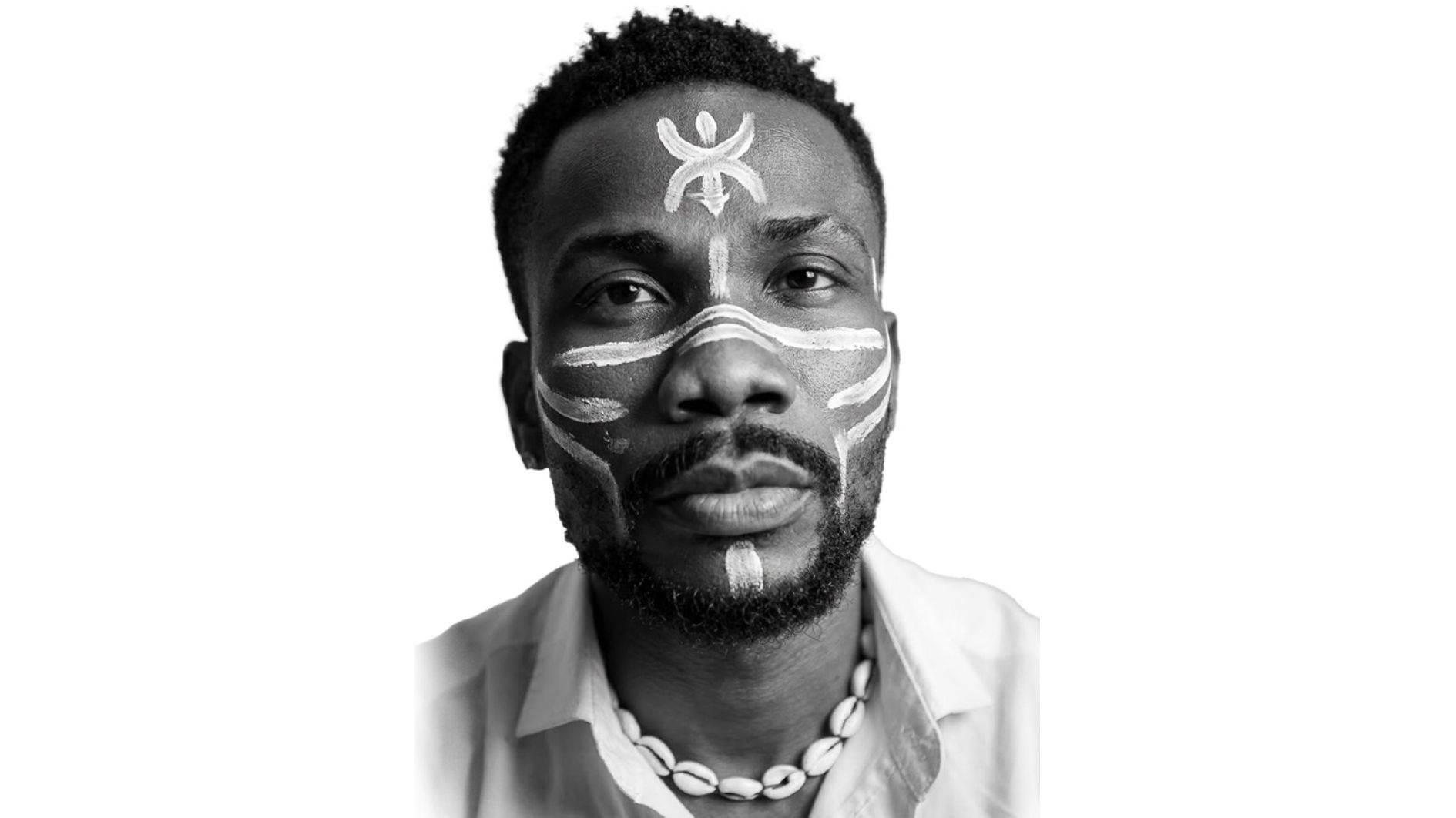
Every artist reaches a point when the conversation around their work begins to change. The question no longer focuses solely on the artworks they make but on the place they occupy within a wider cultural ecosystem. For Joachim Keke, 2026 may well be one of those moments.
The multi-disciplinary dance-theatre artist, choreographer and facilitator has recently been producing a body of work that exists at the intersection of performance, storytelling and community engagement.
Yet what appears most significant is not simply the quality of the work itself, but the increasing range of spaces in which it is being seen, discussed and developed, from the Leeds International African Arts Festival (LIAAF) to Yorkshire Dance’s FRESH programme and the University of Leeds Creative Labs initiative.
Perhaps, the most visible expression of this new phase emerged during the 2026 edition of the Leeds International African Arts Festival. Held across Leeds from June 4 to 10, under the theme Connect with Nature, the festival brought together artists, audiences and creative practitioners from across the African diaspora and beyond.
Among the featured artists was Joachim Keke, who presented both a performance and workshop activity on June 5 at Slung Low’s Warehouse in Holbeck.
Keke’s performance drew inspiration from Fela Anikulapo kuti ‘s iconic composition Water No Get Enemy, a song whose enduring cultural relevance continues to resonate across generations. Yet rather than attempt a reconstruction of Fela’s stage persona, Keke approached the material through his own movement vocabulary, creating a performance that felt at once familiar and distinctly personal.

The resulting work blended Afro-contemporary dance with theatrical storytelling. Keke moved through energetic travelling sequences and quieter moments of stillness, allowing the music space to breathe rather than overwhelming it with movement. Particularly, striking was the sense that he was not simply performing before an audience but engaging in a dialogue with them. A glance held a little longer than expected. A pause lingered. A gesture appeared to ask a question before the next movement phrase emerged as an answer.
Several days after the performance, I spoke with Keke on phone about the work and the artistic decisions behind it.
“The song has always represented something universal to me,” he explained. “Water belongs to everyone. It doesn’t discriminate. It carries memory, movement and life. I wasn’t interested in recreating Fela’s performance. I wanted to respond to the ideas inside the music and translate them through my own experiences.”
That intention was evident throughout the piece. Keke’s interpretation demonstrated a sensitivity to the musical score, shifting between fluid grounded movement and more expansive dynamic passages that echoed the rhythm of the composition. Rather than presenting nostalgia, the work became an exploration of resilience, cultural memory and human connection.
What emerged was not simply an homage but an act of interpretation.
This capacity to interpret rather than reproduce has become an increasingly recognisable characteristic of Keke’s practice. His work frequently references culture and lived experience, but it does so in a way that leaves room for audiences to contribute their own meanings.
Indeed, when asked about the participatory quality of his performance, Keke spoke less about choreography and more about relationships.
“I don’t think performance should always be a one-way exchange,” he said. “Even when audiences are silent, they’re participating. They’re bringing their memories, emotions and experiences into the room. I’m interested in creating work that invites that kind of engagement.”
This concern with participation appears consistently throughout Keke’s broader artistic practice.
In 2026 he was selected as a panel member for Yorkshire Dance’s FRESH Youth Dance Festival, where he contributed to assessing emerging dance works while supporting the development of young practitioners. Alongside this, he facilitated workshops and offered choreographic leadership within the programme.
Such appointments suggest growing recognition not only of Keke’s abilities as a performer but also of his capacity as a mentor, facilitator and artistic leader.
The same pattern can be observed in his involvement with the University of Leeds Creative Labs project, an interdisciplinary initiative that brings together artists, researchers and innovators to explore new approaches to creative inquiry and collaboration.
For Keke, whose work consistently engages questions of memory, identity and belonging, these opportunities feel less like separate achievements and more like interconnected expressions of a coherent artistic philosophy.
“Whether I’m working in a theatre, a workshop or a research environment, I’m asking similar questions,” he said during the conversation. “How do people connect? How do they remember? How do they belong? Those questions stay with me regardless of the context.”
The observation helps explain the continuity visible across his recent projects.
Large-scale public productions connected to Bradford 2025, including BLOOM and Brighter Still, have placed him within ambitious cultural programmes involving broad public participation. Meanwhile, projects such as Clinic of Remembering have allowed him to explore more intimate and reflective modes of engagement. Though different in scale, each project reveals a sustained interest in creating spaces where people can encounter one another through movement, storytelling and shared experience.
During the conversation, Keke repeatedly returned to the idea of connection, not simply as an artistic outcome but as a responsibility.
“Workshops are just as important to me as performances,” he said. “Sometimes the most meaningful discoveries happen when people come together to create, share stories or move together. Those moments remind me that art is ultimately about people.”
This perspective perhaps explains why Keke’s artistic development appears increasingly expansive. His practice is no longer confined to the production of performances alone. Instead, it extends into mentorship, facilitation, research, community engagement and artistic leadership.
Seen from this perspective, Water No Get Enemy becomes more than a successful festival performance. It offers a glimpse into a larger artistic trajectory.
At LIAAF 2026, Keke paid tribute to a cultural classic while speaking with an unmistakably personal voice. Yet the performance also revealed something broader: an artist increasingly concerned with how people participate in performance rather than merely how they watch it.
As the conversation drew to a close, he was asked what he hoped audiences carried away from the work.
After a brief pause, his answer seemed to summarise much of what his practice has been exploring in recent years.
“I hope people leave feeling connected,” he said. “Connected to themselves, to other people, to a memory or feeling that surfaced during the performance. If that happens, then the work has done what it was meant to do.”
It is this consistency of inquiry across festivals, workshops, research projects and performances that makes Joachim Keke an artist worth watching. The individual projects will undoubtedly continue to evolve, but the questions remain compellingly his own. And in a cultural landscape increasingly interested in participation, dialogue and community, those questions may prove more relevant than ever.

