 Follow Us on Google News
 Follow Us on Google Discover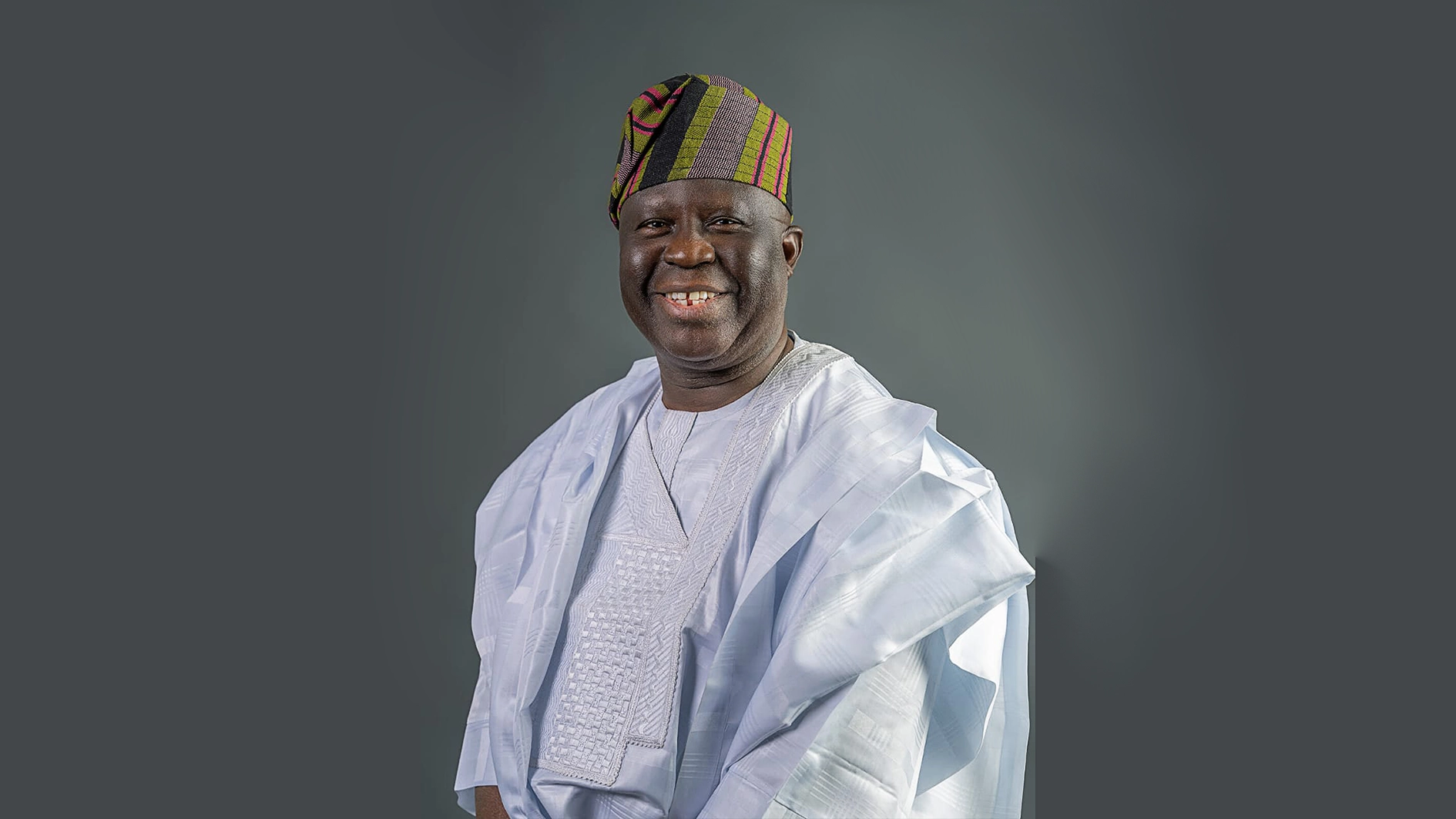
By Mallam Rasheed Gimbar
Let us begin with what is undisputed, because it is the ground on which this argument stands. Professor Abayomi Sunday Fasina served five full years as Vice-Chancellor of the Federal University Oye-Ekiti, Ekiti State, Southwest Nigeria.
During the period, he grew the institution’s internally generated revenue by 310 per cent. He expanded the university from eight to 18 faculties. He executed over 160 infrastructure projects. He steered FUOYE into Times Higher Education Impact Rankings and the AD Scientific Index.
He exited office having successfully midwifed the appointment of a successor through a rigorous merit-driven process. The successor, Joshua Ogunwole, also a professor of soil science and former Vice-Chancellor of Bowen University, one of Nigeria’s prestigious private universities, has described the institution he inherited as one he could work with and build upon.
Professor Fasina even documented his leadership experience in a book titled “Holding the Rudder,” with its launch witnessed by Nigeria’s foremost institutional actors, who praised the author for his unprecedented achievements as a university administrator.
Professor Fasina left office on his own terms, on the constitutionally prescribed date, without drama of departure. These are facts. They are documented. They are attested to by prominent Nigerians, including the Managing Director of First Bank of Nigeria, Olusegun Alebiosu; the university’s Pro-Chancellor and Chairman of Governing Council, Distinguished Senator Victor Ndoma-Egba; and members of the university’s Senate, and the alumni association, among others.

At the time of Professor Fasina’s exit, the institution’s subscription figure by the Unified Tertiary Matriculation Examination (UTME) candidates has placed FUOYE fourth most sought-after among all Nigerian universities. They cannot be unsaid by noise, however loud such noise could be.
And yet, here we are in the weeks preceding Professor Fasina’s appearance before the Senate, some elements are working so hard to make the dominant public conversation about him not about any of these facts, but about an allegation that his own institution, through its highest governance authority, investigated and found to lack merit.
This is a controversy that, in the Nigerian tradition of deploying scandal as a political instrument, has been inflated far beyond its institutional resolution and deployed as a weapon against a nomination that the President of the Federal Republic, exercising his constitutional prerogative, has thought fit to make.
The Senate must not be complicit in this campaign. It must, instead, do what the Constitution empowers it to do: scrutinise the nominee’s credentials, competence, and character based on the totality of the evidence available, not on the loudest voices in the room.
Since the governing council of the university has spoken, that should settle it. The council, chaired by one of Nigeria’s most distinguished Senior Advocates of Nigeria, Senator Victor Ndoma-Egba, did not arrive at its findings hastily. It constituted an investigative panel, examined police reports, listened to audio recordings, reviewed correspondence, and considered the minutes of management meetings.
At the conclusion of this process, it issued a formal finding that there was no sexual harassment. The council further noted, citing the Nigeria Police Force‘s own investigation, that the complainant had stated during that investigation that she was not sexually harassed.
The council then directed the complainant to tender an apology for bringing the university’s name into disrepute. Whatever one thinks of the acrimony surrounding this matter, the institutional verdict exists, and it is unambiguous. An institution’s highest governance body investigated, found no case, and said so formally.
Now, certain civil society organisations, invoking court cases that remain pending, argue that the Senate should defer confirmation pending the outcome of those proceedings. This argument, offered with the language of accountability and public confidence, is in truth a sleight of hand.
No court has convicted Professor Fasina of anything. No criminal finding of guilt exists. The constitutional presumption of innocence, which even the CSOs acknowledge in their own statements, is not merely a formal nicety. It is the bedrock principle that separates Nigeria’s democratic order from the tyranny of accusation.
If the Senate were to withhold confirmation from every public official against whom legal proceedings, however preliminary, had been initiated, it would create a precedent of extraordinary mischief. In a country where litigation is routinely weaponised to derail appointments, promotions, and political careers, this standard would make public service hostage to the malicious complaint.
That cannot be the standard the Senate adopts.
There is another dimension to this matter that deserves the Senate’s sober attention. That is the irreversibility of what Professor Fasina built. When a man grows a university’s IGR by 310 per cent, that money is real. The 160 capital projects funded from that revenue are real. The 2,000-capacity student hostel sitting on 33 hectares of Ekiti land is real. The expanded faculties are real. The students who now attend a better-resourced, better-ranked institution because of decisions taken between 2021 and 2026 are real.
Accusation is reversible. Achievement is not. The Senate must weigh both, and it must weigh them honestly.
What Professor Fasina offers to Nigeria’s diplomatic service is the credibility of demonstrated institutional competence. As a Professor of Soil Science and a former Vice-Chancellor who managed a budget, supervised thousands of staff and students, negotiated with government agencies, managed community relations, handled media pressure, and navigated the treacherous terrain of Nigerian university administration, he arrives at the door of the foreign service with more relevant experience than many career ambassadors carry into their postings.
Non-career ambassadors are chosen precisely because their non-diplomatic backgrounds equip them with specialist knowledge and standing that can advance Nigeria’s interests in ways that career diplomats, trained in the protocols of embassy management, sometimes cannot. A professor who understands institutional development, who has managed partnerships, who has built a university’s international research profile, and who has navigated the politics of a complex institution, brings skills of inestimable value to a diplomatic posting, particularly in contexts where Nigeria’s educational and developmental cooperation interests are at stake.
It is therefore instructive to observe when the loudest voices against Professor Fasina’s confirmation chose to speak. Not in the weeks or months following the Governing Council’s clearance of him. Not at the conclusion of his tenure. But in the precise window between the announcement of his ambassadorial nomination and his scheduled screening before the Senate.
This timing is not accidental. It is the characteristic architecture of a campaign against a public figure whose achievements make him difficult to defeat on the merits. Unable to argue against the record, because the record is formidable, those who oppose this nomination have chosen instead to amplify a resolved controversy at the moment of maximum institutional vulnerability, hoping that the Senate will confuse loudness with substance.
The Senate must resist this temptation. It owes the Nigerian people not a performance of sensitivity, but a genuine exercise of its constitutional screening function. That function requires the legislators to examine the nominee’s professional record, character, and capacity for the assigned role, and on all three of those criteria, the evidence in Professor Fasina’s favour is overwhelming.
The argument for confirming Professor Abayomi Fasina is not merely an argument for one man. It is an argument for a principle: that in Nigeria, it is possible to build something lasting, to serve faithfully, to be tested by adversity, to be vindicated by process, and to have that vindication mean something. If the Senate declines to confirm a nominee of this record merely because organised noise is being made, it will send a devastating signal to every serious institution builder in this country.
Confirm Professor Fasina. Let the institutional record speak, as it must. And let Nigeria be represented abroad by a man who knows, in his bones, what it means to build something from the ground up.
If the allegations against him are later substantiated, the Senate has a responsibility to act appropriately. But disqualifying him based on mere noise would be tantamount to delivering a judgment devoid of substance, even when the law court has not spoken, which will be prejudicial.
Mallam Gimbar is a public commentator and political analyst with special interest in foreign policy.

