 Follow Us on Google News
 Follow Us on Google Discover
As Ogun State prepares for the 2027 governorship election, the familiar debate over power rotation has resurfaced with renewed intensity, pitching the state’s four major ethnic blocs: Egba, Ijebu, Remo and Yewa (Egbado), against one another in what is fast becoming one of the defining issues of the contest, TUNDE BODUNRIN reports.
Although political parties insist that candidates emerge through competitive primaries, the agitation over which zone should produce the next governor of Ogun State has taken precedence over party ideology. Across the state, political leaders, traditional rulers, socio-cultural groups and opinion moulders are increasingly framing the election around equity, inclusion and historical justice.

The race to Oke Mosan is therefore no longer merely about who wins the election, but whose turn it is to govern. While the Ijebus argue that they have not occupied the governorship since the advent of the Fourth Republic in 1999, the Yewas insist they remain the only major bloc in Ogun State that has never produced an elected governor despite decades of political participation.
Since the beginning of the Fourth Republic, the governorship has largely rotated between the Egba and Remo axis. Chief Olusegun Osoba, an Egba indigene, governed between May 1999 and May 2003 under the platform of the Alliance for Democracy (AD). He was succeeded by Gbenga Daniel from Remo, who served between 2003 and 2011 under the Peoples Democratic Party (PDP). Another Egba son, Senator Ibikunle Amosun, occupied Oke Mosan from 2011 to 2019 under the All Progressives Congress (APC), before Prince Dapo Abiodun, from Iperu-Remo, assumed office in 2019 under the same party and is expected to complete his second term in 2027.
This pattern has fuelled persistent complaints from both Ijebu and Yewa that they have remained spectators while the state’s highest political office alternates between two blocs.
What differentiates the agitation of the Ijebus from that of the Yewas, however, is that Ijebu is part of Ogun East Senatorial District, which has produced three governors. First was the late Chief Olabisi Onabanjo during the Second Republic, followed by Daniel and Abiodun under the current Fourth Republic, although both are from the Remo axis of the district.
By contrast, Ogun West, which is predominantly inhabited by the Yewa people and comprises five local government areas, Ado-Odo/Ota, Imeko-Afon, Ipokia, Yewa North and Yewa South, has yet to produce a governor since the state was created in 1976.
Historically, however, Ogun politics has always revolved around balancing the interests of the four divisions. Since the state’s creation in 1976, appointments to key offices have often reflected an unwritten understanding that no section should be completely excluded from political power. Nevertheless, unlike states that formally adopt zoning arrangements within political parties, Ogun has never institutionalised governorship rotation. Consequently, every election cycle reopens the debate over equity and inclusion.
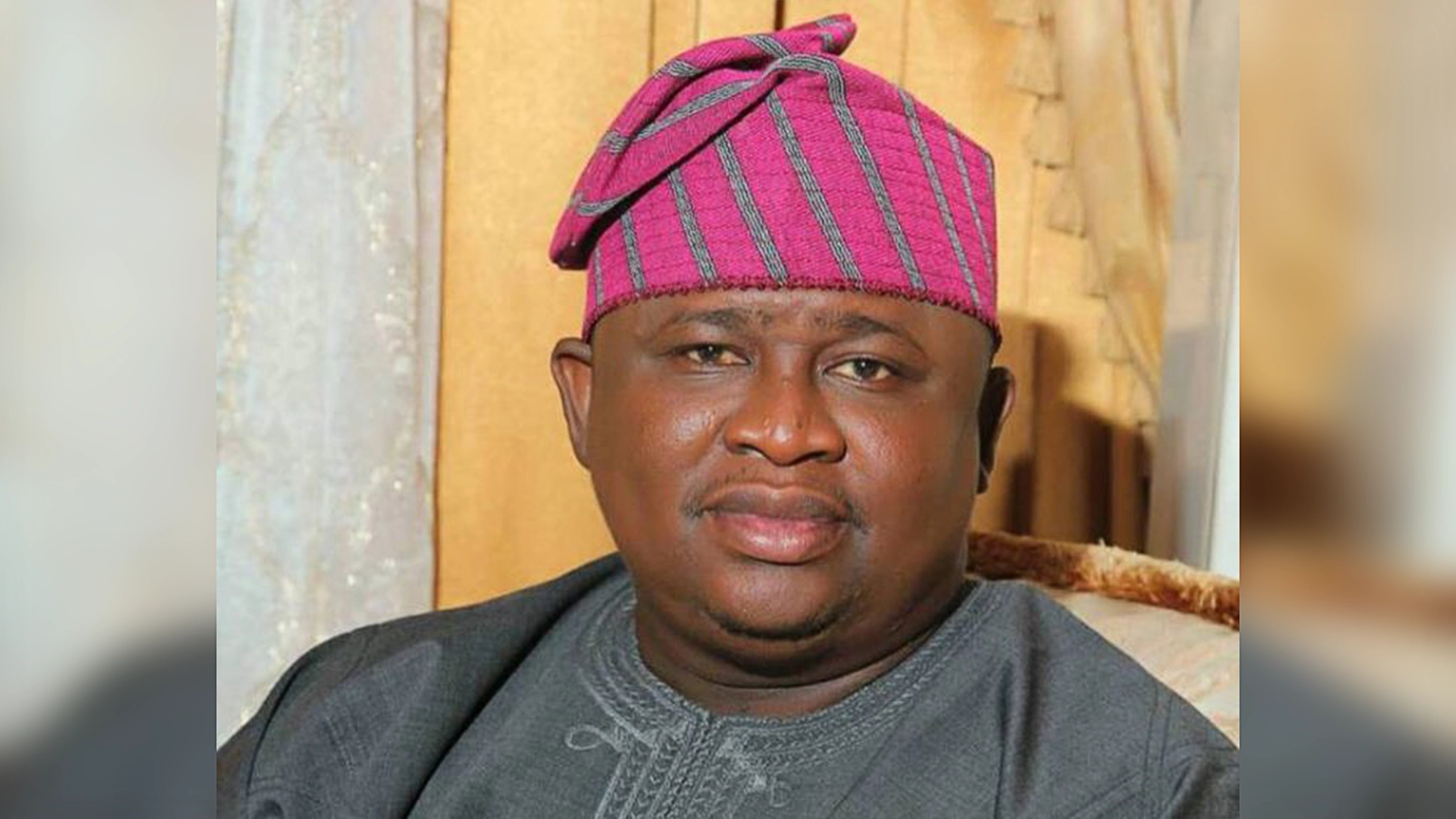
Senator Solomon Olamilekan Adeola, popularly known as Yayi, has transformed what was once a Yewa agitation into a major governorship movement.
A native of Yewa, the only major division yet to produce an elected governor, Adeola represents perhaps the strongest opportunity the zone has had since the state’s creation, having secured the APC ticket through a consensus arrangement allegedly backed by the Presidency and supported by the incumbent governor, Abiodun.
Although born and politically nurtured in Lagos, where he spent eight years in the Lagos State House of Assembly before representing Alimosho Federal Constituency in the House of Representatives for four years, he later represented Lagos West Senatorial District for two terms before relocating his political structure to Ogun, where he currently represents Ogun West Senatorial District in the Senate.
His emergence as the APC candidate has considerably strengthened the Yewa agenda to produce a governor in 2027.
Politically, Yayi enters the race with enormous advantages. The APC controls the Presidency, the Ogun State Government and all the state’s local governments, while also enjoying a formidable grassroots structure. He is also widely believed to enjoy the confidence of influential leaders within the ruling party.
His choice of Kudirat Adegunwa-Balogun, an accomplished accountant from Ijebu Central and daughter of industrialist Alhaji Adebola Adegunwa, as his running mate is equally strategic. Political analysts believe the decision was carefully designed to reduce Ijebu resistance by giving the influential ethnic bloc a stake in the ticket.
The Yewa agenda itself enjoys sympathy across parts of Ogun State. Many believe that after more than four decades of statehood, it would amount to political injustice if Ogun West remains permanently excluded from producing a governor.
Nevertheless, the APC ticket faces considerable challenges. One of the biggest is the growing agitation among sections of Egbaland under the “Egba Lokan Agenda 2027.” Supporters of the movement argue that since Governor Abiodun is from Remo, power should naturally return to Egba, which remains the state’s largest voting bloc and political stronghold.
Although some leaders within the movement have indicated support for Yayi, many would have preferred an Egba indigene as his running mate.
Yayi has also faced sustained criticism regarding his political roots. PDP spokesman Afolabi Orekoya questioned whether someone who spent almost his entire political career in Lagos should suddenly become governor of Ogun State.
However, the APC’s Publicity Secretary in the state, Olufemi Nubarau, dismissed the allegation, describing the comments as reckless, mischievous and inconsistent with constitutional provisions governing citizenship and eligibility.
Adebutu and the Ijebu question
FOR the Peoples Democratic Party (PDP), Oladipupo Adebutu, represents what many supporters describe as the long-awaited opportunity for the Ijebu people to reclaim political leadership.
Although Ogun East has produced governors from Remo, many Ijebu politicians insist that Ijebu and Remo are distinct historical entities and should not be treated as a single political bloc.
Their argument is that while Remo has governed the state for 16 years under Daniel and Abiodun, the larger Ijebu division has remained without a governor in the Fourth Republic.
To strengthen his acceptability across the state, Adebutu selected Dr Yemi Sowunmi-Kolapo, an Egba woman from the respected Sowunmi family of Ijemo, Abeokuta, as his running mate.
Besides being a respected academic and community leader, she holds the traditional title of Iya Sunnah of Egbaland. Political observers believe the choice was intended to improve the PDP’s electoral fortunes in Ogun Central.
Adebutu also received a political boost following the return of Iyabo Obasanjo-Bello to the PDP, a development many analysts believe could strengthen the party’s acceptance among sections of the Egba electorate.
However, his candidacy has generated another layer of controversy. Opponents argue that, because Adebutu has roots in Iperu-Remo, the same hometown as Governor Abiodun, his election would amount to another Remo succession.
The National President of the APC Youth League and Convener of Yayi Youth Vanguard, Olamide Lawal, insists that allowing another indigene of Iperu to succeed Abiodun would offend the spirit of fairness.
Another APC chieftain, Kayode Oladele, has also questioned Adebutu’s managerial competence, although PDP leaders dismiss the criticism as politically motivated.

According to him, nothing in Nigeria’s Constitution or Ogun State’s political tradition prevents two successive governors from emerging from the same area.
He also argued that Adebutu’s ancestral roots extend to Odogbolu through his maternal lineage and maintained that he belongs to the Jaiyesimi Royal Family of Odogbolu.
Orekoya further noted that the PDP had previously zoned its governorship ticket to Ogun West in both 2011 and 2015, demonstrating that the party had never discriminated against the Yewa people.
He also questioned attempts to portray Senator Adeola as more qualified solely because of the Yewa agenda, insisting that Ogun State should be governed on the basis of competence rather than sentiment.
Beyond the competing claims of Yewa and Ijebu lies perhaps the most decisive political variable in the election, the Egba vote.
Ogun Central, dominated by Egbaland, remains the state’s largest voting population and has traditionally recorded the highest number of registered voters during elections.
Historically, no governorship candidate has won Ogun State without making significant inroads into Egba votes. Even governors from Remo relied heavily on support from Abeokuta and the surrounding Egba communities to secure victory.
This explains why both the APC and PDP deliberately selected running mates expected to appeal to influential interests within Egbaland. Whichever candidate successfully convinces Egba voters that their interests will be protected after Governor Abiodun leaves office may ultimately gain the decisive advantage.
Ultimately, the 2027 governorship election is shaping up to be more than a contest between political parties. It is becoming a referendum on inclusion, historical balance and the future political architecture of Ogun State.
Whether the state chooses to break the long-standing pattern by producing its first Yewa governor, satisfy the Ijebu demand for political justice, or witness another political realignment capable of reshaping existing calculations, the battle for Oke Mosan promises to be one of the most closely watched governorship contests in the country.

