 Follow Us on Google News


 Follow Us on Google Discover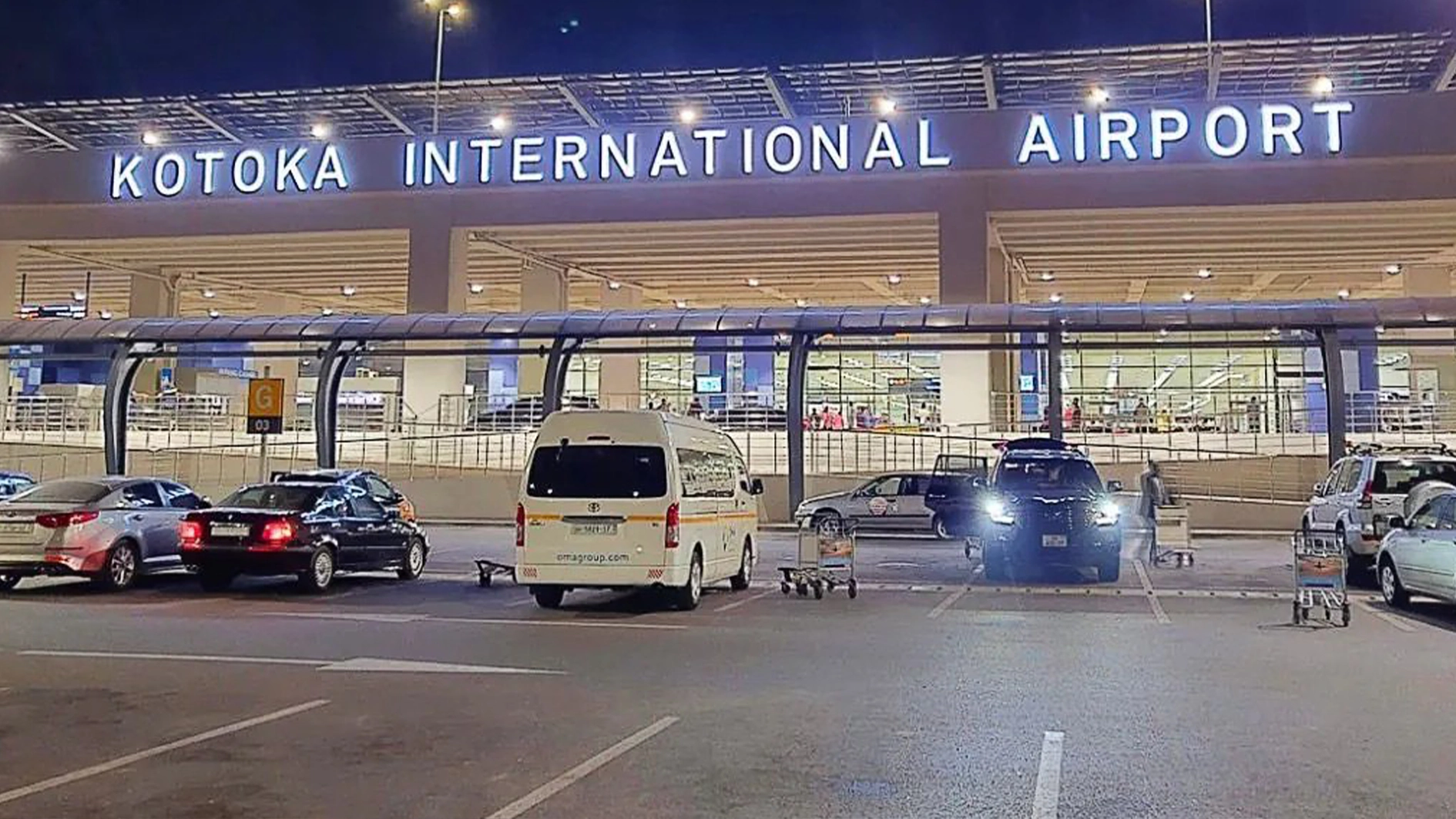
The Nigerian government’s failure to prioritise infrastructure development and to withdraw contentious charges and levies may have redirected air traffic demand to Ghana, OLUSEGUN KOIKI reports.
For decades, Nigeria was West Africa’s undisputed aviation hub. With a population exceeding 200 million, a large diaspora, a strategic location, and one of Africa’s busiest travel markets, the country possessed virtually everything needed to dominate regional and intercontinental air transport.
However, rather than strengthening its position, Nigeria is gradually watching a growing share of international passengers, airline investments, and transit traffic migrate towards its neighbouring West African country, Ghana.
At the centre of this transformation is Kotoka International Airport (KIA) in Accra, which has steadily evolved from a national gateway into one of Africa’s fastest-growing transit hubs.
However, statistics recently obtained from the Nigeria Civil Aviation Authority (NCAA) indicate that Nigeria still dominates the West coast in terms of international passenger arrivals and departures.
For instance, in 2025, Nigeria recorded 4.85 million international passenger movements; Togo, 1,584,188, while Ghana recorded 2.72 million within the same year under review.

The 4.85 million passenger movements recorded by Nigeria in 2025, may appear big, but the traffic has been static over a decade, while that of Ghana has grown by about 60 per cent within the same period with Kotoka International Airport alone having more than 90 per cent of the international movement traffic.
The stagnated figure in Nigeria is not all about infrastructure. It is largely due to the outcome of years of policy formulations, regulatory inconsistencies, multiple taxation, foreign exchange uncertainty and a business environment that has become increasingly expensive for airlines operating in Nigeria.
As it stands, Nigeria is not just exporting passengers, but also aviation earnings, tourism income, employment opportunities and future investment. Passengers who start their journey in Accra also spend on hotels, transport and shopping in Ghana before they fly.
While Nigeria’s international traffic figures have remained static over the last decade despite population growth, Ghana’s have gradually increased.

For instance, President of the National Association of Nigeria Travel Agencies (NANTA), Dr Yinka Folami in a recent interview with The Guardian, confirmed that Nigeria was losing its travel market to neighbouring countries.
According to him, high airfares pushed Nigerians into travelling from surrounding countries that offered cheaper fares.
Folami explained that the situation generated revenues for the travel operators, but was a loss to the country because taxes that would have accrued to Nigeria was lost.
What initially appeared to be an occasional money-saving strategy has gradually become a regular travel option.
A short Lagos-Accra or Abuja-Accra flight, combined with an international ticket originating from Ghana, frequently costs significantly less than purchasing the same journey directly from Nigeria. The savings can run into hundreds or even thousands of dollars, especially on premium cabins.
How Ghana courts the market
Unlike Nigeria, Ghana has spent almost 20 years deliberately positioning Kotoka International Airport as a regional hub. Successive governments invested in modern passenger terminals, improved immigration procedures, expanded cargo-handling facilities, and enhanced airport connectivity.
The Terminal 3, commissioned in 2018, significantly increased passenger handling capacity while providing facilities comparable to many leading international airports. Hence, international airlines have continued to expand services to Accra.
In recent months, at least five foreign airlines have either commenced operations, resumed services or announced major expansion into Ghana. These include Virgin Atlantic Airways, which launched direct London Heathrow-Accra services; Emirates Airlines, which restored flights to Accra after earlier suspensions; Brussels Airlines, which has strengthened West African operations through Accra; TAP Air Portugal, which announced plans to commence services linking Lisbon/Accra/World2Fly, the Spanish leisure carrier, which introduced services into Ghana’s growing tourism market.
Beyond these new entrants, several established airlines like Qatar Airways, Turkish Airlines, Ethiopian Airlines, KLM Royal Dutch Airlines, British Airways, Air France, Delta Air Lines, United Airlines, Lufthansa, Kenya Airways, RwandAir, EgyptAir, Middle East Airlines (MEA), South African Airways and ASKY Airlines, have continued to expand frequencies or strengthen their presence through Accra as demand continues to rise.
Time for Nigeria to act
Commenting on the issue, aviation analyst Samuel Caulcrick said that the current situation had little to do with aircraft type or route distance, but rather with policy formulation and implementation.
According to him, Nigeria’s aviation ecosystem imposes numerous statutory charges, taxes, agency remittances and operational costs that are ultimately reflected in ticket prices.
Caulcrick also said that the funds, which prevented international airlines from freely repatriating billions of dollars for almost three years, further contributed to the unpleasant situ ation.
He, however, observed that most of the trapped funds had now been cleared, but airlines continue to price Nigerian operations more cautiously to protect themselves against future financial uncertainty.
He said: “Kotoka is capturing growing passenger volume because international airfares departing from Accra are cheaper than those from Lagos or Abuja. The main driver is not distance or aircraft type. It is a policy.
“Nigeria applies higher statutory charges than Ghana – fact. These include multiple ticket sales charges, value-added tax and mandatory remittances for aviation agencies.
“When added to the trapped revenue and foreign exchange problems that foreign airlines faced when repatriating funds from Nigeria, carriers push those costs onto passengers. The result is a higher base fare from Nigerian airports for the same seat on the same aircraft.”
Caulcrick emphasised that the pricing gap had compelled many Nigerian travellers to book a short, inexpensive flight from Lagos or Abuja to Accra, then connect to international carriers operating out of Ghana.
He added that Kotoka’s expanded infrastructure contributed to the country’s growing traffic, but declared that this was not the primary reason for the diversion.
The former Rector of the Nigerian College of Aviation Technology (NCAT), Zaria, pointed out that until Nigeria addresses tax multiplicity, agency levies and foreign exchange repatriation bottlenecks, Kotoka would continue to win traffic that should depart from Nigerian airports, especially from Lagos.
The Managing Partner, Aeronexus, Gbenga Onitilo, described the situation as “death by a thousand levies.”
He noted that aviation was one of the few sectors where virtually every government agency appears to have established a financial claim on airline revenues.
He explained that domestic airline operators had repeatedly complained that the country’s layered tax regime left very little revenue in airlines’ hands after ticket sales.
According to him, Air Peace Chairman, Allen Onyema, had publicly disclosed that from a domestic airfare of roughly N350,000, barely N81,000 eventually reaches the airline after deductions.
He regretted that the remaining money is consumed through Value Added Tax (VAT), NCAA’s charges, the Federal Airports Authority of Nigeria (FAAN) fees, navigational charges by the Nigerian Airspace Management Agency (NAMA), pension obligations, industrial training fund contributions, national social insurance trust fund deductions, security levies and numerous statutory payments.
Onitilo expressed that an additional passenger security levy of $11.5 introduced by the Nigeria Immigration Service (NIS), further increased the cumulative cost burden on international tickets.
He expressed that compared to competing regional markets, Nigeria’s tax architecture had become increasingly difficult to justify, while Ghana, by contrast, had adopted a relatively streamlined charging framework, making tickets originating from Accra considerably more competitive.
He added: “By late 2025, the NCAA was set to introduce additional charges that would bring the cumulative levy burden on international tickets to $31.50 on top of fuel costs, ground handling, and overflying charges.
“Compare this with the European model. Airlines in the United Kingdom, Germany and France do pay taxes and airport charges; no one is suggesting European operators exist in a tax-free paradise. But their charge structures are rationalised, transparent and calibrated against what the market can bear.
“Nigeria’s response to its airlines in crisis has, too often, been another levy, another charge, another administrative burden. There is no strategic aviation fund. There is no national aviation sector development programme with real capitalisation behind it.”
Initilo, however, observed that infrastructure at Nigerian airports had been improving in recent years and cited upgrades at Murtala Muhammed International Airport (MMIA), Lagos, and investments at some regional airports as examples of such development.
But he insisted that Nigerian airport infrastructure still imposes higher costs on airlines than their European and American counterparts levy on their operators.
He expressed that delays caused by inadequate ground-handling equipment or baggage-system breakdowns or malfunctions, diversions forced by navigational or lighting deficiencies at regional airports, and the indirect costs of unreliable airport performance are all borne by airlines in the form of schedule disruptions, passenger compensation, and reputational damage.
For instance, he mentioned Onyema’s nine-year battle to secure land for a Maintenance, Repair, and Overhaul (MRO) facility as one of the challenges investors in the sector face.
Aviation security expert John Ojikutu opined that Nigeria should fundamentally rethink airport management.
He suggested that the government should concentrate on regulation, safety and security, while allowing private operators to manage commercial airport services.
Ojikutu pointed to the privately managed Murtala Muhammed Airport Terminal Two (MMA2), operated by Bi-Courtney Aviation Services (BASL), and insisted that greater private-sector participation could improve operational efficiency.
He warned that unless reforms were enhanced, foreign airlines would continue to route traffic through Accra and other regional hubs.
Such a shift, he said, would reduce FAAN’s earnings from international airlines by 80 per cent annually.
Besides, an industry analyst who didn’t want his name mentioned believed that infrastructure was one of the major factors Nigerian travellers chose Accra, Ghana, for.
According to him, passengers increasingly choose airports where transfers are seamless, immigration is efficient, baggage systems function reliably and security procedures are predictable.
He insisted that even if Nigerian fares were lower, many African travellers would still hesitate to use Nigeria as a transit point because of concerns over a poor passenger experience.
He added that Accra offers shorter walking distances, easier connections and significantly less congestion than Lagos, maintaining that the passenger experience itself had become part of Ghana’s competitive advantage.
“If Nigeria became the cheapest gateway tomorrow without fixing transfer processes, passengers from neighbouring countries may still prefer connecting elsewhere,” the source said.

