 Follow Us on Google News
 Follow Us on Google Discover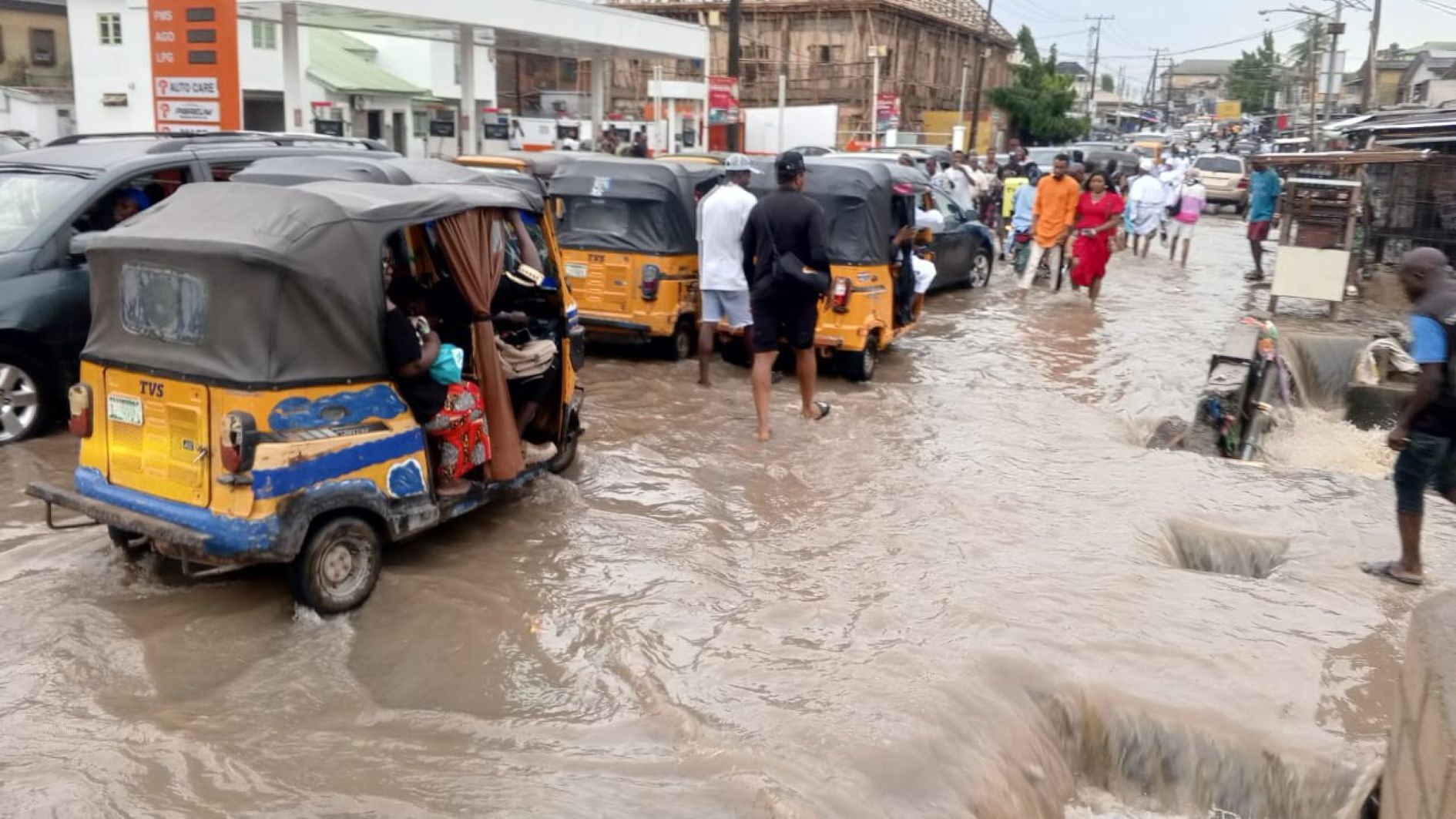
Every rainy season in Lagos follows a familiar script. Torrential rainfall overwhelms roads and neighbourhoods, commuters are stranded, homes and businesses are inundated, and public discourse quickly shifts into a contest of blame. Government insists residents are responsible for clogging drainage systems with refuse or building on water channels, while citizens accuse authorities of failing to provide and maintain the infrastructure.
Yet this recurring exchange has done little to reduce the impact of flooding or prepare the city for increasingly extreme weather. The reality is that both effective governance and responsible public behaviour are essential to tackling a challenge of this magnitude. As climate change intensifies rainfall and urban development places greater pressure on existing infrastructure, experts argued that Lagos cannot afford another season dominated by blame as it needs practical solutions, sustained investment, strict enforcement of environmental regulations and a renewed commitment from both government and residents to protect the city from a crisis that has become both predictable and preventable.

To many, there is need for better action as it has been predicted that more heavy rains are ahead. It was also not surprising when the Lagos State government told residents to prepare for more heavy rainfall and flash floods in the days ahead, advising those living in low-lying areas to move to safer locations.
The advice from government came follows days of persistent rainfall that resulted in widespread flooding across the state, submerging roads and homes, disrupting commercial activities and leaving motorists and commuters stranded.
In the past one week, many residents were forced to bail floodwater from their homes as the rain, which began on Sunday and continued till Wednesday, shook the city to its belly.
Commenting, Commissioner for Environment and Water Resources, Mr. Tokunbo Wahab attributed it to flash floods caused by heavy rainfall coinciding with high sea levels, which temporarily prevented stormwater from flowing into the lagoon and the Atlantic Ocean.
He noted that the Nigerian Meteorological Agency (NiMet) had earlier predicted thunderstorms, heavy rainfall and possible flash floods in Lagos and several other states.
Wahab recalled that while presenting the 2026 Seasonal Climate Prediction (SCP), the state government had projected above-normal rainfall, with annual precipitation expected to range between 1,650mm and 3,030mm.
“Flash flooding is basically when the sea level is up. When it rains heavily, your stormwater cannot discharge into the lagoon or its discharge point. It will hold back for about one or two hours.
“Even after the rain stops, within one or two hours, the water will recede because nature allows it to return to the discharge point. That’s why we call it flash flooding.
“There are one or two areas that have persistent flooding, and we are addressing them. One of them is Ajiran. It is not because of the government, but because of irresponsible land-owning families.
“We are extending the drainage channels to the lagoon. Those are the issues we are addressing,” he said.
Wahab appealed for calm, assuring residents that measures were being implemented to minimise the impact of flooding.
A resident, Fatima Akubor said that she was lucky that where she stays presently is not a flooded area though she experienced a flooded street because the drainage is a bit blocked.
“In my own opinion, the major cause is because of our bad roads. Sometimes, the government builds a wrong drainage where water can pass through to a canal or river or better still a place where it can settle and not get stuck in the drainage or street.”
Akubor implored government to be more proactive and stop blaming citizens. “I would rather say the government is not trying because these days you need to see how messed up some roads are including with refuse, plus unfinished roads.”
She, however, argued that some residents contribute to the crisis. “We the citizens should also help ourselves by not dumping refuge on a walk way or in the street. Sometimes, when it rains, you see those dirts blocking the drainage or where water flows to go out, most especially those that stay in undeveloped areas.”
Akubor implored the government to take concerted efforts to reduce the flooding and prevent future disasters by investing in modern drainage infrastructure.
On his part, Tolu Adesola said that government must do more by leading by example. “Since the introduction of monthly environmental sanitation, I expect government to ensure that drainages that are on major roads are cleared too by the government. Also, Lagos State is getting more money from federal allocation, I expect that all the small canals within residential areas would be cleared by government every six months but many of them for two years or more are left untouched. It does not show a government that is serious with managing flood considering the prediction.”
Adesola also said that Lagos Mainland is hugely dirty and it is principally due to PSP operators not coming to pick waste as at when due even in some places where people pay regularly.
“And I feel this added to the flood crisis experienced last week and it could get worse because the refuse will keep increasing. So, government needs to take action. It should not just be about residents reporting PSP operators to government. Doesn’t government have mechanism to track their operations.”
Also commenting, a resident, Blessing Oladunjoye, said the flooding has not affected her directly as an individual as her area is not prone to flood. “But moving around, places are flooded as a result, movement is a whole lot more difficult because of flood areas. And at times, you are calculating your movement so that you not get stuck on the road.
“The major cause of the flood is due to the poor drainage system, and bad roads. When it rains, the water does not flow easily. There is somewhere around Ijaye road in Ogba, it gets really flooded and vehicles find it difficult to move, even people within the estate find it difficult to move in and out principally because of poor drainage system and the water gets accumulated.
“And it is getting worse because in the past few weeks, LAWMA has not been coming to pick waste from residential houses. From my experience, the last time they came to my house was May 25, 2026, that was a day before eid, and that is well over a month now. And we know that people generate waste on a daily basis. So, some people are forced to throw their waste all around. Even those who do not have the culture of keeping waste in the right way now has a perfect excuse to dump indiscriminately.
“The wastes are now blocking the drainage or spilling into the drainages where they are kept on the road, which makes it difficult for water to flow easily. There are some parts of Lagos whereby when it rains, people push their waste into the drainage system expecting it to be flushed away. The government needs to find a way to engage those set of people on behavioural change.”
On his part, John Bassey said that while climate change and increasingly intense rainfall have heightened the risk of flooding, they do not fully explain the scale of destruction witnessed across Lagos.
“The crisis reflects years of inadequate urban planning, weak enforcement of building regulations, poor maintenance of drainage infrastructure and slow investment in resilient flood management systems. At the same time, the indiscriminate disposal of refuse into drainages and canals, illegal structures on waterways and widespread disregard for environmental sanitation by many residents have compounded the problem.”
He added that there are times government de-silt drainages and leave the silt uncleared which get swept into the drainage again. “I have passed through Mile 2 inward Orile about four times in the last three weeks, I noticed that what was brought out of the drainage around Mile 2 bus stop were left there and gradually it will flow back into the drainage.”

