 Follow Us on Google News
 Follow Us on Google Discover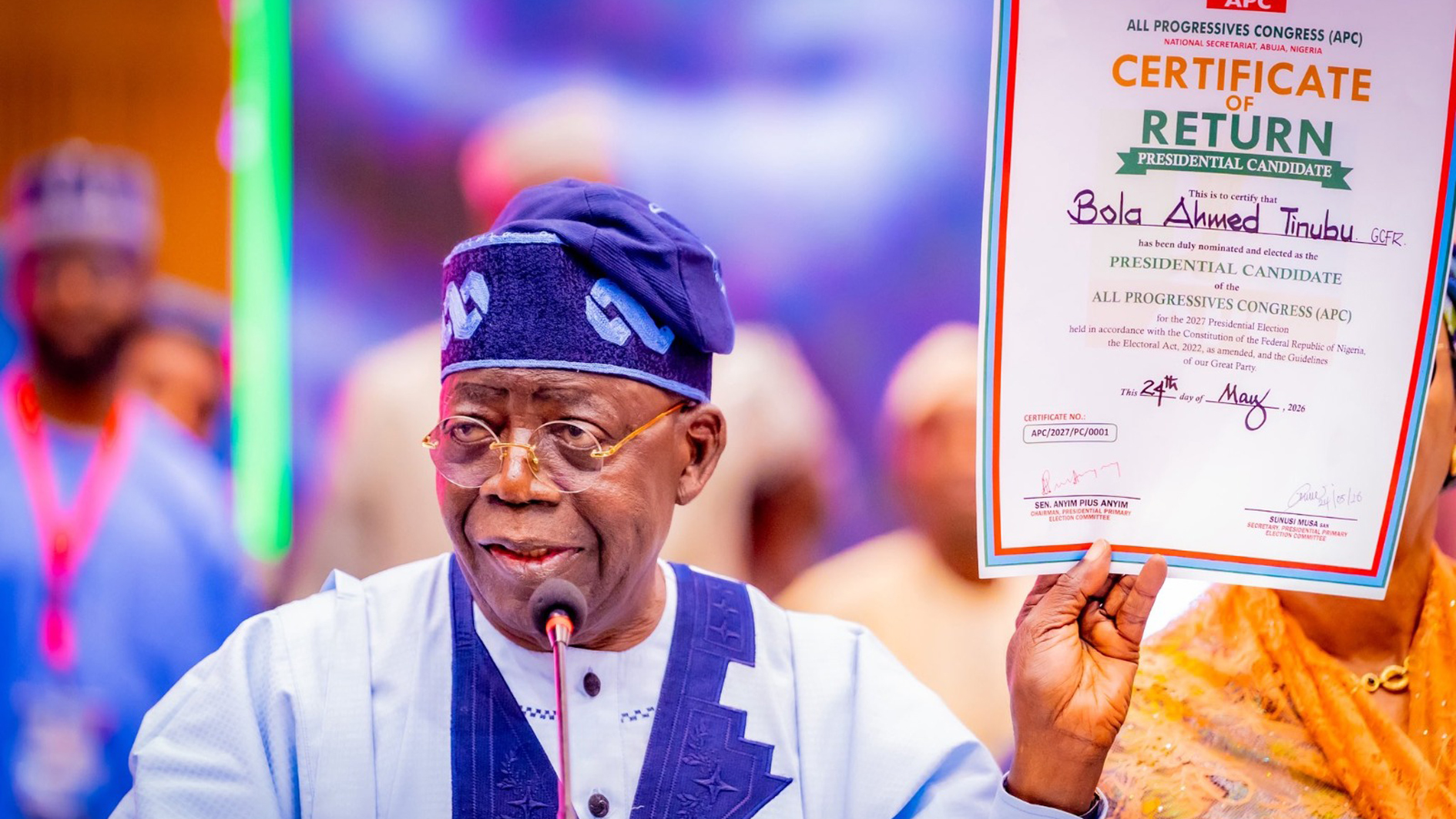
By Akin Olukiran
One of the most enduring paradoxes of governance is that the policies most critical for a nation’s long-term prosperity are often the least popular in the short term. Across history, transformative leaders have rarely emerged from the ranks of political opportunists or populist entertainers. Rather, they have been men and women willing to endure temporary unpopularity in pursuit of a greater national objective. They understood that statesmanship is not measured by applause in the present but by prosperity in the future.
No nation has ever attained greatness without sacrifice. No society has ever industrialised, modernised, or transformed itself by choosing comfort over discipline or expediency over vision. Development, by its very nature, demands difficult choices. It requires leaders who possess the courage to take decisions that may be painful today but beneficial tomorrow.
This is perhaps the most important lens through which the administration of President Bola Ahmed Tinubu should be assessed.The tendency among sections of the political opposition and some segments of the media is to evaluate every policy solely through the prism of immediate personal benefit. The perennial question is always: “How does this put food on my table today?”
While understandable in a country where poverty remains widespread, such a question, if elevated into a governing philosophy, becomes profoundly dangerous. Nations cannot be built on instant gratification. Families do not prosper by consuming all they earn, they prosper by investing part of their resources for future returns. The same principle applies to nations.
Indeed, one of the most debilitating political pathologies Nigeria has suffered over the years is the triumph of what has become known as “stomach infrastructure” politics – the prioritisation of immediate consumption over productive investment. It is a political culture that focuses on food handouts while neglecting the roads, railways, ports, power systems, health, educational institutions and industrial infrastructure that create sustainable prosperity.

The history of modern development offers countless examples.China, now the world’s second-largest economy, did not arrive at its current status through political convenience. Generations of Chinese citizens endured prolonged periods of economic austerity, social dislocation and constrained consumption, in pursuit of a broader civilisational project of national rejuvenation.Beginning in the late 1970s under the leadership of Deng Xiaoping, China embarked upon sweeping economic reforms that fundamentally altered the structure of its economy. Those reforms were painful. Millions of workers experienced dislocation as inefficient state enterprises were restructured. The Chinese people endured decades of disciplined sacrifice while vast resources were channelled into roads, ports, rail networks, manufacturing zones and energy infrastructure.
Today, the dividends are evident for all to see with a manufacturing capacity that powers global supply chains. The prosperity enjoyed by modern China was not created overnight.It was purchased through years of deferred gratification.
The story is remarkably similar elsewhere. In the 1960s, Lee Kuan Yew inherited a resource-poor Singapore, plagued by unemployment, ethnic tensions and uncertain prospects. Many of his policies were unpopular. His government enforced strict fiscal discipline, maintained high standards of public accountability and relentlessly invested in housing, education, infrastructure and industrialisation. The immediate benefits were not always obvious to ordinary citizens. Yet, decades later, Singapore emerged as one of the most prosperous, efficient and admired societies in the world.
The lesson from these examples is unmistakable: development requires patience and sacrifice.Against this backdrop, President Tinubu’s early reforms deserve objective examination.
The removal of fuel subsidies represented not merely an economic reform but an attempt to dismantle one of the most distortive rent-seeking architectures in Nigeria’s post-colonial political economy. For decades, vast fiscal resources that could have been deployed towards productive capital formation were absorbed by a subsidy regime that incentivised arbitrage, entrenched corruption and rewarded economic inefficiency. Difficult though the decision was, it represented an attempt to redirect national resources toward more productive uses.
Similarly, the unification of the foreign exchange market sought to address structural inefficiencies that had encouraged arbitrage, corruption and economic distortions. Again, the short-term consequences were severe, but the underlying objective was to establish a more transparent and sustainable economic framework.
Most significantly, however, is the administration’s commitment to infrastructure expansion.History teaches that infrastructure is destiny. Roads connect markets. Railways connect industries. Ports facilitate trade. Power infrastructure drives manufacturing. Digital infrastructure powers innovation. Countries that neglect infrastructure condemn themselves to perpetual underdevelopment.
The Lagos-Calabar Coastal Highway, as a flagship project, should therefore not be viewed merely as a transportation project. Properly understood, it is an economic corridor capable of stimulating tourism, agriculture, logistics, manufacturing and real estate development across multiple states. Its significance lies not only in the jobs it creates during construction but in the economic ecosystems it can unlock for generations.Infrastructure is not merely concrete, asphalt and steel, it is the physical architecture upon which future economic growth is constructed.
Critics often focus on the immediate costs. Statesmen focus on the future benefits.This distinction separates politics from leadership. President Tinubu’s first months in office revealed a leader willing to make politically risky decisions rather than merely play to the gallery. Whether every policy ultimately succeeds, remains a matter for history to judge. However, it is difficult to deny that many of the decisions taken thus far, reflect a willingness to confront entrenched structural problems that previous administrations either avoided or postponed.
Renewing hope is not simply about distributing palliatives or delivering uplifting speeches. Genuine hope is created when the foundations of future prosperity are laid, even when the construction process is uncomfortable.
As citizens, we must resist the temptation to evaluate every national decision solely through the lens of today’s inconvenience. The roads we drive on tomorrow must be built today. The industries that employ our children tomorrow must be established today. The prosperity we seek tomorrow requires investments today.
The true test of leadership is not whether difficult decisions generate temporary discomfort. The true test is whether those decisions create the conditions for future national greatness.
I am convinced that history will ultimately remember President Tinubu’s reforms not for the pain they imposed, but for the prosperity they made possible. Nations do not ascend to greatness by avoiding pain, they ascend by ensuring that pain serves a productive purpose. A consequential question is whether these hardships constitute the birth pangs of a more competitive, resilient and prosperous Nigeria. National transformation is rarely a painless undertaking. Prosperity deferred is often prosperity secured.
If the current reforms succeed in establishing the foundations of fiscal sustainability, infrastructural modernisation, industrial competitiveness and national cohesion, then what appears today as hardship will ultimately be remembered as the indispensable cost of renewal.
Olukiran is a social and political analyst. He wrote from London. He can be reached via: [email protected]

