 Follow Us on Google News


 Follow Us on Google Discover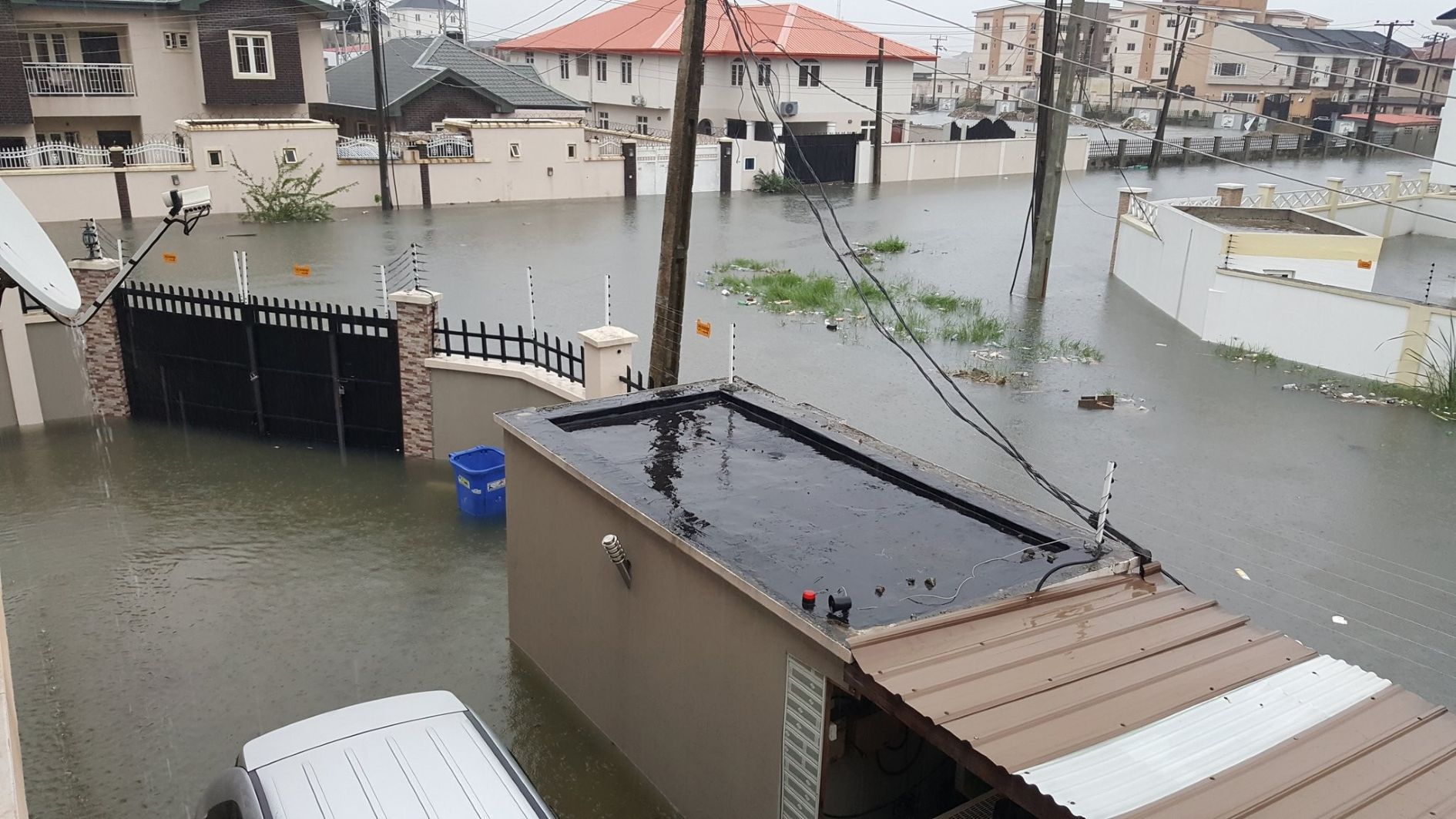
With the torrential rainfall across the coastal states, property owners and tenants are assessing the devastation to their homes and businesses. However, engineers and property professionals warn that the greater danger may lie beneath the surface, as repeated flooding weakens building foundations, accelerates structural deterioration with attendant risks, CHINEDUM UWAEGBULAM reports.
As floodwaters recede across the coastal states, including Lagos, following several days of heavy rainfall, many households have begun to count their losses, and businesses struggle to reopen. But beyond the immediate destruction is the silent deterioration of thousands of flood-affected buildings into distressed properties, posing significant risks to lives, investments, and the built environment.
For engineers and building experts, flooding is not merely a seasonal environmental challenge. It is a structural threat that can gradually weaken buildings, shorten their lifespan, and, if left unchecked, increase the risk of partial or total collapse.
The danger is rarely immediate. Instead, it develops over months or years as floodwater erodes foundations, corrodes steel reinforcement, weakens concrete and creates conditions for progressive structural failure.
The concern has become even more pressing as governments intensify efforts to remove unsafe buildings. In Lagos, authorities have continued to identify and demolish distressed structures to prevent building collapses, while other states are taking similar actions. Official records show that Lagos has identified well over 1,000 distressed buildings in recent years, with hundreds already demolished after failing structural integrity tests.
Official records illustrate the scale of the challenge. In 2021, the Lagos State Government announced that it had identified 1,121 distressed buildings across the state and demolished 259 after they failed structural integrity tests. The remaining buildings were placed under monitoring, repair or enforcement. Two years later, the Lagos State Building Control Agency (LASBCA) published another list of 349 buildings exhibiting signs of structural distress, including severe cracks, bulging walls, sinking foundations, tilting and exposed reinforcement.

The national picture is equally troubling. The Building Collapse Prevention Guild (BCPG) reports that Nigeria recorded 679 building collapse incidents between 1971 and 2025, resulting in at least 1,639 deaths. Lagos alone accounts for about 53.9 per cent of all recorded collapses, making it the country’s most affected state
A 2025 academic review of 108 building collapse cases recorded between 1985 and 2023 found that Lagos has experienced building collapses consistently for nearly four decades, highlighting persistent weaknesses in construction quality and regulatory enforcement.
Lagos is particularly vulnerable because of its geography, rapid urbanisation and climate realities. Much of the city lies on low-lying coastal terrain, with many developments built on reclaimed wetlands and flood-prone land. Intense rainfall, rising sea levels, blocked drainage channels, and indiscriminate waste disposal combine to produce recurrent flooding across neighbourhoods, including Lekki, Victoria Island, Ikoyi, Ajah, Ikorodu, Isheri, Ketu, Maryland, Surulere, Festac and parts of Ibeju-Lekki.
According to experts, while the floodwater may disappear within days, its effects on buildings often remain hidden. Water can wash away supporting soil beneath foundations, causing uneven settlement. Reinforcement bars embedded inside concrete may begin to corrode, expanding and causing concrete to crack and spall. Persistent dampness weakens walls, damages electrical installations, promotes mould growth and accelerates the deterioration of timber and other building materials.
These defects rarely announce themselves dramatically. Instead, they appear gradually as cracks in walls, beams or columns, doors that no longer close properly, uneven floors, sagging ceilings, peeling finishes, leaking roofs, damp patches or buildings that begin to tilt subtly. By the time many of these warning signs become obvious, structural deterioration may already be advanced.
Experts warn that older buildings are particularly vulnerable, especially those that have suffered years of poor maintenance. Structures erected before modern drainage standards or those built with substandard materials may deteriorate much faster after repeated flooding. Residential estates with blocked drainage systems, commercial buildings with basement parking, schools, hospitals, hostels, warehouses, and industrial facilities located within flood-prone areas also face heightened risks due to both their design and occupancy levels.
The implications extend far beyond physical damage. For investors, flooding has become a major financial risk capable of wiping out years of investment. Buildings repeatedly exposed to floodwater may suffer significant reductions in market value as buyers become increasingly cautious about acquiring properties in high-risk locations. Repair costs can run into tens or hundreds of millions of naira, while severe structural damage may ultimately require demolition.
The experts warned that recurrent flooding could add to this growing stock of distressed properties if post-flood inspections and maintenance are neglected. Former President of the Nigerian Institution of Structural Engineers (NiStructE), Dr Victor Oyenuga, told The Guardian that repeated flooding weakens building foundations, particularly in areas with clayey soil.
“Repeated flooding fluidises the founding substructure and, in clayey soils, the soil beneath the foundation can wash away disproportionately, leading to uneven settlement and severe structural damage that could eventually result in collapse.
“Foundation settlement is often indicated by cracks that begin at the base of walls and gradually widen as they extend upward. If such cracks are repaired but reappear after one or two months, the building’s foundation is in serious trouble, and a structural engineer should be contacted immediately to prevent structural failure and possible collapse.”
Oyenuga, a Senior Lecturer in the Department of Civil Engineering at Babcock University, explained that buildings most vulnerable to flood-induced structural failure are those located in waterlogged areas but not designed by qualified and experienced structural engineers.
“A competent structural engineer will consider all soil parameters, including the soil’s susceptibility to flooding, before recommending an appropriate foundation for a building in such an environment. In such cases, soil investigations should go beyond the common penetrometer test to include deep borehole investigations,” he said.
Speaking on measures to prevent flood-damaged buildings from becoming unsafe, Oyenuga advised that integrity tests should be carried out whenever government officials or structural engineers observe defects in a building.
“The practice of inspecting a building from outside the fence, completing a pre-prepared form and pasting it on the property only ridicules the organisation and tarnishes the image of engineers before the public. This should be discouraged,” he said.
Also, President of the Building Collapse Prevention Guild (BCPG), Sulaimon Yusuf, told The Guardian that recurring flooding in Lagos poses serious risks to buildings by damaging foundations and eroding the soil used to backfill foundation trenches.
“It can also penetrate walls, causing dampness, corrosion of reinforcement, paint flaking, mould growth and timber rot. Flooding, exacerbated by poor drainage systems and inadequate maintenance, as already evident in Lagos, is indeed a disaster,” he said.
Yusuf advised property owners to watch for warning signs after flooding, including doors and windows that no longer open freely, gaps between walls and floors, sagging roofs and ceilings, electrical sparking at joints, foundation cracks, and bulging staircases and beams.
According to him, buildings most at risk are those improperly constructed without regard to the area’s topography, structures built with poorly manufactured, non-engineered blocks, those with inadequate foundations, old structures, and those with shallow foundations.
Yusuf called for regular clearing of drains, canals and streams, continuous building maintenance, proper site selection during project planning, and the adoption of appropriate foundation systems. He also urged developers to engage qualified professionals throughout the construction process.
“We don’t have to wait until the rains begin before desilting canals, drains and streams. There should also be relocation and social support programmes for residents in low-lying flood-prone areas. Every state government should establish a meteorological department to monitor weather patterns, conduct flood mapping, issue early warnings, prevent flooding disasters and sustain public awareness on the proper use of infrastructure, including responsible waste disposal. More drainage channels should be constructed, roads improved, and urban renewal programmes encouraged,” Yusuf added.
The President of the Nigerian Institute of Town Planners (NITP), Dr Ogbonna Chime, said that poor urban planning, or the complete absence of planning, significantly contributes to the impact of flooding on communities.
“In such settlements, drainage channels are either inadequate or non-existent, building setbacks from gullies, streams and rivers are ignored, and sufficient green areas to absorb rainwater are not provided. Consequently, almost every rainfall becomes surface runoff with devastating consequences,” he said.
Chime stated that while Lagos has adequate planning regulations and development control mechanisms, they should be reviewed every 10 years and supported by recruiting more development control officers trained to address emerging urban challenges.
He noted that flooding is a natural phenomenon that can occur even in well-planned settlements, urging governments to update environmental planning standards. Chime also advocated a common strategic disaster management plan backed by adequate budgetary provisions and proactive preventive measures.
In its submission, the Nathaniel Atebije Foundation for Planning Advocacy (NAFPA) said the recurring incidence of building collapse in Nigeria is no longer merely an engineering or construction problem.
“It is increasingly becoming a planning, governance and public safety crisis. Weak development control, poor maintenance culture, illegal alterations, political interference, inadequate enforcement and delayed government action continue to expose citizens to avoidable tragedies.”
The Convener of NAFPA, Mr Nathaniel Atebije, called for the establishment of a comprehensive digital database of distressed buildings that would be updated regularly and made accessible to the public.
The organisation also advocated routine structural integrity audits, recommending that all multi-storey public, commercial, institutional and residential buildings above a prescribed age undergo mandatory structural integrity assessments at regular intervals, with certificates issued only after satisfactory inspections.
According to the group, Nigeria possesses the professional expertise, legal framework and institutional capacity to prevent many of these tragedies. What is required, it said, is the political will to enforce the law without fear or favour and to place the sanctity of human life above administrative convenience and vested interests.
The foundation further recommended the enactment of a National Building Safety and Distressed Buildings Response Protocol requiring every state to establish an Emergency Building Safety Fund, maintain a register of distressed buildings, and provide for mandatory evacuation and temporary resettlement of occupants of unsafe structures.

