 Follow Us on Google News


 Follow Us on Google Discover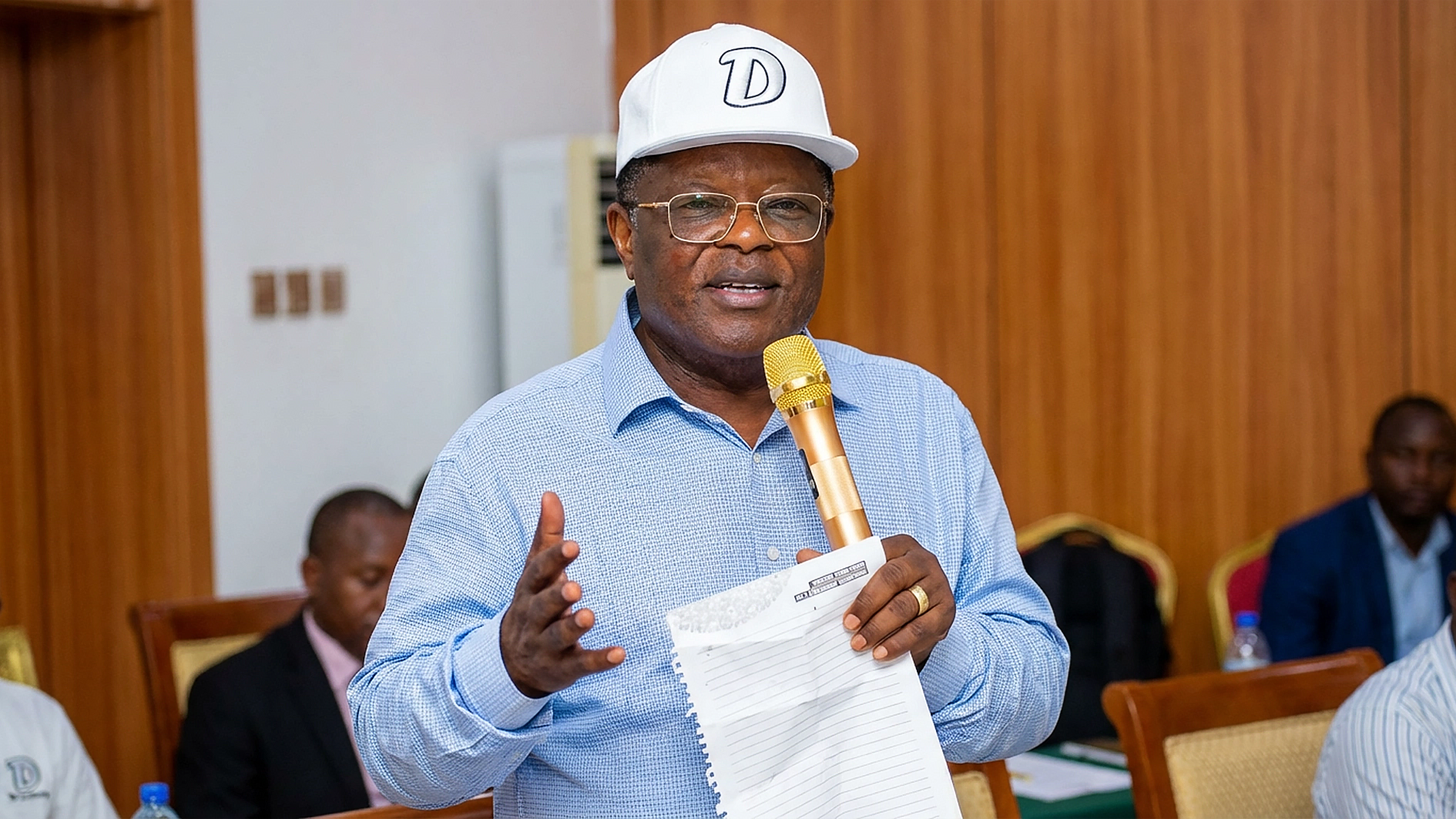
The Minister of Works, David Umahi, has attributed flooding along sections of the Lagos-Calabar Coastal Highway to poor drainage systems and the indiscriminate dumping of refuse by residents, dismissing claims that construction on the road is causing flooding in neighbouring communities.
Speaking yesterday during an inspection of the Sokoto-Badagry Highway, the minister, who was accompanied by federal lawmakers and officials of the ministry, said underground drainage channels designed to manage water flow had been obstructed by refuse dumped into manholes.
He said: “The team will go and evaluate the coastal highway tomorrow (Monday) and the surroundings. Not because we are causing the flooding, but because the president has directed we should go and technically evaluate it.”
In addition, the minister blamed the Lagos State Government for failing to implement its flood management master plan, noting that a number of designated drainage points to support the flow of water had not been provided.
“Also, you can see the amount of refuse, even on our way. You can see the indiscipline of Nigerians that carry refuse to block the drainage,” he said.
The minister, however, maintained that the coastal highway project incorporates adequate drainage and engineering standards, stressing that there is no technical basis linking the construction to flooding incidents.

Speaking on the Sokoto-Badagry Highway, Umahi commended Hitech Construction Company for the quality of construction on the road, noting that similar standards are being replicated from Sokoto and Kebbi to Lagos, Calabar, Akwa Ibom and Badagry.
He lauded the commitment of President Bola Tinubu to investing heavily in road infrastructure, stressing that many of Nigeria’s current road challenges stem from years of inadequate investment in quality construction.
“If we were building this kind of quality of roads in the past administrations, we wouldn’t be crying for road infrastructure,” he said.
He also reaffirmed the government’s commitment to holding contractors accountable, warning that firms that fail to deliver quality work would face consequences.
Giving details of the level of work achieved on the project, the engineer in charge of the Sokoto-Badagry Highway project, Oyewande Aliu, said construction on Section 3 had recorded significant progress, with 25 kilometres of continuously reinforced concrete pavement (CRCP) completed on one carriageway.
He explained that the section, which spans approximately 162.352 kilometres, runs from Lagos through Ogun State and terminates at the Oyo State boundary.
“Between February and now, we’ve achieved up to 25 kilometres of CRCP on the left-hand side and about 9.4 kilometres on the right-hand side,” he said.
Aliu further disclosed that the earlier stages of the project involved extensive earthworks, adding: “In total, we have carried out earthworks up to about 81 kilometres, while site clearance has reached approximately 145 kilometres along the corridor.”
He, however, noted that progress on some stretches had been temporarily slowed due to a planned bridge at a major interchange and the installation of cross culverts in certain locations.

