 Follow Us on Google News
 Follow Us on Google Discover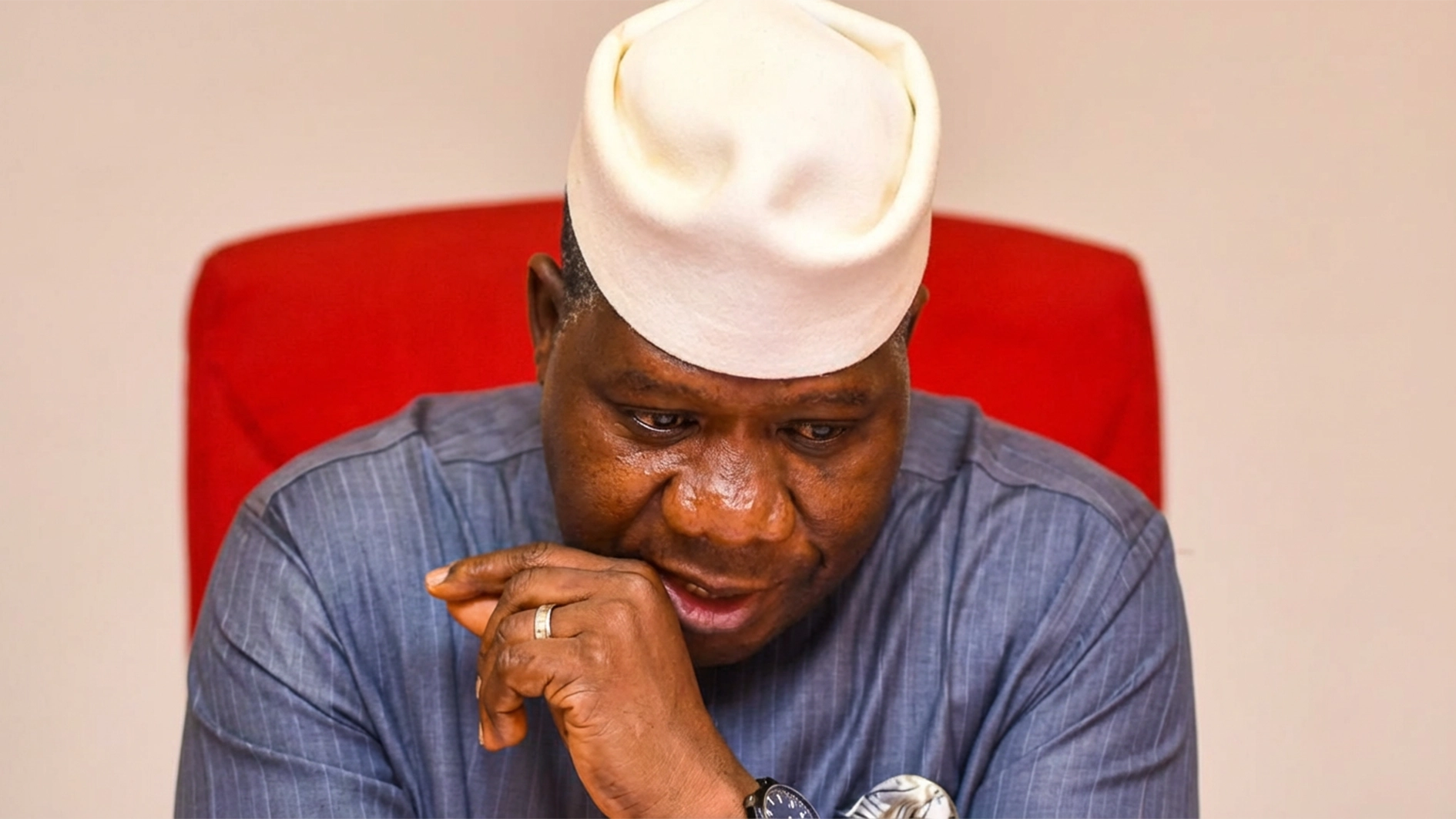
Up to a point, Senate Leader Opeyemi Bamidele was right in his defence of the Senate, seeking to justify the predictable collaborative disposition of the upper legislative chamber with the presidency. Constitutional democracy does not require perpetual warfare between the branches of government, but it is dangerous for democracy when such cooperation is perceived as capitulation. In that event, the fine separation of powers between and among the critical organs of government, carefully crafted in the 1999 Constitution, may become so blurred as to constitute a weapon of dictatorship.
Bamidele recently defended the 10th Senate against accusations of being a mere appendage of the Presidency. The Senate, he insisted, had deliberately chosen constructive engagement over public confrontation. Legislative independence, he argued, should not be measured by theatrical quarrels between institutions but by the quality of governance outcomes. Much of the disagreement between the National Assembly and President Bola Tinubu’s administration, he said, had been resolved quietly and in the national interest.
Cooperation between the Executive and Legislature is not only desirable; it is indispensable. A belligerent parliament obsessed with scoring political points can be as damaging to democracy as an overbearing presidency. Effective governance often demands compromise, consultation and discreet negotiations.
But collaboration must not become capitulation. The doctrine of separation of powers—the cornerstone of constitutional democracy—was never intended to create institutional hostility. Rather, it seeks to prevent the concentration of power by distributing governmental authority among the Executive, Legislature and Judiciary, each acting as a restraint upon the others through checks and balances. Harmony among the branches is commendable. Subservience is not.
Measured against this standard, the 10th Senate has struggled to convince Nigerians that it possesses an institutional identity separate from the Executive. Rarely has the chamber openly rejected a presidential request. Ministerial nominees sail through with remarkable ease. Presidential appointments encounter little resistance. Requests for supplementary appropriations are routinely granted. Emergency declarations receive expeditious approval. Above all, the Senate’s treatment of government borrowing has raised troubling questions about the effectiveness of parliamentary oversight. Since assuming office on May 29, 2023, President Tinubu has routinely secured parliamentary approvals for several domestic and external loans.
Between 2023 and 2025, the Tinubu government obtained several facilities from the World Bank amounting to about $4.95 billion. These loans were purportedly for economic reforms, social protection, power sector support and infrastructure. In 2024, the African Development Bank approved a two-year support programme for Nigeria. About $500 million was disbursed in 2024, with another $500 million planned for 2025, making a total commitment of $1 billion. In the same 2024, Nigeria secured a $747 million syndicated loan, led by Deutsche Bank, to finance the first phase of the Lagos-Calabar Coastal Highway. In July 2025, the National Assembly approved a massive borrowing package comprising: $21 billion in foreign loans; €4 billion (approximately $4.7 billion); ¥15 billion (about $102 million); a $65 million grant and $2 billion domestic dollar-denominated borrowing.
The House of Representatives approved an additional $347 million under the 2025–2026 borrowing plan, partly to accommodate increased costs of the Lagos-Calabar Coastal Highway. In May 2025, President Tinubu requested approval for $21.5 billion in external loans; a $2 billion foreign currency bond programme; N757.98 billion bond to clear pension liabilities. Observers described this as the largest single borrowing proposal in Nigeria’s history. In April 2026, the Federal Government obtained legislative approval for a $516.3 million syndicated loan from Deutsche Bank to finance sections of the Sokoto–Badagry Superhighway.
President Bola Tinubu’s latest approach to the National Assembly for fresh loans confirms what is fast becoming the defining feature of his economic policy: an extraordinary reliance on loans. Barely three years into office, the administration has turned to borrowing with a frequency and scale unmatched in recent times.
The latest request, amounting to $6 billion, includes a proposed $5 billion structured financing arrangement with the First Abu Dhabi Bank of the United Arab Emirates and another $1 billion facility backed by UK Export Finance for the rehabilitation of the Lagos Port Complex and Tin Can Island Port.
In constitutional democracies, the power to borrow is among the most consequential powers exercised by governments. Debts incurred today become obligations borne by future generations. It is for this reason that constitutions and statutes erect safeguards around borrowing. In Nigeria, the President cannot unilaterally contract external loans. Section 41(1)(a) of the Debt Management Office (Establishment, etc.) Act, 2003, requires that such borrowing conform to conditions approved by the National Assembly. Sections 80 to 83 of the Constitution and provisions of the Fiscal Responsibility Act similarly ensure that borrowed funds and their servicing remain subject to legislative appropriation and scrutiny.
In theory, therefore, the Legislature serves as the people’s guardian against reckless or avoidable indebtedness. In practice, however, parliamentary oversight has often appeared more ceremonial than rigorous. Loan requests are approved with little visible scrutiny. Ministers and heads of agencies are seldom subjected to searching examinations regarding the terms, utilisation and economic viability of projects financed by debt. The National Assembly rarely demonstrates the inquisitorial zeal that one expects from a body entrusted with safeguarding the public purse.

Given that legislative approval has often come with little visible resistance and even less public debate. The impression created, fair or otherwise, is of a parliament more inclined to endorse than to interrogate.
The framers of Nigeria’s Constitution did not establish the National Assembly as a ceremonial appendage of the Presidency. They entrusted it with the power of appropriation, oversight and confirmation precisely because executive power, left unchecked, has a natural tendency to expand. Parliament’s role is not to frustrate government but to ask difficult questions on behalf of the citizens. It exists not to rubber-stamp, but to scrutinise.
A compliant National Assembly encourages executive overreach. When the three arms of government cease to function as mutual checks, democracy gradually gives way to elective absolutism.
Disagreement between the executive and the legislature is not evidence of dysfunction. It is evidence that democracy is alive. A legislature that occasionally rejects, amends or delays executive proposals is not being obstructive; it is performing the duty assigned to it by the Constitution. The gravest threat to democracy is not always dictatorship. Sometimes it is the quiet erosion of institutional independence, carried out under the guise of unity and efficiency.
A parliament that grants the Executive everything it asks for may make governing easier. But it also makes accountability harder. And in constitutional democracies, convenience is a poor substitute for checks and balances. For when legislatures cease to question, and courts cease to constrain, presidents cease to govern under the law.
This is not merely a procedural defect. It strikes at the heart of democratic accountability. A parliament that habitually endorses executive initiatives without rigorous scrutiny ceases to act as the representative of the people and begins to resemble an extension of the government it is supposed to oversee. Such an arrangement mocks neither the opposition nor critics alone; it mocks the very idea of constitutional democracy.
The tragedy is that Nigeria’s constitutional architecture is not fundamentally defective. The country possesses an elaborate framework of checks and balances. What is lacking is the institutional culture necessary to make those safeguards meaningful. Laws exist. Institutions exist. What is frequently absent is the willingness to exercise power independently and courageously.
The issue, therefore, is not whether the National Assembly should cooperate with the Executive. It should. Governments cannot function amid perpetual institutional warfare. But cooperation without scrutiny degenerates into compliance, and compliance without accountability breeds impunity.
Democracy is not sustained by elections alone. It requires institutions capable of saying “yes” when necessary and “no” when principle demands it. A legislature that cannot refuse ceases to be a legislature in the constitutional sense; it becomes a department of the Executive.
Nigeria’s democratic experiment will yield meaningful dividends only when its institutions acquire a distinctly national character rooted in accountability, transparency and service to the public good. Without such character, politics degenerates into what the French political economist Frédéric Bastiat famously described as “legalised plunder.”
And when democratic institutions become instruments of legalised plunder, elections merely determine who gets to preside over the spoils.

